Hubbry Logo
search
logo
1620187

Count Dracula

logo
Community Hub0 Subscribers
Read side by side
from Wikipedia

Count Dracula
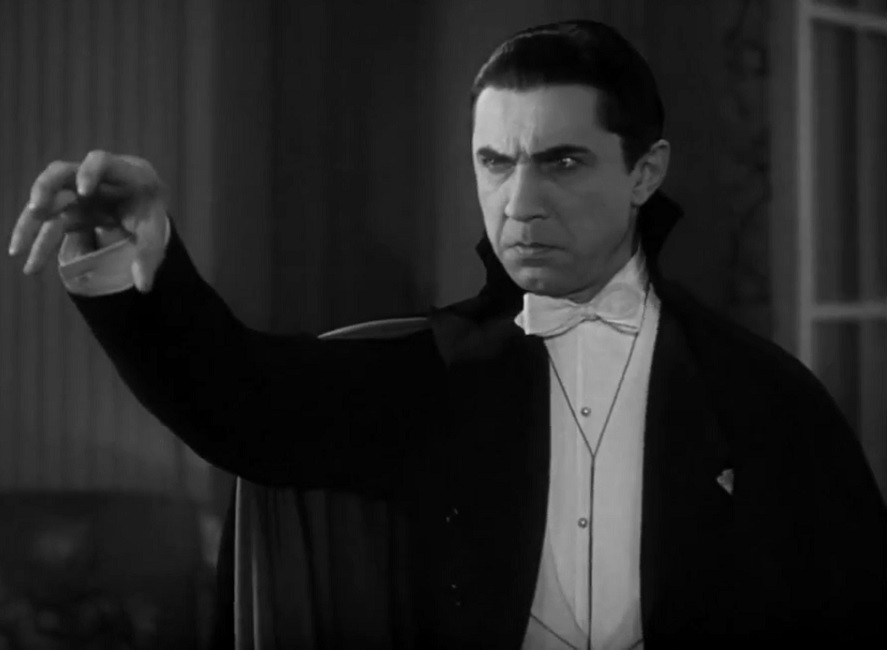
Bela Lugosi as Count Dracula in the 1931 film Dracula
First appearanceDracula (1897)
Created byBram Stoker
Portrayed bySee below
In-universe information
Aliases
  • Dracula
  • Count De Ville[1]
  • Mr. De Ville[2]
Nickname
SpeciesVampire (also has been classified as an undead human, a dhampir, and a werewolf[6][7])
GenderMale
Title
SpousePossibly Brides of Dracula (unclear)

Count Dracula (/ˈdrækjʊlə, -jə-/) is the title character of Bram Stoker's 1897 gothic horror novel Dracula. He is considered the prototypical and archetypal vampire in subsequent works of fiction. Aspects of the character are believed by some to have been inspired by the 15th-century Wallachian prince Vlad the Impaler, who was also known as Vlad Dracula, and by Sir Henry Irving and Jacques Damala,[12][13] actors with aristocratic backgrounds that Stoker had met during his life.[14] Count Dracula is one of the best-known fictional figures of the Victorian era.[15]

One of Dracula's most famous powers is his ability to turn others into vampires by biting them and infecting them with the vampiric disease. Other characteristics have been added or altered in subsequent popular fictional works, including books, films, cartoons, and video games.

Stoker's creation

[edit]

Bram Stoker's novel takes the form of an epistolary tale, in which Count Dracula's characteristics, powers, abilities, and weaknesses are narrated by multiple narrators, from different perspectives.[16]

Count Dracula is an undead, centuries-old vampire, and a Transylvanian nobleman who claims to be a Székely descended from Attila the Hun.[17] He inhabits a decaying castle in the Carpathian Mountains near the Borgo Pass. Unlike the vampires of Eastern European folklore, which are portrayed as repulsive, corpse-like creatures, Dracula is handsome and charismatic, with a veneer of aristocratic charm. In his conversations with Jonathan Harker, he reveals himself as deeply proud of his boyar heritage and nostalgic for the past, which he admits has become only a memory of heroism, honour, and valour in modern times. The character of Count Dracula created by Stoker has become one of the best-known fictional figures of the Victorian era.[15]

Early life

[edit]

Details of his early life are undisclosed, but it is mentioned that

he was in life a most wonderful man. Soldier, statesman, and alchemist. Which latter was the highest development of the scientific knowledge of his time. He had a mighty brain, a learning beyond compare, and a heart that knew no fear and no remorse... there was no branch of knowledge of his time that he did not essay.[18]

Dracula studied the black arts at the academy of Scholomance in the Carpathian Mountains, overlooking the town of Sibiu (also known as Hermannstadt) and has a deep knowledge of alchemy and magic.[19] Taking up arms, as befitting his rank and status as a voivode, he led troops against the Turks across the Danube. According to his nemesis Abraham Van Helsing, "He must indeed have been that Voivode Dracula who won his name against the Turk, over the great river on the very frontier of Turkey-land. If it be so, then was he no common man: for in that time, and for centuries after, he was spoken of as the cleverest and the most cunning, as well as the bravest of the sons of the land beyond the forest."[20] Dead and buried in a great tomb in the chapel of his castle, Dracula returns from death as a vampire and lives for several centuries in his castle with three terrifyingly beautiful female vampires beside him.[21]

Narrative

[edit]

Short story

[edit]
Cover of Dracula's Guest and Other Weird Stories, a collection of short stories authored by Bram Stoker

"Dracula's Guest", published in Stoker's posthumous collection Dracula's Guest and Other Weird Stories, was written at the same time as Dracula, either as an episode in early drafts of the novel or a standalone story. The narrative follows an unnamed Englishman traveller as he wanders around Munich before leaving for Transylvania. It is Walpurgis Night and the young Englishman foolishly leaves his hotel, in spite of the coachman's warnings, and wanders through a dense forest alone. Along the way, he feels that he is being watched by a tall and thin stranger. The story climaxes in an old graveyard, where the Englishman encounters a sleeping female vampire called Countess Dolingen in a marble tomb with a large iron stake driven into it. This malevolent beautiful vampire awakens from her marble bier to conjure a snowstorm before being struck by lightning and returning to her eternal prison. The Englishman's troubles are not quite over, as he is dragged away by an unseen force and rendered unconscious. He awakens to find a gigantic wolf lying on his chest and licking his throat. It keeps him warm and protects him until help arrives. When the Englishman is finally taken back to his hotel, a telegram awaits him from his expectant host Dracula, with a warning about "dangers from snow and wolves and night".

Novel

[edit]

In Dracula, the eponymous vampire has decided to move from Transylvania to London. He summons Jonathan Harker, a newly qualified English solicitor, to provide legal support for a real estate transaction overseen by Harker's employer. Dracula at first charms Harker with his cordiality and historical knowledge, and even rescues him from the clutches of the three female vampires in the castle. In truth, Dracula wishes to keep Harker alive long enough to complete the legal transaction and to learn as much as possible about England.

Ruins of Whitby Abbey in Whitby which features in the novel. As a creature resembling a large dog which came ashore at the Whitby headland, Count Dracula runs up the 199 steps to the graveyard of St Mary's Church in the shadow of the abbey ruins.

Dracula leaves his castle and boards a Russian ship, the Demeter, taking along with him 50 boxes of Transylvanian soil, which he needs to regain his strength and rest during daylight. During the voyage to Whitby, a coastal town in northern England, he sustains himself on the ship's crew members. Only one body is later found, that of the captain, who is found tied up to the ship's helm. The captain's log is recovered and tells of strange events that had taken place during the ship's journey. Dracula leaves the ship in the form of a dog and runs up the 199 steps to the graveyard of St Mary's Church in the shadow of the Whitby Abbey ruins.

Soon, the Count begins menacing Harker's fiancée, Wilhelmina "Mina" Murray, and her friend, Lucy Westenra. There is also a notable link between Dracula and Renfield, a patient in an insane asylum overseen by John Seward, who is compelled to consume spiders, birds, and other creatures—in ascending order of size—to absorb their "life force". Renfield acts as a kind of sensor, reacting to Dracula's proximity and supplying clues accordingly. Dracula visits Lucy's bed chamber on a nightly basis, draining her of blood while simultaneously infecting her with the curse of vampirism. Not knowing the cause for Lucy's deterioration, her three suitors – Seward, Arthur Holmwood and Quincey Morris – call upon Seward's mentor, the Dutch doctor Abraham Van Helsing. Van Helsing soon deduces her condition's supernatural origins, and tries to keep the vampire at bay with garlic. Nevertheless, Dracula attacks Lucy's house one final time, killing her mother and transforming Lucy herself into one of the undead.

Colorized stills of Edward Van Sloan as Van Helsing confronting Bela Lugosi in Dracula (1931)

Harker escapes Dracula's castle and returns to England, barely alive and deeply traumatized. On Seward's suggestion, Mina seeks Van Helsing's assistance in assessing Harker's health. She reads his journal and passes it along to Van Helsing. This unfolds the first clue to the identity of Lucy's assailant, which later prompts Mina to collect all of the events of Dracula's appearance in news articles, saved letters, newspaper clippings and the journals of each member of the group. This assists the group in investigating Dracula's movements and later discovering that Renfield's behaviour is directly influenced by Dracula. They then discover that Dracula has purchased a residence next door to Seward's. The group gathers intelligence to track down Dracula and destroy him.

After the undead Lucy attacks several children, Van Helsing, Seward, Holmwood and Morris enter her crypt and destroy her to save her soul. Later, Harker joins them, and the party works to discover Dracula's intentions. Harker aids the party in tracking down the locations of the boxes to the various residences of Dracula and discovers that Dracula purchased multiple real estate properties throughout London[22] under the alias 'Count De Ville'.[23] Dracula's main plan was to move each of his 50 boxes of earth to his various properties in order to arrange multiple lairs throughout and around the perimeter of London.[22]

The party pries open each of the graves, places sacramental wafers within each of them, and seals them shut. This deprives Dracula of his ability to seek safety in those boxes.[24] Dracula gains entry into Seward's residence by coercing an invitation out of Renfield. As he attempts to enter the room in which Harker and Mina are staying, Renfield tries to stop him; Dracula then mortally wounds him. With his dying breath, Renfield tells Seward and Van Helsing that Dracula is after Mina. Van Helsing and Seward discover Dracula biting Mina and forcing her to drink his blood. The group repels Dracula using crucifixes and sacramental bread, forcing him to flee by turning into a dark vapour. The party continues to hunt Dracula to search for his remaining lairs.[25] Although Dracula's 'baptism' of Mina grants him a telepathic link to her, it backfires when Van Helsing hypnotizes Mina and uses her supernatural link with Dracula to track him as he flees back to Transylvania.

The heroes follow Dracula back to Transylvania, and in a climactic battle with Dracula's Romani bodyguards, finally destroy him. Despite the popular image of Dracula having a stake driven through his heart to kill him, Mina's narrative describes his decapitation by Harker's kukri while Morris simultaneously pierces his heart with a Bowie knife (Mina Harker's Journal, 6 November, Dracula Chapter 27). His body then turns into dust, but not before Mina sees an expression of peace on his face.

Characteristics

[edit]

"Listen to them—the children of the night. What music they make!".

— Count Dracula to Jonathan Harker, referring to the howling of the wolves. Dracula, Chapter 2.[26]

Although early in the novel Dracula dons a mask of cordiality, he often flies into fits of rage when his plans are frustrated. When Dracula's brides attempt to seduce Jonathan Harker, Dracula physically assaults one and ferociously berates them for their insubordination.

Dracula has an appreciation for ancient architecture and prefers purchasing old houses, saying "a new home would kill me" and that it takes a century to make one habitable.[27]

Dracula is very proud of his warrior heritage, proclaiming his pride to Harker on how the Székely people are infused with the blood of heroes. He also expresses an interest in the history of the British Empire, speaking admiringly of its people. He has a somewhat primal and predatory worldview, pities ordinary humans for their revulsion to their darker impulses, feels human emotions and often says that he can love.[28]

Though usually portrayed as having a strong Eastern European accent, the original novel only specifies that his spoken English is excellent, though strangely toned.

His appearance varies in age. He is described early in the novel as thin, with a long white moustache, pointed ears and sharp teeth.[29] It is also noted later in the novel (Chapter 11 subsection "The Escaped Wolf") by a zookeeper who sees him that he has a hooked nose and a pointed beard with a streak of white in it. He is dressed all in black and has hair on his palms. Harker describes him as an old man, "cruel looking" and giving an effect of "extraordinary pallor".[29]

I saw... Count Dracula... with red light of triumph in his eyes, and with a smile that Judas in hell might be proud of.

— Jonathan Harker's journal, Dracula, Chapter 4

As the novel progresses, Dracula is described as taking on a more and more youthful appearance. After Harker strikes him with a shovel, he is left with a scar on his forehead which he bears throughout the course of the novel.

Dracula also possesses great wealth, and has Romani people in his homeland who are loyal to him as servants and protectors.

Powers and weaknesses

[edit]

Count Dracula is portrayed in the novel using many different supernatural abilities, and is believed to have gained his abilities through dealings with the devil. Chapter 18 of the novel describes many of the abilities, limitations and weaknesses of vampires and Dracula in particular. Dracula has superhuman strength which, according to Van Helsing, is equivalent to that of 20 strong men. He does not cast a shadow or have a reflection from mirrors. He is immune to conventional means of attack; a sailor tries to stab him in the back with a knife, but the blade goes through his body as though it is air.[30] He can defy gravity to a certain extent and possesses superhuman agility, able to climb vertical surfaces upside down in a reptilian manner. He can travel onto unhallowed ground, such as the graves of suicides and those of his victims. He has powerful hypnotic, telepathic and illusionary abilities. He also has the ability to "within limitations" vanish and reappear elsewhere at will. If he knows the path, he can come out from anything or into anything regardless of how close it is bound or even if it is soldered shut.[31]

Dracula has amassed cunning and wisdom throughout centuries and is unable to die of senescence.[31] He can command animals such as rats, owls, bats, moths, foxes and wolves. His control is limited, as seen when the party first enters his house in London. He summons thousands of rats to swarm and attack the group and Holmwood summons his trio of terriers to battle them. The dogs prove very efficient rat killers. Terrified by their onslaught, the rats flee of their own volition.[32]

Dracula can also manipulate the weather and, within his range, is able to direct the elements, such as storms, fog and mist.[31]

Shapeshifting

[edit]

Dracula can change form at will, able to grow and become small, his featured forms in the novel being that of a bat, a large wolf and a fog or mist. When the moonlight is shining, he can travel as elemental dust within its rays. He is able to pass through tiny cracks or crevices while retaining his human form or in the form of a vapour; described by Van Helsing as the ability to slip through a hairbreadth space of a tomb door or coffin. This is also an ability used by his victim Lucy as a vampire. When the party breaks into her tomb, they open the sealed coffin to find her corpse is no longer located within.[33]

Vampirism

[edit]

One of Dracula's powers is the ability to turn others into vampires by biting them. According to Van Helsing:

When they become such, there comes with the change the curse of immortality; they cannot die, but must go on age after age adding new victims and multiplying the evils of the world. For all that die from the preying of the Undead become themselves Undead, and prey on their kind. And so the circle goes on ever widening, like as the ripples from a stone thrown in the water. Friend Arthur, if you had met that kiss which you know of before poor Lucy die, or again, last night when you open your arms to her, you would in time, when you had died, have become nosferatu, as they call it in Eastern Europe, and would for all time make more of those Un-Deads that so have filled us with horror.

— Dr. Seward's journal, Dracula, Chapter 16

The vampire bite itself does not cause death. It is the method vampires use to drain blood of the victim and to increase their influence over them. This is described by Van Helsing:

The nosferatu do not die like the bee when he sting once. He is only stronger, and being stronger, have yet more power to work evil.

— Dr. Seward's journal, Dracula, Chapter 18

Victims who are bitten by a vampire and do not die, are hypnotically influenced by them:

Those children whose blood she suck are not yet so much worse; but if she live on, Un-Dead, more and more lose their blood and by her power over them they come to her.

— Mina Harker's journal, Dracula, Chapter 18

Van Helsing later describes the aftermath of a bitten victim when the vampire has been killed:

But if she die in truth, then all cease; the tiny wounds of the throats disappear, and they go back to their plays unknowing of whatever has been.

— Mina Harker's journal, Dracula, Chapter 18

As Dracula slowly drains Lucy's blood, she dies from acute blood loss and later transforms into a vampire, despite the efforts of Seward and Van Helsing to provide her with blood transfusions.[34]

He is aided by powers of necromancy and divination of the dead, that all who die by his hand may reanimate and do his bidding.[31]

Bloodletting

[edit]

Dracula requires no other sustenance but fresh human blood, which has the effect of rejuvenating him and allowing him to grow younger. His power is drawn from the blood of others, and he cannot survive without it.[31][35] Although drinking blood can rejuvenate his youth and strength, it does not give him the ability to regenerate; months after being struck on the head by a shovel, he still bears a scar from the impact.[36]

Dracula's preferred victims are women.[37] Harker states that he believes Dracula has a state of fasting as well as a state of feeding.[38] He tells Mina exerting his abilities raises a desire to feed.[39]

Vampire's Baptism of Blood

[edit]

Count Dracula is depicted as the "King Vampire", and can control other vampires. To punish Mina and the party for their efforts against him, Dracula bites her on at least three occasions. He also forces her to drink his blood; this act curses her with the effects of vampirism and gives him a telepathic link to her thoughts.[40] Hypnotism only works before dawn.[41] Van Helsing refers to the act of drinking blood by both the vampire and the victim "the Vampire's Baptism of Blood".[42]

you, their best beloved one, are now to me, flesh of my flesh, blood of my blood, kin of my kin, my bountiful wine-press for a while, and shall be later on my companion and my helper. You shall be avenged in turn, for not one of them but shall minister to your needs. But as yet you are to be punished for what you have done. You have aided in thwarting me. Now you shall come to my call. When my brain says 'Come!' to you, you shall cross land or sea to do my bidding.[43]

The effects changes Mina physically and mentally over time. A few moments after Dracula attacks her, Van Helsing takes a wafer of sacramental bread and places it on her forehead to bless her; when the bread touches her skin, it burns her and leaves a scar on her forehead. Her teeth start growing longer but do not grow sharper. She begins to lose her appetite, feeling repulsed by normal food,[44] begins to sleep more and more during the day; cannot wake unless at sunset and stops writing in her diary. When Van Helsing later crumbles the same bread in a circle around her, she is unable to cross or leave the circle, discovering a new form of protection.[45]

Dracula's death would release the curse on any living transformed vampire. Van Helsing reveals that even were he to escape, his continued existence would ensure whether or not he victimized Mina further, she would become a vampire upon her eventual natural death.

Limitations of his powers

[edit]

Dracula is much less powerful in daylight and is only able to shift his form at dawn, noon, and dusk (he can shift his form freely at night or if he is at his grave). The sun is not fatal to him, as sunlight does not burn and destroy him upon contact, though most of his abilities cease.

The sun that rose on our sorrow this morning guards us in its course. Until it sets to-night, that monster must retain whatever form he now has. He is confined within the limitations of his earthly envelope. He cannot melt into thin air nor disappear through cracks or chinks or crannies. If he goes through a doorway, he must open the door like a mortal.

— Jonathan Harker's journal, Dracula, Chapter 22

His power ceases, as does that of all evil things, at the coming of the day. Only at certain times can he have limited freedom. If he be not at the place whither he is bound, he can only change himself at noon or exact sunrise or sunset.

— Mina Harker's journal, Dracula, Chapter 18

Later interpretations of the character, and vampires in general, would amplify this trait into an outright fatal weakness, making it so that even the first rays of sunrise are capable of reducing a vampire to ash.[46]

He is also limited in his ability to travel, as he can only cross running water at low or high tide. Owing to this, he is unable to fly across a river in the form of a bat or mist or even by himself board a boat or step off a boat onto a dock unless he is physically carried over with assistance. He is also unable to enter a place unless invited to do so by someone of the household, even a visitor; once invited, he can enter and leave the premises at will.[31]

Weaknesses

[edit]

Thirst

[edit]

Dracula is commonly depicted with a bloodlust which he is seemingly unable to control. Adaptations sometimes call this uncontrollable state 'the thirst'.

Religious symbolism

[edit]

There are items which afflict him to the point he has no power and can even calm him from his insatiable appetite for blood. He is repulsed by garlic, as well as sacred items and symbols such as crucifixes and sacramental bread.

...at the instant I saw that the cut had bled a little, and the blood was trickling over my chin. I laid down the razor, turning as I did so half round to look for some sticking plaster. When the Count saw my face, his eyes blazed with a sort of demoniac fury, and he suddenly made a grab at my throat. I drew away and his hand touched the string of beads which held the crucifix. It made an instant change in him, for the fury passed so quickly that I could hardly believe that it was ever there.

— Jonathan Harker's journal, Dracula, Chapter 2

Placing the branch of a wild rose upon the top of his coffin will render him unable to escape it; a sacred bullet fired into the coffin could kill him so that he remain true-dead.[31]

Mountain-ash is also described as a form of protection from a vampire, although the effects are unknown.[47] This was believed to be used as protection against evil spirits and witches during the Victorian era.

Death-sleep

[edit]

The state of rest to which vampires are prone during the day is described in the novel as a deathlike sleep in which the vampire sleeps open-eyed, is unable to awaken or move, and also may be unaware of any presence of individuals who may be trespassing. Dracula is portrayed as being active in daylight at least once to pursue a victim. Dracula also purchases many properties throughout London 'over the counter' which shows that he does have the ability to have some type of presence in daylight.

on a pile of newly dug earth, lay the Count! He was either dead or asleep. I could not say which, for eyes were open and stony, but without the glassiness of death, and the cheeks had the warmth of life through all their pallor. The lips were as red as ever. But there was no sign of movement, no pulse, no breath, no beating of the heart. I bent over him, and tried to find any sign of life, but in vain... I thought he might have the keys on him, but when I went to search I saw the dead eyes, and in them dead though they were, such a look of hate, though unconscious of me or my presence, that I fled from the place, and leaving the Count's room by the window.[48]

He requires Transylvanian soil to be nearby to him in a foreign land or to be entombed within his coffin within Transylvania in order to successfully rest; otherwise, he will be unable to recover his strength. This has forced him to transport many boxes of Transylvanian earth to each of his residences in London. He is most powerful when he is within his Earth-Home, Coffin-Home, Hell-Home, or any place unhallowed.[31][49]

Further, if Dracula or any vampire has had their fill in blood upon feeding, they will be caused to rest in this dead state even longer than usual.[50]

Other abilities

[edit]

While universally feared by the local people of Transylvania and even beyond, Dracula commands the loyalty of the Romani people, as well as a band of Slovaks who transport his boxes on their way to London and to serve as an armed convoy bringing his coffin back to his castle. The Slovaks and Romani appear to know his true nature, for they laugh at Harker when he tries to communicate his plight, and betray Harker's attempt to send a letter through them by giving it to the Count.

Dracula seems to be able to hold influence over people with mental disorders, such as Renfield, who is never bitten but who worships Dracula, referring to him over the course of the novel as "Master" and "Lord". Dracula also afflicts Lucy with chronic sleepwalking, putting her into a trance-like state that allows them not only to submit to his will but also seek him and satisfy his need to feed.

Dracula's powers and weaknesses vary greatly in the many adaptations. Previous and subsequent vampires from different legends have had similar vampire characteristics.

Character development subsequent to the novel

[edit]
Christopher Lee starred as Dracula in numerous Hammer Horror films. Shown here is the 1958 film Dracula. Lee fixed the image of the vampire bearing dual elongated fangs in popular culture.[51][52]

Dracula has been portrayed by more actors in more visual media adaptations of the novel than any other horror character.[53] Actors who have played him include Bela Lugosi, John Carradine, Lon Chaney Jr., Christopher Lee, Francis Lederer, Denholm Elliott, Jack Palance, Louis Jourdan, Rudolf Martin, Frank Langella, Klaus Kinski, Gary Oldman, Leslie Nielsen, George Hamilton, David Niven, Charles Macaulay, Keith-Lee Castle, Ray Liotta, Gerard Butler, Duncan Regehr, Richard Roxburgh, Marc Warren, Rutger Hauer, Stephen Billington, Dominic Purcell, Jonathan Rhys Meyers, Luke Evans, Claes Bang, Javier Botet and Bill Skarsgård. In 1922, Max Schreck starred as Count Orlok (an adaptation of Count Dracula) in Nosferatu.[54] In 2003, Count Dracula, as portrayed by Lugosi in the 1931 film, was named as the 33rd greatest movie villain by the AFI.[55] In 2013, Empire magazine ranked Lee's portrayal as Dracula the 7th Greatest Horror Movie Character of All Time.[56]

The character is closely associated with the western cultural archetype of the vampire, and remains a popular Halloween costume.

  • Count Dracula appears in Mad Monster Party? voiced by Allen Swift. This version is shown to be wearing a monocle. Count Dracula is among the monsters that Baron Boris von Frankenstein invites to the Isle of Evil to show off the secret of total destruction and announce his retirement from the Worldwide Organization of Monsters.
  • Sesame Street character Count von Count is based on Bela Lugosi's interpretation of Count Dracula and Jack Davis' design for Dracula from Mad Monster Party?.
  • Count Dracula appears in Mad Mad Mad Monsters (a "prequel of sorts" to Mad Monster Party?) voiced again by Allen Swift. He and his son are invited by Baron Henry von Frankenstein to attend the wedding of Frankenstein's monster and its mate at the Transylvania Astoria Hotel.
  • Dracula is the primary antagonist of the Castlevania video game series and the first two seasons of the Castlevania animated Netflix series. He also appears as Gabriel Belmont, the main protagonist of the Lords of Shadow reboot video game series.
  • Count Dracula appears in the Attack of the Killer Tomatoes episode "Spatula, Prinze of Dorkness", voiced by S. Scott Bullock. He relates a tale of how he once gave Dr. Putrid T. Gangreen a serum to transform tomatoes into vampire tomatoes. Though the doctor refused, Zoltan overheard their conversation and, mistaking the word serum for syrup, ingests the serum himself and renaming himself "Spatula, Prinze of Dorkness" who can turn people into vampires by kissing them in the neck (a stipulation that the Censor Lady put into place in fear of showing the biting and bloodshed associated with vampires on a Saturday morning cartoon). This spread to the other tomatoes and the entire town. When the Sun came up and disabled the vampires, Count Dracula in sunblock appears and deemed that the town is not worthy to be vampires. He then gives Chad Finletter the antidote to the vampirism and advises that the tomatoes be squashed immediately.
  • Dracula appears as the lead character of Dracula the Un-dead, a novel by Stoker's great-grand nephew Dacre presented as a sequel to the original.
  • In the Supernatural episode "Monster Movie", a shapeshifter that Sam and Dean Winchester fight considers his form of Count Dracula (portrayed by Todd Stashwick) his favorite form. It is in this form that Jamie killed him with Sam's gun loaded with silver bullets.
  • Count Dracula is the main character of the Hotel Transylvania franchise, voiced by Adam Sandler in the first three movies and by Brian Hull in the fourth movie.
  • Dracula, going by an inversion of his name, "Alucard", serves as the main character of the anime and manga series Hellsing and Hellsing Ultimate, where he serves Integra Hellsing, Abraham's great-granddaughter, as an anti-vampire warrior devoted to the British Crown.
  • Dracula is the primary antagonist of the Showtime series Penny Dreadful, portrayed by Christian Camargo. This version of the character is the brother of Lucifer and, thus, a fallen angel.

Modern and postmodern analyses of the character

[edit]
Full-size portrait of Vlad Țepeș in the "Gallery of the Ancestors" of the House of Esterházy,  17th century, Forchtenstein Castle

Already in 1958, Cecil Kirtly proposed that Count Dracula shared his personal past with the historical Transylvanian-born Voivode Vlad III Dracula of Wallachia, also known as Vlad the Impaler or Vlad Țepeș. Following the publication of In Search of Dracula by Radu Florescu and Raymond McNally in 1972, this supposed connection attracted much popular attention. This work argued that Bram Stoker based his Dracula on Vlad the Impaler.[57]

Historically, the name "Dracula" is the family name of Vlad Țepeș' family, a name derived from a fraternal order of knights called the Order of the Dragon, founded by Sigismund of Luxembourg (king of Hungary and Bohemia, and Holy Roman Emperor) to uphold Christianity and defend the Empire against the Ottoman Turks. Vlad II Dracul, father of Vlad III, was admitted to the order around 1431 because of his bravery in fighting the Turks and was dubbed Dracul ("dragon" or "devil"), thus his son became Dracula ("of the dragon"). From 1431 onward, Vlad II wore the emblem of the order and later, as ruler of Wallachia, his coinage bore the dragon symbol.[58]

Stoker came across the name Dracula in his reading on Romanian history, and chose this to replace the name (Count Wampyr) that he had originally intended to use for his villain. Some Dracula scholars, led by Elizabeth Miller, have questioned the depth of this connection as early as 1998. They argue that Stoker in fact knew little of the historic Vlad III, "Vlad the Impaler", and that he used only the name "Dracula" and some miscellaneous scraps of Romanian history.[59] Also, there are no comments about Vlad III in the author's working notes.[60]

Shakespearean actor and friend of Stoker's Sir Henry Irving is widely considered to be a real-life inspiration for the character of Dracula.

Stoker was the personal assistant of actor Sir Henry Irving and the business manager of the West End's Lyceum Theatre, which Irving owned.[61] Stoker saw Irving perform at the Lyceum, and Dracula's mesmeric qualities are seen as a dark, gothic caricature of Irving's charismatic on-stage persona, with the actor displaying a gloomy, chilling intensity and having a powerful hold over his audience. In 2002 historian Louis S. Warren writes:

There is virtual unanimity on the point that the figure of Dracula—which Stoker began to write notes for in 1890—was inspired by Henry Irving himself. … Stoker's numerous descriptions of Irving correspond so closely to his rendering of the fictional count that contemporaries commented on the resemblance. … But Bram Stoker also internalized the fear and animosity his employer inspired in him, making them the foundations of his gothic fiction.[14]

While having a conversation with Jonathan Harker in Chapter 3, Dracula refers to his own background, and these speeches show elements which Stoker directly copied from An Account of the Principalities of Wallachia and Moldavia: With Various Political Observations Relating to Them by William Wilkinson.[62] Stoker mentions the Voivode of the Dracula race who fought against the Turks after the defeat in the Battle of Kosovo, and was later betrayed by his brother, historical facts which unequivocally point to Vlad III, described as "Voïvode Dracula" by Wilkinson:

Who was it but one of my own race who as Voivode crossed the Danube and beat the Turk on his own ground? This was a Dracula indeed! Woe was it that his own unworthy brother, when he had fallen, sold his people to the Turk and brought the shame of slavery on them! Was it not this Dracula, indeed, who inspired that other of his race who in a later age again and again brought his forces over the great river into Turkey-land; who, when he was beaten back, came again, and again, though he had to come alone from the bloody field where his troops were being slaughtered, since he knew that he alone could ultimately triumph! (Chapter 3, pp. 19)

The Count's intended identity is later commented by Professor Van Helsing, referring to a letter from his friend Arminius:

He must, indeed, have been that Voivode Dracula who won his name against the Turk, over the great river on the very frontier of Turkey-land. (Chapter 18, pp. 145)

This indeed encourages the reader to identify the Count with the Voivode Dracula first mentioned by him in Chapter 3, the one betrayed by his brother: Vlad III Dracula, betrayed by his brother Radu the Handsome, who had chosen the side of the Turks. But as noted by the Dutch author Hans Corneel de Roos, in Chapter 25, Van Helsing and Mina drop this rudimentary connection to Vlad III and instead describe the Count's personal past as that of "that other of his race" who lived "in a later age". By smoothly exchanging Vlad III for a nameless double, Stoker avoided his main character being unambiguously linked to a historical person traceable in any history book.

Similarly, the novelist did not want to disclose the precise site of the Count's residence, Castle Dracula. As confirmed by Stoker's own handwritten research notes, the novelist had a specific location for the Castle in mind while writing the narrative: an empty mountain top in the Transylvanian Kelemen Alps near the former border with Moldavia.[63] Efforts to promote the Poenari Castle (ca. 200 km away from the novel's place of action near the Borgo Pass) as the "real Castle Dracula" have no basis in Stoker's writing; although it bears much similarity to the fictional Castle Dracula, no written evidence shows Stoker to have heard of it. Regarding the Bran Castle near Brașov, Stoker possibly saw an illustration of Castle Bran (Törzburg) in Charles Boner's 1865 book on Transylvania, Transylvania: Its Products and Its People.[64][65] Although Stoker may have been inspired by its romantic appearance, neither Boner, nor Mazuchelli nor Crosse (who also mention Terzburg or Törzburg) associate it with Vlad III; for the site of his fictitious Castle Dracula, Stoker preferred an empty mountain top.

Stoker's detailed notes reveal he was well aware of the ethnic and geopolitical differences between the Roumanians/Wallachs/Wallachians, descendants of the Dacians, and the Székelys/Szeklers, allies of the Magyars or Hungarians, whose interests were opposed to that of the Wallachians. In the novel's original typewritten manuscript, the Count speaks of throwing off the "Austrian yoke", which corresponds to the Szekler political point of view. This expression is crossed out and replaced by "Hungarian yoke" (as appearing in the printed version), which matches the historical perspective of the Wallachians. Some take this to mean that Stoker opted for the Wallachian, not the Szekler interpretation, thus lending more consistency to his count's Romanian identity. Although not identical to Vlad III, the vampire is portrayed as one of the "Dracula race".[66]

Portrayals

[edit]
Year Title Actor playing Dracula Notes
1921 Dracula's Death Erik Vanko Lost film
1922 Nosferatu Max Schreck Renamed Count Orlok for legal reasons
1931 Dracula Bela Lugosi
Drácula Carlos Villarías Spanish version using the same sets as the Lugosi version, but with a different cast and crew.
1943 Son of Dracula Lon Chaney Jr.
1944 House of Frankenstein John Carradine
1945 House of Dracula
1948 Abbott and Costello Meet Frankenstein Bela Lugosi
1953 Drakula İstanbul'da Atıf Kaptan
1958 Dracula Christopher Lee
The Return of Dracula Francis Lederer
1964 Batman Dracula Jack Smith
1966 Dracula: Prince of Darkness Christopher Lee
Billy the Kid vs Dracula John Carradine
1967 Mad Monster Party? Allen Swift Animated film
Blood of Dracula's Castle Alexander D'Arcy
1968 Dracula Has Risen from the Grave Christopher Lee
Dracula Denholm Elliott Episode of UK TV series Mystery and Imagination
1969 Las vampiras John Carradine
The Magic Christian Christopher Lee
1970 Count Dracula
Taste the Blood of Dracula
One More Time
Scars of Dracula
Cuadecuc, vampir
Jonathan Paul Albert Krumm
1971 Dracula vs. Frankenstein Zandor Vorkov
Night Gallery Francis Lederer Episode: "The Devil Is Not Mocked"
1972 Blacula Charles Macaulay
Mad Mad Mad Monsters Allen Swift Animated film
Dracula A.D. 1972 Christopher Lee
Count Dracula's Great Love Paul Naschy
1973 The Satanic Rites of Dracula Christopher Lee
1974 Bram Stoker's Dracula Jack Palance Television film
Blood for Dracula Udo Kier
Legend of the 7 Golden Vampires John Forbes-Robertson
Vampira David Niven Released in US as Old Dracula
1975 Lady Dracula Stephen Boyd Germany (theatrically released in 1977)
1976 Dracula and Son Christopher Lee
1977 Dracula's Dog Michael Pataki
Count Dracula Louis Jourdan Television film
1978 Doctor Dracula John Carradine
1979 Nosferatu the Vampyre Klaus Kinski Remake of Nosferatu (1922) with the novel's character names restored.
Cliffhangers Michael Nouri Episode: "The Curse of Dracula"
Love at First Bite George Hamilton
Nocturna John Carradine
Dracula Frank Langella
The Halloween That Almost Wasn't Judd Hirsch Television film
1985 Fracchia Vs. Dracula Edmund Purdom
1987 The Monster Squad Duncan Regehr
1988 Waxwork Miles O'Keeffe
Scooby-Doo and the Ghoul School Zale Kessler Animated film
Scooby-Doo! and the Reluctant Werewolf Hamilton Camp Animated film
1989 The Super Mario Bros. Super Show Jim Ward Episode: "Bats in the Basement"
Captain N: The Game Master Garry Chalk Animated TV series
Superboy Lloyd Bochner Episode: "Young Dracula"
1990 Attack of the Killer Tomatoes S. Scott Bullock Episode: "Spatula, Prinze of Dorkness"
1990–1991 Dracula: The Series Geordie Johnson TV series
1992 Bram Stoker's Dracula Gary Oldman
1993 The Young Indiana Jones Chronicles Bob Peck Episode: "Transylvania, January 1918"
Bram Stoker's Dracula Lee Carus-Wescott Video game
U.F.O. Antony Georghiou
1994 Monster Force Robert Bockstael
1995 Monster Mash Anthony Crivello
Dracula: Dead and Loving It Leslie Nielsen
1997 Castlevania: Symphony of the Night Video game
The Creeps Phil Fondacaro
2000 Dracula 2000 Gerard Butler
Buffy the Vampire Slayer Rudolf Martin Episode: "Buffy vs. Dracula"
Dark Prince: The True Story of Dracula Rudolf Martin Television film
2001 Dracula, the Musical Tom Hewitt
2002 Dracula: Pages from a Virgin's Diary Zhang Wei-Qiang
Dracula Patrick Bergin
2003 Dracula II: Ascension Stephen Billington
Castlevania: Lament of Innocence Video game
2004 Van Helsing Richard Roxburgh
Van Helsing Video game
Blade: Trinity Dominic Purcell
Dracula 3000 Langley Kirkwood
2005 Dracula Wins Dieus Indian Malayalam-language television series on Asianet.
The Batman vs. Dracula Peter Stormare Animated film
Dracula III: Legacy Rutger Hauer
Castlevania: Curse of Darkness Douglas Rye Video game
2005–2008 The Grim Adventures of Billy & Mandy Phil LaMarr Animated TV series
2006 Castlevania: Portrait of Ruin Douglas Rye Video game
Dracula Marc Warren Television film
2006–2014 Young Dracula Keith-Lee Castle TV series
2007 Castlevania: The Dracula X Chronicles Patrick Seitz Video game
2008 Dracula Wins Dieus Indian Telugu-language television series on Gemini TV.
Dracula: Origin Kevin Delaney Video game
Supernatural Todd Stashwick Episode: "Monster Movie"
Castlevania: Order of Ecclesia Patrick Seitz Video game
Castlevania Judgment Video game
The Librarian: Curse of the Judas Chalice Bruce Davison
2009 House of the Wolf Man Michael R. Thomas
Castlevania: The Arcade Video game
Castlevania: The Adventure ReBirth Video game
2010 Castlevania: Harmony of Despair Patrick Seitz Video game
Castlevania: Lords of Shadow Robert Carlyle Video game
2012 Family Guy Seth MacFarlane Episode: "Livin' on a Prayer"
Dracula 3D Thomas Kretschmann
Hotel Transylvania Adam Sandler Animated film
Dracula Reborn Stuart Rigby Television film
2013 Castlevania: Lords of Shadow – Mirror of Fate Robert Carlyle Video game
Dracula Jonathan Rhys Meyers TV series
Dracula 2012 Sudheer Sukumaran Indian horror film
Dear Dracula Ray Liotta Animated film
Dracula: The Dark Prince Luke Roberts
2014 Castlevania: Lords of Shadow 2 Robert Carlyle Video game
Dracula Untold Luke Evans
2015 Hotel Transylvania 2 Adam Sandler Animated film
2016 Penny Dreadful Christian Camargo TV series
Welcome To Monster High Michael Sorich Animated film
2017 Monster High: Electrified Michael Sorich Animated film
Monster Family Jason Isaacs Animated film
Escape from Mr. Lemoncello's Library Alexander Mandra Television film
2017–2018 Monster High: The Adventures of the Ghoul Squad Michael Sorich Animated TV series
2017–2020 Hotel Transylvania David Berni
Ivan Sherry
Animated TV series
2017–2021 Castlevania Graham McTavish Animated TV series
2018 Hotel Transylvania 3: Summer Vacation Adam Sandler Animated film
Hotel Transylvania 3: Monsters Overboard Brock Powell Video game
2019 Van Helsing Tricia Helfer TV series
Castlevania: Grimoire of Souls Jack Merluzzi Video game
Vinay Murthy
2020 Dracula Claes Bang TV miniseries
Dracula Sir Anirban Bhattacharya Indian Bengali-language film loosely based on the legend of the Dracula.
2021 Monster Pets Brian Hull Replacing Adam Sandler.
Monster Family 2: Nobody's Perfect Jason Isaacs Animated film
2022 Hotel Transylvania: Transformania Brian Hull Replacing Adam Sandler.
Hotel Transylvania: Scary-Tale Adventures Brian Hull Video game
Monster High: The Movie Steve Valentine Television film
Monster High Ken Marino Animated TV series
Dracula: The Original Living Vampire Jake Herbert
The Invitation Thomas Doherty
2023 Renfield Nicolas Cage
The Last Voyage of the Demeter Javier Botet
Renfield: Bring Your Own Blood Video game
Monster High 2 Steve Valentine
2024 Abigail Matthew Goode (implied to be the real name of Kristoff Lazar)
Nosferatu Bill Skarsgård Second Remake of Nosferatu (1922) also renamed Count Orlok.
2025 Motel Transylvania TBA Animated TV series[67][68][69]
2025 Dracula: A Love Tale Caleb Landry Jones

See also

[edit]

References

[edit]
[edit]
Revisions and contributorsEdit on WikipediaRead on Wikipedia
from Grokipedia
Count Dracula is the central antagonist and titular character in Bram Stoker's 1897 Gothic horror novel Dracula, portrayed as a centuries-old aristocratic vampire residing in a remote castle in Transylvania who travels to England to propagate the undead curse by feeding on the blood of the living and transforming victims into vampires.[1] Physically, he appears as a tall, thin elderly man with an aquiline face, high-bridged nose, lofty forehead, long white mustache, sharp white teeth protruding over ruddy lips, extraordinary pallor, hairy palms, and long pointed nails, though he can rejuvenate his youthful appearance by consuming fresh blood.[1] Behaviorally, he exhibits courtly manners with a strange intonation in his excellent English, avoids mirrors and daylight, sleeps in a coffin filled with his native soil during the day, and possesses supernatural abilities including shape-shifting into a bat, wolf, or mist, superhuman strength, hypnotic powers, control over animals like wolves and rats, and the capacity to climb walls face-first.[1] In the novel, narrated through journals, letters, and clippings, Dracula employs Jonathan Harker, an English solicitor, to facilitate his purchase of a London property, allowing him to infiltrate British society; there, he targets young women like Lucy Westenra and Mina Harker, draining their blood and turning Lucy into a vampire before a group led by Professor Abraham Van Helsing pursues and ultimately destroys him by decapitation and staking in Transylvania.[1] The character's name derives from "Drăculea," meaning "son of the dragon" or "son of the devil," linked to Vlad III Dracula (Vlad the Impaler), the 15th-century Wallachian prince infamous for his brutal impalements of enemies, though Stoker drew more extensively from Eastern European vampire folklore and contemporary occult sources rather than direct biography.[2] Stoker's depiction emphasizes Dracula as an "other"—a foreign, atavistic threat to Victorian values of rationality, sexuality, and imperialism—symbolizing fears of reverse colonization and degeneration.[3] Since its publication, Count Dracula has profoundly shaped vampire mythology and popular culture, establishing the archetype of the sophisticated, cape-wearing bloodsucker and inspiring over 200 film adaptations, including Tod Browning's 1931 Dracula starring Bela Lugosi, as well as literature, theater, and media that popularized themes of immortality, seduction, and horror.[4][5]

Historical Inspirations

Vlad the Impaler

Vlad III, commonly known as Vlad the Impaler or Vlad Țepeș, was born in 1431 in Sighișoara, Transylvania (present-day Romania), as the second son of Vlad II Dracul, a member of the Order of the Dragon sworn to defend Christianity against the Ottoman Empire.[6] At age 11, Vlad was sent as a hostage to the Ottoman court of Sultan Murad II to secure his father's loyalty, an experience that likely fueled his lifelong animosity toward the Ottomans.[6] He briefly ruled Wallachia as voivode in 1448 following his father's assassination, but was ousted; he regained the throne in 1456 and held it until 1462, with a final short reign in 1476 until his death in battle that same year north of present-day Bucharest at age 45, though recent scholarly analysis (as of 2025) of a deciphered inscription suggests he may have been captured and buried in Naples, Italy.[6][7] Throughout his rules, Vlad positioned himself as a fierce defender of Wallachia against Ottoman expansion, engaging in relentless guerrilla warfare and refusing tribute payments to assert independence.[6] Vlad's conflicts with the Ottoman Empire escalated during his second reign, marked by brutal tactics to deter invasions and punish perceived traitors. In 1462, during Sultan Mehmed II's campaign against Wallachia, Vlad conducted the Night Attack at Târgoviște, a daring raid on the Ottoman camp that killed thousands but ultimately failed to halt the advance.[6] Retreating, Vlad ordered the impalement of thousands of captured Ottoman soldiers and civilians, creating a vast "forest of the impaled" visible from afar, which horrified Mehmed and forced his army's withdrawal without conquering Wallachia.[6] Impalement—driving victims onto sharpened stakes through the body and leaving them to die slowly—became Vlad's signature method of execution, applied to Ottoman prisoners, Saxon merchants, and internal enemies like disloyal boyars, symbolizing both terror and retribution in 15th-century Eastern European warfare.[6] Historical estimates attribute up to 80,000 deaths to Vlad's orders during his reigns, with impalement accounting for a significant portion, though contemporary accounts from Ottoman, German, and Russian sources often exaggerated numbers for propaganda.[8] These figures underscore the scale of his ruthlessness, which contemporaries compared to biblical tyrants, yet Vlad was also celebrated in Romanian folklore as a just ruler who enforced harsh laws to restore order after years of instability.[6] Bram Stoker encountered Vlad's legacy through his research for the 1897 novel Dracula, particularly via William Wilkinson's 1820 book An Account of the Principalities of Wallachia and Moldavia, which described "Dracula" as a Wallachian term meaning "devil" and applied it to Vlad as a byname signifying extraordinary cruelty, courage, or cunning.[9] Stoker's handwritten notes from Wilkinson's text directly reference Vlad's 1462 campaign and the name's ominous connotations, leading him to adopt "Dracula" for his protagonist to evoke exotic Eastern menace.[9] While Stoker borrowed the name and hints of brutality, he transformed Vlad's historical ferocity into supernatural vampirism, distinguishing the real voivode's political savagery from the fictional count's immortal predation.[6]

Vampire Folklore Influences

Vampire myths originated in Eastern European folklore, particularly among Slavic and Romanian communities, where beliefs in undead revenants predate widespread Western awareness. These legends gained prominence in the 18th century through reports of "vampire epidemics" in regions like Serbia and Hungary, which described corpses rising from graves to torment the living. Dom Augustin Calmet's 1746 treatise Dissertations sur les apparitions des anges, des démons et des esprits, et sur les vampires compiled such accounts from Hungary, Bohemia, Moravia, and Silesia, attributing them to natural decomposition misinterpreted as supernatural activity while acknowledging the cultural terror they inspired.[10][11] Calmet's work disseminated these Slavic and Romanian traditions across Europe, influencing 19th-century perceptions of vampires as blood-drinking undead entities.[12] In Romanian folklore, as documented by Emily Gerard in her 1885 essay "Transylvanian Superstitions," vampires manifested as strigoi (living witches or revenants who prey on the living) and moroi (undead spirits, often of unbaptized children or improper burials). These beings were believed to suck blood from victims, leading to weakness or death, and could perpetuate undeath by transmitting their curse through bites or proximity.[13] Stoker adapted these traits, emphasizing blood-drinking as a core sustenance and undeath as a contagious state where victims rise as vampires. Aversion to sunlight confined them to nocturnal activity, while holy items like garlic repelled them, rooted in rituals to prevent reanimation.[10] Regional variations enriched these myths; in Serbian folklore, vampires (vampir) were often ex-soldiers or plague victims who rose from graves, as in the 1720s case of Arnold Paole, whose alleged attacks sparked mass exhumations and influenced Western views of vampires as plague-bringers.[14] Hungarian traditions featured similar bloodsucking entities, with disposal methods like cremation to ensure final death, differing from Romanian staking preferences.[10] These folkloric elements shaped Stoker's conceptualization, blending them with 19th-century literature such as John Polidori's 1819 novella The Vampyre, which portrayed an aristocratic predator and elevated vampires from rural horrors to sophisticated threats.[15]

Bram Stoker's Creation

Development and Sources

Bram Stoker, an Irish author born in 1847 and who died in 1912, began conceptualizing Dracula in the early 1890s while working as the business manager for the Lyceum Theatre in London. His surviving notes reveal that initial ideas emerged on March 8, 1890, with the project evolving intermittently over the next seven years until the novel's publication on May 26, 1897.[16] Early concepts focused on an epistolary format involving correspondence between a foreign count and English lawyers, initially set in Styria before shifting to Transylvania, and included scenes of a lawyer's clerk encountering vampire women during a castle visit.[16] Stoker's research incorporated folklore and historical materials to ground the supernatural elements. He drew extensively from Emily Gerard's 1885 essay "Transylvanian Superstitions," published in The Nineteenth Century magazine, which detailed regional vampire beliefs such as the undead nosferatu, staking rituals, and protective garlic use; Stoker referenced it repeatedly in his notes for authenticating the character's origins and behaviors.[17][16] A pivotal real-world influence came from his July 1890 stay in Whitby, England, where the Gothic ruins of Whitby Abbey overlooking the North Sea inspired atmospheric settings, and a storm combined with memories of the 1885 shipwreck of the Russian vessel Dmitry on Tate Hill Sands shaped the novel's dramatic arrival of the ship Demeter carrying the count.[18] During this visit, Stoker also encountered the name "Dracula" in William Wilkinson's 1820 book An Account of the Principalities of Wallachia and Moldavia at the local library, linking it briefly to the historical figure Vlad III.[18][16] The narrative structure expanded from a potential short story into a full novel, with an early draft titled "The Un-Dead" or "The Dead Un-Dead" growing to 27 chapters across three books.[16] A fragment excised from the opening, later published posthumously as the short story "Dracula's Guest" in 1914, originated as Chapter 2 and featured a traveler's perilous encounter in a snowy Munich-area village, hinting at the count's influence.[16] Abandoned elements included a werewolf subplot, a dinner scene with 13 guests evoking superstition, and a protective spell for one character, as well as expanded roles for secondary figures like a Texan visitor to Transylvania.[16] Stoker's close professional relationship with actor Henry Irving, whom he met in 1877 and managed until Irving's death in 1905, contributed to the character's dramatic flair and physical portrayal. Irving's commanding stage presence and features—such as an aquiline face, high-bridged nose, lofty forehead, and bushy eyebrows—mirrored the count's description, infusing the figure with a mesmerizing, hypnotic intensity drawn from Irving's performances in roles like Hamlet.[19] This collaboration emphasized theatrical elements, reflecting Stoker's theater background in crafting the novel's suspenseful tone.[16]

Fictional Backstory

In Bram Stoker's Dracula, Count Dracula is depicted as a Székely nobleman and voivode born around 1431 in 15th-century Transylvania, a region marked by its fierce independence and strategic position amid Ottoman threats.[20] As a historical figure in the novel's lore, he embodies the warrior spirit of his people, repeatedly leading forces across the Danube to repel Turkish invasions, earning renown for his bravery, cunning, and unyielding resolve despite battlefield losses.[20] This martial legacy, drawn from the era of Vlad III, underscores his identity as a defender of Transylvania against external conquest.[21] Dracula's human life extended beyond warfare to profound scholarly pursuits, reflecting a multifaceted intellect as a soldier, statesman, and alchemist.[20] He immersed himself in studies of foreign cultures, including the English language, social customs, politics, law, finance, and science, preparing meticulously for ambitions that transcended his homeland.[22] Central to his education was attendance at the Scholomance, a devilish academy in the novel's folklore where scholars mastered arcane knowledge, with the tenth scholar claimed by Satan himself; there, he delved into secrets tied to witchcraft ("stregoica"), Satan ("ordog"), and hell ("pokol").[20] These pursuits fortified his resolve, as he proclaimed to Jonathan Harker: "We Szekelys have a right to be proud, for in our veins flows the blood of many brave races who fought as the lion fights, for lordship."[22] The novel implies Dracula's transformation into a vampire occurred in the 1460s, granting him immortality through an unspecified vampiric process likely involving blood exchange, though no detailed ritual such as a "baptism of blood" from a dying enemy is described for his origin.[20] Following this change, he endured centuries of isolation within his ancient castle, a brooding fortress symbolizing his eternal vigil and detachment from the living world.[23] His motivations stem from an insatiable thirst for conquest and perpetual existence, driven by ancestral pride and a vision to impose his will on distant realms like England, creating a lineage of undead followers whose path defies mortal life.[20] This ambition, rooted in his historical exploits against the Turks, propels his character as a figure of resolute dominance.[21]

Role in the Narrative

In Bram Stoker's Dracula, Count Dracula serves as the central antagonist, initiating the plot by traveling from Transylvania to England to expand his influence. He arranges the purchase of the Carfax estate near Purfleet and a residence at 347 Piccadilly under the alias Count de Ville, shipping fifty boxes of earth from Varna to establish secure lairs.[1] His arrival occurs on August 8 via the ship Demeter, which crashes at Tate Hill Pier in Whitby with its crew dead, allowing him to escape undetected and begin his operations in England.[1] Dracula targets Lucy Westenra first, visiting her repeatedly at her home in Piccadilly, which leads to her progressive decline and transformation.[1] He extends his pursuit to Mina Harker, entering her bedroom on October 3 and marking her, using hypnotic influence to compel her to relay information about his pursuers during their later sessions.[1] This draws the attention of Professor Abraham Van Helsing and his allies—Jonathan Harker, Dr. John Seward, Arthur Holmwood, and Quincey Morris—who form a group to track and confront him, raiding his properties at Carfax on October 1 and Piccadilly on October 3.[1] Forced to retreat, Dracula flees London aboard the Czarina Catherine with his remaining earth-box, leading to a trans-European chase through Varna, Galatz, and up the Bistritza River to Transylvania.[1] The pursuit culminates on November 6 near his castle, where the group intercepts his gypsy escorts and destroys him as the sun sets.[1] In the related short story "Dracula's Guest," originally intended as the opening chapter of the novel, Dracula appears in a more oblique role as a mysterious carriage driver encountered by an unnamed Englishman in Munich on Walpurgis Night. The driver offers the traveler a ride but drives recklessly toward a deserted village, warning of dangers before abandoning him near a tomb amid a gathering storm and wolves. Later, the driver pursues the stranded man, and a rescue follows from an implied supernatural figure who leaves a note from "Dracula," hinting at the Count's early trans-European pursuits and manipulative presence. As the primary antagonist, Dracula drives the narrative by embodying an invasive force from the archaic East threatening Victorian England's modern, rational society, symbolizing anxieties over reverse colonization and cultural degeneration.[3] His actions propel themes of invasion, pitting the protagonists' use of technology, science, and collective resolve against his ancient, atavistic dominion, ultimately reinforcing Western triumph over Eastern otherness.[24]

Description and Characteristics

Physical Appearance

In Bram Stoker's Dracula, Count Dracula's initial physical appearance is detailed through Jonathan Harker's journal entries upon his arrival at the castle on May 5. He is depicted as a tall old man, clean-shaven save for a long white mustache, attired entirely in black from head to foot without a trace of color, evoking an archaic and somber elegance.[25] His face is strong and aquiline, featuring a high-bridged thin nose with peculiarly arched nostrils, a lofty domed forehead, and massive bushy eyebrows that nearly meet above the nose; the mouth is fixed and cruel-looking, with sharp white teeth protruding over vivid red lips, complemented by an extraordinary pallor and pointed pale ears.[25] The eyes are deep-set, glowing with a steely blue intensity that pierces the observer.[25] His hands appear white and fine, yet bear coarse, broad features with squat fingers, long nails cut to sharp points, and unusual hairs in the center of the palms, hinting at an underlying inhumanity.[25] As the narrative progresses, Dracula's appearance undergoes subtle non-human shifts observed by Harker, such as nails that seem to grow longer and sharper overnight and a foul, loathsome breath that emerges during close interactions.[26] Initially presenting as elderly, his form rejuvenates after feeding on blood; by June 30, his white hair and mustache darken to iron-grey, cheeks fill out with a ruby-red flush, the mouth reddens further with traces of fresh blood, and the eyes bloat with a vital gleam, transforming him into a figure of youthful vigor.[1] Later sightings reinforce this evolution, with eyes blazing crimson like hell-fire in moments of fury and a harder, more sensual cruelty etched into the features.[26][27] While sharing traits like extreme pallor, sharp protruding teeth, and unnatural hair growth with vampires in European folklore—particularly Slavic traditions where the undead often retain uncorrupted or bloated bodies with ruddy complexions—Stoker's Dracula stands apart through his aristocratic refinement, tall thin frame, and aquiline nobility that mask rather than accentuate the grotesque.[28][28] This portrayal elevates him beyond the typically normal or decayed folkloric revenant, blending menace with an air of decayed aristocracy.[28]

Personality Traits

Count Dracula exhibits an aristocratic demeanor characterized by polished courtesy and old-world hospitality, particularly evident in his interactions with Jonathan Harker upon the latter's arrival at the castle. He welcomes Harker with gracious phrases such as "Welcome to my house! Enter freely and of your own will!" and personally attends to his guest's needs, carrying luggage and offering meticulous service, which contrasts sharply with his underlying cruelty, as seen in his imprisonment of Harker and command over the wolves outside.[1] This charm masks a profound isolation, stemming from his centuries-long existence in a remote Transylvanian fortress, where he rarely joins Harker for meals or social engagements, revealing a host who is both solicitous and detached.[1] Dracula's intellectual pursuits highlight his vast erudition, encompassing history, languages, law, and sciences, which he employs to prepare for his relocation to England. During conversations with Harker, he demonstrates profound knowledge of English customs, literature, and legal systems, stating, "Through them [English books] I have come to know your great England," while his castle library is stocked with works on these subjects.[1] This scholarly depth, acquired over ages, juxtaposes his supernatural essence, as Van Helsing notes his "mighty brain" trained in necromancy and alchemy during his mortal life as a warrior and statesman.[1] His cunning manifests in strategic planning, such as framing Harker by wearing his clothes to deceive others, underscoring an intellect honed for manipulation rather than mere contemplation.[1] Underlying these traits is Dracula's ruthless ambition, driven by a desire for power, historical revenge, and the seduction of victims to expand his influence. He seeks to dominate England, viewing its "teeming millions" as a field for his vampiric conquest, methodically shipping boxes of earth to establish refuges in London and declaring, "I spread it [his influence] over centuries, and time is on my side."[1] This ambition fuels acts of vengeance against perceived foes, as in his vengeful pursuit and transformation of Lucy Westenra, and his creation of "a new and ever-widening circle of semi-demons" to challenge nations.[1] His seduction of Mina Harker exemplifies this drive, blending charm with coercion to bind her to his will.[1] Dracula displays profound emotional detachment, treating humans as mere prey without remorse, though subtle hints of loneliness emerge from his immortality. He views victims instrumentally, as Harker observes in his "red light of triumph" upon capturing prey, and Van Helsing describes him as lacking a human heart: "The heart of him is not."[1] Renfield's fanatical devotion highlights this, with the inmate proclaiming, "I am here to do Your bidding, Master," yet Dracula responds with cold command rather than affection.[1] Isolated by his eternal solitude, he exhibits wrath only when thwarted, snarling with "devilish passion," but never genuine empathy or regret for his predations.[1]

Supernatural Powers

Transformation Abilities

In Bram Stoker's Dracula, Count Dracula possesses the ability to transform into various non-human forms at will, including mist, a wolf, a bat, or a large dog, enabling him to evade detection, traverse obstacles, and pursue victims.[1] These shapeshifting powers are primarily nocturnal, as Dracula's transformations and related activities are confined to nighttime hours, with his material form limited until sunset unless he is at his earth-home.[1] The process is volitional, triggered by Dracula's intent—for instance, he disperses into mist to slip through cracks in doors or windows, such as when escaping Jonathan Harker's room by vaporizing under the door or entering through a hairbreadth space at Lucy Westenra's tomb.[1] Specific instances highlight the practical application of these abilities. During the voyage of the ship Demeter to Whitby, Dracula assumes the form of a large dog that springs onto the deck amid a storm he summons, later transforming into a gaunt grey wolf that tears open a crewman's dog upon the vessel's arrival.[1] He frequently escapes as a bat, fluttering near Lucy's window to approach her bedside or flying westward from the asylum window after an encounter with Renfield, though he cannot voluntarily cross running water in this form.[1] Additionally, Dracula commands packs of wolves with a gesture, summoning them to the castle courtyard or dispelling them to clear his path, demonstrating his dominion over these beasts as an extension of his transformative influence.[1] These transformations come with limitations, including an implied energy drain that necessitates periodic feeding to sustain his vitality and rejuvenate after exertion.[1] A unique aspect of Stoker's depiction is Dracula's control over weather phenomena to facilitate his shapeshifting, such as generating fog, storms, or snow flurries—evident when he envelops the Czarina Catherine in mist during its approach or conjures wheeling figures of mist and snow to hinder pursuers in the Borgo Pass.[1] This elemental manipulation aids his misty or animal forms, allowing him to obscure his movements or intensify nocturnal pursuits.

Vampiric Traits

In Bram Stoker's Dracula, Count Dracula's vampirism centers on the consumption of human blood as the essential mechanism for his survival and empowerment. He sustains himself by sucking blood directly from victims' necks, a process that replenishes his vitality and allows him to forgo ordinary food, as evidenced by his refusal to dine with Jonathan Harker while insisting the guest eat alone.[1] This bloodletting not only nourishes Dracula but also partially drains victims, often rendering them weakened and susceptible to his influence, transforming them into compliant undead thralls who anticipate his commands.[1] For example, after feeding on Lucy Westenra, she exhibits pallor and lethargy, marking the onset of her subjugation.[29] Dracula's immortality operates through a cycle dependent on blood intake, where regular feeding halts aging and sustains his existence indefinitely, enabling him to "flourish" and even appear rejuvenated.[1] Without nourishment, however, he faces desiccation, becoming deathly pale and emaciated, as seen when he is trapped in a coffin during transport and deprived of victims.[1] This reliance illustrates vampirism as a perpetual hunger that borrows life from others to defy mortality.[30] The transmission of vampirism initiates through Dracula's bites, which leave puncture wounds that mark victims for his psychic control, compelling obedience across distances.[1] Repeated bites intensify this hold, progressively eroding the victim's will and preparing them for full conversion, as observed in Mina Harker's case where each assault deepens her connection to him.[1] One method of complete transformation is the "Vampire's Baptism of Blood," a ritual depicted with Mina, where Dracula fully drains a victim and then feeds them his own blood from an opened vein in his breast, binding them eternally as kin.[1] This process is depicted during an assault on Mina, where he forces her mouth to the wound, declaring, "flesh of my flesh; blood of my blood; kin of my kin," thereby initiating her partial turning and instilling unbreakable loyalty.[1] Such an exchange corrupts the victim's essence, aligning it with the vampire's undead state.[30]

Additional Abilities

In Bram Stoker's Dracula, Count Dracula possesses a hypnotic gaze that allows him to mesmerize and control his victims, often paralyzing them with fear or inducing a trance-like state. This ability is evident when he fixes his blazing red eyes on Jonathan Harker, rendering him immobile during an attempt to escape: "The eyes fell full upon me, with all their blaze of basilisk horror" (Chapter 3). Similarly, during an encounter with Mina Murray, Dracula's gaze compels her obedience, as she later recounts feeling paralyzed under its influence, unable to scream despite her terror (Chapter 21). Scholars note this power draws from mesmerism popular in Victorian pseudoscience, enabling Dracula to extract information or enforce submission without physical force.[1] Dracula also forms telepathic links with those he has bitten or enthralled, allowing mental communication across distances and exerting influence over their thoughts. After partially vampirizing Mina, he establishes a connection that lets him access her mind to learn of his pursuers' plans, as Van Helsing observes during a hypnotic session: the Count "can, within his range, direct the elements... but more, he can direct the minds of others" (Chapter 25). Mina experiences this as involuntary visions of Dracula's actions, such as sensing wolves howling in response to his commands, which she relays to the group (Chapter 26). This link diminishes over time as Mina's resistance grows, particularly at dawn when the connection weakens (Chapter 27).[1] Beyond these, Dracula demonstrates elemental control, summoning natural forces and animals to aid his movements or evasion. He commands wolves with gestures, as seen in the Borgo Pass where "as he swept his long arms... the wolves fell back and back further still" (Chapter 1), and later directs them to attack or distract (Chapter 18). He also manipulates fog and mist, enveloping ships like the Czarina Catherine to delay pursuit or obscuring his path during escapes (Chapter 24). Van Helsing describes this broadly: "He can... direct the elements; the storm, the fog, the thunder; he can command all the meaner things: the rat, and the owl, and the bat—the moth, and the fox, and the wolf" (Chapter 18). These abilities tie into his nocturnal prowess, enhancing his stealth under cover of darkness.[1] Dracula's enhanced physical strength and senses further amplify his predatory nature, granting him superhuman capabilities that peak at night. His grip crushes like a "steel vice" when assisting Harker up the castle steps (Chapter 2), and he effortlessly lifts heavy crates that baffle human workers, described as possessing "the strength of twenty men" (Chapter 18). He exhibits extraordinary speed in fleeing scenes, outpacing pursuers, and acute hearing that detects distant sounds, such as wolves' howls or approaching threats (Chapter 21). Additionally, he crawls on walls in a lizard-like manner, descending the castle exterior face-first with articulated limbs, showcasing unnatural agility: "he... crept up the wall, caterpillar fashion" (Chapter 3). These traits underscore his lizard-like dexterity and sensory acuity, adapted for hunting in shadows.[1]

Weaknesses and Vulnerabilities

Physiological Limits

Count Dracula's physiological limits in Bram Stoker's novel impose strict constraints on his vampiric existence, primarily revolving around cycles of dormancy, sustenance, location, and exertion. During daylight hours, from sunrise to sunset, Dracula enters a profound state of "death-sleep" within his coffin, where he becomes utterly immobile and exhibits no vital signs—no pulse, no breath, and no heartbeat—rendering him highly vulnerable to discovery and attack.[31] This enforced rest aligns with his nocturnal nature, as he is active primarily at night, and any deviation, such as being caught outside his coffin during the day, confines him to his earthly form without the ability to transform or flee effectively until sunset.[32] Dracula's powers and physical form depend heavily on regular blood consumption; deprivation leads to weakening and visible decay, transforming his once-youthful vigor into an aged, withered appearance.[1] Initially encountered as an elderly figure upon arriving in England, he rejuvenates—gaining strength, a more robust physique, and enhanced abilities—only after feeding on fresh blood, underscoring blood as the essential fuel for his immortality and supernatural traits.[33] Without this intake, his vitality diminishes, mirroring the pallor and lethargy observed in his victims like Lucy Westenra during her draining.[34] Geographically, Dracula's potency is tethered to his native Transylvanian soil, requiring him to rest exclusively on earth from his homeland to recover strength and avoid dissipation when traveling abroad.[35] He transports fifty boxes of this consecrated earth to England, using them as makeshift resting places in locations like Carfax Abbey, but his powers wane outside these confines, limiting his mobility and effectiveness in unfamiliar territories.[36] This dependency forces strategic planning, as disruption or destruction of the boxes—such as scattering the soil—prevents proper repose and further erodes his capabilities.[20] Exerting his abilities, particularly transformations into forms like mist, wolf, or bat, and hypnotic control, incurs significant energy costs, often leaving Dracula exhausted and in need of recovery through extended rest or additional feeding.[32] For example, after gorging on blood, he collapses in a state of repletion, likened to a "filthy leech, exhausted with his repletion," temporarily incapacitated by the surplus.[31] Hypnotic influence over victims like Mina also proves taxing over time, growing "increasingly difficult" as his dominance weakens, requiring him to renew efforts through proximity and further blood exchange.[37] These limits collectively hinder his pursuit across England, compelling reliance on cunning and nocturnal operations to compensate for his vulnerabilities.[38]

Symbolic Deterrents

In Bram Stoker's Dracula, symbolic deterrents drawn from Christian iconography and Eastern European folklore form essential defenses against Count Dracula, underscoring the novel's exploration of faith's potency in confronting primordial evil. Professor Abraham Van Helsing, blending scientific inquiry with ancient lore, deploys these items to repel, contain, and destroy the vampire, emphasizing their role as emblems of spiritual purity and communal ritual over individual rationality.[39] Crucifixes and holy wafers embody Christian faith's protective force, repelling vampires through their sacred essence and causing physical aversion or burns upon contact. Van Helsing wields a golden crucifix to halt the vampirized Lucy Westenra, who recoils hissing from its presence, illustrating its power to enforce distance from the unholy.[40] Holy wafers, evoking the Eucharist, similarly sanctify spaces and injure those under vampiric influence; Van Helsing scatters them to form a barrier around Mina Harker, scorching her forehead where Dracula's curse marks her and preventing further intrusion.[41] These artifacts highlight the thematic triumph of religious symbolism, positioning Christianity as an unyielding counter to Dracula's satanic corruption.[3] Garlic functions as a folkloric repellent, its odor creating an impenetrable barrier that vampires cannot breach, often used to secure rooms, doors, or graves. Van Helsing strings garlic flowers across Lucy's windows and places them in her tomb to ward off nocturnal visits, noting their "virtue" in diminishing the vampire's influence.[42] Complementing this, the wild rose serves to seal coffins, anchoring the undead within and thwarting escape; a branch laid upon the lid, as Van Helsing prescribes, binds Dracula immovably during daylight hours when his powers wane.[43] These natural elements integrate pagan traditions into the narrative's ritual framework, symbolizing humble, earthy defenses that reinforce communal vigilance against invasion.[44] Decapitation combined with staking represents the ultimate ritual for annihilation, requiring precise ceremonial steps to purge the vampire's essence and restore eternal peace. A hawthorn stake—valued for its inherent opposition to evil—must pierce the heart, followed by severing the head and filling the mouth with garlic to seal the corruption; Van Helsing guides Arthur Holmwood in applying this to Lucy, where the stake's thrust elicits a sigh of release before the blade completes the rite.[40] This methodical destruction, repeated in the novel's finale against Dracula, underscores the deterrents' thematic function as acts of redemptive violence, transforming horror into salvation through faith-guided precision.[39] Running water erects a formidable natural boundary, prohibiting voluntary crossings except under constrained conditions like slack tide, thereby confining Dracula's territorial ambitions. Van Helsing details that the vampire may be transported over rivers or seas involuntarily, as occurs with the wrecked ship Demeter, but cannot initiate such passages freely, a vulnerability the protagonists leverage to intercept him at Varna.[43] This limitation evokes the novel's motifs of sacred divisions, portraying water as a divine threshold that curtails the profane spread of undeath into protected realms.[45]

Literary Adaptations

Following Bram Stoker's 1897 novel, Count Dracula inspired numerous literary reinterpretations that expanded the vampire mythos, often shifting focus from horror to broader themes of society, history, and identity. One of the earliest adaptations was Hamilton Deane's 1924 stage play Dracula, which streamlined the novel's sprawling narrative into a more theatrical format, emphasizing dramatic confrontations between the count and his pursuers while introducing elements like a more sympathetic Van Helsing that influenced subsequent portrayals.[46] This play, first performed in Derby, England, marked a pivotal transition of the character into live performance literature, setting precedents for Dracula's suave demeanor and the ensemble hunt against him.[46] In the mid-20th century, radio scripts further adapted the story, though these were less direct sequels and more interpretive dramatizations that popularized Dracula's lore through auditory storytelling. By the 1970s, modern novels began drawing explicit parallels to Stoker's archetype, reimagining vampires as complex antiheroes. Anne Rice's Interview with the Vampire (1976) echoes Dracula's themes of immortality's torment and seductive predation, but centers on Louis de Pointe du Lac's confessional narrative, portraying vampirism as a cursed existence fraught with moral ambiguity rather than pure monstrosity.[47] This work parallels the novel's exploration of eternal isolation while humanizing the undead, influencing a wave of introspective vampire fiction.[47] Alternate history narratives emerged in the 1990s, positing worlds where Dracula's influence reshapes society. Kim Newman's Anno Dracula (1992) envisions a Victorian England in which the count marries Queen Victoria after conquering his hunters, leading to a vampire-overrun empire rife with political intrigue, Jack the Ripper murders, and class warfare among the undead.[48] The novel weaves Stoker's characters into a panoramic alternate timeline, blending horror with mystery and romance to critique imperialism and sexuality.[48] Later expansions sought to continue the original storyline directly. Dacre Stoker's Dracula the Un-Dead (2009), co-authored with Ian Holt and authorized by the Stoker estate, serves as an official sequel set 25 years after the novel, reintroducing Quincey Harker—son of Jonathan and Mina—as a theater student entangled in a new vampiric conspiracy.[49] The book delves into family dynamics, revealing Dracula's survival and his vendetta against the Harkers, while incorporating theatrical elements inspired by the 1920s London stage.[49] Variations in the 2000s incorporated feminist perspectives and historical depth, merging Dracula with the real-life Vlad III of Wallachia. Elizabeth Kostova's The Historian (2005) follows a young woman's quest to uncover her father's research on Vlad the Impaler's tomb, intertwining academic pursuit with supernatural dread and portraying Dracula as a lingering historical specter tied to Ottoman-era atrocities.[50] This retelling empowers female protagonists in unraveling patriarchal myths of terror, blending thriller elements with Eastern European history to recontextualize the count's brutality.[50]

Film and Media Portrayals

The portrayal of Count Dracula in film and media began with stage adaptations that shaped his iconic visual and performative elements. In 1927, Hungarian actor Béla Lugosi originated the role in Hamilton Deane and John L. Balderston's Broadway production of Dracula, performing over 350 times and establishing the character's signature cape, formal attire, and thick Eastern European accent.[51][46] This stage version, which toured successfully before Broadway, emphasized Dracula's suave menace and hypnotic presence, influencing subsequent interpretations.[51] Lugosi reprised the role in Tod Browning's 1931 Universal Pictures film Dracula, which became a cornerstone of horror cinema and defined the character's cinematic archetype. Directed by Browning and co-starring David Manners and Helen Chandler, the film featured Lugosi's commanding performance as the aristocratic vampire who travels from Transylvania to London, blending terror with subtle eroticism through shadowy visuals and sparse dialogue.[52][51] Its groundbreaking use of sound and atmosphere solidified Dracula's image as a sophisticated predator, grossing significantly and spawning Universal's monster franchise.[52] British studio Hammer Films revitalized the character in a series of Technicolor productions from 1958 to 1973, starring Christopher Lee as Dracula and emphasizing sensuality and gothic horror. The inaugural Horror of Dracula (1958), directed by Terence Fisher, depicted Lee as a more overtly sexual and brutal vampire, clashing with Peter Cushing's Van Helsing in vivid crimson hues that contrasted the 1931 film's black-and-white restraint.[53] Subsequent entries, including Dracula: Prince of Darkness (1966), Dracula Has Risen from the Grave (1968), and Scars of Dracula (1970), explored escalating eroticism and supernatural spectacle, with Lee portraying a charismatic yet feral count across seven films.[53][54] These Hammer productions, known for their lurid style and Lee's imposing physicality, influenced global vampire media by amplifying themes of forbidden desire.[54] Later cinematic depictions highlighted diverse interpretations of Dracula's tragic and monstrous nature. In Francis Ford Coppola's 1992 Bram Stoker's Dracula, Gary Oldman portrayed the count as a romantic antihero driven by eternal love, transforming from a medieval warrior to a shape-shifting vampire in a visually opulent adaptation faithful to the novel's structure.[55] Co-starring Winona Ryder and Anthony Hopkins, the film used innovative effects to depict Dracula's metamorphoses, earning acclaim for Oldman's layered performance that blended pathos with horror.[55] Similarly, Werner Herzog's 1979 remake Nosferatu the Vampyre cast Klaus Kinski as a gaunt, plague-bringing Dracula (named Count Dracula in this version), evoking existential dread through Kinski's feral intensity and Isabelle Adjani's sacrificial Lucy.[56] This arthouse horror, shot in atmospheric locations, reimagined the 1922 silent Nosferatu while restoring Stoker's name to the character, focusing on inevitable doom.[56] Television and animation have featured Dracula in parodic and action-oriented roles, expanding his cultural footprint. In the 1964–1966 CBS sitcom The Munsters, Al Lewis played Grandpa Munster as a comedic Dracula figure, a mad scientist and vampire patriarch in a monster family, modeled on Lugosi's suave look but infused with vaudevillian humor and antics like potion-brewing.[57][58] The series, running for 70 episodes, satirized suburban life through Grandpa's Dracula-inspired cape and fangs, making the character approachable and familial.[58] In the Netflix animated series Castlevania (2017–2021), Dracula—voiced by Graham McTavish—appears as the formidable antagonist Vlad Tepes, a scholarly sorcerer grieving his wife's death and unleashing demonic forces against humanity.[59] Adapted from the video game franchise, the four-season series portrays Dracula as a complex villain with tactical brilliance and raw power, clashing with vampire hunter Trevor Belmont in dark fantasy battles that highlight his isolation and rage.[59] McTavish's gravelly performance underscores Dracula's tragic depth, influencing modern animated horror.[59]

Modern Interpretations

In the 21st century, cinematic portrayals of Count Dracula have evolved to emphasize his historical roots and heroic potential, diverging from purely villainous depictions. The 2014 film Dracula Untold, directed by Gary Shore and starring Luke Evans as Vlad III Dracula, reimagines the vampire's origin as a tragic bargain with dark forces to defend Wallachia against Ottoman threats, explicitly tying the character to the 15th-century warlord Vlad the Impaler known for his brutal tactics. This narrative frames Dracula as a reluctant anti-hero whose vampirism stems from paternal sacrifice rather than innate evil, influencing subsequent media by blending historical drama with supernatural action. Similarly, the 2020 BBC and Netflix miniseries Dracula, created by Steven Moffat and Mark Gatiss, updates the story across timelines, portraying the count as a cunning predator grappling with modernity, addiction, and psychological torment in a witty, genre-bending format that critiques Victorian morality.[60] In 2025, Luc Besson's film Dracula reimagined the count's origin as a tragic romance, with Caleb Landry Jones portraying Vlad/Dracula as a 15th-century prince who curses God after his wife's death, becoming the immortal vampire. Co-starring Christoph Waltz and Matilda De Angelis, the film blends gothic horror with emotional depth, released in France on July 30, 2025, and internationally thereafter.[61] Comics and role-playing games have further diversified Dracula's archetype, often amplifying his monstrous or strategic traits in ensemble narratives. The 2007 film adaptation of the 30 Days of Night comic series by Steve Niles and Ben Templesmith, while not directly featuring Dracula, has profoundly shaped modern vampire lore by depicting bloodthirsty hordes as primal, nomadic killers invading isolated communities, a stark contrast to the solitary aristocrat that inspires feral reinterpretations of Dracula in horror anthologies.[62] In the tabletop RPG Vampire: The Masquerade, first published in 1991 but expanded through 21st-century editions and video games like Vampire: The Masquerade – Bloodlines 2 (2025), Dracula appears as a formidable elder of the Tzimisce clan, embodying shape-shifting mastery and ancient Eastern European mysticism, serving as a template for players to explore vampiric politics and personal horror.[63] Diverse and subversive interpretations have highlighted marginalized perspectives, infusing Dracula's legacy with queer and anti-colonial lenses. The 2014 mockumentary film What We Do in the Shadows, directed by Taika Waititi and Jemaine Clement, satirizes vampire existence through a household of immortals who reference Dracula's tropes, with their pansexual dynamics and fluid relationships enabling queer readings that normalize same-sex attractions and gender nonconformity within undead society.[64] In Africanfuturist literature, Octavia E. Butler's 2005 novel Fledgling reworks vampire mythology through an amnesiac protagonist navigating a construct community, using the genre to interrogate racial hierarchies, colonial exploitation, and genetic engineering as metaphors for resistance against systemic oppression.[65] Digital platforms have democratized Dracula's reinvention, particularly since the 2010s, through memes and fan-created content that cast him as a brooding anti-hero. On TikTok, viral edits and skits often draw from the Netflix anime Castlevania (2017–2021), portraying Dracula as a grief-stricken widower whose rampage stems from human betrayal, garnering millions of views in sympathetic montages set to dramatic music. Fanfiction communities on Archive of Our Own (AO3) have proliferated stories post-2010 that redeem Dracula as a complex protagonist—allying with hunters against corporate overlords or exploring his immortality as existential isolation—reflecting broader trends in transformative works that humanize the monster.[66]

Critical Analyses

Psychological Readings

Psychoanalytic interpretations of Bram Stoker's Dracula often frame vampirism as a manifestation of sexual repression, with the act of blood-sucking symbolizing erotic desires suppressed by Victorian societal norms. In her analysis, Phyllis A. Roth argues that the novel's portrayal of female vampires, such as Lucy Westenra, transforms them into "suddenly sexual women," embodying the terror of unleashed female sexuality that threatens patriarchal order. Roth further posits that Dracula's bite represents a perverse oral fixation, drawing on Freudian concepts where blood serves as a metaphor for seminal fluid and the vampire's immortality perpetuates unresolved Oedipal conflicts.[67] This reading highlights how the Count's predatory allure masks deeper anxieties about male impotence and the invasion of forbidden desires into the domestic sphere. From a Jungian perspective, Dracula embodies the shadow archetype, the repressed and darker aspects of the collective unconscious that confront the protagonists with their own hidden fears and instincts. Leann Vincent's Jungian analysis interprets the Count as the eternal wanderer, a figure of the "other" who symbolizes the undifferentiated chaos threatening the ego's integration, forcing characters like Jonathan Harker to undergo individuation through confrontation with this shadow self.[68] Similarly, Anne Reuschel examines the vampire myth, including Dracula, as an archetypal expression of the anima's destructive potential, where the Count's nocturnal invasions represent the psyche's battle against integration of the unconscious, portraying immortality not as empowerment but as eternal fragmentation.[69] Trauma theory readings view Dracula's immortality as a curse of profound isolation, trapping the vampire in an unending cycle of loss and disconnection from humanity. Elizabeth Signorotti's ethical examination of trauma in the novel likens the vampire's undead existence to the "undeadness" of traumatic memory, where the Count's eternal life perpetuates a state of frozen suffering, unable to mourn or form genuine bonds.[70] Post-World War II interpretations extend this to Holocaust metaphors, with critics like Sara Libby arguing that Dracula's parasitic survival and extermination evoke the undead persistence of genocidal trauma, symbolizing the survivor's isolation and the horror of history's unerasable wounds.[71] Gender dynamics in Dracula are analyzed as patriarchal invasion through seduction, where the Count's corruption of women reinforces fin-de-siècle fears of female autonomy. Bram Dijkstra's study of feminine evil in Victorian culture critiques the novel's vampiric seduction as a misogynistic fantasy, portraying Dracula's bites on Mina and Lucy as symbolic violations that reclaim women's bodies for male dominance amid emerging feminist threats.[72] Dijkstra emphasizes how this dynamic idolizes perversity in the female form, using the vampire to pathologize sexuality as a degenerative force that must be eradicated to preserve gender hierarchies.[73]

Cultural and Historical Contexts

Bram Stoker's Dracula (1897) emerged amid Victorian anxieties about Eastern European immigration and the fear of "reverse colonization," where foreign influences threatened to invade and corrupt the British homeland. Scholar Stephen D. Arata argues in his seminal essay that the novel portrays Count Dracula as an "occidental tourist" whose migration to England embodies late-Victorian dread of cultural contamination and imperial decline, with the vampire's invasion symbolizing the influx of "degenerate" Eastern elements into the heart of the empire.[74] This allegory reflected real historical tensions, including rising anti-Semitic and anti-Slavic sentiments in Britain during the 1890s, as waves of Jewish and Eastern European migrants arrived amid economic uncertainty.[74] The novel also intersects with fin-de-siècle decadence, capturing societal unease over sexuality, moral decay, and disease in the wake of Oscar Wilde's 1895 trials for "gross indecency." Elaine Showalter's analysis links Dracula to this era's "sexual anarchy," where vampirism serves as a metaphor for illicit desires and the spread of venereal diseases like syphilis, paralleling later 1980s interpretations that recast the vampire's bloodlust as an allegory for HIV/AIDS transmission and the stigmatization of queer communities.[75] Talia Schaffer further elucidates homoerotic undertones in the text, suggesting Stoker encoded anxieties about same-sex attraction—echoing Wilde's persecution—through scenes of male vulnerability and predatory intimacy.[76] These readings highlight how Dracula navigated the era's shifting boundaries between normative and deviant expressions of desire. From a post-colonial perspective, Dracula inverts imperial dynamics, depicting the Count as a colonizer who mimics and undermines British superiority, thereby mirroring the Empire's perceived vulnerabilities as it faced challenges from colonized regions. Carol Margaret Davison examines this through the "imperial gaze," noting how the novel's Orientalist tropes reinforce British anxieties about losing global dominance, with Dracula's Transylvanian origins evoking the "barbaric" peripheries Britain sought to control.[77] This framework underscores the text's role in perpetuating racial hierarchies while exposing the fragility of imperial identity. In 21st-century scholarship, Dracula remains relevant to discussions of xenophobia and migration, with analyses drawing parallels to modern anti-immigrant rhetoric. For instance, studies from the late 2010s relate the novel to debates on border security and cultural integration in Europe and the United States, while post-2016 works extend this to discourses on non-Western migrants as existential threats to national purity. Recent interpretations (as of 2023) further connect vampiric contagion and isolation to COVID-19 pandemic anxieties about global health crises and social disconnection.[78] Such interpretations affirm the novel's enduring critique of how societies construct monsters from marginalized groups.

References

User Avatar
No comments yet.