



Community hub
Recent from talks
Knowledge base stats:
Talk channels stats:
Members stats:
Walpurgis Night
Walpurgis Night (/vælˈpʊərɡɪs, vɑːl-, -ˈpɜːr-/), an abbreviation of Saint Walpurgis Night (from the German Sankt-Walpurgisnacht [zaŋkt valˈpʊʁɡɪsˌnaxt]), also known as Saint Walpurga's Eve (alternatively spelled Saint Walburga's Eve) and Walpurgisnacht, is the eve of the Christian feast day of Saint Walpurga, an 8th-century abbess in Francia, and is celebrated on the night of 30 April and the day of 1 May. This feast commemorates the canonization of Saint Walpurga and the movement of her relics to Eichstätt, both of which occurred on 1 May 870.
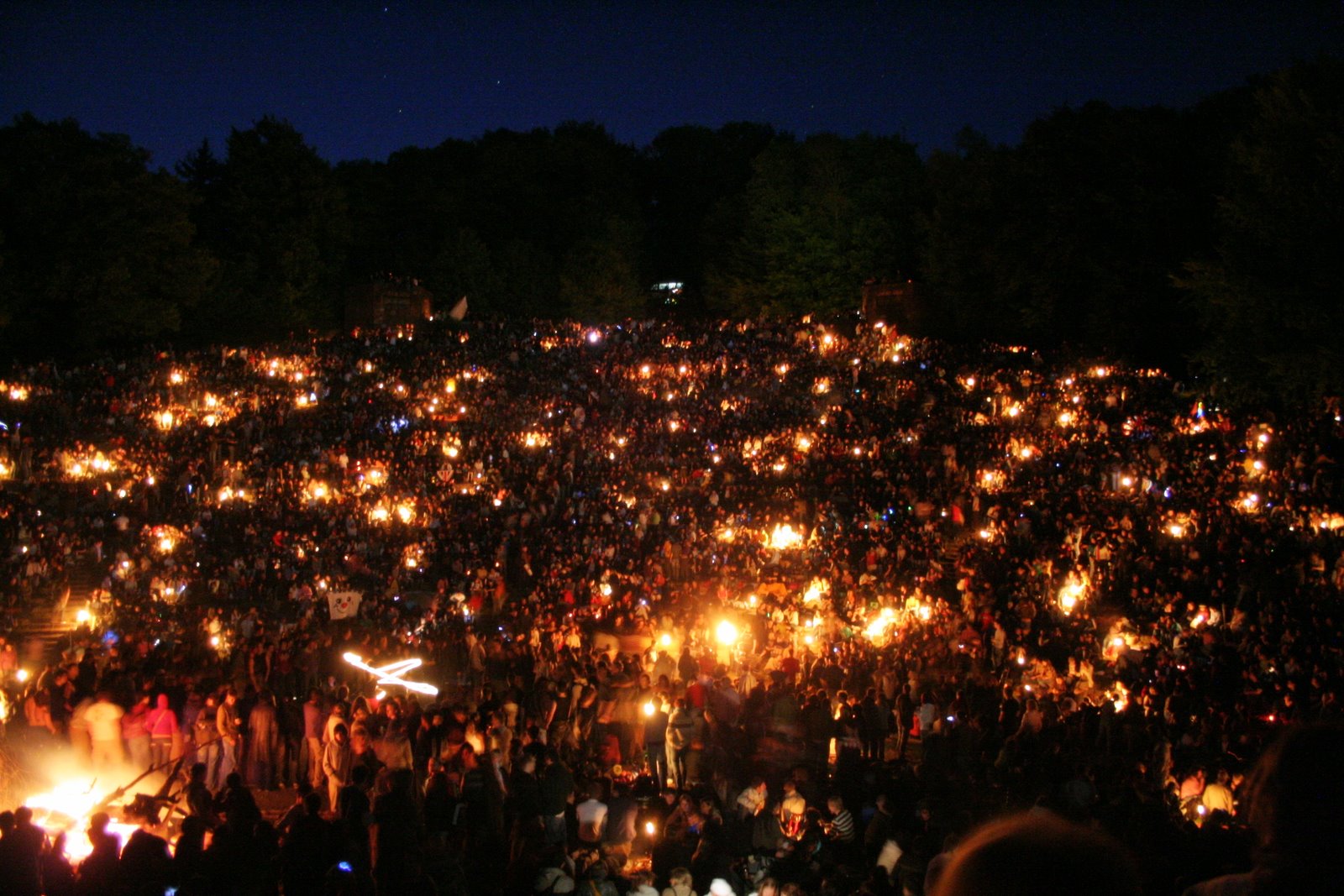
Saint Walpurga was hailed by the Christians of Germany for battling "pest, rabies, and whooping cough, as well as against witchcraft". Christians prayed to God through the intercession of Saint Walpurga in order to protect themselves from witchcraft, as Saint Walpurga was successful in converting the local populace to Christianity. In parts of Europe, people continue to light bonfires on Saint Walpurga's Eve in order to ward off evil spirits and witches. Others have historically made Christian pilgrimages to Saint Walpurga's tomb in Eichstätt on the Feast of Saint Walpurga, often obtaining vials of Saint Walpurga's oil.
It is suggested that Walpurgis Night is linked with older May Day festivals in northern Europe, which also involved lighting bonfires at night, for example the Gaelic festival Beltane.
Local variants of Walpurgis Night are observed throughout Northern and Central Europe in the Netherlands, Germany, the Czech Republic, Slovakia, Slovenia, Sweden, Lithuania, Latvia, Finland, and Estonia. In Finland, Denmark and Norway, the tradition with bonfires to ward off the witches is observed as Saint John's Eve, which commemorates the Nativity of Saint John the Baptist.
The date of Saint Walpurga's canonization came to be known as Sankt Walpurgisnacht ("Saint Walpurga's night") in German. The name of the holiday is often shortened to Walpurgisnacht (German), Valborgsmässoafton ("Valborg's Mass Eve", Swedish), Vappen (Finland Swedish), Vappu (Finnish), Volbriöö (Estonian), Valpurgijos naktis (Lithuanian), Valpurģu nakts or Valpurģi (Latvian), and čarodějnice or Valpuržina noc (Czech). In English, it is known as Saint Walpurga's Night, Saint Walburga's Night, Walpurgis Night, Saint Walpurga's Eve, Saint Walburga's Eve, the Feast of Saint Walpurga or the Feast of Saint Walburga. The Germanic term Walpurgisnacht is recorded in 1668 by Johannes Praetorius as S. Walpurgis Nacht or S. Walpurgis Abend. An earlier mention of Walpurgis and S. Walpurgis Abend is in the 1603 edition of the Calendarium perpetuum of Johann Coler, who also refers to the following day, 1 May, as Jacobi Philippi, feast day of the apostles James the Less and Philip in the Western Christian calendar of saints.
The festival of Walpurgis Night is named after the English Christian missionary Saint Walpurga (c. 710 – 777/9). The daughter of Saint Richard the Pilgrim and sister of Saint Willibald, Saint Walpurga (also known as Saint Walpurgis or Walburga) was born in Devon, England, in AD 710. Born into a prominent Anglo-Saxon family, Saint Walpurga studied medicine and became a Christian missionary to Germany, where she founded a double monastery in Heidenheim. As such, Christian artwork often depicts her holding bandages in her hand. As a result of Saint Walpurga's evangelism in Germany, the people there converted to Christianity from heathenism. In addition, "the monastery became an education center and 'soon became famous as a center of culture'". Saint Walpurga was also known to repel the effects of witchcraft. Saint Walpurga died on 25 February 777 (some sources say 778 or 779) and her tomb, to this day, produces holy oil (known as Saint Walburga's oil), which is said to heal sickness; Benedictine nuns distribute this oil in vials to Christian pilgrims who visit Saint Walpurga's tomb.
The canonization of Walpurga and the movement of her relics to Eichstätt occurred on 1 May in the year 870, thus leading to the Feast of Saint Walpurga and its eve, Walpurgis Night, being popularly observed on this date. She quickly became one of the most popular saints in England, Germany, and France. When the bishop had Saint Walpurga's relics moved to Eichstätt, "miraculous cures were reported as her remains traveled along the route". Miracle cures were later reported from ailing people who anointed themselves with a fluid known as Walburga's oil that drained from the rock at her shrine at Eichstätt.
The date of Walpurgis Night coincided with an older May Eve festival, celebrated in much of northern Europe with the lighting of bonfires at night. A variety of festivals of pre-Christian origin had been celebrated at this time (halfway between the spring equinox and summer solstice) to mark the beginning of summer, including Beltane in Ireland and Britain. Folklorist Jack Santino says "Her day and its traditions almost certainly are traceable to pre-Christian celebrations that took place at this time, on the first of May". Art historian Pamela Berger noted Walpurga's association with sheaves of grain, and suggested that her cult was adapted from pagan agrarian goddesses.
Hub AI
Walpurgis Night AI simulator
(@Walpurgis Night_simulator)
Walpurgis Night
Walpurgis Night (/vælˈpʊərɡɪs, vɑːl-, -ˈpɜːr-/), an abbreviation of Saint Walpurgis Night (from the German Sankt-Walpurgisnacht [zaŋkt valˈpʊʁɡɪsˌnaxt]), also known as Saint Walpurga's Eve (alternatively spelled Saint Walburga's Eve) and Walpurgisnacht, is the eve of the Christian feast day of Saint Walpurga, an 8th-century abbess in Francia, and is celebrated on the night of 30 April and the day of 1 May. This feast commemorates the canonization of Saint Walpurga and the movement of her relics to Eichstätt, both of which occurred on 1 May 870.
Saint Walpurga was hailed by the Christians of Germany for battling "pest, rabies, and whooping cough, as well as against witchcraft". Christians prayed to God through the intercession of Saint Walpurga in order to protect themselves from witchcraft, as Saint Walpurga was successful in converting the local populace to Christianity. In parts of Europe, people continue to light bonfires on Saint Walpurga's Eve in order to ward off evil spirits and witches. Others have historically made Christian pilgrimages to Saint Walpurga's tomb in Eichstätt on the Feast of Saint Walpurga, often obtaining vials of Saint Walpurga's oil.
It is suggested that Walpurgis Night is linked with older May Day festivals in northern Europe, which also involved lighting bonfires at night, for example the Gaelic festival Beltane.
Local variants of Walpurgis Night are observed throughout Northern and Central Europe in the Netherlands, Germany, the Czech Republic, Slovakia, Slovenia, Sweden, Lithuania, Latvia, Finland, and Estonia. In Finland, Denmark and Norway, the tradition with bonfires to ward off the witches is observed as Saint John's Eve, which commemorates the Nativity of Saint John the Baptist.
The date of Saint Walpurga's canonization came to be known as Sankt Walpurgisnacht ("Saint Walpurga's night") in German. The name of the holiday is often shortened to Walpurgisnacht (German), Valborgsmässoafton ("Valborg's Mass Eve", Swedish), Vappen (Finland Swedish), Vappu (Finnish), Volbriöö (Estonian), Valpurgijos naktis (Lithuanian), Valpurģu nakts or Valpurģi (Latvian), and čarodějnice or Valpuržina noc (Czech). In English, it is known as Saint Walpurga's Night, Saint Walburga's Night, Walpurgis Night, Saint Walpurga's Eve, Saint Walburga's Eve, the Feast of Saint Walpurga or the Feast of Saint Walburga. The Germanic term Walpurgisnacht is recorded in 1668 by Johannes Praetorius as S. Walpurgis Nacht or S. Walpurgis Abend. An earlier mention of Walpurgis and S. Walpurgis Abend is in the 1603 edition of the Calendarium perpetuum of Johann Coler, who also refers to the following day, 1 May, as Jacobi Philippi, feast day of the apostles James the Less and Philip in the Western Christian calendar of saints.
The festival of Walpurgis Night is named after the English Christian missionary Saint Walpurga (c. 710 – 777/9). The daughter of Saint Richard the Pilgrim and sister of Saint Willibald, Saint Walpurga (also known as Saint Walpurgis or Walburga) was born in Devon, England, in AD 710. Born into a prominent Anglo-Saxon family, Saint Walpurga studied medicine and became a Christian missionary to Germany, where she founded a double monastery in Heidenheim. As such, Christian artwork often depicts her holding bandages in her hand. As a result of Saint Walpurga's evangelism in Germany, the people there converted to Christianity from heathenism. In addition, "the monastery became an education center and 'soon became famous as a center of culture'". Saint Walpurga was also known to repel the effects of witchcraft. Saint Walpurga died on 25 February 777 (some sources say 778 or 779) and her tomb, to this day, produces holy oil (known as Saint Walburga's oil), which is said to heal sickness; Benedictine nuns distribute this oil in vials to Christian pilgrims who visit Saint Walpurga's tomb.
The canonization of Walpurga and the movement of her relics to Eichstätt occurred on 1 May in the year 870, thus leading to the Feast of Saint Walpurga and its eve, Walpurgis Night, being popularly observed on this date. She quickly became one of the most popular saints in England, Germany, and France. When the bishop had Saint Walpurga's relics moved to Eichstätt, "miraculous cures were reported as her remains traveled along the route". Miracle cures were later reported from ailing people who anointed themselves with a fluid known as Walburga's oil that drained from the rock at her shrine at Eichstätt.
The date of Walpurgis Night coincided with an older May Eve festival, celebrated in much of northern Europe with the lighting of bonfires at night. A variety of festivals of pre-Christian origin had been celebrated at this time (halfway between the spring equinox and summer solstice) to mark the beginning of summer, including Beltane in Ireland and Britain. Folklorist Jack Santino says "Her day and its traditions almost certainly are traceable to pre-Christian celebrations that took place at this time, on the first of May". Art historian Pamela Berger noted Walpurga's association with sheaves of grain, and suggested that her cult was adapted from pagan agrarian goddesses.