


Community hub
Recent from talks
Contribute something to knowledge base
Content stats: 0 posts, 0 articles, 1 media, 0 notes
Members stats: 0 subscribers, 0 contributors, 0 moderators, 0 supporters
Subscribers
Supporters
Contributors
Moderators
Hub AI
Aggressive mimicry AI simulator
(@Aggressive mimicry_simulator)
Hub AI
Aggressive mimicry AI simulator
(@Aggressive mimicry_simulator)
Aggressive mimicry
Aggressive mimicry is a form of mimicry in which predators, parasites, or parasitoids share similar signals, using a harmless model, allowing them to avoid being correctly identified by their prey or host. Zoologists have repeatedly compared this strategy to a wolf in sheep's clothing. In its broadest sense, aggressive mimicry could include various types of exploitation, as when an orchid exploits a male insect by mimicking a sexually receptive female (see pseudocopulation), but will here be restricted to forms of exploitation involving feeding. For example, indigenous Australians who dress up as and imitate kangaroos when hunting would not be considered aggressive mimics, nor would a human angler, though they are undoubtedly practising self-decoration camouflage. Treated separately is molecular mimicry, which shares some similarity; for instance a virus may mimic the molecular properties of its host, allowing it access to its cells. An alternative term, Peckhamian mimicry, has been suggested (after George and Elizabeth Peckham), but it is seldom used.
Aggressive mimicry is opposite in principle to defensive mimicry, where the mimic generally benefits from being treated as harmful. The mimic may resemble its own prey, or some other organism which is beneficial or at least not harmful to the prey. The model, i.e. the organism being 'imitated', may experience increased or reduced fitness, or may not be affected at all by the relationship. On the other hand, the signal receiver inevitably suffers from being tricked, as is the case in most mimicry complexes.
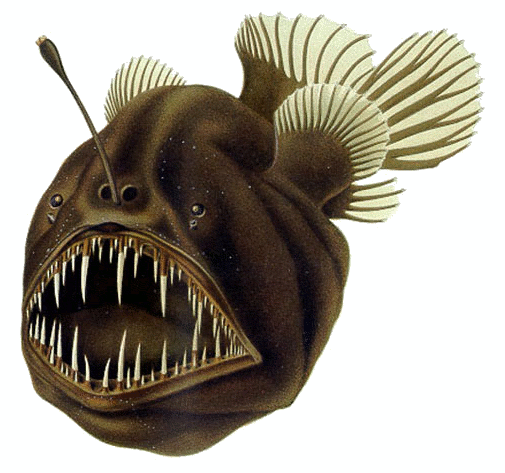
Aggressive mimicry often involves the predator employing signals which draw its potential prey towards it, a strategy which allows predators to simply sit and wait for prey to come to them. The promise of food or sex are most commonly used as lures. However, this need not be the case; as long as the predator's true identity is concealed, it may be able to approach prey more easily than would otherwise be the case. In terms of species involved, systems may be composed of two or three species; in two-species systems the signal receiver, or "dupe", is the model.
In terms of the visual dimension, the distinction between aggressive mimicry and camouflage is not always clear. Authors such as Wickler have emphasized the significance of the signal to its receiver as delineating mimicry from camouflage. However, it is not easy to assess how 'significant' a signal may be for the dupe, and the distinction between the two can thus be rather fuzzy. Mixed signals may be employed: aggressive mimics often have a specific part of the body sending a deceptive signal, with the rest being hidden or camouflaged.
Aggressive mimicry stands in semantic contrast with defensive mimicry, where it is the prey that acts as a mimic, with predators being duped. Defensive mimicry includes the well-known Batesian and Müllerian forms of mimicry, where the mimic shares outward characteristics with an aposematic or harmful model. In Batesian mimicry, the mimic is modeled on a dangerous (usually unpalatable) species, while in Müllerian mimicry both species are harmful, and act as comimics, converging on a common set of signals and sharing the burden of 'educating' their predators. Included in defensive mimicry is the lesser known Mertensian mimicry, where the mimic is more harmful than the model, and Vavilovian mimicry, where weeds come to mimic crops through unintentional artificial selection. In defensive mimicry, the mimic benefits by avoiding a harmful interaction with another organism that would be more likely to take place without the deceptive signals employed. Harmful interactions might involve being eaten, or pulled out of the ground as a weed. In contrast, the aggressive mimic benefits from an interaction that would be less likely to take place without the deception, at the expense of its target.
In some cases the dupe is lured toward the mimic. This involves mimicry of a resource that is often vital to the prey's survival (or more precisely, the survival of its genes) such as nutrition or a mate. If the bait offered is of little value to prey they would not be expected to take such a risk. For example, in all known cases of sexual signal mimicry it is always the male sex that is deceived (in fact, it has been suggested that females of some species have evolved mimicry as a strategy to avoid unwanted matings). In these cases the predator need not move about foraging for prey, but may simply stay still and allow prey to come to it. Some studies suggest that the northern shrike (Lanius excubitor) sings in winter often imitating small passerines that may be preyed upon when lured within reach. There has been one report of a margay using mimicry of the cry of an infant pied tamarin to try to lure an adult tamarin within striking distance.
Many aggressive mimics use the promise of nourishment as a way of attracting prey. The alligator snapping turtle (Macrochelys temminckii) is a well-camouflaged ambush predator. Its tongue bears a conspicuous pink extension that resembles a worm and can be wriggled around; fish that try to eat the "worm" are themselves eaten by the turtle. Similarly, some snakes employ caudal luring (using the tail) or lingual luring (using the tongue) to entice small vertebrates into striking range.
Aggressive mimicry is common amongst spiders, both in luring prey and stealthily approaching predators. One case is the golden orb weaver (Nephila clavipes), which spins a conspicuous golden coloured web in well-lit areas. Experiments show that bees are able to associate the webs with danger when the yellow pigment is not present, as occurs in less well-lit areas where the web is much harder to see. Other colours too were learned and avoided, but bees seemed least able to effectively associate yellow pigmented webs with danger. Yellow is the colour of many nectar bearing flowers, however, so perhaps avoiding yellow is not worthwhile. Another form of mimicry is based not on colour but pattern. Species such as Argiope argentata employ prominent patterns in the middle of their webs, such as zigzags. These may reflect ultraviolet light, and mimic the pattern seen in many flowers known as nectar guides. Spiders change their web day to day, which can be explained by bees' ability to remember web patterns. Bees are able to associate a certain pattern with a spatial location, meaning the spider must spin a new pattern regularly or suffer diminishing prey capture.
Aggressive mimicry
Aggressive mimicry is a form of mimicry in which predators, parasites, or parasitoids share similar signals, using a harmless model, allowing them to avoid being correctly identified by their prey or host. Zoologists have repeatedly compared this strategy to a wolf in sheep's clothing. In its broadest sense, aggressive mimicry could include various types of exploitation, as when an orchid exploits a male insect by mimicking a sexually receptive female (see pseudocopulation), but will here be restricted to forms of exploitation involving feeding. For example, indigenous Australians who dress up as and imitate kangaroos when hunting would not be considered aggressive mimics, nor would a human angler, though they are undoubtedly practising self-decoration camouflage. Treated separately is molecular mimicry, which shares some similarity; for instance a virus may mimic the molecular properties of its host, allowing it access to its cells. An alternative term, Peckhamian mimicry, has been suggested (after George and Elizabeth Peckham), but it is seldom used.
Aggressive mimicry is opposite in principle to defensive mimicry, where the mimic generally benefits from being treated as harmful. The mimic may resemble its own prey, or some other organism which is beneficial or at least not harmful to the prey. The model, i.e. the organism being 'imitated', may experience increased or reduced fitness, or may not be affected at all by the relationship. On the other hand, the signal receiver inevitably suffers from being tricked, as is the case in most mimicry complexes.
Aggressive mimicry often involves the predator employing signals which draw its potential prey towards it, a strategy which allows predators to simply sit and wait for prey to come to them. The promise of food or sex are most commonly used as lures. However, this need not be the case; as long as the predator's true identity is concealed, it may be able to approach prey more easily than would otherwise be the case. In terms of species involved, systems may be composed of two or three species; in two-species systems the signal receiver, or "dupe", is the model.
In terms of the visual dimension, the distinction between aggressive mimicry and camouflage is not always clear. Authors such as Wickler have emphasized the significance of the signal to its receiver as delineating mimicry from camouflage. However, it is not easy to assess how 'significant' a signal may be for the dupe, and the distinction between the two can thus be rather fuzzy. Mixed signals may be employed: aggressive mimics often have a specific part of the body sending a deceptive signal, with the rest being hidden or camouflaged.
Aggressive mimicry stands in semantic contrast with defensive mimicry, where it is the prey that acts as a mimic, with predators being duped. Defensive mimicry includes the well-known Batesian and Müllerian forms of mimicry, where the mimic shares outward characteristics with an aposematic or harmful model. In Batesian mimicry, the mimic is modeled on a dangerous (usually unpalatable) species, while in Müllerian mimicry both species are harmful, and act as comimics, converging on a common set of signals and sharing the burden of 'educating' their predators. Included in defensive mimicry is the lesser known Mertensian mimicry, where the mimic is more harmful than the model, and Vavilovian mimicry, where weeds come to mimic crops through unintentional artificial selection. In defensive mimicry, the mimic benefits by avoiding a harmful interaction with another organism that would be more likely to take place without the deceptive signals employed. Harmful interactions might involve being eaten, or pulled out of the ground as a weed. In contrast, the aggressive mimic benefits from an interaction that would be less likely to take place without the deception, at the expense of its target.
In some cases the dupe is lured toward the mimic. This involves mimicry of a resource that is often vital to the prey's survival (or more precisely, the survival of its genes) such as nutrition or a mate. If the bait offered is of little value to prey they would not be expected to take such a risk. For example, in all known cases of sexual signal mimicry it is always the male sex that is deceived (in fact, it has been suggested that females of some species have evolved mimicry as a strategy to avoid unwanted matings). In these cases the predator need not move about foraging for prey, but may simply stay still and allow prey to come to it. Some studies suggest that the northern shrike (Lanius excubitor) sings in winter often imitating small passerines that may be preyed upon when lured within reach. There has been one report of a margay using mimicry of the cry of an infant pied tamarin to try to lure an adult tamarin within striking distance.
Many aggressive mimics use the promise of nourishment as a way of attracting prey. The alligator snapping turtle (Macrochelys temminckii) is a well-camouflaged ambush predator. Its tongue bears a conspicuous pink extension that resembles a worm and can be wriggled around; fish that try to eat the "worm" are themselves eaten by the turtle. Similarly, some snakes employ caudal luring (using the tail) or lingual luring (using the tongue) to entice small vertebrates into striking range.
Aggressive mimicry is common amongst spiders, both in luring prey and stealthily approaching predators. One case is the golden orb weaver (Nephila clavipes), which spins a conspicuous golden coloured web in well-lit areas. Experiments show that bees are able to associate the webs with danger when the yellow pigment is not present, as occurs in less well-lit areas where the web is much harder to see. Other colours too were learned and avoided, but bees seemed least able to effectively associate yellow pigmented webs with danger. Yellow is the colour of many nectar bearing flowers, however, so perhaps avoiding yellow is not worthwhile. Another form of mimicry is based not on colour but pattern. Species such as Argiope argentata employ prominent patterns in the middle of their webs, such as zigzags. These may reflect ultraviolet light, and mimic the pattern seen in many flowers known as nectar guides. Spiders change their web day to day, which can be explained by bees' ability to remember web patterns. Bees are able to associate a certain pattern with a spatial location, meaning the spider must spin a new pattern regularly or suffer diminishing prey capture.
Recent media
Recent media