


Community hub
0 subscribers8 pages, 0 posts
Recent from talks
All channels
Be the first to start a discussion here.
Be the first to start a discussion here.
Be the first to start a discussion here.
Be the first to start a discussion here.
Contribute something
Welcome to the community hub built to collect knowledge and have discussions related to Parasitoid.
Nothing was collected or created yet.
Parasitoid
View on Wikipediafrom Wikipedia
Not found
Parasitoid
View on Grokipediafrom Grokipedia
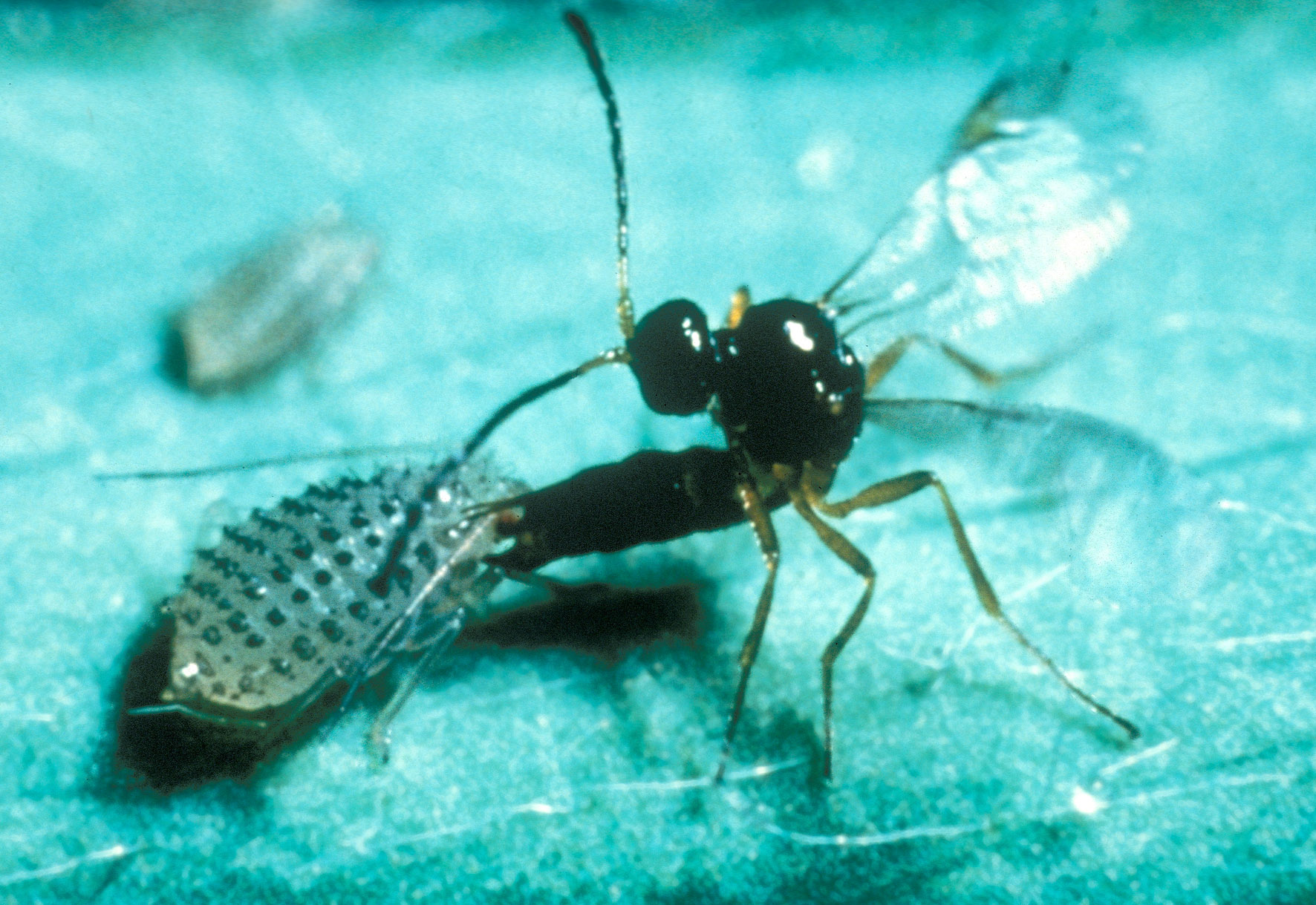
A parasitoid is an organism that spends its larval stage living as a parasite within or on the body of a single host organism, feeding on its tissues and fluids while avoiding immediate death of the host, ultimately killing it upon completion of development, whereas the adults are free-living and often feed on nectar or other non-host resources.[1][2][3] Most parasitoids are insects belonging to the order Hymenoptera (such as wasps in families like Braconidae and Ichneumonidae) or Diptera (tachinid and other flies), though a few occur in Coleoptera (beetles) and other orders.[4][5] There are over 70,000 described species of parasitoids worldwide, with estimates suggesting the total diversity, particularly among parasitoid wasps, may exceed 100,000 species.[1][6]
The typical life cycle of a parasitoid begins when a female adult selects and oviposits eggs into or onto a suitable host, often using a specialized ovipositor to inject them precisely.[7][8] Upon hatching, the larvae develop by consuming the host's hemolymph and non-vital tissues initially, then progressively feeding on vital organs, which leads to the host's death before the parasitoid larvae pupate either internally or externally.[7][8] Adult parasitoids then emerge from the host remains, ready to mate and seek new hosts, with many species exhibiting host specificity that limits them to particular host taxa or life stages.[7][9]
Parasitoids are ecologically significant as key regulators of host populations in food webs, exerting top-down control on herbivores and thereby influencing plant communities and overall biodiversity.[1][10] Their specificity and lethal impact make them vital natural enemies, particularly in suppressing pest insects without the broad disruptions caused by chemical pesticides.[1][3] In applied contexts, parasitoids are extensively employed in biological control programs to manage agricultural, forestry, and invasive pests, with classical introductions and augmentative releases enhancing their effectiveness in sustainable pest management.[2][9][11]