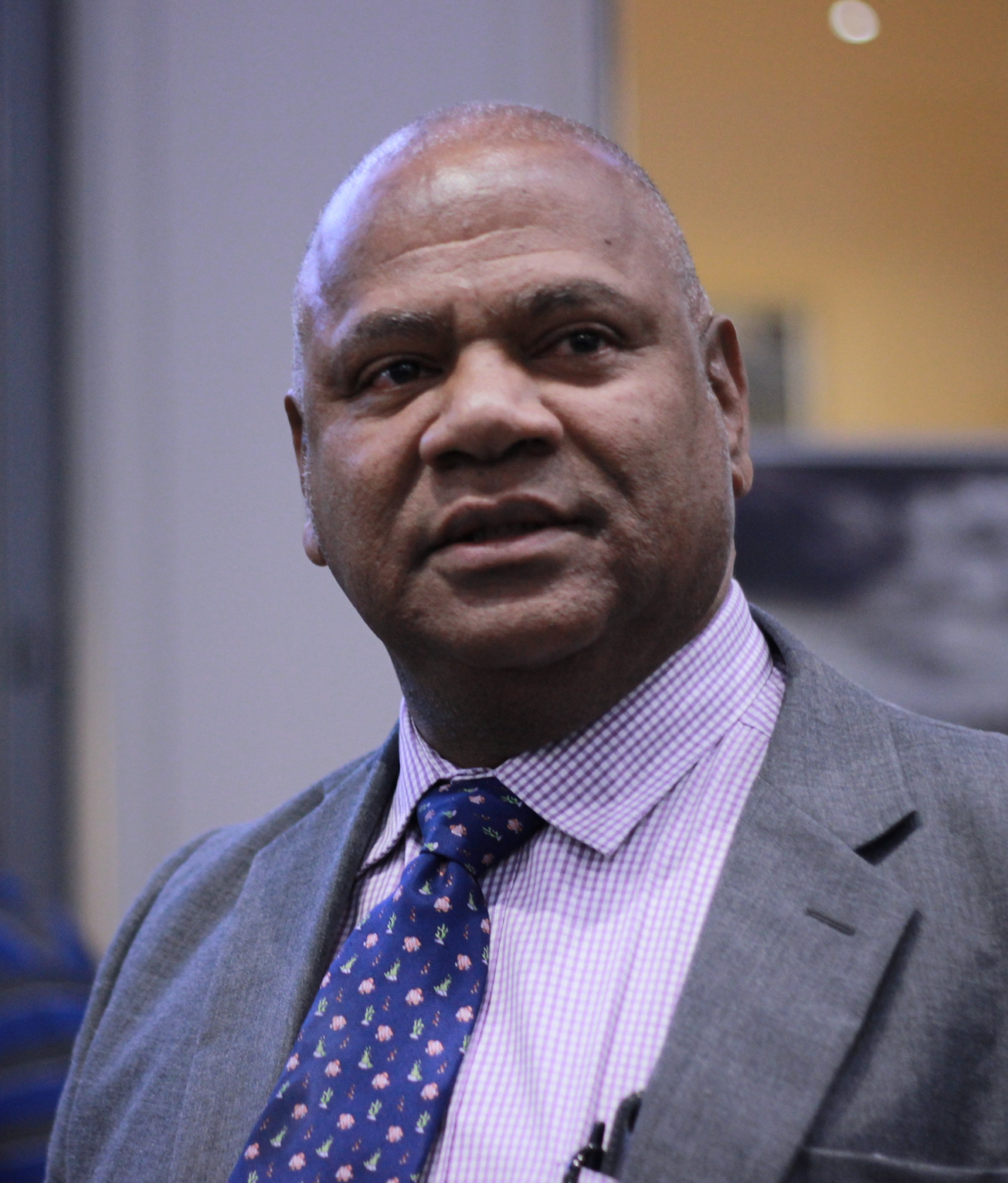
Dan Plato
Dan Plato
Main page
1105116

Dan Plato

logo
Community Hub0 subscribers
Read side by side
from Wikipedia

Daniel Plato (born 5 October 1960), known as Dan Plato, is a South African politician and a former Member of the Western Cape Provincial Parliament. He served from June 2011 until October 2018 and again from January 2022 until February 2024. He is the former mayor of Cape Town, a position he held for two nonconsecutive terms from May 2009 until June 2011 and again from November 2018 until October 2021. From June 2011 to October 2018, he was the Western Cape Provincial Minister of Community Safety.

Key Information

Born in Cape Town, Plato was involved in political activities during his high school career. He was a community organiser and played a crucial role in mobilising residents against the Apartheid government. He was elected as a ward councillor in 1996. Plato was elected Mayor of Cape Town in May 2009, succeeding Helen Zille, who was elected Premier of the Western Cape.

In 2011, the Democratic Alliance nominated Patricia de Lille as the party's Cape Town mayoral candidate for the 2011 local government elections. Plato left office on 1 June 2011 and subsequently took office as a Member of the Western Cape Provincial Parliament and took up the position of Provincial Minister of Community Safety, succeeding Albert Fritz.

In August 2018, he declared his candidacy to succeed De Lille as Mayor of Cape Town. The Democratic Alliance named him as the party's preferred candidate in September 2018. Plato resigned as both Provincial Minister of Community Safety and Member of the Western Cape Provincial Parliament in late-October 2018. He was sworn in as a councillor on 1 November 2018 and was elected Mayor on 6 November. In August 2021, the DA nominated party spokesperson on finance and Member of Parliament, Geordin Hill-Lewis, as their mayoral candidate for the City of Cape Town for the municipal elections on 1 November 2021. The DA retained their majority on the Cape Town city council. In December 2021, the DA announced that Plato would be returning to the Provincial Parliament in early 2022. He was sworn in as an MPP on 18 January 2022. He resigned from the DA and joined Marius Fransman's People's Movement for Change in February 2024.[1]

Early life and political activities

[edit]

Activities before the Cape Town City Council

[edit]

Plato has been involved in political activities since high school, particularly in Cape Town's northern suburbs. He was a community organiser and played a significant role in rallying people against the apartheid regime.[2] The Emergency Services Unit of the former Bellville Municipality (Tygerberg Administration) employed him in the 1980s. Plato became a member of the National Party in 1990. He later became the Cape Town Chairperson of the South African National Tuberculosis Association during the mid-1990s.[3]

Cape Town City Councillor

[edit]

In 1996, Plato was elected as a Cape Metro councillor for the Belhar, Uitsig and Ravensmead region. He became a member of the council executive the following year. He served two terms as Chairperson of the City of Cape Town's Economic Development, Tourism and Property Management Portfolio Committee.[2]

He managed the Housing portfolio in the Mayoral Committee from 2006 to 2009. During the same period, he was Deputy Chairperson of both the DA Metro Region and the DA Caucus in the City of Cape Town. He had also served as acting mayor at various intervals. Shortly before being elected mayor in May 2009, Plato had taken over as the Mayoral Committee Member responsible for Service Delivery and Economic Development.[3]

Other activities

[edit]

In addition to his political activities, he has served on the boards of multiple organisations, including the Cape Film Commission, Cape Tourism, the University of the Western Cape and the Business Opportunities Network. He had also been a member of several community-based trusts. Plato was previously co-owner of National Pride Holdings Pty (Ltd).[3]

Political career

[edit]
Plato at the handover of the Cape Town Stadium.

Mayor of Cape Town (2009–2011)

[edit]

On 30 April 2009, Helen Zille resigned as Mayor of Cape Town. Plato declared his candidacy for the post and was ultimately selected as the party's preferred candidate.[4]

Plato was elected Mayor of Cape Town on 12 May 2009. He won with 119 votes to the ANC candidate Belinda Landingwe's 69 votes, while six councillors abstained from the vote.[5]

During his tenure as mayor, controversial open-air toilets were built in the Makhaza region of Khayelitsha. The Democratic Alliance defended its decision to build the toilets. The Western Cape High Court later ruled against it.[6] Cape Town was one of host cities of the 2010 FIFA World Cup. He banned the old South African flag from being present at soccer matches at the Cape Town Stadium after he described the flag as being detrimental to the country's image.

The Department of Co-operative Governance and Traditional Affairs rated Cape Town as the best-managed city in South Africa, while the Auditor-General awarded the city with a rating for good governance and accountability.[7] Plato introduced many job creation projects and made reducing unemployment one of the focus points of his mayoral agenda.

In 2010, Plato announced his candidacy for the post of Provincial Leader of the Democratic Alliance. He lost to incumbent Theuns Botha. He received 123 votes compared to Botha's 543 and Lennit Max's 317.[8]

In 2011, Plato declared his intention to seek a full term as Mayor of Cape Town ahead of the 2011 municipal elections. His challengers for the post were Mayoral Committee Member for Social Development, Grant Pascoe, Mayoral Committee Member for Housing, Shehaam Sims, and Leader of the Independent Democrats, Patricia de Lille. De Lille defeated Plato in an internal party election. Plato left office on 1 June 2011.[9][10][11]

Provincial Minister for Community Safety (2011–2018)

[edit]
Judge O'Regan and Adv. Pikoli (centre table) with Dan Plato and Helen Zille (left table) at the Khayelitsha Commission handover ceremony.

Western Cape Premier Zille reshuffled her Provincial Cabinet on 30 May 2011 and appointed Plato to the post of Provincial Minister for Community Safety, succeeding Albert Fritz. She said in a statement: "I am confident he will make a major contribution, not only to the community safety portfolio but to the provincial cabinet as a whole." He took office on 1 June, hours after he left office as mayor.[12] In October 2018, Zille announced that the Provincial Minister of Economic Opportunities, Alan Winde, would succeed Plato. Plato effectively resigned from the provincial government on 31 October 2018 and Winde took office the next day.[13]

Second term as mayor (2018–2021)

[edit]
Plato with the United States Ambassador to South Africa Lana Marks.

In August 2018, Plato declared his candidacy to replace De Lille as Mayor of Cape Town after she had announced her intention to resign on 31 October 2018.[14] On 18 September 2018, the Democratic Alliance announced that Plato would succeed De Lille. Plato defeated many prominent candidates for the nomination, including the Speaker of the Western Cape Provincial Parliament, Sharna Fernandez, and the Deputy Mayor of Cape Town, Ian Neilson.[15]

On 1 November 2018, Plato was sworn in as a councillor. The day before the ceremony, Patricia de Lille formally resigned as Mayor of Cape Town. A former acquaintance of Patricia de Lille, Brett Herron, resigned as a councillor after the ceremony along with many other councillors, in protest against the removal of De Lille and the mayoralty of Plato.[16][17] Plato was elected Mayor of Cape Town on 6 November 2018 during a special council sitting. He received 146 out of 202 valid votes. His main challengers were Xolani Sotashe of the African National Congress and Grant Haskin of the African Christian Democratic Party. Sotashe received 53 votes while Haskin got 3 votes. Six ballots were spoilt.[18]

On 1 August 2020, Plato declared that he was a candidate for regional chairperson of the Democratic Alliance.[19] He was elected at the party's regional conference in October 2020, defeating incumbent Grant Twigg.[20][21]

In April 2021, Plato applied to be the DA's mayoral candidate for the City of Cape Town for the 2021 local government elections. He was up against the DA's Shadow Minister of Finance in the National Assembly Geordin Hill-Lewis and the DA provincial leader Bonginkosi Madikizela. Madikizela later withdrew and resigned from all active party roles following a qualifications scandal. In August 2021, DA leader announced Hill-Lewis as the party's mayoral candidate.[22] Plato was reported to be upset with the party's decision and mulled resigning from politics, though he pledged to support Hill-Lewis's campaign.[23][24] Plato delivered his last speech to the Cape Town City Council as Executive Mayor on 29 September 2021 and received a standing ovation.[25] The DA retained their majority on the city council in the local election.[26]

Return to the Provincial Parliament

[edit]

Following Geordin Hill-Lewis's election as Mayor of Cape Town on 17 November 2021, Plato served as an ordinary councillor. In December 2021, the DA announced that Plato would be taking up Bonginkosi Madikizela's seat in the Provincial Parliament.[27] On 18 January 2022, he was sworn in as a DA Member of the Provincial Parliament by Speaker Masizole Mnqasela. Despite speculation that Plato was headed back to the Provincial Cabinet, Plato served as an ordinary member. Premier Alan Winde's spokesperson Cayla Murray dismissed speculation in a short statement. On returning to the Provincial Parliament, Plato said that he was "glad to be back home" and that he has "no regrets" about leaving the City of Cape Town.[28]

People's Movement for Change

[edit]

In February 2024, Plato resigned from the DA, and announced that he was joining the People's Movement for Change.[29] DA provincial leader Tertuis Simmers thanked him for his service.[30]

References

[edit]
[edit]
Revisions and contributorsEdit on WikipediaRead on Wikipedia
from Grokipedia
Daniel Plato is a South African politician known for his roles in provincial and municipal governance in the Western Cape.[1][2] He served as Executive Mayor of Cape Town from May 2009 to June 2011 and again from November 2018 to November 2021.[2][3] During his first term, Plato oversaw the completion and handover of key infrastructure projects, including the Cape Town Stadium for the 2010 FIFA World Cup.[4] In his second term, he managed the city's response to the COVID-19 pandemic, emphasizing community safety and service delivery amid economic pressures.[5] From 2014 to 2019, as Western Cape MEC for Community Safety, Plato's department secured clean audits for eight consecutive years and was recognized as the best-run provincial department for three years.[1] A long-serving figure in the Democratic Alliance, he resigned in February 2024, criticizing the party's policy shifts and foreign policy positions, including on Palestine, before joining the People's Movement for Change led by Marius Fransman.[6][7][8] Plato's career reflects a commitment to law enforcement and urban development, with initiatives like the Khayelitsha Commission addressing gang violence and informal settlements.[9] His leadership emphasized empirical improvements in crime reduction and governance efficiency, though it drew criticism from opponents over issues like housing backlogs and inequality in Cape Town.[10][11]

Early life and background

Family origins and upbringing

Daniel Plato was born on 5 October 1960 in Cape Town, South Africa.[12] He grew up in the Western Cape province, initially raised in the town of Swellendam before relocating to Ashton and later settling in Ravensmead, a Coloured township on the Cape Flats in Cape Town.[13] As a Coloured South African, Plato's upbringing occurred amid the apartheid system's racial classifications and restrictions, which segregated communities like his along ethnic lines.[14] During his high school years, Plato engaged in early anti-apartheid activism, acting as a community organizer on the Cape Flats to mobilize residents against the regime's policies in the 1980s.[4] This involvement reflected the broader resistance in Coloured communities, where youth often participated in protests and civic actions despite state repression. His mother's home-cooked meals, including braaied chicken, remained a cherished aspect of his childhood memories into adulthood.[15]

Education and early professional experience

Plato attended high school in Ravensmead, Cape Town, where he became involved in anti-apartheid political activities, rallying communities in the area and surrounding Cape Flats neighborhoods during the 1980s.[16] No records indicate formal higher education or university degrees for Plato; his early development focused on grassroots activism rather than academic pursuits.[16] In his early professional career, Plato served as a community organizer, mobilizing residents against the apartheid regime through local structures on the Cape Flats. He co-owned National Pride Holdings Pty Ltd, a company engaged in international trading, and participated in community initiatives, including anti-tuberculosis organizations aimed at public health support in underserved areas. These roles preceded his entry into elected politics in 1996.[16][10]

Initial political involvement

Pre-council community and activist roles

Prior to his election to the Cape Metropolitan Council in 1996, Dan Plato was active in community organizing and anti-apartheid efforts on the Cape Flats, focusing on Ravensmead and adjacent northern suburbs of Cape Town.[4] [17] These activities began during his high school years, where he rallied residents against the apartheid regime through grassroots mobilization.[4] [17] In the mid-1980s, Plato served in the Emergency Services Unit of the Bellville Municipality, contributing to local emergency response amid the heightened political tensions of the era.[17] This role involved direct community engagement in a period marked by states of emergency and resistance movements on the Cape Flats.[4] Additionally, in the mid-1990s, he chaired the Cape Town branch of the South African National Tuberculosis Association, advocating for public health initiatives in underserved communities affected by the disease's prevalence in coloured and township areas.[17] These efforts underscored his early focus on social upliftment and poverty alleviation through non-partisan community structures.[1]

Election to Cape Town City Council

In the 1996 South African local government elections, Dan Plato was elected as a ward councillor to the Cape Metropolitan Council, representing the Belhar, Uitsig, and Ravensmead communities in the northern suburbs of Cape Town.[9][4] These elections marked the establishment of metropolitan governance structures post-apartheid, with Plato securing the ward under the New National Party (NNP) banner, a party dominant among Coloured voters in the Western Cape at the time.[4] Plato's victory reflected his prior community leadership, including his role as Cape Town chairperson of the South African National Civics Organisation (SANCO), which positioned him as a bridge between grassroots activism and electoral politics.[9] Following the NNP's merger with the Democratic Party to form the Democratic Alliance (DA) in 2000, Plato continued his council tenure under the new party, eventually ascending to roles such as chair of the Economic Development, Tourism, and Property Management Portfolio Committee.[4][17] His election underscored the NNP's strategy of retaining support in mixed-race suburbs amid shifting post-1994 political alignments.[4]

Tenure in Democratic Alliance leadership

First term as Mayor of Cape Town (2009–2011)

Dan Plato was elected Mayor of Cape Town on 13 May 2009, following Helen Zille's resignation to assume the position of Premier of the Western Cape. He defeated African National Congress candidate Belinda Landingwe, receiving almost double the votes in the council election.[18] Plato prioritized community outreach and service delivery during his tenure. In September 2009, he launched the "Taking the City to the People" programme, a series of engagements designed to directly address residents' service needs and concerns across various neighbourhoods.[19] Towards the end of his term, in January 2011, Plato collaborated with Western Cape Minister Patricia de Lille on a joint plan of action to register hundreds of illegal partial care facilities, thereby improving regulatory compliance and unblocking service delivery bottlenecks through enhanced cooperation between city and provincial government.[20] A key focus was the preparation for the 2010 FIFA World Cup. On 14 December 2009, Plato received the keys to the newly completed Cape Town Stadium from contractors Murray & Roberts and WBHO, marking the project's handover despite it exceeding the original budget by approximately 50 percent while meeting the timeline.[21][22] The official handover ceremony took place in June 2010, after which the stadium hosted seven matches during the tournament, contributing to South Africa's successful hosting of the event.[1] Upon Plato's departure in June 2011 to become Western Cape Minister for Community Safety, Cape Town was rated the best-run city in South Africa by the national Department of Cooperative Governance.[1] Patricia de Lille succeeded him as mayor.[2]

Provincial Minister for Community Safety (2011–2018)

Dan Plato served as the Western Cape Provincial Minister for Community Safety from June 2011 to October 2018, appointed by Premier Helen Zille following his tenure as Mayor of Cape Town. In this role, he oversaw the Department of Community Safety, which lacked direct control over the South African Police Service (SAPS) but focused on legislative oversight, community partnerships, and strategic interventions to enhance public safety amid high crime rates driven by gang activity and socioeconomic factors. The department's efforts emphasized annual Policing Needs and Priorities reports to guide resource allocation and collaboration with SAPS.[23] Plato introduced the Western Cape Community Safety Bill in 2012, aimed at strengthening provincial oversight of policing to improve accountability and effectiveness, though implementation faced national legal constraints on provincial powers. He launched safety partnerships, including a 2015 collaboration with the City of Cape Town and stakeholders to integrate municipal law enforcement with provincial strategies. The department achieved administrative excellence, securing its eighth consecutive clean audit in 2017 and recognition as South Africa's best-functioning provincial department in 2015, reflecting robust financial and performance management.[24][25][26][27] A pivotal initiative was Plato's response to the 2014 Khayelitsha Commission of Inquiry, which exposed SAPS inefficiencies in the township. He committed to implementing recommendations by establishing oversight teams for police stations, drafting memoranda of agreement with SAPS for access and monitoring, and forming task teams on youth gangs, vengeance killings, and liquor-related violence. Additional measures included allocating R500,000 for youth programs in Khayelitsha and enhancing training for community police forums and neighborhood watches. Despite these efforts, Western Cape crime statistics revealed persistent challenges, with the province accounting for 83% of South Africa's gang-related murders in 2018 and 45% of its murders concentrated in 26 gang hotspots, underscoring limitations in provincial influence over national policing amid rising drug-related offenses. Plato advocated for community responsibility in combating gangsterism, arguing that silent majorities on the Cape Flats needed to confront gangs directly.[28][29][13]

Second term as Mayor of Cape Town (2018–2021)

Dan Plato was elected executive mayor of Cape Town on November 6, 2018, succeeding Patricia de Lille following her resignation amid disputes with the Democratic Alliance (DA) caucus over allegations of mismanagement. He received 146 votes in the 231-member council, reflecting the DA's majority control. Upon taking office, Plato prioritized stabilizing service delivery, including water management after the near-miss of "Day Zero" in the preceding administration, and advancing urban resilience. In his inaugural address, he commended residents for reducing water consumption by 50% during the crisis, enabling a downgrade from Level 6 to Level 3 restrictions by December 2018.[30] The administration released the City of Cape Town Resilience Strategy in August 2019, outlining measures to address shocks like water scarcity, crime, and climate risks through enhanced infrastructure, community partnerships, and data-driven interventions. This included investments in water augmentation projects and law enforcement collaboration to curb gang violence, building on Plato's prior experience as Western Cape Minister of Community Safety. Crime statistics during the term showed stabilization in murder rates relative to national trends, with Cape Town avoiding the escalation seen in other metros, attributed partly to sustained policing partnerships. However, persistent challenges like housing backlogs and informal settlement vulnerabilities persisted, with ongoing debates over land use and evictions. The COVID-19 pandemic dominated much of Plato's tenure from March 2020, with the city implementing rapid adaptations such as deploying 31 water trucks to informal areas, maintaining essential services for 200,000 households, and developing an economic recovery plan emphasizing business support and social relief. Cape Town recorded lower per capita infection and mortality rates compared to national averages in early waves, linked to proactive testing and compliance enforcement, though critics highlighted disconnections and evictions amid the national moratorium. Plato's administration facilitated vaccine rollouts and sector reopenings aligned with national levels, contributing to a phased recovery.[31][32] Controversies included a March 2021 public meeting in Ocean View where Plato instructed a resident complaining about housing to "shut up," prompting the Economic Freedom Fighters (EFF) to demand his resignation for perceived disrespect toward vulnerable communities. In July 2021, charges were filed against him for allegedly contravening Level 4 lockdown rules by hosting an event, though no conviction followed. Plato reflected on the term's achievements in September 2021, including service continuity and resilience gains, before stepping down after the November 1 municipal elections, with Geordin Hill-Lewis succeeding him as DA candidate.[33][34]

Later DA roles and departure

Return to Western Cape Provincial Parliament (2021–2024)

In December 2021, following his tenure as Mayor of Cape Town, the Democratic Alliance nominated Dan Plato to fill a vacant seat in the Western Cape Provincial Parliament (WCPP), leveraging his experience in local and provincial governance.[35] He was sworn in as a Member of the Provincial Parliament (MPP) on 18 January 2022 during a low-key ceremony at noon, presided over by Speaker Felicity Purchase.[36] Plato described the return as coming "back home" to the legislature, where he had previously served before his appointments as mayor and provincial minister.[36] As a DA MPP, Plato took on the role of party spokesperson on Social Development, focusing on oversight of provincial spending in areas affecting vulnerable groups. In March 2022, he publicly endorsed elements of the Western Cape budget that expanded funding for social services, arguing it provided essential support amid economic pressures.[37] He attended meetings of the WCPP Budget Committee, including deliberations on the Cape Appropriation Bill and Western Cape Additional Adjustments Appropriation Bill for the 2022/23 financial year, contributing to fiscal scrutiny as the DA held the provincial majority.[38] Plato's legislative activities emphasized community safety and social welfare, drawing on his prior ministerial experience. From 25 July 2023 to 13 February 2024, he served on the Ad-hoc Committee on the Western Cape Provincial Powers Bill, which examined devolution of authority to the province on matters like policing and trade.[39] In plenary sessions, he initiated subjects for discussion, such as on 28 September 2023, addressing provincial policy implementation.[40] His tenure ended with resignation from the WCPP in February 2024, amid broader party shifts.[7]

Resignation from the Democratic Alliance (2024)

On February 13, 2024, Dan Plato, then a member of the Western Cape Provincial Parliament, announced his resignation from the Democratic Alliance (DA), citing the party's drift from its foundational commitment to the poor and working class.[6][7] Plato stated that the DA had "lost its identity" as a welcoming political home for marginalized communities, particularly in the Western Cape, where his efforts to address poverty were increasingly constrained by internal party dynamics.[41][42] Plato's decision followed prolonged internal deliberations, including exclusion from the DA's 2024 election candidate list despite his long service, which he described as prompting "many sleepless nights" before opting for a decisive exit.[43][42] He attributed additional tensions to policy divergences, such as the DA's stance on international issues like the Israel-Palestine conflict, which he felt alienated grassroots supporters focused on local socioeconomic challenges.[6] While acknowledging the DA's past support—"the DA has been good to me"—Plato emphasized that these shifts rendered the party incompatible with his vision for community-driven governance.[44] The DA responded by formally noting Plato's resignation on February 14, 2024, expressing gratitude for his contributions during his tenure as Cape Town mayor and Western Cape MEC for Community Safety, but refraining from public rebuttals to his criticisms.[45][46] DA federal council chair Helen Zille later indicated that Plato had been afforded multiple opportunities within the party but failed to secure a position on the candidate list due to performance evaluations, underscoring internal selection processes as a factor in his departure.[43] This exit marked Plato as one of several high-profile DA departures amid pre-election realignments, though the party maintained its provincial legislative majority unaffected.[41]

People's Movement for Change

Joining and role in PMC formation

Dan Plato announced his resignation from the Democratic Alliance (DA) on February 13, 2024, citing dissatisfaction with the party's evolving policies and its position on the Israel-Palestine conflict, before joining the People's Movement for Change (PMC).[6][47] The PMC, established in November 2023 by former African National Congress provincial leader Marius Fransman, positioned itself as a grassroots alternative focused on community empowerment and economic opportunity in underserved areas. Plato's departure from the DA, where he had served in senior roles including mayor of Cape Town and Western Cape Minister for Community Safety, marked a significant defection amid tensions over the party's direction.[7] As one of the party's earliest high-profile recruits post-founding, Plato assumed the role of National Treasurer, tasked with overseeing financial accountability and supporting the nascent party's organizational infrastructure.[48] His involvement bolstered PMC's credibility in the Western Cape, leveraging his track record in urban governance to aid in membership drives and policy formulation during the party's formative phase ahead of the 2026 local elections. The DA acknowledged his contributions but expressed no surprise at his exit, noting it followed prior internal frictions.[49] Plato publicly framed his move as driven by a commitment to tangible change beyond entrenched party politics, emphasizing family-centered and youth-focused initiatives aligned with PMC's platform.[6]

Policy platform and early activities

The People's Movement for Change (PMC) outlines a policy platform emphasizing grassroots-driven reforms to address socioeconomic challenges, with priorities including education, economic development, housing, healthcare, public safety, and governance transparency. In education, the party proposes upgrading school infrastructure, modernizing curricula to incorporate technology, entrepreneurship, and life skills, and ensuring access to transport, nutrition, and digital tools for students.[50] Economic policies focus on establishing community job centers, incentivizing youth-led businesses and cooperatives, supporting local manufacturing, and reducing regulatory barriers for small enterprises to foster employment.[50] Land and housing initiatives call for accelerating redistribution under oversight mechanisms, investing in affordable housing stock, and promoting sustainable land utilization to mitigate urban informal settlements.[50] Healthcare reforms under the platform advocate increasing public sector budgets, deploying mobile clinics for underserved areas, and prioritizing mental health services alongside maternal and child care programs.[50] Public safety and justice measures emphasize community-oriented policing, rehabilitative approaches over punitive ones, and anti-corruption efforts through mandatory transparency laws and public accountability.[50] Broader inclusion policies target women, youth, and marginalized groups, including those with disabilities and LGBTQ+ individuals, via expanded support programs. Environmental commitments include creating green jobs, safeguarding water resources and forests, and imposing penalties on polluters, while digital access goals involve rolling out free public Wi-Fi, equipping educational institutions with technology, and lowering data costs.[50] Governance proposals center on conducting regular public audits, publishing simplified budgets, and nurturing local leadership to enhance service delivery.[50] Formed in November 2023, PMC's early activities involved building organizational structures under president Marius Fransman, with a focus on recruiting members from diverse political backgrounds to advance its community-first agenda. Dan Plato, joining as national treasurer in February 2024 after resigning from the Democratic Alliance, contributed to financial oversight and strategic planning, citing the DA's perceived drift from serving the poor and working class as a motivator for alignment with PMC's emphasis on inclusive development.[7] [51] Initial efforts included grassroots outreach to promote unity and justice, culminating in the June 2025 launch of the "Re-Imagine South Africa" campaign, which aimed to rally public participation in redefining national priorities amid unfulfilled post-apartheid promises.[52] These steps positioned PMC as a nascent alternative, targeting local and provincial engagement ahead of future elections.[53]

Key policies and empirical outcomes

Crime and public safety measures

During his tenure as Western Cape Minister for Community Safety from 2011 to 2018, Dan Plato emphasized police oversight, inter-agency partnerships with the South African Police Service (SAPS), and targeted interventions in high-crime areas such as the Cape Flats, including the rollout of the Western Cape Safety Plan to enhance visibility and resource allocation in hotspots.[29] His department achieved eight consecutive clean audits, reflecting administrative efficacy in safety programming, while initiatives like the Safely Home campaign integrated enforcement efforts resulting in a 23% reduction in road fatalities over two-and-a-half years.[26] [54] Plato also prioritized combating police criminality through compliance monitoring, which correlated with fewer internal misconduct cases.[55] A cornerstone policy under Plato's second term as Cape Town Mayor (2018–2021) was the expansion of the Law Enforcement Advancement Plan (LEAP), which deployed City law enforcement officers alongside SAPS in gang-ridden precincts like Khayelitsha and Philippi to conduct foot patrols, stop-and-searches, and reactive operations.[56] [57] LEAP, jointly funded by provincial and municipal budgets, recruited and trained over 1,300 additional officers by 2020, focusing on bylaw enforcement, crime prevention, and seizures of illegal firearms, drugs, and narcotics in violent hotspots.[58] [59] Empirical outcomes of these measures included substantial operational yields, with LEAP officers effecting over 30,000 arrests since inception through April 2024 (encompassing Plato's mayoral period), including for possession of illegal firearms, drugs, and violent offenses, alongside seizures of weapons and narcotics that disrupted local criminal activities.[60] [61] However, broader crime trends in the Western Cape under Plato's oversight showed persistent escalation in violent offenses: murders rose 12.6% to 3,729 in 2017/18, with the province accounting for 83% of South Africa's gang-related murders (808 of 973 cases), and contact crimes increased 1.8% in 2018 amid daily averages of 10 murders and 10 attempted murders province-wide.[62] [29] These patterns, concentrated in 26 Cape Town precincts responsible for 45% of provincial murders, underscored limitations tied to SAPS under-resourcing and national policy constraints rather than provincial initiatives alone, as Plato attributed rises to gangsterism, drug syndicates, and dismantled specialized SAPS units.[29] [62] While LEAP contributed to tactical disruptions, overall murder rates in Cape Town increased approximately 40% over the five years preceding 2017, indicating that supplemental municipal enforcement yielded arrests but insufficiently reversed entrenched violent crime drivers.[63]

Urban governance and service delivery

During his second term as Mayor of Cape Town from September 2018 to October 2021, Dan Plato prioritized accelerating urban service delivery through initiatives like the Mayoral Visible Service Delivery Acceleration programme, which focused on visible improvements in roads, stormwater infrastructure, and public facilities to enhance resident access and reduce backlogs. The City allocated over R4 billion specifically for formalizing informal settlements and upgrading basic services such as water and sanitation in underserved areas, aiming to address the housing backlog estimated at around 300,000 units citywide.[64] Empirical outcomes included the provision of 428 service points (comprising toilets and taps with hand basins) to backyard dwellers in informal areas during the 2019/20 financial year, though this fell short of the annual target of 780 due to capacity constraints and competing priorities like drought recovery. Housing delivery under Plato's administration contributed to broader DA-led efforts, with an estimated 259,000 individuals benefiting from subsidized housing opportunities cumulatively since 2012/13, including subsidies, upgrades, and emergency units during his tenure amid economic pressures from the COVID-19 pandemic.[65] The City approved R16 billion in building plans during the lockdown periods of 2020-2021, facilitating private-sector-led developments that supported job creation and urban expansion while prioritizing serviced land for low-income housing to prevent unviable sprawl.[66] Major infrastructure projects greenlit included the R3.9 billion V&A Waterfront Canal District expansion and redevelopments like Riverclub and Harbour Arch, which aimed to integrate economic growth with improved public amenities and transport links, though delivery timelines were impacted by legal challenges over land use.[67][68] Basic services maintained high access levels, with Cape Town achieving near-universal water and sanitation coverage in formal areas—over 99% for piped water—sustained through post-drought strategies emphasizing conservation and infrastructure resilience, as outlined in the City's Water Strategy. However, informal settlements, housing about 11% of the population, faced ongoing challenges, including sanitation backlogs where the City targeted one toilet per five households but encountered disputes over technology deployment and community buy-in, resulting in variable rollout rates.[69] Plato's administration countered land invasions—removing structures from over 55,000 sites on City-owned land earmarked for development—to safeguard serviced plots for planned upgrades, a tactic credited with preserving fiscal resources for targeted interventions over reactive crisis management.[70] Overall, these efforts yielded Cape Town's lowest service delivery protest rates among South African metros, reflecting effective governance amid national fiscal constraints, though critics highlighted persistent informal dwelling growth as evidence of insufficient pace in eradication.[65][71]

Criticisms, controversies, and counterarguments

Challenges to safety enforcement tactics

Critics of Cape Town's safety enforcement under Mayor Dan Plato (2019–2020) have primarily targeted the municipal metro police's handling of homeless encampments, land occupations, and street-level interventions, alleging excessive force, human rights violations, and a punitive approach lacking adequate oversight. During 2020, amid efforts to clear informal settlements and prevent illegal land grabs—often justified by the city as protecting public infrastructure and responding to resident complaints—activist groups and opposition figures accused the metro police of militarized tactics that violated constitutional rights, including incidents of brutality documented in videos. For instance, in July 2020, footage emerged of officers manhandling a naked man during an anti-land invasion operation in Khayelitsha, prompting public outcry and questions about proportionality, though Plato defended the officers' mandate to enforce by-laws while condemning specific excesses.[72][73] A notable controversy arose from the city's management of the Strandfontein temporary relocation site for homeless individuals during the COVID-19 lockdown in 2020, which Plato oversaw; reports highlighted conditions including inadequate sanitation, restricted movement, and rights abuses such as forced relocations without due process, leading organizations like Ndifuna Ukwazi to label it a failure of humane policy. Homeless advocacy groups further challenged Cape Town's street vending and public space by-laws in court starting in 2021, arguing that enforcement sweeps—directed by Plato and safety mayoral committee member JP Smith—involved arbitrary fines, confiscations, and evictions that exacerbated vulnerability rather than addressing root causes like housing shortages, with the city accused of defying interim court interdicts against punitive measures.[74][75][76] Additional incidents underscored accountability gaps, such as a November 2020 video showing metro officers throwing a disabled man from his wheelchair during an arrest, for which Plato issued a public apology and committed to internal investigations, but critics contended this reflected systemic under-scrutiny of the force, expanded under DA governance without robust independent oversight mechanisms. Commentators, including legal experts, argued that the metro police's growth into a 1,500-strong unit prioritized reactive enforcement over community-oriented policing, potentially fostering a culture of impunity amid rising complaints of abuse, though city officials countered that such tactics were essential for maintaining order in high-crime areas and that isolated cases did not negate overall crime reductions, such as a reported 10% drop in certain contact crimes during Plato's tenure.[77][73][78] These challenges often emanated from civil society groups and ANC-aligned critics, who portrayed the tactics as classist and disproportionately targeting the poor, while Plato maintained that enforcement was legally mandated and balanced with social services like safe spaces, rejecting claims of systemic cruelty as politically motivated distortions amid verifiable successes in eviction preventions and public safety metrics. Independent analyses, however, noted tensions between rapid urbanization pressures and rights-based policing, suggesting that while aggressive tactics curbed immediate threats like service disruptions from occupations, they risked long-term community alienation without complementary investments in prevention.[79][76]

Political realignments and integrity questions

Plato's resignation from the Democratic Alliance (DA) on February 13, 2024, marked a significant political realignment, as he joined the newly formed People's Movement for Change (PMC), led by Marius Fransman, a former African National Congress (ANC) provincial chairperson expelled in 2017 amid sexual misconduct allegations. Plato cited the DA's evolving identity, particularly its perceived shift away from representing the poor and working class, alongside policy disagreements on wealth redistribution and the party's stance on the Israel-Palestine conflict, as key factors in his departure. He described the decision as resulting from "many sleepless nights," emphasizing a desire for a "clean break" to align with a platform more focused on marginalized communities in the Western Cape.[7][42][6] Critics questioned the integrity of this move, highlighting apparent inconsistencies with Plato's prior public positions. During his tenure as Cape Town's executive mayor, Plato had accused ANC-linked figures of ties to gangsters in the province and explicitly labeled Fransman a "liar" in 2017 amid Fransman's ANC expulsion. The alliance with Fransman, whose PMC has been characterized as appealing primarily to Coloured voters through identity-based messaging, drew accusations of political opportunism and selective memory, with observers noting it overlooked Fransman's history of controversy while Plato had previously positioned himself as a staunch critic of ANC corruption and gangsterism.[80][81] The DA's provincial leadership accepted Plato's resignation without public acrimony, expressing gratitude for his service in roles including Western Cape MEC for Community Safety, but the shift raised broader concerns about ideological coherence in South African opposition politics. Plato maintained that his principles remained intact, framing the PMC as a vehicle for addressing unmet needs in high-crime, low-service areas like the Cape Flats, though detractors argued the partnership undermined his credibility on governance integrity. No formal investigations into personal misconduct followed the realignment, but it fueled debates on whether such cross-party maneuvers prioritize electoral pragmatism over consistent ethical standards.[45][80]

References

User Avatar
No comments yet.