Hubbry Logo
Dave CourtneyDave CourtneyMain
Open search
Dave Courtney
Community hub
Dave Courtney
logo
8 pages, 0 posts
0 subscribers
Be the first to start a discussion here.
Dave Courtney
Dave Courtney
from Wikipedia

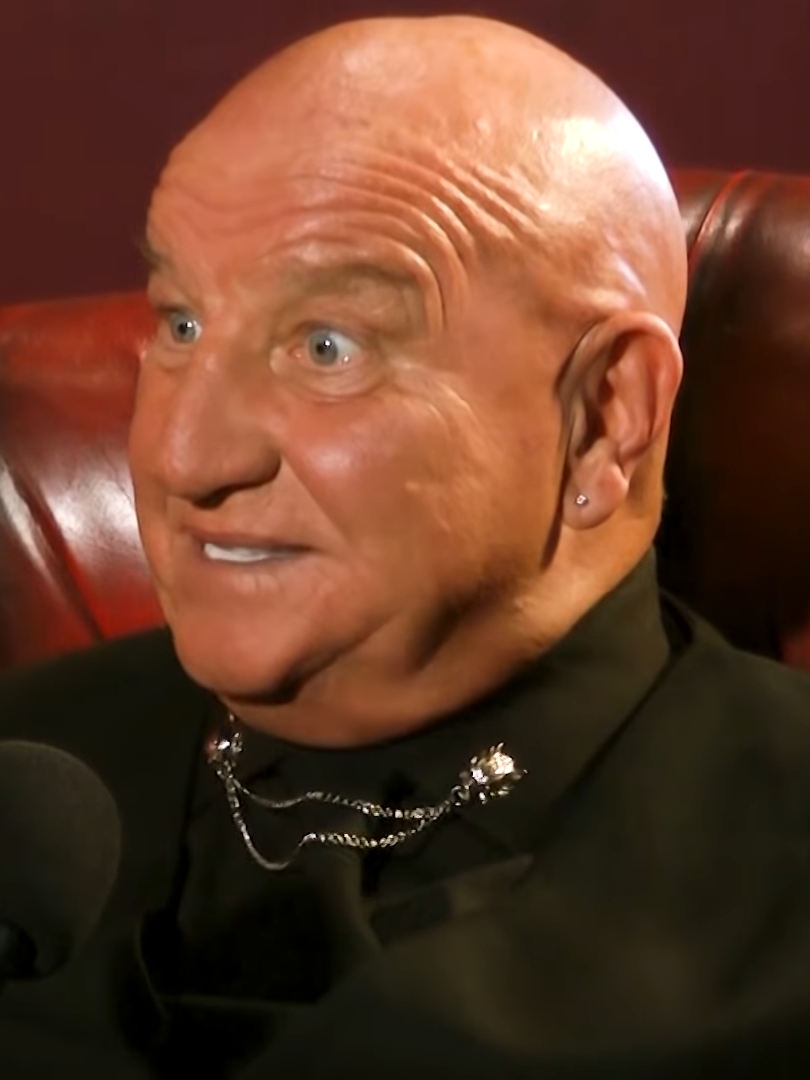
David John Courtney[1] (17 February 1959 – 22 October 2023) was an English self-proclaimed gangster[2] who became both an author[3] and an actor.[4]

Key Information

Early life

[edit]

Courtney was born in Forest Hill, London.[5] He went to Adamsrill primary school in Sydenham, South East London.

Courtney often bragged about supposed connections with gangsters such as Reggie Kray and Lenny McLean, although he was nine years old when Kray was imprisoned. He also claimed to have been involved in debt-collecting, minding clubs, assault, contraband, and murder.[6] He spent time in Belmarsh Prison as a high-security prisoner, as described by ex-prison guard Jim Dawkins in his book The Loose Screw.[7]

Courtney claimed to have been shot, stabbed, had his nose bitten off, and stated that he has had to kill to stay alive. He also said that a car crash he was involved in on the M20 was an attempt on his life by "someone who had a grudge against him".[8]

His claims of criminal activity have come under scrutiny, and the veracity of many has never been proven.[9]

Author

[edit]

Courtney published six books: Stop the Ride I Want to Get Off, Raving Lunacy, Dodgy Dave's Little Black Book, The Ride's Back On, F**k the Ride, and Heroes & Villains. In his book F**k the Ride, Courtney claimed to have been found not guilty in 19 separate trials.[citation needed]

Published works

[edit]
  • 1999: Stop the Ride I Want to Get Off[10]
  • 2000: Raving Lunacy[11]
  • 2001: Dodgy Dave's Little Black Book[12]
  • 2003: The Ride's Back On[13]
  • 2005: F**k the Ride[14]
  • 2006: Heroes & Villains[15]
  • 2008: The British Crime and Prison Quiz Book (with Jim Dawkins)[16]

Acting

[edit]

Largely making a living from television documentaries[17] and personal appearances, Courtney ran his own website, was involved in charity work and worked on the films Six Bend Trap and Clubbing to Death alongside Craig Charles and Huey Morgan. Courtney was featured in the 2008 film The Dead Sleep Easy, filmed on location in Mexico.[citation needed]

He also starred in and produced his own film, Hell to Pay (2005), and took on the leading role of Mad Dave opposite Manish Patel[18] in the low-budget British film Triads, Yardies and Onion Bhajees (2003).

Courtney worked with Director Liam Galvin on two DVDs – Dave Courtney's Dodgy DVD and Dave Courtney Even Dodgier – both released by Gangster Videos. He collaborated again with Liam Galvin on the 2010 film Killer Bitch and the 2016 film Mob Handed.

Courtney appeared in the film Mother's Child (2020), as club owner Mr Townsend alongside Alex Reid.[citation needed] He made his final cinematic appearance in 2022, portraying John Saviour in Legacy.[19]

Selected filmography

[edit]
[edit]

In June 2004, Courtney was cleared of beating his girlfriend Jennifer Lucrea Pinto during a row over her lesbian lover.[21][22]

In January 2009 he was given an 18-month conditional discharge at Bristol Crown Court, on a charge of possessing live ammunition without a firearms certificate. His defence of not knowing that the single live pistol round was live rather than a stage prop prompted Judge Ticehurst to comment, "It perhaps undermines your street credibility and your stage performance that you cannot distinguish between a real round and a fake round. But perhaps that's not for me to say."[23]

In May 2009, Courtney filed for bankruptcy, reportedly owing £400,000 to creditors, including taxes of £250,000.[24]

On 29 July 2009, he was arrested and charged with possession of a prohibited weapon, specifically a Brocock Air Cartridge pistol, and possession of a firearm whilst being a prohibited person.[25] The Brocock pistol, which fired projectiles using pre-charged gas cartridges, was previously a legal air-weapon in the UK but concerns over the "ease" with which these types of gun could be converted into real firearms led to them being banned. After Courtney spending time on remand in HMP Belmarsh, a jury at the Old Bailey took two hours to find him not guilty on all charges on 10 December 2009.[26]

Personal life

[edit]

Courtney often referred to himself as Dave Courtney OBE, the suffix standing for One Big Ego. His house in Plumstead, called Camelot Castle, was decorated with Union Jack flags and the cross of St George, a painted depiction of himself as a knight and a large knuckle duster, alongside a band of supporting knights that included Lenny McLean, the Kray twins, Joey Pyle, Al Capone, John Gotti, Ronnie Biggs, Freddie Foreman, Roy Shaw, Howard Marks and Charlie Richardson.[5][24]

Death

[edit]

On 22 October 2023, Courtney was found dead at his home Chestnut Rise, Plumstead, having shot himself. He was 64.[27][28]

References

[edit]
[edit]
Revisions and contributorsEdit on WikipediaRead on Wikipedia
from Grokipedia
Dave Courtney (17 February 1959 – 22 October 2023) was a British former , , , and media personality, best known for his claimed associations with the and his transition from London's criminal underworld to a flamboyant public figure through books, films, and television appearances. Born in , , to working-class parents—his father a gas board employee and his mother a —Courtney was expelled from school as a youth and soon turned to petty theft and car stealing, escalating into a career as a and violent debt collector in the and . He claimed involvement in numerous crimes including murder, assault, robbery, and fraud, though he was acquitted in 19 court trials, notably a 1989 murder case, and served time in Belmarsh Prison for other offenses. Courtney cultivated ties with notorious figures, organizing security for Ronnie Kray's 1995 funeral and attending Ronnie Biggs's 1999 birthday party, while associating with underworld contacts like "" and Jack "The Hat" McVitie. In the late 1990s, Courtney pivoted to the entertainment industry, publishing his first autobiography, Stop the Ride I Want to Get Off, in 1999, which became a bestseller detailing his criminal life and reportedly inspiring the character of "Big Chris" in the film Lock, Stock and Two Smoking Barrels. He went on to author at least six books, including Raving Lunacy: Clubbed to Death (2000) and Dodgy Dave's Little Black Book (2001), often focusing on gangland culture and his experiences. As an actor, he appeared in films such as The Krays (1990, as Bill), Hell to Pay (2005, as Dave Malone), and Triads, Yardies and Onion Bhajees! (2003, as Mad Dave), alongside television roles in shows like The Bill and Minder. He also featured in documentaries and supported charities for ADHD awareness, styling himself as a "gentleman gangster" with a signature flamboyant look of bling jewelry and custom suits. Courtney's personal life was marked by three marriages—to Susan Ray, Annette Barn, and Jennifer Pinto—from which he had three sons and two daughters; he was separated from his third wife at the time of his death and lived with partner in his self-named "Camelot Castle" home in , , adorned with gangster murals. Tragedy struck in 2011 when his stepson, Genson Courtney, was shot dead in Greenwich. Legally, he faced ongoing scrutiny, including acquittal in a 2000 cocaine-planting conspiracy and weapons charges in 2009, and declared bankruptcy that same year. On 22 October 2023, aged 64, Courtney died by at his home using a , amid severe pain from and a cancer , as confirmed by his , investigations, and a 2025 inquest which found he could not cope with the pain; no arrests were made. Reports in October 2025 revealed he died penniless without a will.

Early life and background

Birth and family

David John Courtney was born on 17 February 1959 in , . He was raised in a respectable working-class family in south-east . His father worked for the gas board and served as a , while his mother was employed as a at Woolworths and acted as an Akela in the Cub Scouts. The family resided in areas such as Sydenham, where Courtney attended Adamsrill Primary School. Growing up in this environment exposed him to the local street culture of post-war south-east London, shaping his early worldview amid a loving but modest household.

Youth and initial influences

Dave Courtney grew up in a working-class family in south-east London during the 1960s and 1970s, a socioeconomic environment marked by post-war austerity and rising urban crime that profoundly shaped his formative years. Raised in Bermondsey before moving to nearby areas, he was immersed in a community where tales of the local underworld circulated widely, fostering an early fascination with figures of notoriety. He attended Adamsrill Primary School in Sydenham, South East London, where his disruptive behavior drew notable attention from educators. His headmaster prophetically observed of the young Courtney: “That boy is going to cause his mother, future wife and a lot of trouble.” Formal education beyond was minimal, as Courtney left formal schooling early, opting instead for the informal lessons of life in his neighborhood. In his teenage years, Courtney began engaging in petty activities that hinted at his future path, including minor hustling and what he later described as an innate "naughtiness" that strained family ties. The era's cultural milieu, rife with stories of gangland icons like the —who were imprisoned in 1969 when Courtney was just ten—provided distant but influential role models through local lore and media portrayals, though direct connections were impossible given his age. Anecdotes from this period, such as early street confrontations or attempts at collecting small debts, appear in Courtney's later self-reported accounts but remain unverified and subject to scrutiny for potential embellishment, consistent with his reputation for dramatic storytelling.

Criminal career

Key activities and incidents

Dave Courtney portrayed himself as a prominent enforcer and debt collector operating in South East London from the 1970s through the 1990s, engaging in activities such as collecting outstanding debts through intimidation and physical confrontations. He described his role as involving the use of knuckle-dusters and other tools to resolve disputes in the and scenes, often working as a before escalating to more organized enforcement work. These self-reported exploits were detailed in his autobiographies, where he emphasized a code of violence applied selectively against those he deemed deserving. Among his recounted incidents, Courtney claimed a 1980 confrontation in which he armed himself with a meat cleaver and a to face six Chinese waiters in a dispute, for which he was convicted of and served a year in Belmarsh Prison. He also described an attempted of a from Zoo, framing it as a youthful escapade tied to his early criminal impulses. Additionally, Courtney asserted he had been shot six times and stabbed multiple times during various altercations, including a pub brawl where his nose was nearly bitten off, attributing these injuries to his enforcer lifestyle. Courtney's involvement extended to elements of , including running protection rackets and participating in violent disputes over territory and payments in London's during the late . In his writings, he referenced 19 instances where he was found not guilty in court, positioning these acquittals as evidence of his shrewd navigation of legal challenges amid a career marked by , , and fraud allegations. However, many of Courtney's claims faced scrutiny, with critics and investigators noting a lack of corroborating police records for several major events he described, such as the extent of his shootings and stabbings. Reports highlighted discrepancies, including post-acquittal admissions in his books to crimes like a 1989 for which he had been cleared, raising questions about the veracity of his self-aggrandizing narratives. These unverified accounts contributed to accusations that Courtney embellished his criminal history for publicity, though he consistently denied such fabrications.

Associations and reputation

Courtney claimed associations with several prominent figures in London's East End underworld, including Reggie Kray and , asserting friendships with them. These connections were highlighted in his public narratives, where he described collaborating with on security operations and maintaining ties with Kray post-release, though such claims were often unverified and questioned due to Courtney's young age—nine years old—at the time of the Krays' 1969 imprisonment. He also boasted of links to other hardmen like , positioning himself within a network of legendary gangsters. Courtney cultivated a reputation as a "gentleman ," emphasizing a amid his tough exterior, which he promoted through and media appearances. This image was bolstered by stories from his time in Belmarsh Prison, a high-security facility, where he claimed to have navigated the harsh environment unscathed, reinforcing narratives of his invincibility and resilience. Self-described as "Dave Courtney OBE – One Big Ego," he amplified this persona via interviews and documentaries, including DVD releases like Dave Courtney's Dodgy DVD (2004) and Dave Courtney's Even Dodgier DVD (2006), directed by Liam Galvin, which featured his anecdotes and myth-building tales. However, Courtney's faced significant for alleged and fabrication of his criminal exploits to gain fame. Figures such as , associated with the Essex Boys, and , a former member, publicly accused him of embellishing stories about his past, including ties to the Krays and other incidents, to construct a celebrity persona. Courtney consistently denied these allegations, maintaining that his accounts were authentic reflections of his life.

Entertainment pursuits

Authorship and publications

In the late , following his retreat from in the mid-, Dave Courtney began writing as a means to chronicle his past experiences, reflect on his life choices, and establish a legitimate public profile beyond the . His debut , Stop the Ride I Want to Get Off (1999), detailed his criminal exploits, time in , key acquittals, and decision to exit the "game," achieving respectable sales upon release. Published by Virgin Books, it served as the foundation for his literary output, blending raw accounts of violence and survival with broader life lessons on redemption and resilience. Courtney authored five additional memoirs over the following years: Raving Lunacy: Clubbed to Death (2000), which recounted his involvements in the rave and club scenes amid ongoing criminal associations; Dodgy Dave's Little Black Book (2001), a collection of anecdotes from his contacts; The Ride's Back On (2003), continuing explorations of post-crime challenges and personal reflections; F**k the Ride (2005), addressing further trials, betrayals, and acquittals; and (2006), profiling influential figures from his life, both real and fictional, that shaped his worldview. These works, primarily published by Ebury Press and Virgin Books, consistently emphasized themes of gritty criminal history, harsh prison conditions, legal victories that reinforced his reputation, and philosophical insights into loyalty, regret, and societal outcasts, often drawing directly from his earlier associations in London's gangland. While specific sales figures for later titles remain unavailable, the series collectively bolstered his transition to media celebrity, enabling him to monetize and reframe his notoriety through storytelling. In 2008, Courtney co-authored The British Crime and Prison Quiz Book with Jim Dawkins and , a lighthearted yet thematic compilation of on British criminal and incarceration, published by Apex Publishing Ltd. This venture extended his focus on prison life and crime lore into an interactive format, further cementing his role as a self-styled authority on the subject. Overall, Courtney's publications played a pivotal role in cultivating his public image as a reformed figure, attracting attention from readers fascinated by authentic narratives and contributing to his appearances in and media.

Acting roles

Dave Courtney first appeared in acting roles in the 1990s, including as Bill in The Krays (1990). He transitioned more prominently into acting in the early 2000s, capitalizing on his real-life reputation as a former to portray authentic tough-guy characters in low-budget British films. One of his early notable roles was as Mad Dave in Triads, Yardies and Onion Bhajees! (2003). A major role came in 2005 with Hell to Pay, a drama he also produced and co-wrote, where he played the lead character Dave Malone, a street-hardened figure inspired by his own experiences. This entry marked a significant point in a career focused on gritty underworld narratives, allowing Courtney to blend his persona with on-screen performances. Throughout the late and , Courtney appeared in several independent films, often in supporting or antagonistic roles that reinforced his image as a no-nonsense enforcer. Notable credits include The Dead Sleep Easy (2007), where he portrayed the menacing Tlaloc in a story of and ; Six Bend Trap (2007), as the debt enforcer Gordy Metcalf in a comedy-crime tale centered on ; and Killer Bitch (2010), featuring him as a paparazzi figure in a controversial action-horror thriller. Later roles encompassed cameos in TV series like (1984–2010) as George Petty and uncredited appearances in (1979–1994), alongside features such as Full English Breakfast (2014) and Legacy (2022), where he played John Saviour in a family protection saga. These selections highlight his consistent involvement in genre films exploring criminal elements, with over a dozen credits across cinema and television by the time of his death. In addition to scripted roles, Courtney contributed to documentaries and self-produced media that documented his life and the gangster milieu. He collaborated on Dave Courtney's Dodgy DVD (2004) and its sequel Dave Courtney's Even Dodgier DVD (2006), both released through his Videos production company, which blended autobiographical storytelling with interviews and reenactments of his past exploits. These works, directed by Galvin, served as extensions of his entertainment pursuits, further blurring the lines between his personal history and public performances. Courtney's acting was frequently critiqued for him in stereotypical hardman roles, with reviewers noting that his authentic lent credibility but limited versatility, as seen in portrayals that mirrored his off-screen . This niche focus, however, bolstered his celebrity status, transforming him from a fringe figure into a recognizable name in British cult cinema and reinforcing his self-styled "gentleman " image among fans of the genre.

Business and public endeavors

Security and commercial ventures

Following his departure from criminal activities, Dave Courtney founded a security firm in the , capitalizing on his prior experience in London's environment to offer services such as event , personal protection, and for clubs. The company grew significantly, at one point employing over 1,000 staff to manage for various venues and collections, including international operations in . A notable early assignment was organizing the detail for Ronnie Kray's funeral in 1995, where he coordinated a large contingent of bouncers to maintain order amid high-profile attendance. Courtney expanded into other commercial endeavors, including public appearances at events and the sale of gangster-themed memorabilia, such as autographed books and personal items tied to his reputation. These activities, alongside his security work, marked a deliberate transition toward legitimate enterprises, though specific investments in pubs or event hosting remain undocumented in available records. His business portfolio also encompassed producing low-budget films and recording music, which contributed to his public profile and income streams. Despite initial growth, Courtney's financial trajectory faced significant setbacks, culminating in a bankruptcy filing in May 2009 with debts totaling £400,000, including £250,000 in unpaid taxes. This led to the eventual closure of several ventures, underscoring the challenges in sustaining his shift to lawful business operations amid ongoing personal and economic pressures.

Philanthropy and advocacy

In the 2000s and 2010s, Dave Courtney became involved in charitable initiatives aimed at deterring young people from criminal paths, leveraging his past experiences to mentor at-risk youth. He served as patron of , a children's ADHD charity based in , for over a decade, where he conducted school talks to raise awareness about and its links to behavioral challenges that could lead to delinquency. These efforts focused on providing support to families and children, emphasizing early intervention to prevent involvement in gangs or crime. Courtney also collaborated with organizations like the , participating in fundraising events and public appearances to promote youth development programs that offered alternatives to street life, such as skill-building workshops and community engagement activities. In interviews, he shared personal anecdotes of mentoring young individuals in the towns through the Free Spirit Live charity, drawing on his own history to advise against crime and encourage discipline through structured activities like training. He extended this advocacy to Autistic Inclusive Meets (AIM), hosting a fundraising disco for autistic youth in 2017 and becoming a patron in 2020 to foster inclusive environments that reduce isolation and potential vulnerability to negative influences. Through and media appearances, Courtney promoted a philosophy of mutual respect and personal responsibility—concepts he outlined in his and applied to guidance—to steer young away from involvement. His work received positive reception from the charities he supported, with noting his decade-long dedication as inspirational for neurodivergent , though no formal awards were documented beyond his roles. These initiatives highlighted Courtney's shift toward a redemptive public role, using his notoriety to amplify anti-crime messaging for London's vulnerable .

Criminal trials and outcomes

Dave Courtney faced numerous criminal trials throughout his life, often related to his alleged involvement in gangland activities, and he publicly claimed to have been found not guilty in 19 separate cases. By 2000, reports indicated he had received not guilty verdicts in 10 court appearances over the previous 15 years. These trials frequently stemmed from incidents tied to his criminal associations, though defenses often centered on lack of evidence or claims of police misconduct. In the early 1980s, Courtney was convicted of after attacking six Chinese waiters with a meat cleaver and a samurai sword in 1980, leading to a one-year sentence at Belmarsh Prison (an initial charge of was reduced). In 1989, Courtney was acquitted of a gangland charge at the Central Criminal Court, but immediately after the verdict, he brazenly admitted responsibility on the steps of the court, highlighting the controversial nature of his legal defenses. The case involved allegations of his role in a violent underworld killing, but the jury found insufficient evidence to convict. A notable acquittal occurred in 2000 at the , where Courtney was cleared of conspiring to plant on a model during a custody dispute involving her husband; the defense argued and fabrication of evidence. This trial underscored recurring themes in his cases, including accusations against officers for improper conduct. In June 2004, at , Courtney was acquitted of against his wife, Jennifer Pinto, following an incident on May 9, 2003; the accepted his account that no such assault took place. In January 2009 at , Courtney received an 18-month conditional discharge for possessing live without a firearms certificate, a minor offense tied to items found during a search. Later that year, in December, he was acquitted at the on three counts of possessing prohibited weapons—revolvers discovered at his home, dubbed "Camelot Castle"—after a deliberated for just two hours; Courtney testified that the items were props for film work, including one gold-sprayed for a James Bond-themed event, and he had spent time on remand at HMP Belmarsh prior to the trial. In October 2011, Courtney pleaded guilty to assaulting his wife Jennifer Pinto following a domestic dispute and was sentenced to 16 weeks' imprisonment.

Financial disputes

In May , Dave Courtney declared bankruptcy, owing approximately £400,000 to creditors, including £250,000 in unpaid taxes to (HMRC). The debts primarily arose from failed business ventures, such as his The Ride's Back On, combined with his extravagant lifestyle. Bankruptcy proceedings led to disputes over Courtney's assets, including his Plumstead residence known as Camelot Castle and his extensive collection of gangster memorabilia. Creditors, led by HMRC, sought to liquidate these holdings to recover funds, though the home was initially protected as his primary residence. Valued at around £500,000 at the time, Camelot Castle became a focal point of contention, with ongoing negotiations over its equity and the potential sale of memorabilia items like weapons and film props. Following Courtney's death in October 2023, documents revealed he died penniless without a will, valuing his estate at £0 and triggering complications under law. His Plumstead home was sold in July 2024 for £500,000, but unresolved creditor claims from the 2009 and potential tax liabilities complicated distribution to heirs.

Later life and death

Personal relationships

Courtney was married to Jennifer Lucrea Pinto, known professionally as the rapper JennyBean, whom he met in 1989 at one of his nightclubs; the couple wed in 1990 but separated after a few years, though they remained legally married until his death. Pinto brought a son, Genson Courtney, into the marriage from a previous relationship, whom Courtney adopted as a stepson; Genson, a drug dealer, was murdered in 2011 at age 23 in a shooting carried out by his biological uncle. In his later years, Courtney lived with his partner Angela, who was described as his close companion and the last person to speak with him before his passing. Courtney was a father to three sons and two daughters from various relationships, often expressing public pride in their achievements; his daughter Courtney Courtney pursued a career as an award-winning , while Lillie Eliza Barry served as a private in the , completing advanced training in 2023. He resided at a distinctive property he dubbed Castle on Chestnut Rise in , southeast , a converted Victorian schoolhouse extensively renovated to resemble a medieval fortress with themed interiors. The home featured an in-house , suits of armor lining the hallways, walls adorned with swords and replica firearms, and artwork depicting notorious gangsters—including Courtney himself—as , alongside memorabilia from his acting roles and criminal associations. Courtney cultivated a flamboyant self-image, styling himself as "Dave Courtney OBE"—where OBE stood for "One Big Ego" rather than the official honor—reflected in his penchant for ostentatious jewelry, cigar-smoking, and commissioning portraits of himself with angelic halos or as a saintly figure amid icons. In his later years, he grappled with chronic health issues, including severe that severely limited his mobility and an undisclosed battle with cancer, which contributed to his increasing isolation and pain. Beyond his criminal past, Courtney maintained friendships with celebrities from the entertainment world, including actor , for whom he served as the inspiration for a character in the 1998 film Lock, Stock and Two Smoking Barrels, as well as boxer and reality TV star , with whom he shared social media interactions and public appearances. Locally in , he was known for engaging with community members, hosting events at his home, and fostering ties through his efforts involving family support.

Circumstances of death

Dave Courtney died on 22 October 2023 at the age of 64 from a self-inflicted to the head at his home on Chestnut Rise in , south-east . He was discovered in the early hours by a friend, Brendan McGirr, who alerted authorities; police initially treated the death as unexplained but not suspicious. A preliminary post-mortem examination confirmed the cause as a from a 9mm . An opened at Coroner's Court in November 2023 and concluded in March 2025, with Senior Coroner Dr Julian ruling the death a , determining that Courtney had acted with intent. The coroner noted evidence from eight video recordings Courtney made hours before his death, in which he expressed severe pain and an inability to continue living, including statements like "I’m having to hide the fact that I can’t get up and down the stairs" and "I don’t want to go waste having a wicked life like I’ve had." A previous failed in July 2023 was also referenced during proceedings. Leading up to his death, Courtney faced significant health challenges, including chronic and a recent diagnosis, which caused debilitating pain managed with both legal and illegal medications. He also grappled with financial difficulties, dying penniless without a will despite his previously lavish , as revealed in documents showing his estate had minimal assets at the time. These factors contributed to a context of personal isolation, though a friend described him as "happy and chirpy" the day prior. Initial media coverage focused on Courtney's colorful past as a former , with tributes from family highlighting his "incredible, colourful, rock 'n' roll life" and the toll of his health struggles. His , Jennifer Pinto, and daughter attended the , where videos showed him apologizing for any upset caused. Public reactions included condolences from associates, emphasizing the tragedy amid his battles with illness.

References

Add your contribution
Related Hubs
User Avatar
No comments yet.