Recent from talks
Nothing was collected or created yet.
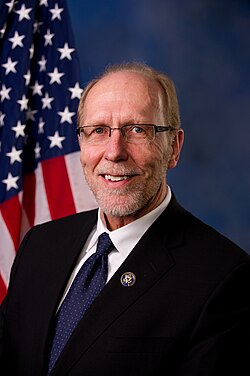
Dave Loebsack
View on WikipediaDavid Wayne Loebsack (/ˈloʊbˌsæk/; born December 23, 1952) is an American politician who served as the U.S. representative for Iowa's 2nd congressional district from 2007 to 2021. A member of the Democratic Party, he also is an emeritus professor of political science at Cornell College,[1] where he had taught since 1982. On April 12, 2019, Loebsack announced he would not seek reelection.[2]
Key Information
U.S. House of Representatives
[edit]Committee assignments
[edit]Caucus memberships
[edit]- Congressional Cement Caucus
- Congressional Progressive Caucus[4]
- Congressional Arts Caucus[5]
- Afterschool Caucuses[6]
Political campaigns
[edit]
2006
[edit]In 2006, Loebsack narrowly defeated 15-term Republican incumbent Jim Leach in one of the biggest upsets of the cycle. Loebsack was nominated by a special convention of the 2nd District after failing to get the required number of signatures to be on the primary ballot. Since there was no one qualified for the ballot, the convention was called to determine the nomination. The 2nd had been trending Democratic for some time (a Republican presidential candidate had not carried it since 1984), and was considered the most Democratic-leaning district in the state. It was taken for granted that Leach would be succeeded by a Democrat once he retired, but he was not considered particularly vulnerable due to his moderate voting record, popularity, and longtime incumbency. Loebsack won largely by running up an 8,395-vote margin in Johnson County, home to Iowa City.
2008
[edit]Loebsack was easily reelected in 2008, taking 57 percent of the vote over Mariannette Miller-Meeks, a doctor from Ottumwa and the former president of the state medical society.
2010
[edit]Loebsack faced Miller-Meeks again in 2010 and had a much more difficult time of it than he had two years earlier. He prevailed with only 51% of the vote, largely by running up a 13,900-vote margin in Johnson County. Terry Branstad easily carried the district in his successful bid to reclaim the governorship. Chuck Grassley carried every county in the district except Johnson; in fact, Johnson was the only county Grassley lost in his bid for another term.
2012
[edit]After redistricting moved Loebsack's longtime home in Mount Vernon to the 1st District of fellow Democrat Bruce Braley, Loebsack moved to Iowa City in the reconfigured 2nd. The redrawn district is less Democratic than its predecessor; it regained Davenport, which had been the anchor of the 2nd and its predecessors for decades before being shifted out of the district in the 2000s round of redistricting.
Loebsack won the election with 55.4% of the vote. His Republican opponent, John Archer, got 42.5%; Alan Aversa, an Independent candidate, received 2.2%. Braley won the 1st district with 56.9% of the vote.[7]
2014
[edit]Loebsack beat Miller-Meeks, 52.5% to 47.5%. The 1st district went Republican, leaving Loebsack the only Democratic House member from Iowa.[8]
2016
[edit]In October 2016, the Daily Iowan endorsed Loebsack, saying that while he was "not perfect" he displayed a "willingness to work with the other side" and had "maintained some degree of competence in office."[9] Loebsack defeated surgeon Christopher Peters, 54% to 46%. Again, Loebsack was the only Democrat that Iowa sent to the House in 2016. The state was won by Donald Trump by a comfortable margin, and Republican Chuck Grassley was re-elected to the U.S. Senate by a landslide.[10] Despite the Republican swing in Iowa, Loebsack managed to hold his position as a Democrat.
2018
[edit]In a rematch of the 2016 election, Loebsack defeated Peters by a comfortable margin with 54.8% of the vote. Democrats also flipped the 1st and 3rd districts in this election cycle; therefore, Loebsack was no longer the sole Democratic member of Iowa's congressional delegation.[11]
Tenure
[edit]Taxation
[edit]In November 2017, Loebsack was the only House member from Iowa to vote against the GOP tax reform bill, claiming the "tax plan that was rushed through the House of Representatives will hurt everyday Iowans."[12]
Immigration
[edit]In September 2017, Loebsack told Ottumwa voters that he supports Dreamers. He said, "We've got to do everything we can to protect them."[13]
2020 presidential election
[edit]
Ahead of the 2020 Iowa Democratic caucuses, Loebsack endorsed former South Bend, Indiana, mayor Pete Buttigieg for President of the United States.[14] After Buttigieg withdrew from the primaries, he endorsed eventual Democratic nominee Joe Biden on March 12, 2020.[15]
Electoral history
[edit]2006
[edit]| Party | Candidate | Votes | % | |||
|---|---|---|---|---|---|---|
| Democratic | Dave Loebsack | 107,683 | 51.38 | |||
| Republican | James A. Leach (incumbent) | 101,707 | 48.53 | |||
| No party | Others | 196 | 0.09 | |||
| Total votes | 209,586 | 100.00 | ||||
| Turnout | ||||||
| Democratic gain from Republican | ||||||
2008
[edit]| Party | Candidate | Votes | % | |
|---|---|---|---|---|
| Democratic | Dave Loebsack (incumbent) | 175,218 | 57.19 | |
| Republican | Mariannette Miller-Meeks | 118,778 | 38.77 | |
| Green | Wendy Barth | 6,664 | 2.18 | |
| Independent | Brian White | 5,437 | 1.78 | |
| No party | Others | 261 | 0.09 | |
| Total votes | 306,358 | 100.00 | ||
| Turnout | ||||
| Democratic hold | ||||
2010
[edit]| Party | Candidate | Votes | % | |
|---|---|---|---|---|
| Democratic | Dave Loebsack (incumbent) | 115,839 | 50.99 | |
| Republican | Mariannette Miller-Meeks | 104,319 | 45.92 | |
| Libertarian | Gary Joseph Sicard | 4,356 | 1.92 | |
| Constitution | Jon Tack | 2,463 | 1.08 | |
| No party | Others | 198 | 0.09 | |
| Total votes | 227,175 | 100.00 | ||
| Turnout | ||||
| Democratic hold | ||||
2012
[edit]| Party | Candidate | Votes | % | |
|---|---|---|---|---|
| Democratic | Dave Loebsack (incumbent) | 211,863 | 55.57 | |
| Republican | John Archer | 161,977 | 42.48 | |
| Independent | Alan Aversa | 7,112 | 1.87 | |
| No party | Others | 323 | 0.08 | |
| Total votes | 381,275 | 100.00 | ||
| Turnout | ||||
| Democratic hold | ||||
2014
[edit]| Party | Candidate | Votes | % | |
|---|---|---|---|---|
| Democratic | Dave Loebsack (incumbent) | 143,431 | 52.48 | |
| Republican | Mariannette Miller-Meeks | 129,455 | 47.36 | |
| Write-ins | 443 | 0.16 | ||
| Total votes | 273,329 | 100 | ||
| Democratic hold | ||||
2016
[edit]
| Party | Candidate | Votes | % | |
|---|---|---|---|---|
| Democratic | Dave Loebsack (incumbent) | 198,571 | 53.66 | |
| Republican | Christopher Peters | 170,933 | 46.19 | |
| Write-ins | 528 | 0.15 | ||
| Total votes | 370,032 | 100.00 | ||
| Democratic hold | ||||
2018
[edit]| Party | Candidate | Votes | % | |
|---|---|---|---|---|
| Democratic | Dave Loebsack (incumbent) | 171,446 | 54.8 | |
| Republican | Christopher Peters | 133,287 | 42.6 | |
| Libertarian | Mark Strauss | 6,181 | 2.0 | |
| Independent | Daniel Clark | 1,837 | 0.6 | |
| Write-ins | 162 | 0.0 | ||
| Total votes | 312,913 | 100.0 | ||
| Democratic hold | ||||
References
[edit]- ^ "Politics Faculty | Cornell College". www.cornellcollege.edu. Retrieved 2018-08-13.
- ^ Murphy, Dave (April 12, 2019). "Iowa Congressman Dave Loebsack to retire in 2020". DescriptionThe Quad-City Times. Retrieved April 12, 2019.
- ^ a b "U.S. Congressman Dave Loebsack". U.S. Government. Archived from the original on 2020-11-23. Retrieved 2011-06-24.
- ^ "Caucus Members". Congressional Progressive Caucus. Archived from the original on 27 April 2019. Retrieved 30 January 2018.
- ^ "Membership". Congressional Arts Caucus. Archived from the original on 12 June 2018. Retrieved 13 March 2018.
- ^ "Members". Afterschool Alliance. Retrieved 18 April 2018.
- ^ "Iowa". The New York Times. ISSN 0362-4331. Retrieved 2022-07-21.
- ^ "Iowa Election Results". The New York Times. ISSN 0362-4331. Retrieved 2023-03-31.
- ^ "Endorsement: Dave Loebsack". The Daily Iowan. Retrieved 2023-03-31.
- ^ "Iowa Election Results 2016". The New York Times. 2017-08-01. ISSN 0362-4331. Retrieved 2023-04-06.
- ^ "Iowa Election Results". The New York Times. 2018-11-06. ISSN 0362-4331. Retrieved 2022-07-21.
- ^ "Meyer, Elizabeth; Dave Loebsack, Iowa's lone Democrat, votes no on tax bill; The Hawk Eye; November 17, 2017".
- ^ Menon, Aish (September 17, 2017). "Congressman Dave Loebsack talks about DACA and other issues". KTVO.
- ^ Rodriguez, Barbara (January 12, 2020). "U.S. Rep. Dave Loebsack endorses Pete Buttigieg for president". The Des Moines Register. Retrieved January 12, 2020.
- ^ Wiggins, Courtney (March 12, 2020). "Iowa Congressman Dave Loebsack Is Endorsing Presidential Candidate Joe Biden". KWWL.
External links
[edit]Dave Loebsack
View on GrokipediaEarly life and education
Family and upbringing
David Loebsack was born on December 23, 1952, in Sioux City, Iowa.[1] His parents divorced during his childhood, after which he was raised by his single mother, who struggled with mental illness and had only an 11th-grade education.[6] [7] The family experienced significant poverty, frequently relying on food stamps and other assistance to meet basic needs; Loebsack later described his upbringing as one marked by economic hardship in Sioux City.[7] [8] He grew up alongside siblings in this environment, where his mother's condition eventually led to her inability to care for the children independently.[9] [8] Sioux City, located in Iowa's agriculturally dominant northwest, provided Loebsack with early immersion in the state's rural Midwestern culture, including community-oriented values tied to farming, livestock processing, and small-town resilience amid economic fluctuations in the meatpacking and grain sectors.[10]Academic degrees and influences
Loebsack graduated from East High School in Sioux City, Iowa.[1] He earned a B.A. in political science from Iowa State University in Ames in 1974, followed by an M.A. in political science from the same institution in 1976.[2] Loebsack then pursued doctoral studies at the University of California, Davis, where he received a Ph.D. in political science in 1985.[2] His graduate work at Iowa State emphasized foundational aspects of American political institutions, laying the groundwork for his later scholarly interests in comparative politics and democratic theory.[3] While specific mentors from his student years are not prominently documented in public records, Loebsack's training at land-grant institutions like Iowa State and a research-oriented program at UC Davis exposed him to rigorous empirical approaches in political science, influencing his analytical framework on governance and policy processes.[11]Pre-political career
Academic teaching roles
Loebsack began his academic teaching career at Cornell College, a private liberal arts institution in Mount Vernon, Iowa, joining the faculty in 1982 as a professor of political science.[4] He remained there for 24 years, instructing students until retiring in 2006 to enter politics.[11] In addition to his professorial duties, Loebsack advanced to full professor and chaired the Political Science Department.[12] His teaching emphasized U.S. politics alongside international relations, comparative politics, and politics in developing nations, often incorporating real-world case studies such as legitimacy-building in Third World contexts.[13][14] This focus aligned with Cornell College's block plan curriculum, which structures courses in intensive, one-month blocks to foster deep engagement.Scholarly focus and publications
Loebsack's doctoral research centered on comparative politics and international political economy, particularly the effects of capitalist integration on development policies in Sub-Saharan Africa. His 1985 PhD dissertation from the University of California, Davis, examined "Capitalist Penetration and Its Policy Consequences in Sub-Saharan Africa," employing empirical methods to analyze economic influences on governance strategies in the region. He contributed a book review to the American Political Science Review in 1987, critiquing H. W. Arndt's Economic Development: The History of an Idea, which traces the intellectual history of development economics from mercantilism to neoliberalism; Loebsack assessed its implications for understanding policy evolution in post-colonial contexts.[15] Loebsack secured competitive grants, including Fulbright and National Endowment for the Humanities awards, to support fieldwork and study at institutions such as Brown University, the University of Wisconsin-Madison, and in Brazil and Mexico, enabling cross-national empirical investigations into political economy and development.[11] These efforts underscored a focus on causal factors in policy formation amid varying levels of economic integration, though his pre-2006 publication record remained modest, prioritizing teaching over extensive peer-reviewed output.[14]Political ideology and party change
Initial Republican affiliation
David Loebsack was born on December 23, 1952, in Sioux City, Iowa, a city in Woodbury County that has historically leaned Republican, with local voters favoring GOP candidates in multiple presidential elections throughout the late 20th century.[16][17] This regional conservatism reflected broader trends in northwest Iowa, where Republican dominance influenced the political environment during Loebsack's upbringing and early adulthood. In the 1980s and early 1990s, Iowa's political landscape was marked by strong Republican performance at the presidential level, exemplified by Ronald Reagan's landslide victories in the state—capturing 51.31% of the vote against Jimmy Carter in 1980 and approximately 65% against Walter Mondale in 1984.[18] These outcomes underscored the GOP's appeal through policies promoting fiscal restraint, limited government intervention, and economic deregulation, which resonated amid Iowa's agricultural economy and rural sensibilities.[19] Loebsack's formative years and initial academic career as a political science professor at Cornell College from 1982 onward unfolded against this backdrop of Republican ascendancy, where such values formed a common framework for policy discourse in Iowa institutions.[1]Switch to Democratic Party and motivations
Loebsack switched his party affiliation to the Democratic Party in the mid-1990s, attributing the decision to the Republican Party's rightward shift under the influence of Newt Gingrich, particularly the perceived extremism in social conservatism and fiscal policies associated with the 1994 Contract with America. Gingrich's agenda, which emphasized welfare reform, tax cuts, and congressional term limits, led to Republican gains of 54 House seats that year, marking the first GOP House majority since 1954 and challenging the long-standing Democratic dominance. However, these policies garnered subsequent bipartisan support, including welfare overhaul signed by President Clinton in 1996, indicating that characterizations of extremity may stem more from ideological opposition than objective radicalism. This timing coincided with accelerating leftward trends among university faculty, where political science professors increasingly aligned with Democrats amid rising campus progressivism. Surveys from the period reveal Democrat-to-Republican ratios among social science faculty climbing to over 11:1 by the early 2000s, reflecting institutional pressures and self-selection that favored liberal viewpoints in hiring and promotion. Loebsack's move as a political science professor at Cornell College thus mirrored a broader professoriate pattern, where conservative voices diminished, potentially amplifying perceptions of GOP "extremism" through echo-chamber dynamics rather than a genuine partisan realignment on the right. No verifiable evidence links the switch to personal scandal or opportunism; instead, it appears consistent with disillusionment narratives common among academics facing party purity tests, though causal analysis suggests the reverse—GOP resurgence responded to voter demands for fiscal restraint post-Cold War, while academia's homogeneity predated and intensified during this era.[20][21]Congressional elections
2006 election against Jim Leach
In the 2006 United States House of Representatives elections, Dave Loebsack, a political science professor at Cornell College with no prior elected experience, challenged Republican incumbent Jim Leach in Iowa's 2nd congressional district, which spans eastern Iowa including urban centers like Cedar Rapids, Davenport, and Iowa City alongside rural counties. The general election occurred on November 7, 2006, amid a national backlash against Republican control of Congress, fueled by the ongoing Iraq War, corruption scandals such as the Jack Abramoff lobbying affair, and low approval ratings for President George W. Bush.[22][23] Leach, who had held the seat since January 1977 following his initial election in a special contest, represented a 30-year incumbency marked by moderate positions, including his vote against the 2002 Authorization for Use of Military Force Against Iraq as one of only six House Republicans to oppose it.[24][25] Loebsack positioned himself as an independent-minded Democrat skeptical of the Iraq War—echoing Leach's stance but advocating for quicker disengagement—and emphasized anti-corruption reforms and fiscal responsibility to appeal to the district's mix of independent voters and swing counties. His campaign ads acknowledged Leach's anti-war vote while critiquing support for measures like the Patriot Act, framing Loebsack's academic outsider perspective as a fresh alternative to career politicians.[26] Loebsack secured an upset victory with 107,683 votes (51 percent) to Leach's 103,359 (49 percent), flipping the district in a race that exemplified the Democratic gains of 31 House seats nationwide.[27] The narrow margin reflected the district's competitive nature, where Republicans had maintained an edge through Leach's personal popularity and cross-aisle reputation, but voter turnout driven by anti-incumbent sentiment and the broader midterm wave overcame these factors.[22] Loebsack's success as a first-time candidate underscored the appeal of his professorial background in a district valuing education and pragmatism, contributing to Democrats' control of the House for the first time since 1994.[23]2008 reelection
Loebsack was reelected to the U.S. House of Representatives on November 4, 2008, defeating Republican Kim Schmett with 56.5% of the vote (176,904 votes) to Schmett's 42.0% (132,136 votes), while other candidates received the remainder.[28] The contest occurred amid the 2008 financial crisis, which had intensified following the September bankruptcy of Lehman Brothers and subsequent market turmoil, contributing to a national Democratic wave that expanded the party's House majority.[29] Schmett, a Davenport business owner, campaigned on fiscal conservatism and criticism of Democratic spending, but faced headwinds from the district's shift toward Democrats, as evidenced by Barack Obama's statewide victory in Iowa with 53.3% of the presidential vote to John McCain's 44.5%.[29] Loebsack, maintaining his moderate profile after flipping the seat in 2006, highlighted cross-aisle work on issues like farm policy and infrastructure to appeal to the district's independent voters in eastern Iowa's rural and urban mix.[30] Voter turnout in Iowa's 2nd Congressional District exceeded 70% in key counties like Linn and Johnson, reflecting high engagement during the economic uncertainty.[31] The margin represented an improvement over Loebsack's 2006 plurality win, bolstered by the district's alignment with national trends favoring change, though Schmett garnered support in conservative strongholds such as Scott County.[32] Post-election analysis noted Loebsack's emphasis on local economic stabilization efforts, including advocacy for federal aid to Iowa manufacturers hit by the recession, as key to his incumbency advantage.[30]2010 midterm challenge
In the 2010 United States midterm elections, held on November 2, Democratic incumbent Dave Loebsack faced Republican challenger Mariannette Miller-Meeks, an ophthalmologist and U.S. Army veteran, in Iowa's 2nd congressional district.[33] Loebsack secured a narrow victory with 51.1% of the vote (127,800 votes) to Miller-Meeks' 46.9% (117,300 votes), while minor candidates took the remainder.[33] This outcome defied the national Republican surge fueled by the Tea Party movement, which criticized government spending and resulted in the GOP gaining 63 House seats and reclaiming majority control.[34] Loebsack's survival hinged on his affiliation with the Blue Dog Coalition, a group of fiscally conservative Democrats emphasizing deficit reduction and targeted spending cuts over expansive liberal agendas.[3] Throughout the campaign, he highlighted his independent voting record, including opposition to certain Democratic-backed spending measures pushed by House Speaker Nancy Pelosi, such as elements of omnibus appropriations bills that Blue Dogs viewed as insufficiently offset by savings.[35] This moderation appealed to the district's independent voters, who comprised a significant portion of the electorate in the competitive eastern Iowa region spanning rural counties and urban centers like Davenport and Iowa City. By positioning himself as a check against unchecked federal expenditure—echoing Tea Party concerns without fully aligning with Republican orthodoxy—Loebsack mitigated losses among swing voters amid widespread Democratic defeats nationwide, where over two dozen Blue Dog incumbents failed to hold their seats.[36]2012 reelection
Following the 2010 census, Iowa's congressional districts were redrawn by the nonpartisan Legislative Services Agency, resulting in a new map signed into law on April 19, 2011; the revised 2nd district retained much of its eastern Iowa core, including Cedar Rapids and Iowa City, but incorporated shifts that maintained its competitive nature without significantly altering the partisan balance.[37][38] Loebsack, the incumbent Democrat, faced Republican challenger John Archer, a Bettendorf-based corporate attorney, in the November 6, 2012, general election; Archer had secured the GOP nomination by defeating state Representative Pete Cownie in the June 5 primary.[39][40] Loebsack's campaign emphasized constituent services and district-specific priorities over national partisan divides, positioning him as a moderate focused on eastern Iowa's economic needs.[41] The race benefited from presidential coattails, as Barack Obama carried Iowa with 51.99% of the vote amid a tight national contest against Mitt Romney, boosting Democratic turnout in the 2nd district's urban and university-heavy areas.[42] Loebsack highlighted reforms to federal agriculture programs, leading a bipartisan Iowa delegation effort in July 2012 to extend disaster assistance provisions expiring with the 2008 farm bill, which aimed to provide certainty for corn, soybean, and livestock producers amid drought conditions threatening rural livelihoods.[43][44] Loebsack secured reelection with 169,595 votes (55.6%) to Archer's 131,743 (43.2%), a margin of 12.4 percentage points, reflecting stronger performance in core Democratic strongholds like Johnson County while holding ground in rural precincts.[45][46] Archer conceded on election night, acknowledging the outcome in the redrawn district.[46]2014 reelection
In the Democratic primary election on June 3, 2014, incumbent U.S. Representative Dave Loebsack ran unopposed and secured nomination with over 99% of the vote in reporting precincts statewide.[47] On the Republican side, Mariannette Miller-Meeks, a physician and former Iowa Department of Public Health director who had previously challenged Loebsack in 2008 and 2010, won her party's nomination by defeating other contenders including Mark Lofgren.[48] The general election on November 4, 2014, marked the third contest between Loebsack and Miller-Meeks in Iowa's 2nd congressional district.[49] Loebsack prevailed with 143,431 votes (52.5%) to Miller-Meeks's 129,455 votes (47.4%), retaining the seat for a fifth term amid a national Republican midterm surge that netted the party 13 House seats and Senate control. Voter turnout in the district was approximately 61% of registered voters, reflecting the competitive nature of the race in a district rated as leaning Democratic but with significant independent support. Campaign dynamics highlighted Loebsack's moderate profile as a Blue Dog Democrat, which insulated him against broader anti-Obama backlash; he emphasized bipartisan efforts on local issues like flood recovery and agricultural policy while facing attacks from Miller-Meeks on his 2010 vote for the Affordable Care Act, which she argued increased healthcare costs for Iowans.[50] Miller-Meeks, positioning herself as a conservative outsider with military and medical credentials, criticized Loebsack's alignment with Obama-era policies but could not overcome his incumbency advantages and cross-aisle votes, such as opposing certain EPA regulations deemed burdensome to Iowa farmers.[51] Loebsack's victory margin narrowed from his 2012 result but demonstrated resilience in a district where independents favored his pragmatic stance over partisan shifts.2016 election amid Trump shift
Incumbent Dave Loebsack secured reelection to Iowa's 2nd congressional district on November 8, 2016, defeating Republican Christopher Peters with 53.7 percent of the vote (198,571 votes) to Peters' 46.2 percent (170,933 votes). Neither candidate faced opposition in their respective party primaries held on June 7, 2016. The race occurred amid a national Republican surge, as Donald Trump carried the district by 4 percentage points over Hillary Clinton in the presidential contest, reflecting broader Rust Belt discontent with globalization and trade policies.[52] Loebsack's margin of victory—approximately 7.5 percentage points—exceeded Clinton's performance by an average of 11 points district-wide, underscoring the area's split-ticket voting patterns where local incumbency and moderate appeal trumped national partisan tides.[52] This crossover success was pronounced in rural and small-town precincts, such as Davis County (where Loebsack overperformed Clinton by 41 points) and Van Buren County (by 31 points), areas aligned with Trump's economic messaging on manufacturing and job losses but responsive to Loebsack's established record on district-specific issues like agriculture and workforce concerns.[52] The outcome tested and affirmed Loebsack's ability to retain support from voters prioritizing pragmatic representation over strict party loyalty, even as Trump's protectionist rhetoric highlighted trade vulnerabilities in Iowa's manufacturing and farming sectors.[52]2018 reelection
Loebsack secured reelection to a seventh term in the U.S. House on November 6, 2018, defeating Republican challenger Christopher Peters, a rematch from the 2016 contest, with 52 percent of the vote (156,607 votes) to Peters's 46 percent (138,214 votes).[53] The race occurred amid a national Democratic "blue wave" in the midterm elections, in which the party flipped 41 Republican-held House seats to regain majority control, driven by voter dissatisfaction with President Trump's approval ratings and policy agenda. Despite this broader shift, Iowa's 2nd Congressional District demonstrated resilience for the incumbent Democrat, as Loebsack maintained a comfortable margin in a district rated as leaning Democratic but with competitive rural and suburban elements.[54] Loebsack's campaign emphasized local priorities, including expanded access to veterans' mental health services to reduce stigma and improve local care delivery, reflecting his ongoing committee work on veterans' affairs.[55] He also highlighted infrastructure investments, particularly rural broadband expansion to bridge connectivity gaps in unserved areas of the district, aligning with bipartisan efforts to secure federal funding for such projects.[56] These focuses helped underscore his moderate record and constituent service, contributing to his victory in a year of heightened partisan turnout.[57]Service in the U.S. House of Representatives
Committee assignments
During his tenure in the U.S. House of Representatives from 2007 to 2019, Dave Loebsack served on the Committee on Education and the Workforce, focusing on higher education and workforce development issues relevant to Iowa's economy.[3] He also held assignments on the Committee on Armed Services, where he contributed to oversight of military personnel, readiness, and related subcommittees.[11] These roles as a junior member enabled him to advance district-specific priorities, including legislation supporting biofuels production tied to agricultural innovation and flood mitigation efforts in flood-prone Iowa regions. In December 2014, Loebsack secured a position on the influential Committee on Energy and Commerce for the 114th Congress (2015–2017) and subsequent terms, replacing his prior committee seats after obtaining a waiver to transition.[58] This committee provided broader leverage on energy policy, economic growth, and investments in infrastructure, allowing greater impact on Iowa's biofuels sector and rural energy needs. His work emphasized practical, state-focused initiatives over broader partisan agendas, reflecting his moderate approach within the Democratic caucus.Caucus memberships and moderate stance
Loebsack was a member of the Blue Dog Coalition, a group of fiscally conservative Democrats emphasizing deficit reduction, targeted spending, and bipartisan problem-solving.[59] He participated in the coalition during multiple Congresses, including the 115th, where it advocated for moderate positions on budget and economic issues.[60] Loebsack's voting record reflected a moderate stance relative to his party, with party unity scores below the Democratic average, indicating frequent deviations on fiscal and other matters. For instance, his party unity rate stood at 88 percent in one analyzed period, lower than that of other Iowa Democrats and the broader caucus norm exceeding 90 percent.[61] Such metrics, while quantifying alignment on party-line roll calls, can undervalue cross-aisle collaboration in favor of ideological consistency, as Loebsack prioritized pragmatic outcomes over strict adherence.[62] Loebsack engaged in bipartisan efforts, particularly on infrastructure, cosponsoring and supporting legislation with Republican colleagues to address rural broadband, water resources, and public works. He backed the Water Resources Development Act amendments, which garnered cross-party approval for funding improvements like those in Flint, Michigan, and endorsed the SECTORS Act for workforce development tied to infrastructure needs, passing with unanimous bipartisan support in prior sessions.[63][64] These actions underscored a governance approach favoring cooperation on tangible projects over partisan gridlock.[65]Fiscal policy and taxation positions
Loebsack, as a member of the Blue Dog Coalition, positioned himself as a fiscal moderate emphasizing deficit reduction and targeted tax relief, though his voting record reflected alignment with Democratic leadership on major spending initiatives. In February 2009, he voted in favor of the American Recovery and Reinvestment Act (H.R. 1), a $787 billion economic stimulus package that included tax cuts, infrastructure spending, and aid to states, which critics argued contributed to long-term federal debt without sufficient offsetting cuts.[66] [67] He co-sponsored the Targeted Deficit Reduction Act of 2010 (H.R. 5008), which proposed $1 trillion in spending reductions over a decade through discretionary cuts and reforms to programs like Medicare and agriculture subsidies, reflecting efforts to curb deficits amid rising national debt.[68] On taxation, Loebsack advocated for credits benefiting small businesses and middle-class families, pledging support for financial aid and tax incentives during visits to Iowa constituents, such as historic building rehabilitations in Mount Pleasant in 2018.[69] In a 2017 op-ed, he criticized Republican tax proposals for favoring the wealthy over working families, arguing instead for plans preserving deductions like state and local taxes while providing relief to average Iowans.[70] However, he voted against the Tax Cuts and Jobs Act of 2017 (H.R. 1), which reduced corporate rates from 35% to 21% and individual rates across brackets, citing concerns over increased deficits projected at $1.5 trillion over ten years and disproportionate benefits to high earners.[3] [71] Critics, including conservative scorecards, highlighted inconsistencies in his fiscal conservatism, with Heritage Action assigning him scores as low as 0% in later sessions for supporting omnibus appropriations that expanded spending without matching revenue measures.[72] While co-sponsoring deficit-focused legislation demonstrated restraint, party-line votes on stimulus and appropriations contributed to net debt increases during his tenure from 2007 to 2019, when federal debt rose from approximately $9 trillion to over $22 trillion.[73] Supporters noted his Blue Dog affiliation led to occasional deviations, such as opposition to unchecked spending surges, but empirical data from vote tallies showed limited pushback against Democratic budget priorities.[74]Immigration and border security votes
Loebsack supported legislative efforts to provide limited pathways to legal status for certain undocumented immigrants while expressing reservations about expansive amnesty proposals. In December 2010, he voted in favor of H.R. 5281, the DREAM Act, which aimed to grant conditional permanent residency and eventual citizenship to undocumented individuals brought to the U.S. as children who met education or military service requirements.[75] He co-sponsored H.R. 6, the American Dream and Promise Act of 2019, which passed the House on June 4, 2019, by a 237-187 vote and sought to offer protections and a citizenship path for DREAMers, Temporary Protected Status holders, and certain violence victims, without addressing broader enforcement reforms.[76] [77] These positions aligned with comprehensive immigration reform frameworks emphasizing targeted relief over blanket amnesty, though critics on the right viewed such measures as incentivizing further illegal entries by rewarding past violations.[78] On border enforcement, Loebsack backed negotiated security enhancements but opposed dedicated funding for a continuous physical wall along the U.S.-Mexico border. In January 2019, amid the government shutdown, he joined 29 other House Democrats in a letter to Speaker Nancy Pelosi urging a vote on President Trump's border security funding request—including wall-related appropriations—if the government reopened, framing it as a means to facilitate expert testimony on Department of Homeland Security needs rather than an endorsement of wall construction.[79] He publicly stated that "playing politics and building a wall is not the answer," prioritizing alternative measures like technology and personnel over barriers.[80] His votes on appropriations bills often included Department of Homeland Security funding for patrols and operations, contributing to Heritage Action's assessment of low support for stringent enforcement priorities, such as defunding certain amnesty expansions or mandating E-Verify nationwide.[72] Loebsack's district, Iowa's 2nd congressional district—spanning rural counties with significant agriculture, including meatpacking and crop production—experienced relatively low levels of illegal immigration compared to border states, with statewide unauthorized population estimates around 45,100 in 2022, or roughly 1.4% of Iowa's total residents.[81] This context underscored demands for guest worker programs to address labor shortages in farming and processing industries, where immigrants filled roles amid domestic workforce gaps, though undocumented presence remained minimal and tied more to interior enforcement challenges than border surges.[82] Conservatives criticized his backing of legalization paths as insufficiently prioritizing enforcement amid national apprehensions exceeding 400,000 annually by the late 2010s, while some progressives faulted Democrats like Loebsack for failing to secure standalone DREAM protections earlier despite opportunities in bipartisan talks.[72] [83]Healthcare legislation involvement
Loebsack, as a member of the moderate Blue Dog Coalition, participated in negotiations to incorporate cost-control measures into the Patient Protection and Affordable Care Act (ACA), including provisions for the Independent Payment Advisory Board and adjustments to Medicare provider payments intended to curb long-term spending growth. He voted in favor of the ACA on March 21, 2010, supporting its passage in the House by a 219-212 margin.[84] In subsequent years, Loebsack opposed Republican efforts to repeal the ACA, voting against the American Health Care Act in May 2017 and similar measures, while advocating for targeted reforms to address implementation challenges. In July 2017, he introduced the Congressional Accountability for Health Care Coverage Act, which would require members of Congress to remain enrolled in ACA exchanges if they enacted changes disrupting coverage for millions, aiming to enforce personal accountability amid reports of premium increases; for instance, Iowa's individual market premiums rose by an average of 14.5% in 2017 following ACA expansions, contributing to criticisms that the law failed to fully deliver on affordability promises despite subsidies for lower-income enrollees.[85][86] Loebsack supported Medicare expansions under the ACA, which extended eligibility to nondisabled, low-income adults starting in 2014, facilitating coverage gains in Iowa where over 100,000 residents enrolled via Medicaid by 2016. He consistently opposed single-payer proposals, aligning with Blue Dog preferences for incremental, market-oriented adjustments over government-run systems, as evidenced by his rejection of broader public-option expansions during 2009-2010 debates.[84] On rural health access, Loebsack co-sponsored bipartisan legislation to bolster providers in underserved areas, including the Rural Health Clinic Modernization Act of 2017, which expanded the roles of physician assistants and nurse practitioners in clinics to improve primary care delivery without requiring physician oversight in all cases. He also backed the Save Rural Hospitals Act of 2015, eliminating disproportionate share hospital payment reductions for rural facilities under Medicare and Medicaid to prevent closures, and supported reauthorization of the $400 million Rural Health Care Program in 2016 to subsidize telecommunications for remote providers, enhancing telehealth capabilities in Iowa's rural districts.[87][88][89]Trade, economy, and labor record
Loebsack voted against trade promotion authority in June 2015, citing insufficient congressional input on agreements like the Trans-Pacific Partnership (TPP), which he opposed due to concerns over job offshoring and lack of protections for American workers.[90][91] He signed letters expressing bipartisan reservations about fast-tracking TPP negotiations, emphasizing the need for enforceable labor standards and safeguards against unfair foreign competition impacting Iowa's economy.[91] In contrast, Loebsack supported the United States-Mexico-Canada Agreement (USMCA), voting for its implementation on December 19, 2019 (Roll Call 701, Yea).[92] Following the deal's finalization, he praised its robust enforcement mechanisms, stronger worker rights provisions, elevated environmental standards, and preservation of congressional authority on drug pricing, viewing it as a step toward preventing offshoring of Iowa jobs while providing market certainty for exporters.[93] He criticized broad tariffs during the Trump administration's trade disputes, arguing they harmed Iowa farmers and manufacturers more than targeted measures would, given the state's reliance on agricultural exports valued at over $10 billion annually in the mid-2010s.[94] On labor issues, Loebsack maintained a pro-union record, earning a 95% lifetime score from the AFL-CIO, including 100% in 2020 for votes supporting the Protecting the Right to Organize (PRO) Act and rights for transportation security officers.[95] He backed measures enhancing worker organizing rights and apprenticeships but occasionally opposed expansive mandates, aligning with his Blue Dog emphasis on balanced economic growth; for instance, his testimony highlighted support for reentry programs aiding manufacturing reemployment in Iowa's Quad Cities region.[64][95] During Loebsack's tenure (2007–2019), Iowa manufacturing employment hovered around 170,000–180,000 jobs annually per Bureau of Labor Statistics data, reflecting national trends of gradual decline amid automation and global competition rather than isolated policy effects, though he prioritized initiatives to bolster local sectors like machinery production tied to agriculture.[96] Critics from protectionist perspectives faulted his selective endorsement of trade pacts for not sufficiently shielding domestic industries from import surges, while ag advocates credited his fair-trade focus for sustaining export markets critical to Iowa's economy.[97]Environmental and energy policy
Loebsack consistently advocated for expanding biofuel production and use, reflecting Iowa's status as the leading U.S. producer of ethanol, which accounted for over 40% of national output during his tenure. He opposed reductions in the Renewable Fuel Standard (RFS), describing proposed EPA cuts to ethanol blending volumes as a "slap in the face" for Iowa farmers and the rural economy in February 2015.[98] In 2016, he urged presidential candidate Hillary Clinton to enforce congressional mandates for higher biofuel volumes and reverse phaseouts of the E15 waiver, emphasizing renewables as an economic driver for his district.[99] He co-led bipartisan efforts in 2020 to reiterate congressional support for biofuels amid EPA small refinery exemptions that reduced blending obligations.[100] On broader energy policy, Loebsack voted in favor of the 2009 Waxman-Markey American Clean Energy and Security Act, which established a cap-and-trade system for greenhouse gas emissions, arguing that Iowa's biofuel sector provided a viable alternative to fossil fuel dependence.[101][102] His lifetime score of 91% from the League of Conservation Voters reflected strong alignment with environmental priorities, including opposition to defunding clean energy programs.[103] However, he balanced this with protections for agricultural interests, voting in December 2011 for H.R. 1633 to prohibit EPA regulation of farm dust under the Clean Air Act, citing undue burdens on rural operations.[104] Following the devastating 2008 Midwest floods that caused over $10 billion in Iowa damages, Loebsack prioritized flood mitigation, securing federal recovery funds and reintroducing legislation in 2016 to establish a National Flood Center for predictive research and infrastructure improvements.[105][106] Critics from conservative outlets, such as Heritage Action, scored his record low (0-14% in later Congresses) partly due to perceived favoritism toward biofuel subsidies as inefficient corporate welfare rather than market-driven innovation.[72] In contrast, he voted against a 2016 bill to block the EPA's Waters of the United States rule, supporting expanded federal oversight of waterways potentially affecting farmland drainage.[107]Foreign policy and national security
Loebsack served on the House Armed Services Committee from 2013 to 2019, where he focused on defense readiness, veterans' support, and measured responses to international threats rather than expansive military engagements. He consistently voted for annual National Defense Authorization Acts, including the FY 2013 defense budget and the FY 2019 NDAA, which authorized funding for military operations, equipment modernization, and troop support amid ongoing commitments in Afghanistan and elsewhere.[108] Reflecting a preference for drawdowns over escalations, Loebsack supported transitioning security responsibilities to Afghan forces, as demonstrated during his 2011 congressional delegation visit to Afghanistan, where he commended Iowa National Guard units for training Afghan troops to enable a U.S. troop reduction. This aligned with broader efforts to wind down the U.S. presence following the 2010-2011 surge reversal, prioritizing sustainable local capacity over indefinite American involvement.[109] On Iran, Loebsack backed economic sanctions to pressure the regime's nuclear ambitions and missile program, supporting measures like the 2012 Iran Threat Reduction and Syria Human Rights Act, which expanded penalties on entities aiding Iran's prohibited activities. His votes reflected a strategy of coercion through isolation rather than direct confrontation, consistent with bipartisan efforts to enforce non-proliferation without immediate military action.[110] Loebsack took a restrained view of intervention in Syria, opposing U.S. military strikes in 2013 following chemical weapons use by the Assad regime; he argued for exhausting diplomatic channels, including cooperation with Russia and international bodies, before any kinetic response, citing uncertainties over objectives and outcomes. This stance underscored his wariness of open-ended commitments amid the rise of groups like ISIS, favoring targeted support for allies over unilateral escalation.[111][112] Throughout his service, Loebsack emphasized reallocating defense resources toward veterans' care over new conflicts, securing funding for VA outpatient clinics in Cedar Rapids and advocating for a $3.7 billion veterans budget increase in 2008 to address healthcare and benefits for returning servicemembers. He introduced legislation to extend GI Bill benefits to more National Guard members activated for federal missions and met regularly with veterans groups to address VA access issues, framing national security as sustaining those who served in prior wars rather than initiating fresh ones.[113][114][115]Social issues and civil liberties
Loebsack maintained a mixed record on gun rights, earning low evaluations from the National Rifle Association, including an F grade in 2010 for his voting alignment with the group's priorities.[116] He opposed federal efforts to override state concealed-carry reciprocity laws, advocating for states' rights in firearm permitting as of 2013.[117] Following mass shootings such as those in El Paso and Dayton in August 2019, Loebsack endorsed bipartisan measures to expand background checks for gun purchases and close loopholes at gun shows.[118] That same year, on February 15, he cosponsored H.R. 1296, the Assault Weapons Ban of 2019, which sought to prohibit the manufacture, sale, and transfer of certain semiautomatic rifles classified as assault weapons, while grandfathering existing ownership with requirements for licensed dealer background checks on private transfers.[119] On abortion, Loebsack aligned with pro-choice positions throughout his tenure, earning recognition in NARAL Pro-Choice America's 2019 congressional record for supporting reproductive rights legislation.[120] As a moderate Democrat in a politically competitive district, his votes followed party lines on funding restrictions and access measures, drawing criticism from conservative outlets for enabling what they described as unrestricted late-term procedures without viable fetal exceptions, though no public statements from Loebsack specifically endorsed or opposed gestational limits beyond standard Democratic frameworks.[73] Loebsack demonstrated support for religious liberty through votes protecting exemptions in federal policy, including opposition to mandates that conflicted with faith-based objections, consistent with his Blue Dog Coalition affiliation emphasizing balanced civil protections.[73] Regarding free speech and broader civil liberties, he backed the unamended renewal of the Voting Rights Act in 2006 during his campaign, condemning attempts to weaken provisions against voter suppression as infringements on electoral freedoms.[121] His record included votes on intelligence authorizations that expanded surveillance capabilities, which civil liberties advocates critiqued for potentially eroding Fourth Amendment protections, though Loebsack framed such measures as necessary for national security without public dissent on speech implications.Deviations from party line and Blue Dog identity
Loebsack's voting record demonstrated notable independence from Democratic Party leadership, particularly on fiscal conservatism and select progressive priorities, positioning him as one of the more moderate members of his caucus. GovTrack's ideology analysis ranked him 27th most conservative among House Democrats in the 114th Congress (2015–2016), reflecting patterns of legislative behavior that diverged from the party's leftward tilt.[62] His lifetime score from Heritage Action, a conservative advocacy group, stood at 8% through his final term, exceeding the typical alignment for House Democrats on scored votes opposing expansive government measures.[72] This independence manifested in deviations from Speaker Nancy Pelosi's priorities, including opposition to a public option in healthcare reform during the 111th Congress, aligning with fiscal restraint concerns over broader party demands for government-run insurance alternatives.[74] Loebsack's approach drew praise from moderate observers for enabling sustained representation in Iowa's competitive 2nd district, where pragmatic positioning helped secure reelection in cycles with narrow margins, such as 51–46% in 2010.[122] In contrast, progressive critics, including Iowa-based outlets, lambasted him for "Blue Dog" tendencies despite his district's leftward shift post-2018, arguing his votes undermined party unity on issues like spending and regulatory expansion.[74] [123] Though not formally affiliated with the Blue Dog Coalition after initial terms, Loebsack's record evoked its fiscally cautious ethos, with session scores from Heritage Action ranging from 0% to 14% in later Congresses, underscoring resistance to omnibus spending packages and other leadership-backed initiatives.[124] Such positioning, while enabling district retention amid Republican-leaning rural counties, fueled internal Democratic tensions, as evidenced by calls for more progressive alignment in safe seats.[74]Controversies and criticisms
Campaign finance and ethics allegations
In the 2008 election cycle, Loebsack returned a $5,000 contribution from Rep. Charles Rangel's campaign to nonprofit organizations following ethics investigations into Rangel for undisclosed income and other improprieties, a proactive step amid broader Democratic Party scrutiny.[125] This action contrasted with some peers who retained such funds, though it did not implicate Loebsack in wrongdoing. During the 2014 campaign against Republican challenger Mariannette Miller-Meeks, an ad funded by Miller-Meeks accused Loebsack of "dishonesty" for statements on the Affordable Care Act, including claims that individuals could keep their insurance plans and assertions about Medicare cuts and premium increases; a contemporaneous fact-check rated the ad's core points as partially true to mostly true, noting state policy extensions mitigated some impacts in Iowa but acknowledging ongoing debates over federal cost projections.[126] Opponents, including Miller-Meeks, framed this as part of a broader "culture of corruption" tied to national Democratic scandals, though no evidence linked Loebsack to personal ethical breaches.[127] Loebsack's reelection efforts drew standard criticisms from challengers over reliance on political action committee (PAC) donations, which constituted 61% of his 2008 cycle funding—above average for House Democrats but typical for incumbents facing competitive races.[128] Such ties prompted accusations of undue special interest influence, particularly from defense, education, and labor sectors, yet disclosures complied with Federal Election Commission requirements, with no fines, audits resulting in penalties, or violations recorded across his tenure.[129] Unlike high-profile cases in Congress involving indictments or Office of Congressional Ethics referrals, Loebsack faced no formal probes or substantiated ethics complaints, aligning with norms where partisan ads amplify routine funding practices absent illegality.[130]Policy flip-flops and voter perceptions
Loebsack's switch from Republican to Democratic Party registration in April 2006, after years as a registered Republican and independent, prompted accusations of opportunism from Republican opponents during his initial congressional campaign against incumbent Jim Leach. Critics, including Leach's campaign, portrayed the change as a calculated move to exploit Democratic momentum and anti-incumbent sentiment in Iowa's 2nd district rather than a principled evolution, noting Loebsack's prior donations to Republican candidates and his self-description as a fiscal conservative disillusioned with the national party's direction. Loebsack countered that the Republican Party had shifted too far right on issues like the Iraq War and fiscal policy, aligning his values more closely with Democratic principles, though skeptics questioned the timing given his academic career in a liberal-leaning university environment. Perceptions of inconsistency extended to specific policy areas, where Loebsack's Blue Dog moderation led to votes diverging from Democratic orthodoxy, such as opposing cap-and-trade legislation in 2009 while supporting the broader Affordable Care Act in 2010, only to later join Republicans in repealing the CLASS Act provision of the ACA in 2012 amid concerns over its fiscal viability.[131] These deviations fueled right-leaning critiques that his party affiliation facilitated Democratic-led expansions of government spending, enabling policies like stimulus packages despite his reservations, while left-leaning challengers in primaries, such as state Sen. Joe Seng in 2012, accused him of excessive compromise that weakened progressive goals.[132] District-level polling reflected mixed voter trust in Loebsack's consistency, with a 2018 Tarrance Group survey of likely voters showing him leading Republican challenger Mariannette Miller-Meeks 45% to 42%, but internal GOP analyses highlighted persistent skepticism among conservative independents about his ideological reliability post-switch.[133] Overall, his repeated reelections indicated broad acceptance of his centrist approach in a swing district, though editorial commentary from Iowa outlets noted that perceptions of flip-flopping on party loyalty contributed to narrower margins in competitive cycles compared to more ideologically steadfast incumbents.[134]Assessments from conservative and liberal critics
Conservative organizations, such as Heritage Action, consistently rated Loebsack poorly on legislative scorecards for his alignment with Democratic fiscal and regulatory policies, including his vote for the Affordable Care Act on March 21, 2010, which they viewed as expanding government overreach and increasing deficits without sufficient offsets.[72] His lifetime Heritage Action score stood at approximately 3%, reflecting frequent opposition to conservative priorities like spending restraint and ACA repeal efforts in subsequent sessions.[122] However, some conservative commentators and trade skeptics appreciated his resistance to expansive free-trade deals, notably his June 18, 2015, vote against trade promotion authority for the Trans-Pacific Partnership, which echoed concerns about job losses for manufacturing workers in districts like his own.[90] Progressive and liberal critics within the Democratic base, including Iowa-based outlets, lambasted Loebsack's Blue Dog Coalition membership for fostering a pattern of compromise that diluted party goals, such as his September 7, 2018, support for a Republican spending bill they deemed insufficiently progressive on domestic investments.[74] They argued this centrist approach, even in a reliably Democratic district post-2010 redistricting, blocked bolder initiatives on issues like expanded social spending and environmental protections, portraying him as a relic of fiscal caution amid shifting party dynamics toward greater progressivism.[74] In aggregate, assessments from both ideological flanks depicted Loebsack as a survivor-oriented moderate rather than an ideological driver, credited with safeguarding a Democratic foothold in Iowa's 2nd district—which trended Republican in presidential races from 2016 onward—through targeted constituent service over national reform ambitions, though this pragmatism drew accusations of ineffectual gridlock from reformers on either side.[122][135]Retirement from Congress
Announcement in 2019
On April 12, 2019, Dave Loebsack, the Democratic U.S. Representative for Iowa's 2nd congressional district, announced he would retire at the conclusion of his seventh term, forgoing an eighth campaign after 14 years in office.[136] [5] In a statement released via his official congressional website, Loebsack indicated he had initially planned to limit his service to three terms—12 years—but extended it by two cycles following Donald Trump's 2016 presidential victory, explaining, "After Donald Trump assumed the presidency, it became apparent that I needed to run for at least one more term in the hopes that I could provide a check on his worst impulses."[136] He described his time in Congress as unexpectedly fulfilling, stating, "I have enjoyed beyond my expectations serving the people of Iowa’s Second District for the past 13 years."[136] Loebsack, aged 66 at the time of the announcement, cited no health concerns as a factor in his decision, emphasizing instead a personal readiness to conclude his tenure amid a shifting political landscape.[5] The district, encompassing parts of eastern and southern Iowa including Iowa City and Davenport, had shown signs of Republican gains; while Barack Obama carried it by 10 points in 2012, Trump won it by approximately 4 points in 2016, though Loebsack secured re-election in 2018 by a 13-point margin.[136] This rightward shift prompted the National Republican Congressional Committee to designate the seat as a prime 2020 pickup target even before the retirement news, anticipating a more open contest without the incumbent's established profile.[136] The announcement occurred against the backdrop of heightened national partisanship following the 2018 midterms, which delivered Democrats a narrow House majority, but Loebsack's statement focused primarily on his voluntary departure rather than explicit exhaustion from gridlock.[136] Democratic leaders, including House Majority Leader Steny Hoyer, praised his service and expressed confidence in retaining the seat, while Republican strategists viewed the vacancy as an opportunity to capitalize on the district's evolving voter dynamics.[136]Final term and transition
Loebsack's final term in the 116th Congress (2019–2021) focused on constituent services amid the COVID-19 pandemic, including support for federal relief measures. On March 27, 2020, he issued a statement praising the House passage of the CARES Act, the third major COVID-19 response package, which provided $2.2 trillion in economic aid, including direct payments to individuals, enhanced unemployment benefits, and small business loans.[137] He also backed subsequent efforts, voting yes on the Consolidated Appropriations Act, 2021 (H.R. 133), enacted December 27, 2020, which incorporated $900 billion in additional pandemic relief alongside $1.4 trillion in general government funding.[138] These positions aligned with his Blue Dog emphasis on targeted aid, though the bundled omnibus structure drew broader conservative critiques for excess non-relief spending.[139] In preparing for departure, Loebsack endorsed Rita Hart, a Democratic state senator and farm owner, as his successor on May 30, 2019, highlighting her alignment with district priorities like agriculture and education.[140] The November 3, 2020, election saw Hart face Republican state Senator Mariannette Miller-Meeks in a contest reflecting the district's competitiveness, with Trump carrying it by 3.7 points in 2016. Miller-Meeks prevailed by six votes after a mandatory recount narrowed an initial 47-vote margin, leading to certification by the Iowa state canvassing board on November 30, 2020.[141] [142] Hart filed a contest with the U.S. House alleging procedural irregularities in six precincts but withdrew it on March 31, 2021, without altering the outcome.[143] Loebsack's term ended January 3, 2021, marking the transition to Miller-Meeks as the first Republican to represent Iowa's 2nd district since 1994, amid a national shift where Democrats retained a slim House majority but lost seats in competitive areas. Throughout the post-election period, Loebsack refrained from public challenges to the broader 2020 presidential results, consistent with his moderate record and affirmation of institutional processes.[144]Post-congressional activities
Return to academia
Following his retirement from the U.S. House of Representatives on January 3, 2021, after serving seven terms, David Loebsack resumed his longstanding academic career, maintaining the title of Professor Emeritus of Politics at Cornell College in Mount Vernon, Iowa, where he had taught political science for 24 years from 1982 until his 2006 congressional campaign.[14] This emeritus status recognizes his foundational contributions to the institution's politics department prior to entering elective office, underscoring a continuity between his pre-political scholarly focus on comparative politics and American government and his post-congressional engagements.[14] In 2021, Loebsack joined the University of Iowa as Distinguished Visiting Professor of Practice in the Politics and Policy Research Program within the Public Policy Center, affiliated with the School of Planning and Public Affairs.[11] In this capacity, he contributes to instruction and research on policy analysis and political processes, drawing on his congressional experience in areas such as education policy, veterans' affairs, and economic development to inform coursework and seminars targeted at graduate and undergraduate students.[11] This role extends his earlier academic emphasis on practical policy applications, bridging theoretical political science with real-world legislative outcomes.[11]Public commentary and endorsements
Following his departure from Congress in January 2021, Loebsack adopted a low public profile, with limited engagements centered on local Iowa events and selective endorsements of Democratic candidates rather than seeking a prominent national role.[3] In August 2021, shortly after leaving office, Loebsack endorsed Christina Bohannan, a state representative and University of Iowa law professor, for Iowa's 1st congressional district seat, praising her ability to collaborate across party lines: "Iowans deserve a leader who will work across the aisle to get things done, and that’s Christina Bohannan."[145] His support for Bohannan extended into the 2022 cycle, as evidenced by public congratulations on her campaign's fundraising and cross-party endorsements via his social media account.[146] Loebsack has occasionally reflected on the erosion of bipartisanship in American politics, drawing from his Blue Dog tenure. In March 2024, he co-presented at the Chiesman Democracy Conference in Vermillion, South Dakota, alongside former Republican Representative Gil Gutknecht, advocating for renewed cross-aisle cooperation amid deepening partisan divides.[147] Earlier that year, in January 2024, he voiced apprehension to The New York Times about escalating national tensions ahead of the Iowa caucuses, warning of potential political violence even in relatively moderate states like Iowa.[148] No frequent op-eds or opinion pieces from Loebsack on broader Iowa or national issues have appeared post-retirement, underscoring his shift toward academic pursuits at Cornell College over sustained public advocacy.[4]Personal life
Marriage and family
Dave Loebsack has been married to Terry Loebsack, a retired educator, since before his entry into politics.[4] The couple has four children: Jennifer, Sarah, Marcos, and Madeleine.[4][149] They are also grandparents to three grandchildren.[9] The family has resided in the Iowa City area, including a condominium purchased in June 2010 for $205,000.[150]Health and later years
Born December 23, 1952, in Sioux City, Iowa, Dave Loebsack was 72 years old as of October 2025.[2] No major health issues have been publicly reported concerning him in the years following his 2021 retirement from Congress.[4] He has maintained an active presence, participating in public events and commentary as late as October 2025, suggesting sustained physical well-being in later life.[151][152]Electoral history
U.S. House elections overview
Dave Loebsack, a Democrat, was first elected to represent Iowa's 2nd congressional district in the U.S. House of Representatives in 2006, defeating incumbent Republican Jim Leach, and went on to win reelection six more times through 2018, securing seven terms total until retiring in 2021.[3][153] Post-2010 redistricting shifted the district's boundaries, resulting in a partisan composition with a slight Republican tilt, reflected in a Cook Partisan Voting Index rating of R+3 based on presidential voting patterns from 2008 and 2012.[154] This lean aligned with the district's support for Republican Mitt Romney over Barack Obama by a 51% to 47% margin in 2012, yet Loebsack maintained incumbency through moderated positions that appealed across partisan lines.[154] Across his tenure, Loebsack achieved general election vote shares consistently between 51% and 55% in most cycles after 2006, with margins generally in the 5% to 12% range against Republican challengers, demonstrating resilience in a competitive environment despite national Democratic headwinds in midterm years like 2010 and 2014.[3] Voter turnout in the district's House races averaged around 60-65% of registered voters in presidential years and lower in midterms, comparable to statewide Iowa trends, with Loebsack benefiting from strong organization in urban centers like Cedar Rapids and Iowa City. His successes highlighted the district's swing nature, where local factors and candidate quality often outweighed national partisan swings.Detailed vote results by cycle
Loebsack first won election in 2006 during a midterm cycle marked by a national Democratic surge against Republican incumbents, defeating long-serving GOP Rep. Jim Leach in a competitive race.[27]| Candidate | Party | Votes | Percentage |
|---|---|---|---|
| Dave Loebsack | Democratic | 121,505 | 51.8% |
| Jim Leach | Republican | 113,118 | 48.2% |
| Total | 234,623 | 100% |
| Candidate | Party | Votes | Percentage |
|---|---|---|---|
| Dave Loebsack | Democratic | 172,190 | 62.9% |
| Mariannette Miller-Meeks | Republican | 101,707 | 37.1% |
| Total | 273,897 | 100% |
| Candidate | Party | Votes | Percentage |
|---|---|---|---|
| Dave Loebsack | Democratic | 118,289 | 51.7% |
| Mariannette Miller-Meeks | Republican | 106,966 | 46.7% |
| Others | - | 3,630 | 1.6% |
| Total | 228,885 | 100% |
| Candidate | Party | Votes | Percentage |
|---|---|---|---|
| Dave Loebsack | Democratic | 171,415 | 55.6% |
| John Archer | Republican | 136,903 | 44.4% |
| Total | 308,318 | 100% |
| Candidate | Party | Votes | Percentage |
|---|---|---|---|
| Dave Loebsack | Democratic | 116,052 | 52.8% |
| Mariannette Miller-Meeks | Republican | 103,630 | 47.2% |
| Total | 219,682 | 100% |
| Candidate | Party | Votes | Percentage |
|---|---|---|---|
| Dave Loebsack | Democratic | 170,013 | 53.7% |
| Chris Peters | Republican | 146,760 | 46.3% |
| Total | 316,773 | 100% |
| Candidate | Party | Votes | Percentage |
|---|---|---|---|
| Dave Loebsack | Democratic | 148,833 | 55.5% |
| Chris Peters | Republican | 119,261 | 44.5% |
| Total | 268,094 | 100% |
