



Community hub
Recent from talks
Knowledge base stats:
Talk channels stats:
Members stats:
Deep-sea fish
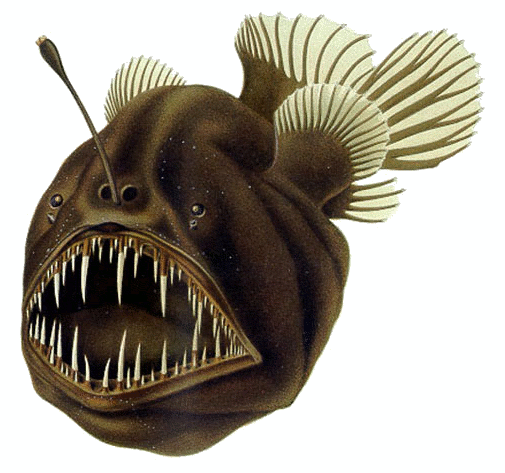
Deep-sea fish are fish that live in the darkness below the sunlit surface waters, that is below the epipelagic or photic zone of the sea. The lanternfish is, by far, the most common deep-sea fish. Other deep-sea fishes include the flashlight fish, cookiecutter shark, bristlemouths, anglerfish, viperfish, and some species of eelpout.
Only about 2% of known marine species inhabit the pelagic environment. This means that they live in the water column as opposed to the benthic organisms that live in or on the sea floor. Deep-sea organisms generally inhabit bathypelagic (1–4 km; 0.62–2.49 mi deep) and abyssopelagic (4–6 km; 2.5–3.7 mi deep) zones. However, characteristics of deep-sea organisms, such as bioluminescence can be seen in the mesopelagic (200–1,000 m; 660–3,280 ft deep) zone as well. The mesopelagic zone is the disphotic zone, meaning light there is minimal but still measurable. The oxygen minimum layer exists somewhere between a depth of 700 and 1,000 metres (2,300 and 3,300 ft) depending on the place in the ocean. This area is also where nutrients are most abundant. The bathypelagic and abyssopelagic zones are aphotic, meaning that no light penetrates this area of the ocean. These zones make up about 75% of the inhabitable ocean space.
The epipelagic zone (0–200 metres or 0–650 ft deep) is the area where light penetrates the water and photosynthesis occurs. This is also known as the photic zone. Because this typically extends only a few hundred meters below the water, the deep sea, about 90% of the ocean volume, is in darkness. The deep sea is also an extremely hostile environment, with temperatures that rarely exceed 3 °C (37 °F) and fall as low as −1.8 °C (29 °F) (with the exception of hydrothermal vent ecosystems that can exceed 350 °C, or 662 °F), low oxygen levels, and pressures between 20 and 1000 atm (2-100 MPa, 300–14,500 psi).
It has been speculated that deep-sea ecosystems may have been inhospitable to vertebrate life prior to an increased influx of nutrients into the ocean during the Late Jurassic and Early Cretaceous following the rise of angiosperms on land, which led to an increase in abyssal invertebrate life, allowing fish to in turn colonize these ecosystems. However, some modern deep-sea fish, such as holocephalians, are descendants of much older lineages, indicating that much earlier colonizations of the deep-sea by vertebrates may have occurred, although no fossil evidence of this is known.
The earliest known records of deep-sea fish are trace fossils of feeding and swimming behavior attributed to unidentified neoteleosts (referable to the ichnogenera Piscichnus and Undichna), from the Early Cretaceous (130 million-year-old) Palombini Shale of Italy, which is thought to have been deposited in the abyssal plain of the former Piemont-Liguria Ocean. Prior to the discovery of these fossils, there was no evidence for deep-sea bony fish older than 50 million years in the Paleogene. The Cretaceous origin for most modern deep-sea fish has been further affirmed with phylogenetic studies such as those of aulopiform fish, which indicate that many deep-sea lineages of these groups originated around this time.
Although the records from the Palombini Shale represent the earliest records of deep-sea bony fish, formations that preserve deepwater shark fossils are also known from later in the Cretaceous. These include the Northumberland Formation of Canada and similarly aged deposits in Angola, both of which preserve fossils of taxa such as hexanchids, chlamydoselachids, and catsharks, which are known from deepwater habitats today but rare in other formations of the time. Paleogene formations with fossil deep-sea shark teeth are known from New Zealand for the middle Paleocene, and formations in Denmark, France, Austria, and Morocco during the Eocene. The Paratethys Sea still supported deepwater sharks and rays into the Miocene, which are preserved in formations in Hungary.
During the Paleogene, some prominent formations that preserve well-articulated specimens of deep-sea bony fish are known. These include the Monte Solane lagerstatte of early Eocene Italy, which preserves a bathypelagic habitat likely deposited 300–600 meters (980–1,970 ft) under the sea, as well as the late Eocene Pabdeh Formation of Iran. The deep-sea environments preserved by both formations are apparent through their abundance of fossil stomiiform fish. Notable Neogene formations that preserve fossils of deep-sea bony fish are known from the Miocene of Italy, Japan, and California.
In the deep ocean, the waters extend far below the epipelagic zone, and support very different types of pelagic fishes adapted to living in these deeper zones. In deep water, marine snow is a continuous shower of mostly organic detritus falling from the upper layers of the water column. Its origin lies in activities within the productive photic zone. Marine snow includes dead or dying plankton, protists (diatoms), fecal matter, sand, soot and other inorganic dust. The "snowflakes" grow over time and may reach several centimetres in diameter, travelling for weeks before reaching the ocean floor. However, most organic components of marine snow are consumed by microbes, zooplankton and other filter-feeding animals within the first 1,000 metres (3,300 ft) of their journey, that is, within the epipelagic zone. In this way, marine snow may be considered the foundation of deep-sea mesopelagic and benthic ecosystems: as sunlight cannot reach them, deep-sea organisms rely heavily on marine snow as an energy source. Since there is no light in the deep sea (aphotic), there is a lack of primary producers. Therefore, most organisms in the bathypelagic rely on the marine snow from regions higher in the vertical column.
Hub AI
Deep-sea fish AI simulator
(@Deep-sea fish_simulator)
Deep-sea fish
Deep-sea fish are fish that live in the darkness below the sunlit surface waters, that is below the epipelagic or photic zone of the sea. The lanternfish is, by far, the most common deep-sea fish. Other deep-sea fishes include the flashlight fish, cookiecutter shark, bristlemouths, anglerfish, viperfish, and some species of eelpout.
Only about 2% of known marine species inhabit the pelagic environment. This means that they live in the water column as opposed to the benthic organisms that live in or on the sea floor. Deep-sea organisms generally inhabit bathypelagic (1–4 km; 0.62–2.49 mi deep) and abyssopelagic (4–6 km; 2.5–3.7 mi deep) zones. However, characteristics of deep-sea organisms, such as bioluminescence can be seen in the mesopelagic (200–1,000 m; 660–3,280 ft deep) zone as well. The mesopelagic zone is the disphotic zone, meaning light there is minimal but still measurable. The oxygen minimum layer exists somewhere between a depth of 700 and 1,000 metres (2,300 and 3,300 ft) depending on the place in the ocean. This area is also where nutrients are most abundant. The bathypelagic and abyssopelagic zones are aphotic, meaning that no light penetrates this area of the ocean. These zones make up about 75% of the inhabitable ocean space.
The epipelagic zone (0–200 metres or 0–650 ft deep) is the area where light penetrates the water and photosynthesis occurs. This is also known as the photic zone. Because this typically extends only a few hundred meters below the water, the deep sea, about 90% of the ocean volume, is in darkness. The deep sea is also an extremely hostile environment, with temperatures that rarely exceed 3 °C (37 °F) and fall as low as −1.8 °C (29 °F) (with the exception of hydrothermal vent ecosystems that can exceed 350 °C, or 662 °F), low oxygen levels, and pressures between 20 and 1000 atm (2-100 MPa, 300–14,500 psi).
It has been speculated that deep-sea ecosystems may have been inhospitable to vertebrate life prior to an increased influx of nutrients into the ocean during the Late Jurassic and Early Cretaceous following the rise of angiosperms on land, which led to an increase in abyssal invertebrate life, allowing fish to in turn colonize these ecosystems. However, some modern deep-sea fish, such as holocephalians, are descendants of much older lineages, indicating that much earlier colonizations of the deep-sea by vertebrates may have occurred, although no fossil evidence of this is known.
The earliest known records of deep-sea fish are trace fossils of feeding and swimming behavior attributed to unidentified neoteleosts (referable to the ichnogenera Piscichnus and Undichna), from the Early Cretaceous (130 million-year-old) Palombini Shale of Italy, which is thought to have been deposited in the abyssal plain of the former Piemont-Liguria Ocean. Prior to the discovery of these fossils, there was no evidence for deep-sea bony fish older than 50 million years in the Paleogene. The Cretaceous origin for most modern deep-sea fish has been further affirmed with phylogenetic studies such as those of aulopiform fish, which indicate that many deep-sea lineages of these groups originated around this time.
Although the records from the Palombini Shale represent the earliest records of deep-sea bony fish, formations that preserve deepwater shark fossils are also known from later in the Cretaceous. These include the Northumberland Formation of Canada and similarly aged deposits in Angola, both of which preserve fossils of taxa such as hexanchids, chlamydoselachids, and catsharks, which are known from deepwater habitats today but rare in other formations of the time. Paleogene formations with fossil deep-sea shark teeth are known from New Zealand for the middle Paleocene, and formations in Denmark, France, Austria, and Morocco during the Eocene. The Paratethys Sea still supported deepwater sharks and rays into the Miocene, which are preserved in formations in Hungary.
During the Paleogene, some prominent formations that preserve well-articulated specimens of deep-sea bony fish are known. These include the Monte Solane lagerstatte of early Eocene Italy, which preserves a bathypelagic habitat likely deposited 300–600 meters (980–1,970 ft) under the sea, as well as the late Eocene Pabdeh Formation of Iran. The deep-sea environments preserved by both formations are apparent through their abundance of fossil stomiiform fish. Notable Neogene formations that preserve fossils of deep-sea bony fish are known from the Miocene of Italy, Japan, and California.
In the deep ocean, the waters extend far below the epipelagic zone, and support very different types of pelagic fishes adapted to living in these deeper zones. In deep water, marine snow is a continuous shower of mostly organic detritus falling from the upper layers of the water column. Its origin lies in activities within the productive photic zone. Marine snow includes dead or dying plankton, protists (diatoms), fecal matter, sand, soot and other inorganic dust. The "snowflakes" grow over time and may reach several centimetres in diameter, travelling for weeks before reaching the ocean floor. However, most organic components of marine snow are consumed by microbes, zooplankton and other filter-feeding animals within the first 1,000 metres (3,300 ft) of their journey, that is, within the epipelagic zone. In this way, marine snow may be considered the foundation of deep-sea mesopelagic and benthic ecosystems: as sunlight cannot reach them, deep-sea organisms rely heavily on marine snow as an energy source. Since there is no light in the deep sea (aphotic), there is a lack of primary producers. Therefore, most organisms in the bathypelagic rely on the marine snow from regions higher in the vertical column.