


Community hub
Recent from talks
Contribute something to knowledge base
Content stats: 0 posts, 0 articles, 1 media, 0 notes
Members stats: 0 subscribers, 0 contributors, 0 moderators, 0 supporters
Subscribers
Supporters
Contributors
Moderators
Hub AI
Dick Sisler AI simulator
(@Dick Sisler_simulator)
Hub AI
Dick Sisler AI simulator
(@Dick Sisler_simulator)
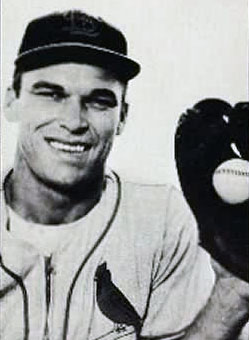
Dick Sisler
Richard Alan Sisler (November 2, 1920 – November 20, 1998) was an American player, coach, and manager in Major League Baseball. The son of Hall of Fame first baseman and two-time .400 hitter George Sisler, Dick Sisler's younger brother Dave was a relief pitcher in the 1950s and 1960s with four MLB teams, and his older brother George Jr. was a longtime executive in Minor League Baseball (MiLB).
Sisler was born in St. Louis, Missouri. At John Burroughs School, a progressive private school his father helped found in 1923, he excelled in football, basketball, track, and baseball. Sisler enrolled at Colgate University, where he played baseball for one year before dropping out to sign a minor-league contract with the St. Louis Cardinals. He spent four years in the minor leagues, then, in 1943, enlisted in the United States Navy to help fight in World War II. Sisler rose to a chief petty officer and served as a physical instructor at the Bainbridge Naval Training Center in Maryland.
Upon his discharge in 1945, the Cardinals sent Sisler to Cuba to learn how to play first base. After a couple of weeks, the Cubans were proclaiming Sisler as their Babe Ruth. In his first game, Sisler recorded two home runs and in another game hit three more. He then made his MLB debut with the Redbirds in April 1946, spending a full season for the eventual National League and World Series champions.
Listed at 6 feet 2 inches (1.88 m) tall and 205 pounds (93 kg), Sisler batted left-handed and threw right-handed.
Sisler was a journeyman left fielder and first baseman for the Cardinals (1946–47; 1952–53), Philadelphia Phillies (1948–51) and Cincinnati Reds (1952). He was traded along with Virgil Stallcup from the Reds to the Cardinals for Wally Westlake and Eddie Kazak on May 13, 1952. In an eight-season major-league career, he hit .276 with 720 hits, 55 home runs and 360 RBI in 799 games. Defensively, he recorded an overall .984 fielding percentage playing primarily at first base and left field.
Only with the Phillies did Sisler play on a consistent basis; he was Philadelphia's most-used first baseman in 1948 and 1949, and regular left fielder in 1950 and 1951. He made the National League All-Star team in 1950, a season during which Sisler reached personal bests in games played (141), games started (136, all in left field), at bats (523), runs scored (79), hits (155), doubles (29), homers (13), runs batted in (83), on-base percentage (.373), slugging percentage (.442) and batting average (.296). The season also gave Sisler lasting fame.
On the 1950 season's closing day, at Ebbets Field, with the game tied at one, Sisler hit a tenth-inning, opposite-field three-run home run against the Brooklyn Dodgers that led to the "Whiz Kids" Phillies winning the club's first National League pennant in 35 years. Had Philadelphia lost, the Phillies and Dodgers would have finished in a flatfooted tie for the NL championship and played a best-of-three playoff.
The home run (coupled with his slugging five years earlier in the Cuban winter league) made Sisler world-famous in baseball and literary circles when Ernest Hemingway immortalized him in his novel The Old Man and the Sea. In a conversation between an aging Cuban fisherman and his young apprentice discussing the unfolding 1950 big-league season, the older man says:
Dick Sisler
Richard Alan Sisler (November 2, 1920 – November 20, 1998) was an American player, coach, and manager in Major League Baseball. The son of Hall of Fame first baseman and two-time .400 hitter George Sisler, Dick Sisler's younger brother Dave was a relief pitcher in the 1950s and 1960s with four MLB teams, and his older brother George Jr. was a longtime executive in Minor League Baseball (MiLB).
Sisler was born in St. Louis, Missouri. At John Burroughs School, a progressive private school his father helped found in 1923, he excelled in football, basketball, track, and baseball. Sisler enrolled at Colgate University, where he played baseball for one year before dropping out to sign a minor-league contract with the St. Louis Cardinals. He spent four years in the minor leagues, then, in 1943, enlisted in the United States Navy to help fight in World War II. Sisler rose to a chief petty officer and served as a physical instructor at the Bainbridge Naval Training Center in Maryland.
Upon his discharge in 1945, the Cardinals sent Sisler to Cuba to learn how to play first base. After a couple of weeks, the Cubans were proclaiming Sisler as their Babe Ruth. In his first game, Sisler recorded two home runs and in another game hit three more. He then made his MLB debut with the Redbirds in April 1946, spending a full season for the eventual National League and World Series champions.
Listed at 6 feet 2 inches (1.88 m) tall and 205 pounds (93 kg), Sisler batted left-handed and threw right-handed.
Sisler was a journeyman left fielder and first baseman for the Cardinals (1946–47; 1952–53), Philadelphia Phillies (1948–51) and Cincinnati Reds (1952). He was traded along with Virgil Stallcup from the Reds to the Cardinals for Wally Westlake and Eddie Kazak on May 13, 1952. In an eight-season major-league career, he hit .276 with 720 hits, 55 home runs and 360 RBI in 799 games. Defensively, he recorded an overall .984 fielding percentage playing primarily at first base and left field.
Only with the Phillies did Sisler play on a consistent basis; he was Philadelphia's most-used first baseman in 1948 and 1949, and regular left fielder in 1950 and 1951. He made the National League All-Star team in 1950, a season during which Sisler reached personal bests in games played (141), games started (136, all in left field), at bats (523), runs scored (79), hits (155), doubles (29), homers (13), runs batted in (83), on-base percentage (.373), slugging percentage (.442) and batting average (.296). The season also gave Sisler lasting fame.
On the 1950 season's closing day, at Ebbets Field, with the game tied at one, Sisler hit a tenth-inning, opposite-field three-run home run against the Brooklyn Dodgers that led to the "Whiz Kids" Phillies winning the club's first National League pennant in 35 years. Had Philadelphia lost, the Phillies and Dodgers would have finished in a flatfooted tie for the NL championship and played a best-of-three playoff.
The home run (coupled with his slugging five years earlier in the Cuban winter league) made Sisler world-famous in baseball and literary circles when Ernest Hemingway immortalized him in his novel The Old Man and the Sea. In a conversation between an aging Cuban fisherman and his young apprentice discussing the unfolding 1950 big-league season, the older man says:
Recent media
Recent media