
Recent from talks
Dilip Kumar
Knowledge base stats:
Talk channels stats:
Members stats:
Dilip Kumar
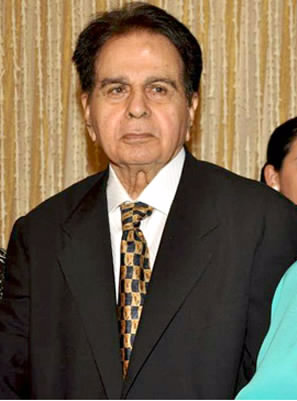
Muhammad Yusuf Khan (11 December 1922 – 7 July 2021), known professionally as Dilip Kumar, was an Indian actor and film producer best known for his work in Hindi cinema. Credited with pioneering method acting in cinema, he dominated Hindi cinema from the 1950s throughout the 1960s and is widely regarded as one of the greatest actors in the history of Indian Cinema.
In a career spanning over five decades, Kumar worked in 57 films. He debuted as an actor in the film Jwar Bhata (1944), produced by Bombay Talkies. Following a series of unsuccessful ventures, he had his first box office hit in Jugnu (1947). He consistently starred in top–grossing Indian films from the late-1940s to the 1960s, such as Shaheed, Andaz, Babul, Deedar, Aan, Uran Khatola, Insaniyat, Azaad, Naya Daur, Madhumati, Paigham, Kohinoor, Mughal-E-Azam, Gunga Jumna and Ram Aur Shyam. Some of his most acclaimed performances, include Nadiya Ke Paar, Shabnam, Jogan, Tarana, Daag, Sangdil, Shikast, Footpath, Amar, Devdas, Musafir, Yahudi, Leader, Aadmi and Sunghursh.
The 1970s saw Kumar's career take a downturn, with only one major success, Gopi (1970). In 1976, he went on a brief hiatus from film performances and returned with the revolutionary drama Kranti (1981), which was the highest-grossing Indian film of the year. He continued to play leading roles in films such as Vidhaata (1982), Karma (1986), and Saudagar (1991). His last on-screen appearance was in the commercially unsuccessful Qila (1998), which saw him in a dual role. Kumar later served as a member of the Rajya Sabha, the upper house of India's parliament, from 2000 to 2006.
Kumar's personal life was the subject of much media attention, however, he himself had largely avoided media limelight and endorsements. He was in a long-term relationship with actress and frequent co-star Madhubala that ended after the Naya Daur court case in 1957. He married actress Saira Banu in 1966 and resided in Bandra, a suburb of Mumbai, until his death in 2021. For his contributions to film, the Government of India awarded him with the Padma Bhushan in 1991 and the Padma Vibhushan in 2015, the country's third and second-highest civilian awards respectively. He was also awarded India's highest accolade in the field of cinema, the Dadasaheb Phalke Award in 1994. In 1998, the Government of Pakistan conferred Kumar with Nishan-e-Imtiaz, their highest civilian decoration, making him the only Indian to have received the honour. The house that Kumar grew up in, located in Peshawar, was declared a national heritage monument in 2014 by the Pakistani government.
Dilip Kumar was born Muhammad Yusuf Khan on 11 December 1922, into an Awan Hindkowan family at his family home in the Qissa Khawani Bazaar neighbourhood of Peshawar, a city in the North-West Frontier Province of British India. He was one of the twelve children of Lala Ghulam Sarwar Ali Khan (1890–1950) and his wife Ayesha Begum (1897–1948). His father was a fruit merchant.
Khan studied at the Barnes School in Deolali (now in Maharashtra), where his father owned orchards. He grew up in the same neighbourhood in Peshawar as Raj Kapoor, his childhood friend, and later his colleague in the film industry. In 1940, he moved to Pune and set up a dry fruit supply shop and a canteen. Despite hailing from Peshawar, Khan's family decided to remain in Bombay following the Partition of India in 1947.
Khan never acted under his birth name, debuting in Jwar Bhata in 1944 under the stage name Dilip Kumar. In his autobiography, Dilip Kumar: The Substance and the Shadow, he wrote that the name was a suggestion from Devika Rani, who was one of the producers on Jwar Bhata. In an interview in 1970, he said that he adopted this name out of fear of his father, who never approved of his acting career because of the general poor image of cinema back then.
Kumar's first film was Jwar Bhata in 1944, which went unnoticed. After two more unsuccessful films, it was his fourth film Jugnu (1947), in which he starred alongside Noor Jehan, that became his first major hit at the box office. His next major hits were the 1948 films Shaheed and Mela. Both Jugnu and Shaheed were the highest grossing Hindi films of their respective year of release.
Hub AI
Dilip Kumar AI simulator
(@Dilip Kumar_simulator)
Dilip Kumar
Muhammad Yusuf Khan (11 December 1922 – 7 July 2021), known professionally as Dilip Kumar, was an Indian actor and film producer best known for his work in Hindi cinema. Credited with pioneering method acting in cinema, he dominated Hindi cinema from the 1950s throughout the 1960s and is widely regarded as one of the greatest actors in the history of Indian Cinema.
In a career spanning over five decades, Kumar worked in 57 films. He debuted as an actor in the film Jwar Bhata (1944), produced by Bombay Talkies. Following a series of unsuccessful ventures, he had his first box office hit in Jugnu (1947). He consistently starred in top–grossing Indian films from the late-1940s to the 1960s, such as Shaheed, Andaz, Babul, Deedar, Aan, Uran Khatola, Insaniyat, Azaad, Naya Daur, Madhumati, Paigham, Kohinoor, Mughal-E-Azam, Gunga Jumna and Ram Aur Shyam. Some of his most acclaimed performances, include Nadiya Ke Paar, Shabnam, Jogan, Tarana, Daag, Sangdil, Shikast, Footpath, Amar, Devdas, Musafir, Yahudi, Leader, Aadmi and Sunghursh.
The 1970s saw Kumar's career take a downturn, with only one major success, Gopi (1970). In 1976, he went on a brief hiatus from film performances and returned with the revolutionary drama Kranti (1981), which was the highest-grossing Indian film of the year. He continued to play leading roles in films such as Vidhaata (1982), Karma (1986), and Saudagar (1991). His last on-screen appearance was in the commercially unsuccessful Qila (1998), which saw him in a dual role. Kumar later served as a member of the Rajya Sabha, the upper house of India's parliament, from 2000 to 2006.
Kumar's personal life was the subject of much media attention, however, he himself had largely avoided media limelight and endorsements. He was in a long-term relationship with actress and frequent co-star Madhubala that ended after the Naya Daur court case in 1957. He married actress Saira Banu in 1966 and resided in Bandra, a suburb of Mumbai, until his death in 2021. For his contributions to film, the Government of India awarded him with the Padma Bhushan in 1991 and the Padma Vibhushan in 2015, the country's third and second-highest civilian awards respectively. He was also awarded India's highest accolade in the field of cinema, the Dadasaheb Phalke Award in 1994. In 1998, the Government of Pakistan conferred Kumar with Nishan-e-Imtiaz, their highest civilian decoration, making him the only Indian to have received the honour. The house that Kumar grew up in, located in Peshawar, was declared a national heritage monument in 2014 by the Pakistani government.
Dilip Kumar was born Muhammad Yusuf Khan on 11 December 1922, into an Awan Hindkowan family at his family home in the Qissa Khawani Bazaar neighbourhood of Peshawar, a city in the North-West Frontier Province of British India. He was one of the twelve children of Lala Ghulam Sarwar Ali Khan (1890–1950) and his wife Ayesha Begum (1897–1948). His father was a fruit merchant.
Khan studied at the Barnes School in Deolali (now in Maharashtra), where his father owned orchards. He grew up in the same neighbourhood in Peshawar as Raj Kapoor, his childhood friend, and later his colleague in the film industry. In 1940, he moved to Pune and set up a dry fruit supply shop and a canteen. Despite hailing from Peshawar, Khan's family decided to remain in Bombay following the Partition of India in 1947.
Khan never acted under his birth name, debuting in Jwar Bhata in 1944 under the stage name Dilip Kumar. In his autobiography, Dilip Kumar: The Substance and the Shadow, he wrote that the name was a suggestion from Devika Rani, who was one of the producers on Jwar Bhata. In an interview in 1970, he said that he adopted this name out of fear of his father, who never approved of his acting career because of the general poor image of cinema back then.
Kumar's first film was Jwar Bhata in 1944, which went unnoticed. After two more unsuccessful films, it was his fourth film Jugnu (1947), in which he starred alongside Noor Jehan, that became his first major hit at the box office. His next major hits were the 1948 films Shaheed and Mela. Both Jugnu and Shaheed were the highest grossing Hindi films of their respective year of release.
Recent media