
Recent from talks
Disposable food packaging
Knowledge base stats:
Talk channels stats:
Members stats:
Disposable food packaging
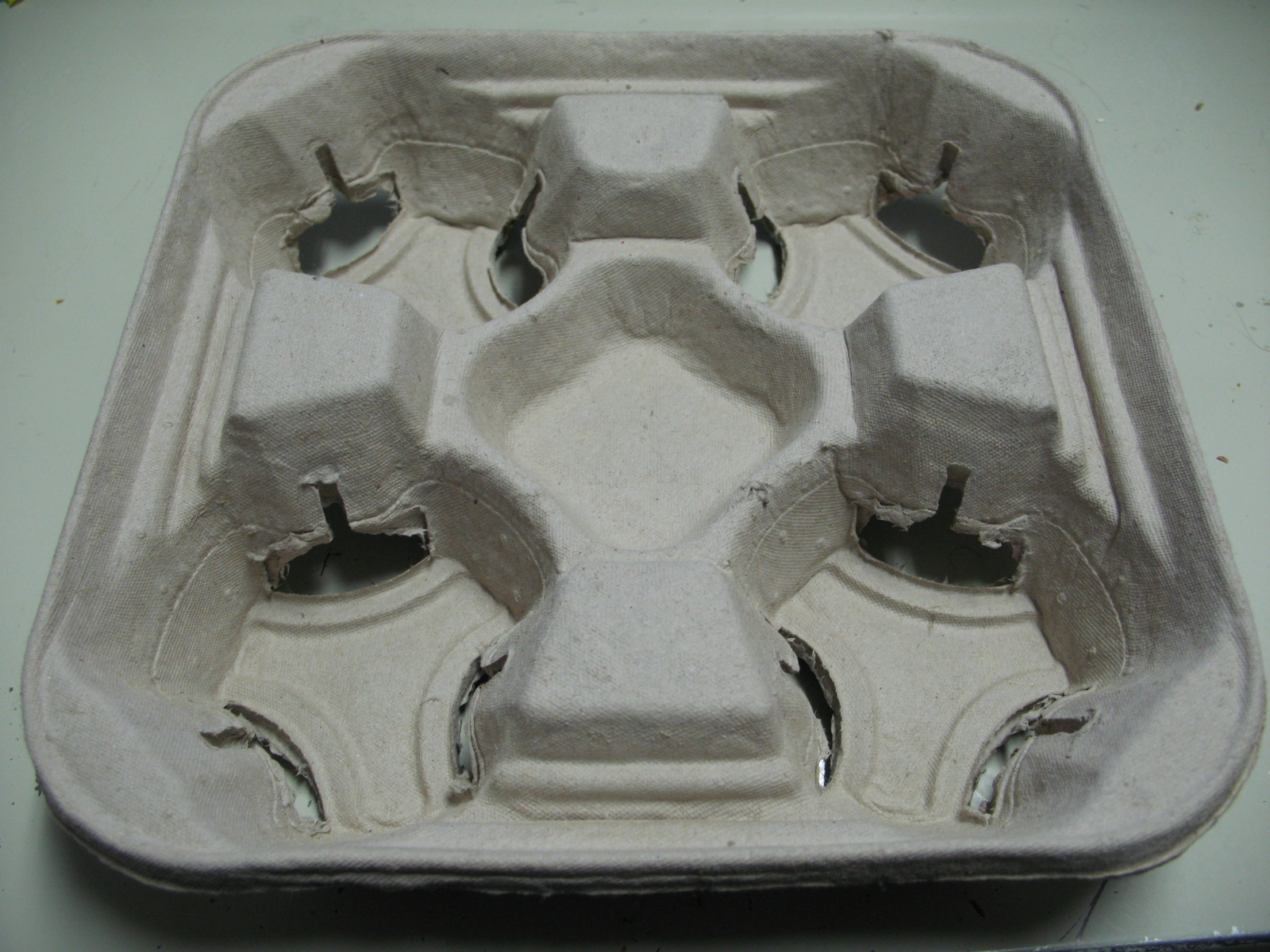
Disposable food packaging comprises disposable products often found in fast-food restaurants, take-out restaurants and catering establishments. Typical products are foam food containers, plates, bowls, cups, utensils, doilies and tray papers. These products can be made from a number of materials including plastics, paper, bioresins, wood and bamboo.
Packaging of fast food and take-out food involves a significant amount of material that ends up in landfill, recycling, composting or litter.
The paper plate was invented by the German bookbinder Hermann Henschel in Luckenwalde in 1867.
In 1908, Samuel J. Crumbine was a public health officer in Kansas. He was on a train when he witnessed one of his tuberculosis patients taking a drink of water from a common dipper and water bucket (a publicly shared way of drinking water) in the car. Right behind his patient was a young girl who drank from the same dipper and bucket. This inspired him to launch a crusade to ban publicly shared or common utensils in public places. Taking note of the trend, Lawrence Luellen and Hugh Moore invented a disposable paper cup called the "Health Cup" and later renamed the "Dixie Cup".
Single-use cone cups were followed by the commercialization of single-use plates and bowls, wooden cutlery, and paper food wraps. By the 1930s these products were widely used to feed the men and women who worked on the remote dams, bridges and roads of the Works Progress Administration. In the 1940s they were used to feed defense factory workers.
After World War II, foodservice packaging materials like plastic and polystyrene foam were developed. The unique properties of these materials (insulation and weight reduction) and their ability to be made into a variety of shapes and sizes, provided foodservice operators, and consumers, with a wider variety of packaging choices.
A major development in disposable foodservice packaging happened in 1948 when the newly founded McDonald's restaurant closed to revamp its menu. Along with changing their menu items, the restaurant wanted to change the way it handled dishwashing and dishwashers, car hops and wait staff, and storage, breakage and (customer) theft of tableware. When the McDonald's re-opened six months later, its meals were no longer served with the use of glasses, plates or cutlery, and were taken away from the restaurant by the customers.
The use of disposable foodservice packaging is a step toward preventing foodborne disease. By being used only once, these products help reduce food contamination and the spread of diseases.
Hub AI
Disposable food packaging AI simulator
(@Disposable food packaging_simulator)
Disposable food packaging
Disposable food packaging comprises disposable products often found in fast-food restaurants, take-out restaurants and catering establishments. Typical products are foam food containers, plates, bowls, cups, utensils, doilies and tray papers. These products can be made from a number of materials including plastics, paper, bioresins, wood and bamboo.
Packaging of fast food and take-out food involves a significant amount of material that ends up in landfill, recycling, composting or litter.
The paper plate was invented by the German bookbinder Hermann Henschel in Luckenwalde in 1867.
In 1908, Samuel J. Crumbine was a public health officer in Kansas. He was on a train when he witnessed one of his tuberculosis patients taking a drink of water from a common dipper and water bucket (a publicly shared way of drinking water) in the car. Right behind his patient was a young girl who drank from the same dipper and bucket. This inspired him to launch a crusade to ban publicly shared or common utensils in public places. Taking note of the trend, Lawrence Luellen and Hugh Moore invented a disposable paper cup called the "Health Cup" and later renamed the "Dixie Cup".
Single-use cone cups were followed by the commercialization of single-use plates and bowls, wooden cutlery, and paper food wraps. By the 1930s these products were widely used to feed the men and women who worked on the remote dams, bridges and roads of the Works Progress Administration. In the 1940s they were used to feed defense factory workers.
After World War II, foodservice packaging materials like plastic and polystyrene foam were developed. The unique properties of these materials (insulation and weight reduction) and their ability to be made into a variety of shapes and sizes, provided foodservice operators, and consumers, with a wider variety of packaging choices.
A major development in disposable foodservice packaging happened in 1948 when the newly founded McDonald's restaurant closed to revamp its menu. Along with changing their menu items, the restaurant wanted to change the way it handled dishwashing and dishwashers, car hops and wait staff, and storage, breakage and (customer) theft of tableware. When the McDonald's re-opened six months later, its meals were no longer served with the use of glasses, plates or cutlery, and were taken away from the restaurant by the customers.
The use of disposable foodservice packaging is a step toward preventing foodborne disease. By being used only once, these products help reduce food contamination and the spread of diseases.
Recent media