
Recent from talks
Dissolution of Czechoslovakia
Knowledge base stats:
Talk channels stats:
Members stats:
Dissolution of Czechoslovakia
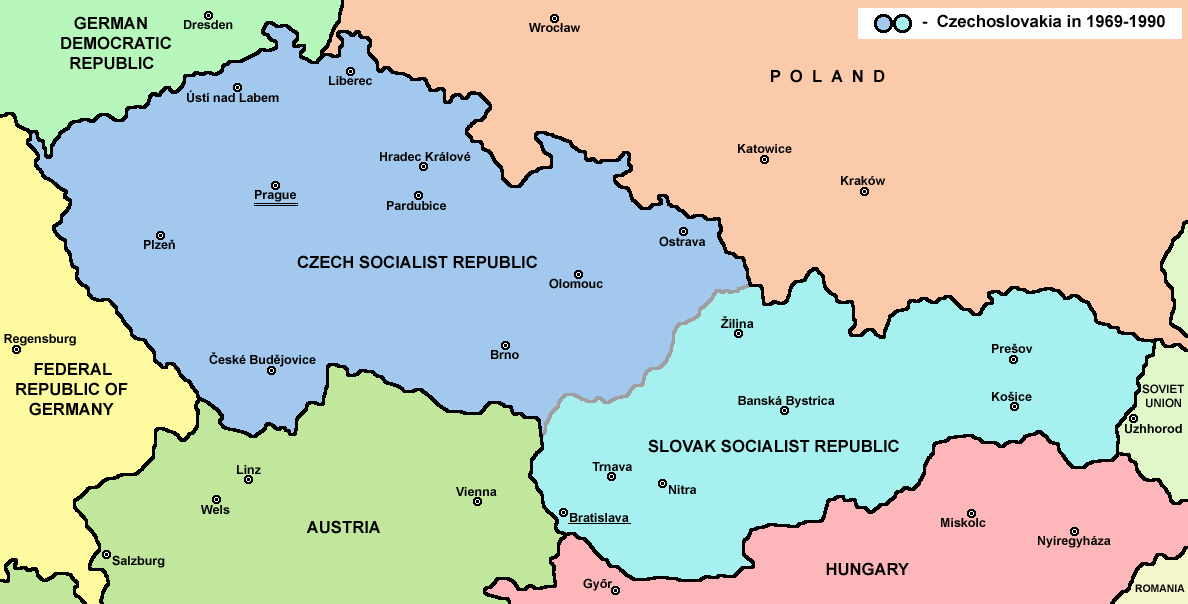
The dissolution of Czechoslovakia, which took effect on 31 December 1992, was the self-determined partition of the federal republic of Czechoslovakia into the independent countries of the Czech Republic and Slovakia. Both mirrored the Czech Socialist Republic and the Slovak Socialist Republic, which had been created in 1969 as the constituent states of the Czechoslovak Socialist Republic until the end of 1989.
It is sometimes known as the Velvet Divorce, a reference to the bloodless Velvet Revolution of 1989, which had led to the end of the rule of the Communist Party of Czechoslovakia.
Czechoslovakia was created with the dissolution of Austria-Hungary at the end of World War I. In 1918, a meeting took place in the American city of Pittsburgh, at which the future Czechoslovak President Tomáš Garrigue Masaryk and other Czech and Slovak representatives signed the Pittsburgh Agreement, which promised a common state consisting of two equal nations: Slovaks and Czechs. However, the Czechoslovak Constitution of 1920 specified a single "Czechoslovak nation".
In subsequent years, there were political tensions in the new country between Czechoslovakists and those seeking greater autonomy for the Slovaks in particular. In March 1939, with pressure from Adolf Hitler, the First Slovak Republic was created as a satellite state of Germany with limited sovereignty. The alignment with the Soviet Union after World War II oversaw the reunification into the Third Czechoslovak Republic.
In 1968, the Constitutional Law of Federation reinstated an official federal structure of the 1917 type, but during the Normalization Period in the 1970s, Gustáv Husák, despite being a Slovak himself, returned most control to Prague. That approach encouraged a regrowth of Slovak separatism after the fall of communism.
By 1991, the Czech Republic's GDP per capita was some 20% higher than Slovakia's. Transfer payments from the Czech budget to Slovakia, which had been the rule in the past, were stopped in January 1991.
Many Czechs and Slovaks desired the continued existence of a federal Czechoslovakia. However, the politicians of leading Slovak parties in Parliament, notably the Slovak National Party, would stand to benefit politically if the country were split in two, and advocated a looser form of complete independence and sovereignty. For a few years, political parties re-emerged, but Czech parties had little or no presence in Slovakia and vice versa. To have a functioning state, the government demanded continued control from Prague, but Slovaks continued to ask for decentralisation.
In 1992, the Czech Republic elected Václav Klaus and others, who demanded either an even tighter federation ("viable federation") or two independent states. Vladimír Mečiar and other leading Slovak politicians wanted a kind of confederation. Both sides opened frequent and intense negotiations in June. On 17 July, the Slovak parliament adopted the declaration of independence of the Slovak nation. Six days later, Klaus and Mečiar agreed to secede Czechoslovakia into two separate states at a meeting in Bratislava. Czechoslovak President Václav Havel resigned, rather than oversee the secession, which he had opposed. In a September 1992 opinion poll, only 37% of Slovaks and 36% of Czechs favoured dissolution.
Hub AI
Dissolution of Czechoslovakia AI simulator
(@Dissolution of Czechoslovakia_simulator)
Dissolution of Czechoslovakia
The dissolution of Czechoslovakia, which took effect on 31 December 1992, was the self-determined partition of the federal republic of Czechoslovakia into the independent countries of the Czech Republic and Slovakia. Both mirrored the Czech Socialist Republic and the Slovak Socialist Republic, which had been created in 1969 as the constituent states of the Czechoslovak Socialist Republic until the end of 1989.
It is sometimes known as the Velvet Divorce, a reference to the bloodless Velvet Revolution of 1989, which had led to the end of the rule of the Communist Party of Czechoslovakia.
Czechoslovakia was created with the dissolution of Austria-Hungary at the end of World War I. In 1918, a meeting took place in the American city of Pittsburgh, at which the future Czechoslovak President Tomáš Garrigue Masaryk and other Czech and Slovak representatives signed the Pittsburgh Agreement, which promised a common state consisting of two equal nations: Slovaks and Czechs. However, the Czechoslovak Constitution of 1920 specified a single "Czechoslovak nation".
In subsequent years, there were political tensions in the new country between Czechoslovakists and those seeking greater autonomy for the Slovaks in particular. In March 1939, with pressure from Adolf Hitler, the First Slovak Republic was created as a satellite state of Germany with limited sovereignty. The alignment with the Soviet Union after World War II oversaw the reunification into the Third Czechoslovak Republic.
In 1968, the Constitutional Law of Federation reinstated an official federal structure of the 1917 type, but during the Normalization Period in the 1970s, Gustáv Husák, despite being a Slovak himself, returned most control to Prague. That approach encouraged a regrowth of Slovak separatism after the fall of communism.
By 1991, the Czech Republic's GDP per capita was some 20% higher than Slovakia's. Transfer payments from the Czech budget to Slovakia, which had been the rule in the past, were stopped in January 1991.
Many Czechs and Slovaks desired the continued existence of a federal Czechoslovakia. However, the politicians of leading Slovak parties in Parliament, notably the Slovak National Party, would stand to benefit politically if the country were split in two, and advocated a looser form of complete independence and sovereignty. For a few years, political parties re-emerged, but Czech parties had little or no presence in Slovakia and vice versa. To have a functioning state, the government demanded continued control from Prague, but Slovaks continued to ask for decentralisation.
In 1992, the Czech Republic elected Václav Klaus and others, who demanded either an even tighter federation ("viable federation") or two independent states. Vladimír Mečiar and other leading Slovak politicians wanted a kind of confederation. Both sides opened frequent and intense negotiations in June. On 17 July, the Slovak parliament adopted the declaration of independence of the Slovak nation. Six days later, Klaus and Mečiar agreed to secede Czechoslovakia into two separate states at a meeting in Bratislava. Czechoslovak President Václav Havel resigned, rather than oversee the secession, which he had opposed. In a September 1992 opinion poll, only 37% of Slovaks and 36% of Czechs favoured dissolution.
Recent media