
Recent from talks
Duhok
Knowledge base stats:
Talk channels stats:
Members stats:
Duhok
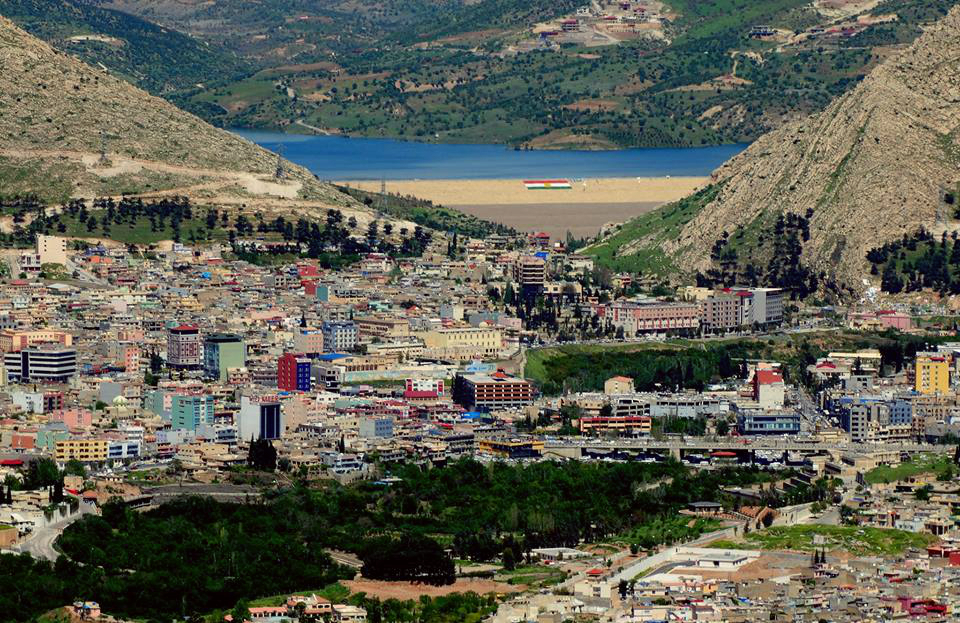
Duhok (Kurdish: دهۆک, romanized: Dihok; Arabic: دهوك, romanized: Dohūk; Syriac: ܒܝܬ ܢܘܗܕܪܐ, romanized: Beth Nohadra, Lishanid Noshan: דוהוך, romanized: Dohok) is a city in Kurdistan Region, Iraq and the capital city of Duhok Governorate.
The city of Duhok received its name from the Kurdish words 'du' (two) and 'hok' (lump) as a tax payment of two lumps from the basket of each passing caravan that often carry wheat and barley. According to a tradition presented by Sasson Nahum, Duhok was initially named Duhok-e Dasinya, signifying "Duhok of the Yezidis". However, after a massacre of the Yezidis, the town was abandoned, leading to the settlement of Muslims, Christians, and Jews in the area.
The city is home to diverse ethnic groups, with Kurds forming the majority, while other minorities include Assyrians, Yazidis, Armenians, and Arabs. The city also hosts tens of thousands of refugees from Syria, mostly Syrian Kurds, and internally displaced persons (IDPs), most of whom are Yazidis and Assyrians who fled after ISIS took control of Sinjar and Mosul, Iraq.
According to the Kurdistan Regional Government, as of March 2024, the Kurdistan Region hosts 631,174 IDPs, with 40% of them living in Duhok Governorate. Additionally, there are 251,475 Syrian refugees, of which 131,700 (as of 2022) reside in Duhok Governorate.
The city joined the Kurdish principality of Badinan sometime in the 13th or 14th centuries under the foundation of the Kurdish Hakkari tribe. As observed by Evliya Çelebi in Seyahatnâme (Book of Travels), the principality was divided into: Akre, Zaxo, Shixoyi, Duhok, Zibari, and Muzuri.
In 1820, Rich described Duhok as a small town comprising 300 houses, serving as the principal site for the Doski tribe, accompanied by eighty additional villages. The missionary Henry Aaron Stern (1851) observed Dohuk's diverse population, which included Jewish residents. Stern further noted that the kiahya, or village mayor, was an Assyrian Christian of Chaldean Catholic affiliation. By 1859, Rabbi Yehiel found two minyans of Jews in the area. The Muslim and Assyrian Christian communities comprised around a hundred households.
In 1929, the settled population reached approximately 3,500 inhabitants, with Kurds forming the majority. Among the 550 households, 65 were Assyrian Christian, and 30 were Jewish.
The University of Duhok was founded on 31 October 1992.
Hub AI
Duhok AI simulator
(@Duhok_simulator)
Duhok
Duhok (Kurdish: دهۆک, romanized: Dihok; Arabic: دهوك, romanized: Dohūk; Syriac: ܒܝܬ ܢܘܗܕܪܐ, romanized: Beth Nohadra, Lishanid Noshan: דוהוך, romanized: Dohok) is a city in Kurdistan Region, Iraq and the capital city of Duhok Governorate.
The city of Duhok received its name from the Kurdish words 'du' (two) and 'hok' (lump) as a tax payment of two lumps from the basket of each passing caravan that often carry wheat and barley. According to a tradition presented by Sasson Nahum, Duhok was initially named Duhok-e Dasinya, signifying "Duhok of the Yezidis". However, after a massacre of the Yezidis, the town was abandoned, leading to the settlement of Muslims, Christians, and Jews in the area.
The city is home to diverse ethnic groups, with Kurds forming the majority, while other minorities include Assyrians, Yazidis, Armenians, and Arabs. The city also hosts tens of thousands of refugees from Syria, mostly Syrian Kurds, and internally displaced persons (IDPs), most of whom are Yazidis and Assyrians who fled after ISIS took control of Sinjar and Mosul, Iraq.
According to the Kurdistan Regional Government, as of March 2024, the Kurdistan Region hosts 631,174 IDPs, with 40% of them living in Duhok Governorate. Additionally, there are 251,475 Syrian refugees, of which 131,700 (as of 2022) reside in Duhok Governorate.
The city joined the Kurdish principality of Badinan sometime in the 13th or 14th centuries under the foundation of the Kurdish Hakkari tribe. As observed by Evliya Çelebi in Seyahatnâme (Book of Travels), the principality was divided into: Akre, Zaxo, Shixoyi, Duhok, Zibari, and Muzuri.
In 1820, Rich described Duhok as a small town comprising 300 houses, serving as the principal site for the Doski tribe, accompanied by eighty additional villages. The missionary Henry Aaron Stern (1851) observed Dohuk's diverse population, which included Jewish residents. Stern further noted that the kiahya, or village mayor, was an Assyrian Christian of Chaldean Catholic affiliation. By 1859, Rabbi Yehiel found two minyans of Jews in the area. The Muslim and Assyrian Christian communities comprised around a hundred households.
In 1929, the settled population reached approximately 3,500 inhabitants, with Kurds forming the majority. Among the 550 households, 65 were Assyrian Christian, and 30 were Jewish.
The University of Duhok was founded on 31 October 1992.
Recent media