Hubbry Logo
Clergy houseClergy houseMain
Open search
Clergy house
Community hub
Clergy house
logo
8 pages, 0 posts
0 subscribers
Be the first to start a discussion here.
Clergy house
Clergy house
from Wikipedia
The former parsonage in Haworth, England, which once served as the Brontë family home and is now the Brontë Parsonage Museum

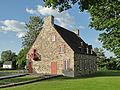
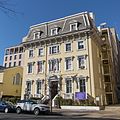
A clergy house is the residence, or former residence, of one or more priests or ministers of a given religion, serving as both a home and a base for the occupant's ministry.[1][2] Residences of this type can have a variety of names, such as manse, parsonage, presbytery, rectory, or vicarage.

Function

[edit]

A clergy house is typically owned and maintained by a church, as a benefit to its clergy. This practice exists in many denominations because of the tendency of clergy to be transferred from one church to another at relatively frequent intervals. Also, in smaller communities, suitable housing is not always available. In addition, such a residence can be supplied in lieu of salary, which may not be able to be provided (especially at smaller congregations).[3]

Catholic clergy houses in particular may be lived in by several priests from a parish. Clergy houses frequently serve as the administrative office of the local parish, as well as a residence. They are normally located next to, or at least close to, the church their occupant serves.

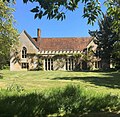
Partly because of the general conservation of churches, many clergy houses have survived and are of historic interest or importance. In the United Kingdom, the 14th-century Alfriston Clergy House was the first property to be acquired by the National Trust. It was purchased in a state of near ruin in 1896 for £10, the vicarage having moved elsewhere long before.[4]

In some countries where the clergy houses were often rather grand, many of them have now been sold off by the churches and replaced by more modest properties.[5] Numerous clergy houses have been acquired by families for use as private homes. Others have been adapted as offices or used for various civic functions. In many villages in England, the former clergy house is called the "Old Vicarage" or the "Old Rectory". In Scotland, a former clergy house may be known as the "Old Manse".

Nomenclature

[edit]

There are a number of more specific terms whose use depends on the rank of the occupant, the denomination, and the locality. Above the parish level, a bishop's house was traditionally called a "Bishop's palace", a dean's residence is known as a deanery, and a canon lives in a canonry or "canon's house". Other clerical titles have different names for their houses.[6]

A parsonage is where the parson of a church resides; a parson is the priest/presbyter of a parish church. A rectory is the residence of an ecclesiastical rector, although the name may also be applied to the home of an academic rector (e.g., a Scottish university rector), or other person with that title. In North American Anglicanism, a far greater proportion of parish clergy were (and still are) titled as rector than in Britain, so the term rectory is more common there.[7]

The names used for homes of ordinary parish clergy vary considerably and include the following:

  • The Anglican Communion uses the terms vicarage or (more informal and old-fashioned) parsonage, and rectory if appropriate.
  • Roman Catholics use the terms priory, clergy house, parochial house (mostly in Ireland), chapel house (in Scotland), presbytery, and rectory (especially in Massachusetts) if appropriate. In the Philippines, the term convent is used, a direct calque of the Spanish convento. An ecclesiastical residence, sometimes called a presbytery, is the residence of a cleric in their diocese or parish.[8]
  • Manse (cognate with mansion) is a Scottish term that is used in Scottish Presbyterianism, and also in other parts of the British Isles by Non-conformist churches such as the Methodists and the United Reformed Church. This name is also commonly used by Baptists in the United Kingdom[9] and in some Commonwealth countries.[10]
  • Pastorium is the usual term in the Southern United States, especially among Baptists.[11]
  • Lutheran churches often use parsonage.
  • The name "parish house" is used by many denominations.
[edit]

See also

[edit]

References

[edit]

Further reading

[edit]
Revisions and contributorsEdit on WikipediaRead on Wikipedia
from Grokipedia
A clergy house is the residence, or former residence, of one or more priests, ministers, or other members, typically provided and maintained by a religious such as a church or to serve as both a private home and a base for duties and . These dwellings, often situated near the associated , vary in name by denomination and region, including parsonage (common in Anglican and general Protestant contexts), rectory (for rectors), vicarage (for vicars), manse (prevalent in Presbyterian, Methodist, and Baptist traditions), and presbytery (used especially for Roman Catholic priests). Historically rooted in Christian traditions, clergy houses emerged as essential components of ecclesiastical property management, evolving alongside societal changes in housing and clergy roles. In England, parsonages were linked to church benefices from the medieval period, encompassing not only the residence but also glebe lands—arable plots owned by the church and farmed by or for the incumbent to support their livelihood. The term "clergy house" first appeared in English usage in the late 1500s, reflecting the growing formalization of clerical housing amid the Reformation. Over centuries, these homes developed in parallel with broader architectural trends, transitioning from simple medieval structures to more comfortable 18th- and 19th-century buildings that emphasized privacy, with improvements driven by legislation such as the Gilbert Act of 1776, which allowed incumbents to mortgage glebe for construction or upgrades, and the 19th-century Ecclesiastical Leasing Acts that facilitated property enhancements. The Dilapidations Act of 1871 further standardized maintenance by mandating inspections to prevent neglect, underscoring the shared responsibility between clergy and diocesan authorities. In the , houses remain vital as diocesan-owned assets, funded through contributions and upheld to modern standards for safety and comfort, symbolizing the integration of personal life and ministry. Across English and American , these residences have housed influential figures, including writers like and presidents like , highlighting their cultural significance as centers of , community life, and spiritual . However, their prevalence has declined in the United States, from 61% of living in parsonages in 1976 to just 14% by 2013, amid shifts toward housing allowances, though they continue to offer stability and tax benefits in many denominations.

Definition and Purpose

Definition

A clergy house is the residence provided by a religious , such as a church or , for one or more members, functioning as both a personal home and an operational base for performing religious duties. Key characteristics of a clergy house include its typical ownership or by the religious body, proximity to a to facilitate ministry, and adaptations for hosting meetings, community events, or counseling sessions. These features ensure the residence supports the clergy's family life while enabling effective work. Unlike monasteries or convents, which serve as communal living quarters for groups of unrelated religious individuals such as or dedicated to contemplative or cloistered life, a clergy house is designed for individual or family-based engaged in active ministry. Terms like rectory (in Anglican and Episcopal contexts) or manse (in Presbyterian traditions) denote specific types of clergy houses.

Primary Functions

A clergy house primarily serves as the official residence for a , minister, or other religious leader and their family, offering a stable living environment directly linked to their appointment within the church structure. This arrangement ensures that the clergy member can focus on their vocational responsibilities without the distractions of housing instability, particularly in traditions like where appointments are made annually by church authorities. In many denominations, such as the [Catholic Church](/page/Catholic Church), the rectory provides private quarters including bedrooms, bathrooms, and sitting areas to maintain personal dignity and family life alongside professional demands. Beyond residential purposes, clergy houses function as a central base for duties, enabling activities such as counseling parishioners, handling administrative tasks like record-keeping and correspondence, and preparing sermons or liturgical materials. These spaces often include dedicated areas like offices equipped with necessary supplies to support these essential ministerial roles, allowing clergy to engage directly with community needs from a convenient adjacent to the church. In this way, the clergy house integrates personal living with professional obligations, fostering efficient . Clergy houses also host various community-oriented functions, including parish meetings, social gatherings, and charitable events, which extend their role into the social fabric of the congregation. For instance, historical English parsonages—often referred to generically as such—frequently accommodated village schools, study groups, and classes, contributing to and . Garden fetes and similar events in these parsonages raised funds for charitable causes, while indoor spaces supported counseling and mother-and-toddler groups, promoting inclusivity across social classes. In contemporary contexts, clergy houses have adapted to include home offices and technology setups for virtual ministry, such as live-streaming services or sessions, transforming parts of the residence into extensions of the church during periods like the . These modifications allow to maintain outreach in digital formats, ensuring continuity of spiritual support amid evolving societal needs.

Terminology

Anglican and Episcopal Variants

In the Anglican tradition, particularly within the , the residence of a rector—who serves as the entitled to the full income of the , including tithes—is designated as a rectory. This term derives from rectoria, stemming from rector ("ruler" or "director"), reflecting the rector's role as the primary spiritual and administrative leader of the under medieval structures. In contrast, the vicarage serves as the home for a , a priest appointed when the 's revenues were appropriated by a , lay patron, or other entity, leaving the vicar with only a funded by the rector or ; the word originates from Latin vicarius ("substitute" or ""), combined with the -age indicating a place or office. These distinctions emerged in medieval English church law around the , as the practice of appropriation became widespread, separating full benefice holders from their deputies and formalizing separate housing provisions on lands. Over time, the term parsonage has evolved as a more inclusive designation encompassing both rectories and vicarages in Anglican usage. It originates from late 15th-century personage and personagium, literally meaning "house for a ," where "" refers to the as the legal "" or representing the church in temporal affairs, derived from Latin persona ("mask" or "character" in a ). This broader application reflects the parson's general responsibility for the , irrespective of whether they held the title of rector or . In Episcopal variants, such as the in the United States and other provinces of the outside , the has adapted to local contexts, with "rectory" predominating as the standard term for the parish-owned residence provided to the leader, often regardless of their specific title as rector or . This usage aligns with the American Episcopal structure, where rectors typically lead self-sustaining parishes, while vicars oversee missions or smaller congregations, but the housing term remains consistent to emphasize institutional provision. In other regions, such as or , similar patterns hold, with rectory favored for its association with the rector's authoritative role, though parsonage may appear in older or more general references. Following the in the , historical shifts in church governance and land reforms led to a gradual consolidation of these terms within the . The dissolution of monasteries reduced new appropriations, stabilizing rector and roles, while 19th-century like the Tithe Commutation Act of 1836 diminished economic distinctions tied to tithes, promoting "parsonage" as a unified, less hierarchical descriptor for clergy residences across the board. This evolution mirrored broader post-Reformation efforts to streamline ecclesiastical property management, as seen in acts like (1704), which supported parsonage maintenance without altering core terminological differences.

Variations in Other Christian Denominations

In Presbyterian and Reformed traditions, the term "manse" refers to the residence provided for a minister, a usage rooted in Scottish Presbyterian practice where it denotes the official home of the parish minister. This contrasts with Anglican "rectory" by emphasizing communal provision within a presbyterian governance structure, often featuring more modest designs suited to the minister's role in a non-hierarchical system. In Roman Catholic contexts, "presbytery" designates the residence of one or more , serving as their private home adjacent to or near the , distinct from the term for a regional of . This nomenclature highlights the communal living arrangements typical in Catholicism, where multiple may share the space for pastoral efficiency. Methodist churches commonly use "parsonage" for the clergy residence, provided by the congregation as a furnished home near the church to support the itinerant nature of appointments. Similarly, in Baptist traditions, the term "parsonage" or simply "pastor's home" applies to church-owned housing, though with potentially looser formal ties to ownership compared to more structured denominations, allowing flexibility in maintenance and use. In Eastern Orthodox Christianity, residences are often referred to as a "priest's house," typically a modest structure built adjacent to the church, reflecting traditions in Eastern European contexts where proximity facilitates liturgical duties and community integration. These homes vary by jurisdiction but emphasize functionality over grandeur, influenced by regional customs such as those in Russian or Greek Orthodox parishes.

Historical Development

Origins in Early Christianity

In the during the , following the in 313 CE that legalized , bishops began residing in adapted urban homes or newly constructed episcopal complexes near basilicas to facilitate their administrative and pastoral roles. These residences often repurposed elite Roman structures, incorporating reception halls, private quarters, and administrative spaces, as evidenced by the Episcopal Residence at in present-day , built in the late with heated rooms and a layout emphasizing the bishop's authority. Similar arrangements appeared in cities like and , where bishops such as maintained houses adjacent to churches for hosting and . The evolution of clergy houses in medieval Europe built on these foundations, with the introduction of glebe lands—church-owned properties allocated to support priests—emerging in the . In Anglo-Saxon from the 6th to 7th centuries, priests received glebe houses on these lands, enabling them to live independently while serving rural communities, as indicated by archaeological evidence of church-associated settlements with dedicated clerical dwellings. This system stemmed from broader endowments, where glebe provided income and housing to distinguish from itinerant missionaries. Monastic traditions significantly influenced the separation of clergy residences from communal living, as the rise of in the required individual houses apart from monastic dormitories. By the , reforms emphasized this distinction, allowing to maintain private residences focused on work rather than shared monastic vows, a shift reinforced in Carolingian capitularies that regulated clerical independence. In Ireland, regional developments during the 10th to 12th centuries integrated clergy quarters into monastic sites, such as those near round towers, which served as belfries and refuges but were part of broader complexes including priests' living spaces amid Viking threats. The (1545–1563) formalized these early provisions by mandating residence for bishops and parish near their churches, decreeing penalties for absence and requiring benefices to support suitable housing to ensure pastoral availability. This reinforced the pre-1500s tradition of dedicated homes, linking them explicitly to ecclesiastical duty.

Evolution in the Modern Era

Following the , the restructured its provision of clergy housing, transforming parsonages from modest medieval structures into more substantial residences tied to lands and endowments. Legislation such as (1704) and Gilbert's Act (1776) facilitated repairs and rebuilding, addressing widespread disrepair in the and enabling the construction of around 1,500 new or improved parsonages by the mid-19th century. This growth reflected the Church's consolidation as a national institution, with parsonages serving as practical bases for pastoral duties amid expanding rural . In the (1837–1901), parsonages reached their peak as symbols of clerical social status, often evolving into expansive estates that mirrored the era's architectural revival and the Church's renewed societal prominence. Acts like the Parsonages Act (1838) and Glebe Exchange Act (1815) supported the erection of larger, purpose-built homes, particularly for the growing number of urban churches serving industrialized populations. These residences, frequently Georgian or Victorian in style, underscored the clergy's role as community leaders and moral anchors, with many incorporating gardens and outbuildings that signified stability and influence within village life. The brought significant shifts due to , , and economic pressures, prompting the sale of many larger parsonages deemed impractical for modern clerical needs. After , the sold approximately 10,000 parsonages, often replacing them with smaller, more manageable homes as parishes consolidated under fewer clergy. Since 1945, around 8,000 historic rectories have been divested, reflecting declining rural congregations and rising maintenance costs amid broader societal changes. Colonial expansion spread the parsonage model globally, with adaptations in and that incorporated local materials and styles while maintaining Anglican traditions. In the United States, the constructed rectories alongside Gothic Revival churches from the 1850s onward, using the style to assert doctrinal continuity with English roots and appeal to immigrant communities. Examples include modest Gothic-influenced residences attached to urban parishes in the Northeast, emphasizing functionality in frontier settings. In , colonial parsonages like the mid-19th-century home of Willoughby Bean in blended English designs with vernacular timber construction to support work in remote areas. In the , trends toward downsizing and have reshaped clergy housing, driven by energy costs and environmental goals. Post-1970s sales of grand vicarages have led to smaller, more efficient properties, often built in former grounds to reduce overheads and align with modest stipends. efforts focus on insulation, solar panels, and triple-glazing to achieve net-zero emissions by 2030, as committed in the Church's 2022 routemap, positioning the Church as a leader in low-carbon living. As of 2024, progress includes retrofitting 51 clergy houses in the alone. Some former parsonages have been repurposed as community centers, such as conversions by development trusts into multi-use venues that preserve heritage while serving local needs.

Architectural Features

Common Design Elements

Clergy houses, also known as parsonages or rectories, typically feature practical layouts designed to accommodate the cleric's family and professional duties while ensuring accessibility to the church. These include dedicated family living quarters, a study or for administrative and theological work, guest rooms for visitors or parishioners, and a well-equipped , often arranged in a two-story configuration with public and private zones separated for privacy. Such designs emphasize proximity to church grounds, frequently situating the house adjacent to or within sight of the to facilitate quick response to needs. Symbolic elements in clergy house architecture underscore the cleric's spiritual role and self-sufficiency, with prominent entrances often oriented toward the church to symbolize a direct connection to ministry. Gardens are a common feature, providing space for cultivation to promote independence and reflection, a practice rooted in 18th-century English designs influenced by the Georgian era's emphasis on ordered domesticity. For durability, especially in rural settings, clergy houses incorporate robust construction materials like stone or to endure harsh weather and frequent use, reflecting adaptations from historical precedents. Georgian-era parsonages (1714–1830), such as those built with thick walls and symmetrical proportions, exemplify this approach, offering solid foundations and weather-resistant features for long-term stability. Interior features prioritize functionality for clerical life, including built-in bookshelves in the study to house theological libraries and multifunctional reception rooms suitable for entertaining parishioners or hosting meetings. These spaces, often with high ceilings and flexible arrangements, balance personal comfort with communal hospitality.

Regional and Denominational Styles

In , Anglican vicarages often embodied Tudor and Victorian Gothic styles, reflecting the ecclesiastical and influences of their eras. Early examples from the featured timber-framed structures with steep gables and jettied upper stories, adapted for rural clergy residences to blend with local farmhouses while denoting status. By the , particularly from the 1830s onward, many vicarages adopted a Tudor Gothic Revival aesthetic, incorporating mullioned windows, hood moulds, tall chimney stacks, and pointed arches to evoke medieval piety and practicality for large clerical families. In rural settings, these buildings aligned with regional traditions for weatherproofing and aesthetic harmony with surrounding cottages. Across the Atlantic, American variations in clergy housing diverged based on denomination and colonial heritage. For Anglicans and Episcopalians in the American colonies during the 17th and 18th centuries, rectories typically followed Colonial styles, such as Georgian symmetry with brick or wood-frame construction, central chimneys, and gabled roofs, mirroring the restrained elegance of English-inspired domestic adapted to local materials. These structures emphasized functionality over ornamentation, often sited near meetinghouses to serve community needs. In contrast, Methodist parsonages favored simpler frame houses, constructed from readily available timber with plain rectangular forms, side-gabled roofs, and minimal embellishments, reflecting the itinerant ministry's emphasis on modesty and mobility during the . Catholic presbyteries in continental Europe, particularly in Italy during the 17th century, were often attached to parish churches influenced by Baroque architecture, though the residences themselves were typically more modest than the dramatic church designs of the Counter-Reformation era. In Scotland, Nonconformist manses—primarily for Presbyterian clergy—adopted an austere and functional Georgian style, contrasting sharply with the more ornate Anglican vicarages south of the border. Built typically in the 18th and early 19th centuries, these two-story harled structures emphasized symmetry, pilastered doorways, and slate gabled roofs, prioritizing restraint and practicality over decoration to align with Reformed theology's emphasis on simplicity. Examples like the Old United Presbyterian Manse highlight this approach, with classical entablatures and unadorned elevations that underscored communal equality rather than hierarchical display.

Ownership and Provision

Historically, clergy houses in the Anglican Church were provided through ecclesiastical endowments, including lands and s, which formed the financial basis for supporting rectors and their residences. lands, set aside as endowments for parish clergy, often encompassed the parsonage house itself along with surrounding farmland, generating income through leasing to sustain the clergy's living and maintenance costs. , requiring one-tenth of agricultural produce, directly funded rectories until the Tithe Commutation Act 1836 in , which replaced these in-kind payments with fixed annual rent-charges, thereby stabilizing but altering the income stream for clergy housing provision. In modern contexts, ownership of clergy houses typically remains with the church denomination, functioning as tied accommodations for active ministry. For the , presbyteries are held as diocesan property or by juridic persons under , with priests serving as stewards rather than owners, ensuring centralized administration and alignment with ecclesiastical governance. Similarly, in the , incumbents hold legal title to parsonage houses but lack authority to sell them; instead, the Diocesan Parsonages Board oversees repairs and management to support clergy duties. Variations in provision occur across countries, particularly regarding legal and fiscal frameworks. , clergy housing benefits from tax-exempt status under rules, where a parsonage allowance—designated in advance by the employing organization—is excludable from up to the fair rental value of the furnished home, including utilities, though it remains subject to self-employment . This exclusion applies only to taxes and supports both owned and rented residences provided for ministerial service. Transition processes for clergy houses emphasize prompt vacating to facilitate reassignment or , governed by denominational guidelines. In the , clergy under common tenure must vacate the parsonage within one month of leaving office, whether due to , , or reassignment, though extensions may be granted by the housing provider; the Church Pensions Board additionally offers housing assistance, such as shared ownership or rentals, to aid in relocation.

Contemporary Usage and Challenges

In contemporary practice, clergy houses increasingly serve functions beyond primary residence, acting as extensions of church ministry and engagement. These properties often host small group meetings, counseling sessions, studies, classes, and preparation activities, fostering closer ties between and parishioners. For instance, , some Baptist and other Protestant congregations utilize parsonages for women's ministry events, fellowship gatherings, and temporary programs during vacancies, enhancing their role as accessible hubs for local . Additionally, vacant parsonages may be rented short-term to generate income or provide , as seen in cases where churches lease them to support broader congregational needs while awaiting new appointments. Historic clergy houses present significant challenges due to escalating maintenance costs and aging infrastructure, often prompting sales, conversions, or demolitions. In the , annual upkeep for parsonages averages £3,000 to £6,000 per property, with older buildings from the 1950s-1970s incurring higher expenses for roofs, windows, and large grounds, straining diocesan budgets amid funding cuts. Campaigners estimate that around 8,000 such houses have been sold since the Second World War, many to alleviate financial burdens and provide with greater privacy, though this has led to losses estimated at £8 billion in potential value. Conversions to or community facilities are common alternatives, as exemplified by U.S. churches transforming parsonages into duplexes for low-income residents when ongoing repairs prove prohibitive. Adaptations for inclusivity remain a key challenge, particularly in accommodating female and LGBTQ+ clergy families amid evolving denominational demographics. Many traditional parsonages, designed for male-led households, require modifications for dual-career couples, childcare facilities, or non-traditional family structures, with female clergy advocating for policies like maternity support integrated into housing provisions. For LGBTQ+ clergy, housing must address risks, drawing on broader church efforts to ensure safe, affirming environments, though implementation varies by denomination. Responses include policy updates for equitable access and , helping mitigate isolation in conservative contexts. To counter environmental and financial pressures, several denominations have pursued eco-friendly retrofits since 2010, enhancing while reducing long-term costs. The Church of England's 2017-2020 clergy houses strategy allocates funds for energy-efficient upgrades, such as improved insulation and heating systems, targeting higher ratings across its stock. Similarly, the Church in Wales promotes net-zero pathways for parsonages through solar installations and low-carbon retrofits, aligning with diocesan plans for resilience against climate impacts. These initiatives, often supported by government incentives like the U.S. , reflect a broader commitment to , with pilot projects in clergy housing underway since 2022. Global disparities exacerbate these challenges, particularly in urban areas of developing countries where dedicated clergy housing is scarce. In regions like and , many urban clergy rely on informal arrangements, such as renting private accommodations or sharing church facilities, due to rapid and limited institutional resources mirroring the broader crisis affecting 40-75% of city populations in informal settlements. This lack of provision hinders ministry effectiveness and personal stability, contrasting sharply with more structured systems in wealthier nations.

References

Add your contribution
Related Hubs
User Avatar
No comments yet.