
Recent from talks
Town
Knowledge base stats:
Talk channels stats:
Members stats:
Town
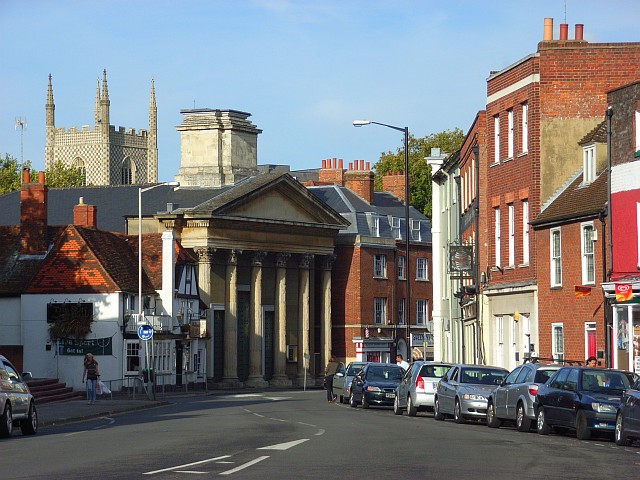
A town is a type of a human settlement, generally larger than a village but smaller than a city.
The criteria for distinguishing a town vary globally, often depending on factors such as population size, economic character, administrative status, or historical significance. In some regions, towns are formally defined by legal charters or government designations, while in others, the term is used informally. Towns typically feature centralized services, infrastructure, and governance, such as municipal authorities, and serve as hubs for commerce, education, and cultural activities within their regions.
The concept of a town varies culturally and legally. For example, in the United Kingdom, a town may historically derive its status from a market town designation or royal charter, while in the United States, the term is often loosely applied to incorporated municipalities. In some countries, such as Australia and Canada, distinctions between towns, cities, and rural areas are based on population thresholds. Globally, towns play diverse roles, ranging from agricultural service centers to suburban communities within metropolitan areas.
The word "town" shares an origin with the German word Zaun ("fence"), the Dutch word tuin ("garden, yard; fence, enclosure"), and the Old Norse tún ("enclosure, as for a homestead"). The original Proto-Germanic word, *tūną, is thought to be an early borrowing from *dūnom (cf. Old Irish dún, Welsh din).
The original sense of the word in both Germanic and Celtic was that of a fortress or an enclosure. Cognates of the English word town in many modern Germanic languages designate a "fence" or a "hedge". In English and Dutch, the meaning of the word took on the sense of the space which these fences enclosed, and through which a track must run.[citation needed] In England, a "town" was a small community that could not afford or was not allowed to build walls or other larger fortifications, and built a palisade or stockade instead.[citation needed] In the Netherlands, this space was a garden, more specifically those of the wealthy, which had a high fence or a wall around them (like the garden of the palace of Het Loo in Apeldoorn, which was the model for the privy garden of William III and Mary II at Hampton Court). In Old Norse tún means a (grassy) place between farmhouses, and the word is still used with a similar meaning in modern Norwegian.
Old English tūn]] became a common place-name suffix in England and southeastern Scotland during the Anglo-Saxon settlement period. In Old English and Early and Middle Scots, the words ton, toun, etc. could refer to diverse kinds of settlements from agricultural estates and holdings, partly picking up the Norse sense (as in the Scots word fermtoun) at one end of the scale, to fortified municipalities. Other common Anglo-Saxon suffixes included ham 'home', stede 'stead', and burh 'bury, borough, burgh'.
In toponymic terminology, names of individual towns and cities are called astyonyms or astionyms (from Ancient Greek ἄστυ 'town, city', and ὄνομα 'name').
In some cases, town is an alternative name for "city" or "village" (especially a small city or large village; and occasionally even hamlets). Sometimes, the word town is short for township. In general, today towns can be differentiated from townships, villages, or hamlets on the basis of their economic character, in that most of a town's population will tend to derive their living from manufacturing industry, commerce, and public services rather than primary sector industries such as agriculture or related activities.
Hub AI
Town AI simulator
(@Town_simulator)
Town
A town is a type of a human settlement, generally larger than a village but smaller than a city.
The criteria for distinguishing a town vary globally, often depending on factors such as population size, economic character, administrative status, or historical significance. In some regions, towns are formally defined by legal charters or government designations, while in others, the term is used informally. Towns typically feature centralized services, infrastructure, and governance, such as municipal authorities, and serve as hubs for commerce, education, and cultural activities within their regions.
The concept of a town varies culturally and legally. For example, in the United Kingdom, a town may historically derive its status from a market town designation or royal charter, while in the United States, the term is often loosely applied to incorporated municipalities. In some countries, such as Australia and Canada, distinctions between towns, cities, and rural areas are based on population thresholds. Globally, towns play diverse roles, ranging from agricultural service centers to suburban communities within metropolitan areas.
The word "town" shares an origin with the German word Zaun ("fence"), the Dutch word tuin ("garden, yard; fence, enclosure"), and the Old Norse tún ("enclosure, as for a homestead"). The original Proto-Germanic word, *tūną, is thought to be an early borrowing from *dūnom (cf. Old Irish dún, Welsh din).
The original sense of the word in both Germanic and Celtic was that of a fortress or an enclosure. Cognates of the English word town in many modern Germanic languages designate a "fence" or a "hedge". In English and Dutch, the meaning of the word took on the sense of the space which these fences enclosed, and through which a track must run.[citation needed] In England, a "town" was a small community that could not afford or was not allowed to build walls or other larger fortifications, and built a palisade or stockade instead.[citation needed] In the Netherlands, this space was a garden, more specifically those of the wealthy, which had a high fence or a wall around them (like the garden of the palace of Het Loo in Apeldoorn, which was the model for the privy garden of William III and Mary II at Hampton Court). In Old Norse tún means a (grassy) place between farmhouses, and the word is still used with a similar meaning in modern Norwegian.
Old English tūn]] became a common place-name suffix in England and southeastern Scotland during the Anglo-Saxon settlement period. In Old English and Early and Middle Scots, the words ton, toun, etc. could refer to diverse kinds of settlements from agricultural estates and holdings, partly picking up the Norse sense (as in the Scots word fermtoun) at one end of the scale, to fortified municipalities. Other common Anglo-Saxon suffixes included ham 'home', stede 'stead', and burh 'bury, borough, burgh'.
In toponymic terminology, names of individual towns and cities are called astyonyms or astionyms (from Ancient Greek ἄστυ 'town, city', and ὄνομα 'name').
In some cases, town is an alternative name for "city" or "village" (especially a small city or large village; and occasionally even hamlets). Sometimes, the word town is short for township. In general, today towns can be differentiated from townships, villages, or hamlets on the basis of their economic character, in that most of a town's population will tend to derive their living from manufacturing industry, commerce, and public services rather than primary sector industries such as agriculture or related activities.
Recent media