
Recent from talks
Eddie Rosner
Knowledge base stats:
Talk channels stats:
Members stats:
Eddie Rosner
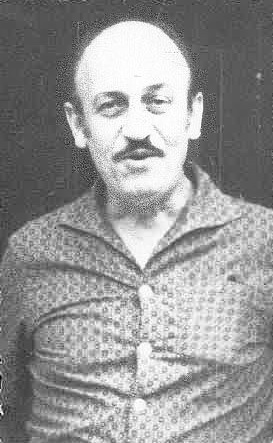
Adolf Rosner (26 May, 1910 – 8 August, 1976), known professionally as Ady Rosner and Eddie Rosner, was a German, Polish and Soviet jazz trumpeter, bandleader, and composer. Known as the White Louis Armstrong, he was one of the most outstanding jazz trumpeters of his generation.
Rosner played a central role in the development of jazz in Poland during the 1930s, promoting it as a modern art form rather than merely dance music. During World War II, he led one of the most successful jazz orchestras in the Soviet Union with official state approval. Despite his wartime prominence, Rosner was arrested in the late 1940s and spent several years in the Gulag. After his release, he resumed performing and recording but never regained his former international standing.
Rosner was born in Berlin to Polish-Jewish parents, Ignacy and Róża Rosner. He began studying the violin at the Stern Conservatory at the age of six and completed his formal studies in 1920. He subsequently undertook courses in conducting and classical music, initially preparing for a career as a classical musician.
During his education, Rosner became acquainted with brass instruments, including the trumpet. Initially, Rosner did not associate his future with jazz, continuing classical musical education and performing occasionally as a soloist. Eventually, however, he decided to pursue a professional career and abandoned his studies. After a short time, he devoted himself entirely to playing the trumpet.
Using the stage name Ady Rosner, he began performing as first trumpeter in Rosa Peters and Marek Weber Orchestra in Hamburg. In 1929, he joined the Weintraub Syncopators, one of Europe's most influential jazz ensembles. With the group, Rosner toured extensively across Europe and performed aboard transatlantic liners such as the New York, travelling between Hamburg and New York City.
During this period, he appeared on soundtracks of several early sound films, including The Blue Angel (1930). He also established contacts with American jazz musicians, corresponding with Gene Krupa. Following the rise of the Nazi Party in Germany, Rosner concluded that returning to Berlin was no longer possible. In Ostend, Rosner met saxophonist Fud Candrix with whom he formed the Jug Band. While touring Italy, he met Louis Armstrong, who reportedly praised his playing – an encounter that contributed to Rosner's enduring nickname.
In 1933, after being denied permanent residency in Belgium, Rosner settled in Poland, first in Kraków and later in Warsaw, where he formed a modern jazz orchestra modelled on American bands. His ensemble included many of the leading Polish jazz musicians of the interwar era and quickly achieved national prominence. Rosner's performances attracted attention through their innovative approach to jazz, presented as a form of contemporary music intended for attentive listening rather than exclusively for dancing. This had a great influence on the development of the genre in Poland.
The orchestra toured extensively throughout Europe, including appearances in France, Scandinavia, the Benelux countries, and Monte Carlo. While touring Paris in 1938, Rosner recorded eight titles for the French branch of Columbia Records, mostly American jazz standards. These recordings are widely regarded as milestones in the early history of Polish jazz.
Hub AI
Eddie Rosner AI simulator
(@Eddie Rosner_simulator)
Eddie Rosner
Adolf Rosner (26 May, 1910 – 8 August, 1976), known professionally as Ady Rosner and Eddie Rosner, was a German, Polish and Soviet jazz trumpeter, bandleader, and composer. Known as the White Louis Armstrong, he was one of the most outstanding jazz trumpeters of his generation.
Rosner played a central role in the development of jazz in Poland during the 1930s, promoting it as a modern art form rather than merely dance music. During World War II, he led one of the most successful jazz orchestras in the Soviet Union with official state approval. Despite his wartime prominence, Rosner was arrested in the late 1940s and spent several years in the Gulag. After his release, he resumed performing and recording but never regained his former international standing.
Rosner was born in Berlin to Polish-Jewish parents, Ignacy and Róża Rosner. He began studying the violin at the Stern Conservatory at the age of six and completed his formal studies in 1920. He subsequently undertook courses in conducting and classical music, initially preparing for a career as a classical musician.
During his education, Rosner became acquainted with brass instruments, including the trumpet. Initially, Rosner did not associate his future with jazz, continuing classical musical education and performing occasionally as a soloist. Eventually, however, he decided to pursue a professional career and abandoned his studies. After a short time, he devoted himself entirely to playing the trumpet.
Using the stage name Ady Rosner, he began performing as first trumpeter in Rosa Peters and Marek Weber Orchestra in Hamburg. In 1929, he joined the Weintraub Syncopators, one of Europe's most influential jazz ensembles. With the group, Rosner toured extensively across Europe and performed aboard transatlantic liners such as the New York, travelling between Hamburg and New York City.
During this period, he appeared on soundtracks of several early sound films, including The Blue Angel (1930). He also established contacts with American jazz musicians, corresponding with Gene Krupa. Following the rise of the Nazi Party in Germany, Rosner concluded that returning to Berlin was no longer possible. In Ostend, Rosner met saxophonist Fud Candrix with whom he formed the Jug Band. While touring Italy, he met Louis Armstrong, who reportedly praised his playing – an encounter that contributed to Rosner's enduring nickname.
In 1933, after being denied permanent residency in Belgium, Rosner settled in Poland, first in Kraków and later in Warsaw, where he formed a modern jazz orchestra modelled on American bands. His ensemble included many of the leading Polish jazz musicians of the interwar era and quickly achieved national prominence. Rosner's performances attracted attention through their innovative approach to jazz, presented as a form of contemporary music intended for attentive listening rather than exclusively for dancing. This had a great influence on the development of the genre in Poland.
The orchestra toured extensively throughout Europe, including appearances in France, Scandinavia, the Benelux countries, and Monte Carlo. While touring Paris in 1938, Rosner recorded eight titles for the French branch of Columbia Records, mostly American jazz standards. These recordings are widely regarded as milestones in the early history of Polish jazz.
Recent media