Hubbry Logo
Ediz HunEdiz HunMain
Open search
Ediz Hun
Community hub
Ediz Hun
logo
8 pages, 0 posts
0 subscribers
Be the first to start a discussion here.
Ediz Hun
Ediz Hun
from Wikipedia

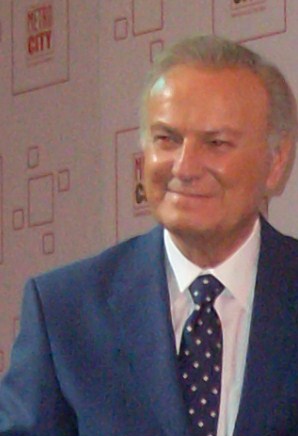
Ediz Hun (born 20 November 1940) is a Turkish film actor, academician and politician.

Key Information

Early life and education

[edit]

Hun was born in 1940 in Istanbul to a Circassian father and a Turkish mother.[1] He attended St. George's Austrian High School in Istanbul before moving to Norway in the mid-1970s. He studied Biology and Environmental Science at the University of Oslo and the Norwegian University of Science and Technology (Trondheim), graduating with a degree in the field.[2]

Career

[edit]

Acting

[edit]

His career in Yeşilçam began after participating in a contest organized by Ses (The Voice) magazine, where he was noticed by film producers. He made his debut in 1963 with the film Genç Kızlar (Young Girls) opposite Hülya Koçyiğit. He became a household name, frequently starring alongside Filiz Akın, and at the height of his career, he appeared in more than 10 films per year.

Academia and politics

[edit]

Upon returning to Turkey from his studies in Norway, Hun transitioned into academia. In 1985, he became a lecturer at Marmara University, specializing in ecology and environmental issues.[2]

Hun entered politics in the late 1990s and was elected as a Member of Parliament for Istanbul representing the Motherland Party (ANAP) in the 1999 Turkish general election. He served in the Grand National Assembly of Turkey until 2002, focusing on environmental protection laws.[3]

Personal life

[edit]

On 3 March 1973, Hun married Berna Hun. The couple has two children: a daughter, Bengü (born 1974), and a son, Burak (born 1981).[4]

Awards and honors

[edit]

Throughout his career, Hun has received numerous accolades for his contributions to cinema and environmental advocacy:

Filmography

[edit]

The filmography of Ediz Hun includes over 130 films and television series. Below is a comprehensive list:

Year Title Role Notes
2021 Savaşçı Gündüz Göktürk TV series
2018 Arif V 216 Himself Guest appearance
2014–2015 Hayat Yolunda TV series
2011 Anadolu Kartalları Hava Kuvvetleri Komutanı
2005 Asla Unutma TV series
2005 Azize
2004 Paydos
2004 Yadigar TV series
2001 Şöhret Sandalı
1997 Unutmadım
1997 İlk Aşk
1995 Gökkuşağı TV series
1985 Acımak Turgut TV series
1976 Aman Karım Duymasın
1974 Garip Kuş
1974 Yüz Lira ile Evlenilmez
1974 Gariban
1973 Ağlıyorum
1973 Aşkımla Oynama
1973 Şüphe
1973 Güllü Geliyor Güllü
1973 Karateci Kız Murat
1973 Soyguncular
1972 Gülüzar
1972 Zehra
1972 Çile
1972 Tanrı Misafiri
1972 Sezercik Aslan Parçası
1972 Asi Kalpler
1972 Ayrılık
1971 Yumurcağın Tatlı Rüyaları
1971 Yarın Ağlayacağım
1971 Ayşecik Bahar Çiçeği
1971 Hayatım Senindir
1971 Güllü Fikret
1971 Mavi Eşarp
1971 Gönül Hırsızı
1971 Bütün Anneler Melektir
1971 Seni Sevmek Kaderim
1971 Fadime Cambazhane Gülü
1971 Yağmur
1971 Bir Genç Kızın Romanı
1970 Tatlı Meleğim
1970 Kezban Roma'da
1970 Ankara Ekspresi Binbaşı Seyfi
1970 Kalbimin Efendisi Ferit
1970 Kader Bağlayınca
1970 Yaban Gülü
1970 Söz Müdafanın
1970 Yuvasız Kuşlar
1969 Ateşli Çingene
1969 Sonbahar Rüzgarları
1969 Uykusuz Geceler
1969 Yaralı Kalp
1969 Gülnaz Sultan
1969 Kahraman Delikanlı
1969 Kanlı Aşk
1969 Öldüren Aşk
1969 Ölmüş Bir Kadının Mektupları
1969 Son Mektup
1969 Sen Bir Meleksin Orhan
1968 Ömrümün Tek Gecesi
1968 Hicran Gecesi
1968 Aşkım Günahımdır
1968 Gönüllü Kahramanlar
1968 Sabah Yıldızı
1968 Ana Hakkı Ödenmez
1968 Kadın Asla Unutmaz
1968 Gözyaşlarım
1968 Yuvana Dön Baba
1968 Gül ve Şeker
1967 Samanyolu Nejat
1967 Ayrılsak da Beraberiz
1967 Kelepçeli Melek
1967 Sinekli Bakkal Peregrini
1967 Bir Soförun Gizli Defteri
1967 Yaprak Dökümü Şevket
1967 Kaderim Ağlamak Mı
1967 Nemli Dudaklar
1967 Sevda
1967 İlk Aşkım
1967 Yarın Çok Geç Olacak
1967 Sözde Kızlar
1967 Ömrümce Ağladım
1966 Beş Fındıkçı Gelin
1966 Çamaşırcı Güzeli
1966 Eli Maşalı
1966 Erkek Severse
1966 Affet Sevgilim
1966 Allahaısmarladık
1966 Severek Döğüşenler
1966 İhtiras Kurbanları
1966 Bar Kızı
1966 Kucaktan Kucağa
1966 Altın Küpeler
1965 Elveda Sevgilim
1965 Sevgili Öğretmenim
1965 Son Kuşlar Oğuz
1965 Üç Kardeşe Bir Gelin
1965 Vahşi Gelin Doğan
1965 Seven Kadın Unutmaz
1965 Bir Gönül Oyunu
1965 Tehlikeli Adımlar
1965 Hıçkırık Kenan
1964 Beş Şeker Kız
1964 Gençlik Rüzgarı
1964 Öksüz Kız
1964 Bir İçim Su
1964 Ahtapotun Kolları
1964 Affetmeyen Kadın
1964 Gecelerin Kadını
1964 Mualla Melih
1963 Genç Kızlar İskender Film debut

References

[edit]
[edit]
Revisions and contributorsEdit on WikipediaRead on Wikipedia
from Grokipedia

Ediz Hun (born 20 November 1940 in , ) is a Turkish , , and academic of Circassian descent through his father.
After graduating from St. George's Austrian High School and earning a degree in and environmental sciences from the of in , Hun entered the film industry in the early , becoming a leading figure in Yeşilçam cinema with over 100 appearances in romantic and dramatic roles during the and 1970s.
In 1985, he began lecturing at , and later transitioned into politics, serving as a member of the Grand National Assembly of for the Motherland Party, representing from 1999 to 2002.

Early Life and Education

Family and Upbringing

Ediz Hun was born on November 20, 1940, in , , although some sources report the date as November 22. He was born to a father of Circassian descent and a mother of Turkish origin from the Rumelian region, embodying the ethnic diversity common among families in early Republican , where Circassian communities had integrated following 19th-century migrations from the amid Russian imperial expansions. This mixed heritage reflected Istanbul's role as a cosmopolitan hub in the mid-20th century, bridging Ottoman legacies with the secular Turkish established in 1923. Hun's early years in the city exposed him to its layered cultural influences, including minority communities and international elements persisting from imperial times. During his upbringing, Hun attended St. George's Austrian High School in , a private Austrian-Turkish institution founded in the late that emphasized and European pedagogical standards, fostering multicultural perspectives among students in a predominantly Turkish environment. This schooling provided foundational exposure to Austrian academic traditions and foreign languages, shaping his formative experiences amid 's post-World War II recovery.

Academic Background

Ediz Hun completed his at St. George's Austrian High School in before pursuing higher studies abroad. He graduated with a degree in and environmental sciences from the University of Trondheim in , an institution known for its emphasis on technical and natural sciences (now part of the Norwegian University of Science and Technology). Hun's formal academic training was exclusively in the empirical sciences, with no recorded studies in or related fields, marking a deliberate pre-professional phase distinct from his later . This scientific background, centered on biological systems and environmental dynamics, highlighted his versatility in shifting from analytical disciplines to creative endeavors without prior vocational preparation in acting.

Acting Career

Debut and Early Roles

Ediz Hun entered Turkish cinema with his debut in the 1963 film (Young Girls), directed by Nevzat Pesen. In this production, he portrayed Iskender, a charismatic young teacher whose presence sparks excitement and rivalry among female students, positioning him as an archetypal handsome romantic lead suited to Yeşilçam's conventions of youthful drama and infatuation. The cast included established actresses and , with whom Hun shared leading billing, marking his initial alignment with the era's formulaic romance narratives amid Turkey's expanding sector. Following this entry, Hun's early output remained modest, featuring roles that reinforced his image as a debonair protagonist in melodramas. In Bir İçim Su (1964), he starred opposite Hülya Koçyiğit as a figure navigating class contrasts and romantic entanglements, a common trope in mid-1960s Yeşilçam fare. Similarly, Gençlik Rüzgarı (1964) paired him with Türkan Şoray in a story of generational passions, while Yedi Kadın (1965), directed by Osman F. Seden, cast him in a dramatic ensemble exploring interpersonal conflicts. These appearances, often in supporting or co-lead capacities, gradually accrued visibility without yet dominating production schedules, as Hun transitioned into the industry during a period of accelerating output that saw emerge as a major film producer by decade's end. His portrayals emphasized physical appeal and emotional sincerity, appealing to audiences in romances that echoed Hollywood influences adapted to local sensibilities, though critical reception focused more on commercial viability than artistic depth in these formative works. This phase laid groundwork for broader recognition, distinct from the higher-volume stardom of the ensuing decade.

Rise to Prominence in the 1970s

Ediz Hun achieved peak popularity in Turkish cinema during the 1970s, starring in dozens of Yeşilçam productions as a leading romantic hero and occasional action protagonist. His prolific output, often exceeding 10 films annually, solidified his status as a matinee idol alongside frequent co-stars like Hülya Koçyigit in melodramatic romances that emphasized idealized love and moral triumphs. These roles capitalized on Yeşilçam's formulaic style, which dominated the industry's annual production of 250 to 350 films, prioritizing commercial appeal over artistic innovation. Amid Turkey's escalating political violence, economic inflation exceeding 20% annually by mid-decade, and ideological clashes between left- and right-wing factions that claimed thousands of lives, Hun's films offered escapist diversion to mass audiences seeking relief from real-world turmoil. While some contemporaries shifted toward social realist critiques of unrest, Hun's mainstream vehicles maintained Yeşilçam's tradition of apolitical entertainment, focusing on personal dramas that resonated with urban and rural viewers alike. This approach amplified his cultural impact, as theaters became refuges during periods of curfews and strikes that disrupted daily life. Hun's prominence extended Yeşilçam's export efforts, though primarily within Turkish diaspora markets, underscoring the era's blend of domestic stardom and limited global reach for non-political genres. By decade's end, his formula had cemented him as emblematic of Yeşilçam's commercial zenith before television's rise and 1980 intervention curtailed production.

Notable Films and Performances

Ediz Hun gained prominence in Turkish cinema through romantic leads that capitalized on his physical appeal and charismatic screen presence, often paired with leading actresses such as Filiz Akın and Hülya Koçyiğit. In films like Seni Sevmek Kaderim (1971), directed by Orhan Aksoy, Hun portrayed a devoted lover entangled in dramatic conflicts, exemplifying the melodramatic style prevalent in Yeşilçam productions of the era. Similarly, his debut Genç Kızlar (1963) featured him opposite Hülya Koçyiğit, marking an early showcase of his ability to embody youthful, idealistic male protagonists in coming-of-age narratives. A standout performance came in the action-oriented Karateci Kız (Karate Girl, 1973), where Hun played Murat, a mentor figure training the vengeful protagonist Zeynep () after a traumatic assault, blending elements of martial arts, revenge, and romance amid Yeşilçam's formulaic yet commercially driven output. This role highlighted his versatility beyond pure romance, incorporating physicality and dramatic intensity in a genre film that resonated with audiences for its high-stakes plot and star pairing. Hun's collaborations with Akın, including Ömrümün Tek Gecesi (1968) and Bar Kızı (1966), further demonstrated his range in emotional melodramas, where he navigated themes of forbidden love and social redemption, contributing to the pair's status as a popular on-screen duo. Throughout the 1960s and 1970s, Hun starred in over 130 Yeşilçam films, earning acclaim for his gentlemanly demeanor and reliable dramatic delivery, which festival organizers later described as emblematic of Turkish cinema's actors. These performances, while embedded in the industry's rapid production cycles, achieved audience appeal through relatable character arcs and box-office viability in a market favoring accessible, star-driven stories over experimental depth.

Decline and Retirement from Acting

By the late 1970s, the Yeşilçam cinema industry, which had dominated Turkish film production, began a marked decline influenced by the growing popularity of television, the emergence of video cassette recorders enabling widespread piracy, chronic economic inflation exceeding 100% annually in some years, and intensifying political violence that disrupted production schedules. This downturn accelerated after the September 12, 1980 military coup, which imposed censorship, curtailed artistic freedoms, and compounded financial instability, leading to a sharp drop in theatrical releases from over 300 films per year in the mid-1970s to fewer than 100 by the mid-1980s. Ediz Hun's film output correspondingly waned during this era; after starring in multiple productions annually through the early 1970s, his roles became infrequent by the decade's end, aligning with his stated dissatisfaction with the stagnation in acting standards and artistic development in Turkish cinema, which prompted him to step away from regular performing around age 35 in 1975. Rather than persisting amid these industry headwinds, Hun prioritized alternative pursuits, including academia and politics, culminating in his election as a Motherland Party parliamentarian representing in the 1983 general elections following the party's formation earlier that year. Subsequent acting engagements were limited and selective, with no full-scale resurgence; Hun appeared in occasional later projects, such as the 2018 science-fiction comedy Arif V 216, but these reflected episodic involvement rather than a career revival, underscoring a deliberate pivot away from cinema sustained by personal and professional reorientations over external obsolescence.

Political Career

Entry into Politics

Following a successful acting career that peaked in the 1970s, Ediz Hun shifted focus to academia and environmental expertise, earning a degree in biology and environmental sciences from the University of Trondheim in Norway before becoming a lecturer at Marmara University starting in 1985. This background facilitated his entry into public administration in 1991, when he served as a consultant to Turkey's Ministry of the Environment and as Istanbul Provincial Director of the Environment until 1993, roles that highlighted his growing commitment to environmental policy amid Turkey's post-1980 economic liberalization efforts. Seeking to extend his public service through electoral means, Hun affiliated with the center-right Motherland Party (ANAP), a party established in 1983 by Turgut Özal to promote market-oriented reforms and conservative values in the wake of the 1980 military intervention. His celebrity status from over 100 films provided a platform for political visibility in a competitive landscape, distinguishing his approach from traditional politicians by drawing on his public persona to advocate for national cohesion and sustainable development. Hun's initial political efforts emphasized themes of economic liberalism and environmental stewardship, reflecting ANAP's foundational principles rather than the populist narratives of his earlier screen roles, as he positioned himself as a bridge between cultural influence and policy-oriented governance. This transition underscored a deliberate pivot toward institutional roles, leveraging his non-partisan environmental appointments to build credibility within ANAP's framework.

Parliamentary Service with the Motherland Party

Ediz Hun was elected to the 21st Parliament of Turkey as a representative of the Motherland Party (ANAP) from Istanbul in the general election on April 18, 1999, securing one of the party's seats amid its campaign emphasizing economic liberalization and national unity following the 1997 military memorandum. His term lasted from 1999 until the 2002 election, during which ANAP held opposition status after the Democratic Left Party-led coalition formed the government. During his parliamentary tenure, Hun served as chairman of the Environmental Commission in the Grand National Assembly, leveraging his academic background in biology to address ecological concerns. In this capacity, he participated in deliberations on the Ministry of Environment's 2001 budget and the 1999 fiscal accounts, advocating for enhanced environmental protections and oversight of industrial impacts. His contributions aligned with ANAP's platform on sustainable development, though legislative influence was limited by the party's minority position.

Political Positions and Contributions

Ediz Hun aligned with the Motherland Party (ANAP), a center-right political entity founded in 1983 that advocated economic liberalization, privatization, and reduced state intervention to foster market-driven growth, while emphasizing Turkish nationalism and moderate conservatism.) During his parliamentary term from 1999 to 2002, Hun served as Chairman of the Environmental Commission in the Grand National Assembly of Turkey, where he contributed to policy discussions on sustainable development and ecological preservation, reflecting ANAP's blend of pragmatic liberalism with national priorities. Hun has critiqued historical interventions that impeded economic and political progress, stating in a 2010 interview that the 1980 military coup prevented Turkey from advancing 50 years ahead, and endorsing the 2010 constitutional referendum as a suitable framework for enhancing freedoms and institutional reforms. This stance underscores his preference for first-principles approaches to governance, favoring reduced military overreach and constitutional mechanisms over centralized control, in line with ANAP's post-Özal legacy of countering statist tendencies often associated with leftist or Kemalist excesses. Of Circassian heritage, Hun has engaged in cultural events promoting ethnic traditions within a unified Turkish identity, such as appearances at Circassian festivals, though explicit parliamentary for minority recognition remains undocumented in his record. Post-parliamentary commentary has focused on rule-of-law issues, including calls in 2025 for the release of detained protesters exercising expression rights, prioritizing individual liberties over partisan alignment. His conservative outlook, evident in 1960s for cinema to uphold and standards against permissive content, extends to broader critiques of cultural decay, though he has avoided deep partisan rhetoric in later years.

Other Professional Activities

Academic and Educational Roles

Ediz Hun earned a degree in biology and environmental science from the University of Trondheim in Norway, complementing his earlier education at St. George's Austrian High School in Istanbul. This academic foundation positioned him to engage in educational roles emphasizing empirical environmental principles following his acting career. In 1985, Hun commenced lecturing at Marmara University, where he addressed topics integrating human development with ecological and demographic equilibria, drawing on biological causal mechanisms to explain challenges. His tenure there involved promoting data-driven insights into environmental dynamics, reflecting a commitment to first-principles analysis of natural systems over ideological narratives. Subsequently, Hun extended his teaching to Bahçeşehir University and Okan University, delivering classes on environmental science and ecology that linked biological evidence to practical conservation strategies. At Okan University, he served as a faculty member in the Faculty of Fine Arts while contributing lectures on nature-human interactions, as demonstrated in his 2024 presentation at 's Institute of European Studies on the interplay between ecological factors and societal outcomes. These roles underscored his efforts to foster scientific literacy, prioritizing verifiable data on biodiversity and resource limits in educational settings.

Environmental and Scientific Engagements

Ediz Hun utilized his training in biology and environmental science from the in to inform environmental policy and conservation efforts in Turkey, particularly during his tenure from 1991 to 1993 as an advisor to the Ministry of Environment and director of the Provincial Directorate of Environment. In this capacity, he addressed urban pollution and resource management challenges arising from rapid industrialization, including waste handling and ecological impacts on local ecosystems. Hun has produced publications emphasizing data-driven approaches to sustainability, such as his 2015 book Çevremiz Geleceğimizdir, which details empirical strategies for protecting seas, forests, and soils against erosion while promoting renewable energy utilization based on observed environmental degradation patterns in Turkey. Another work, Yaşat ki Yaşayasın (2013), examines human-induced ecological disruptions and advocates for measurable conservation outcomes over rhetorical commitments. These texts draw on biological principles to highlight causal links between unchecked development and biodiversity loss, urging policies grounded in verifiable ecological data rather than unsubstantiated projections. Through over 2,500 public lectures and seminars spanning more than four decades, Hun has promoted evidence-based environmental management, focusing on topics like biological waste processing, population pressures on resources, and sustainable practices tailored to Turkey's industrial growth. He has critiqued approaches that prioritize ideological narratives over empirical assessments, stressing the need for policies integrating scientific monitoring of pollution and habitat conservation to counteract industrialization's verifiable effects, such as increased poverty from resource depletion.

Personal Life and Legacy

Family and Personal Interests

Ediz Hun married Berna, a former flight attendant, on March 3, 1973, following a publicized relationship. The marriage has produced two children: a daughter, Bengü, born in 1974, and a son, Burak, born in 1981. Public details on his family life remain limited, consistent with cultural norms in Turkey emphasizing privacy for personal matters. Hun's personal interests include botany, particularly the collection of cacti, a hobby he traces to childhood visits to Emirgan with his father. He maintains physical fitness through regular swimming and other sports, contributing to his vitality at age 84 as of 2025. Residing on Büyükada, he has arranged for his home, which houses his extensive cactus collection, to be preserved as a museum after his lifetime. Of Circassian paternal descent, Hun's heritage reflects his father's origins, though he has not publicly emphasized preservation efforts in this area.

Public Perception and Influence

Ediz Hun remains recognized in Turkey as a quintessential figure of the Yeşilçam cinema's golden era, particularly for his roles as a romantic lead and heartthrob in the 1960s and 1970s, where he starred in dozens of films annually, establishing himself as a household name through partnerships with actresses like and . His on-screen persona, often portraying idealized, gentlemanly male leads, contributed to the genre's appeal among mass audiences, fostering a cultural archetype of chivalrous masculinity that resonated with conservative social values prevalent in mid-20th-century Turkish society. This enduring image has sustained his popularity, evidenced by lifetime achievement recognitions and nostalgic references in media retrospectives on Turkish film history. In political spheres, Hun's association with the center-right Motherland Party (ANAP) positioned him as a bridge between entertainment and conservative politics, advocating for environmental and educational policies informed by his scientific background, though his parliamentary tenure from 1983 onward yielded limited legislative innovations amid the party's broader neoliberal shifts. Public views of his political contributions often highlight his interdisciplinary approach—spanning acting, biology lectures at , and right-leaning advocacy—but critiques note a lack of transformative impact, with ANAP's electoral decline post-1990s diminishing his influence. Empirical markers include over 100 film credits and roles in environmental engagements, yet Yeşilçam's formulaic melodramas, including Hun's, faced contemporary derision for prioritizing commercial repetition over artistic depth, as political tones in 1960s critiques targeted the industry's social conservatism. Hun's legacy lies in exemplifying a rare fusion of popular culture, science, and politics, influencing Turkish conservatism by embodying traditional values in media while pursuing empirical fields like environmental science; however, this multifaceted path has not translated to widespread policy or cultural paradigm shifts, with his fame rooted more in nostalgic appeal than ongoing societal transformation. Balanced assessments acknowledge his role in sustaining Yeşilçam's output—peaking at 250-350 films yearly industry-wide—against valid reservations about genre limitations, without evidence of personal scandals overshadowing his public standing.

References

Add your contribution
Related Hubs
User Avatar
No comments yet.