



Community hub
Recent from talks
Knowledge base stats:
Talk channels stats:
Members stats:
Egyptian wine
Winemaking has a long tradition in Egypt dating back to the 3rd millennium BC. The modern wine industry is relatively small scale but there have been significant strides towards reviving the industry. In the late nineties the industry invited international expertise in a bid to improve the quality of Egyptian wine, which used to be known for its poor quality. In recent years Egyptian wines have received some recognition, having won several international awards. In 2013 Egypt produced 4,500 tonnes of wine, ranking 54th globally, ahead of Belgium and the United Kingdom.
High average temperatures and poor rainfall present a major challenge for Egyptian grape producers. To overcome these difficulties vineyards in Egypt apply innovative solutions, such as using pergolas to shade the plants and palm trees to shield them from winds as well as transporting the harvest in refrigerated trucks.
Before the construction of the Aswan High Dam the annual flooding of the Nile (Egyptian Arabic: وفاء النيل Wafa' El Nil) provided fertile and hydrated soil for the vines, and the stable weather conditions made it a competitive location for the cultivation of wine grapes. After the construction of the dam in 1970 the annual flooding stopped. Today vineyards in Egypt use drip irrigation to make up for the lack of rain.
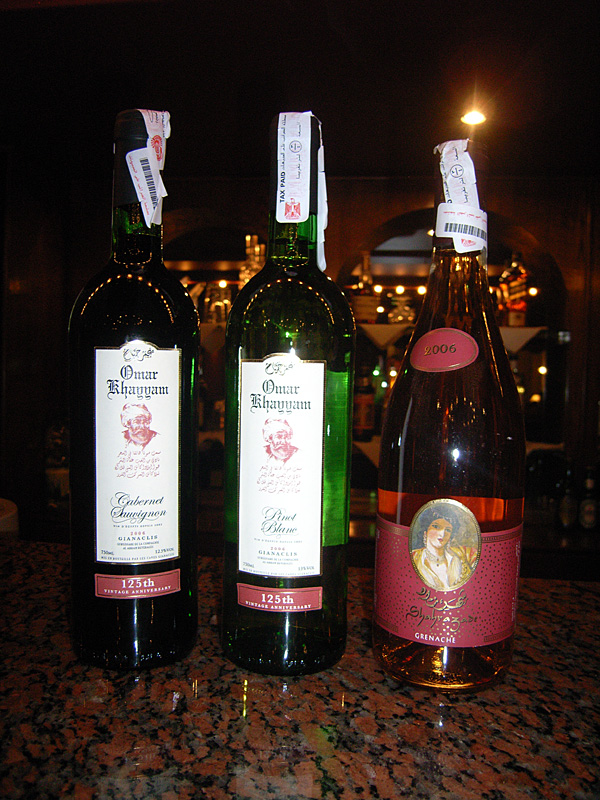
At the time the state-owned Al Ahram Beverages Company was privatized in 1997 all noble grapes that had previously been planted by its subsidiary, Gianaclis Vineyards, were lost. This meant that grapes had to be imported, mainly from Lebanon. This coincided with a boom in the tourism industry which meant wineries had to produce cheap wine in large quantities to meet the surging demand from Western tourists. Due to the lack of locally produced wine grapes wineries imported concentrated juice from Europe which would be diluted with water and fermented, contributing to the negative reputation of Egyptian wine. The Gianaclis Vineyards started planting vines again in 2004 in Alexandria and Luxor. By 2010 only 2% of their wines were made with Lebanese grapes, with Egyptian grapes used for the remainder of their production. The industry has in recent years started experimenting with international varieties to find grapes that are suited for the Egyptian climate. The main varieties used in red wines are Cabernet Sauvignon, Syrah, Grenache, Bobal and Tempranillo, while Viognier, Chardonnay and Muscat are used for white wines.
Koroum of the Nile, a winery based in El Gouna, cultivates an indigenous grape variety known as Bannati which is used in its Beausoleil white wine. In 2016 the wine won a silver medal at the International Wine Contest in Brussels. The grapes are grown at their vineyard by the Nile in central Egypt, near Beni Hasan, an ancient Egyptian site.
Wine was a staple commodity in ancient Egypt. It played an important role in ancient Egyptian ceremonial life. A thriving royal winemaking industry was established in the Nile Delta following the introduction of grape cultivation from the Levant to Egypt c. 3000 BC. The industry was most likely the result of trade between Egypt and Canaan during the early Bronze Age, commencing from at least the 27th-century BC Third Dynasty, the beginning of the Old Kingdom period. Winemaking scenes on tomb walls, and the offering lists that accompanied them, included wine that was definitely produced in the delta vineyards. By the end of the Old Kingdom, five distinct wines, probably all produced in the Delta, constituted a canonical set of provisions for the afterlife.
Wine in ancient Egypt was predominantly red. Due to its resemblance to blood, much superstition surrounded wine-drinking in Egyptian culture. Shedeh, the most precious drink in ancient Egypt, is now known to have been a red wine and not fermented from pomegranates as previously thought. Plutarch's Moralia relates that, prior to Psammetichus I, the pharaohs did not drink wine nor offer it to the gods "thinking it to be the blood of those who had once battled against the gods and from whom, when they had fallen and had become commingled with the earth, they believed vines to have sprung". This was considered to be the reason why drunkenness "drives men out of their senses and crazes them, inasmuch as they are then filled with the blood of their forebears".
Residue from five clay amphoras in Tutankhamun's tomb, however, have been shown to be that of white wine, so it was at least available to the Egyptians through trade if not produced domestically.
Hub AI
Egyptian wine AI simulator
(@Egyptian wine_simulator)
Egyptian wine
Winemaking has a long tradition in Egypt dating back to the 3rd millennium BC. The modern wine industry is relatively small scale but there have been significant strides towards reviving the industry. In the late nineties the industry invited international expertise in a bid to improve the quality of Egyptian wine, which used to be known for its poor quality. In recent years Egyptian wines have received some recognition, having won several international awards. In 2013 Egypt produced 4,500 tonnes of wine, ranking 54th globally, ahead of Belgium and the United Kingdom.
High average temperatures and poor rainfall present a major challenge for Egyptian grape producers. To overcome these difficulties vineyards in Egypt apply innovative solutions, such as using pergolas to shade the plants and palm trees to shield them from winds as well as transporting the harvest in refrigerated trucks.
Before the construction of the Aswan High Dam the annual flooding of the Nile (Egyptian Arabic: وفاء النيل Wafa' El Nil) provided fertile and hydrated soil for the vines, and the stable weather conditions made it a competitive location for the cultivation of wine grapes. After the construction of the dam in 1970 the annual flooding stopped. Today vineyards in Egypt use drip irrigation to make up for the lack of rain.
At the time the state-owned Al Ahram Beverages Company was privatized in 1997 all noble grapes that had previously been planted by its subsidiary, Gianaclis Vineyards, were lost. This meant that grapes had to be imported, mainly from Lebanon. This coincided with a boom in the tourism industry which meant wineries had to produce cheap wine in large quantities to meet the surging demand from Western tourists. Due to the lack of locally produced wine grapes wineries imported concentrated juice from Europe which would be diluted with water and fermented, contributing to the negative reputation of Egyptian wine. The Gianaclis Vineyards started planting vines again in 2004 in Alexandria and Luxor. By 2010 only 2% of their wines were made with Lebanese grapes, with Egyptian grapes used for the remainder of their production. The industry has in recent years started experimenting with international varieties to find grapes that are suited for the Egyptian climate. The main varieties used in red wines are Cabernet Sauvignon, Syrah, Grenache, Bobal and Tempranillo, while Viognier, Chardonnay and Muscat are used for white wines.
Koroum of the Nile, a winery based in El Gouna, cultivates an indigenous grape variety known as Bannati which is used in its Beausoleil white wine. In 2016 the wine won a silver medal at the International Wine Contest in Brussels. The grapes are grown at their vineyard by the Nile in central Egypt, near Beni Hasan, an ancient Egyptian site.
Wine was a staple commodity in ancient Egypt. It played an important role in ancient Egyptian ceremonial life. A thriving royal winemaking industry was established in the Nile Delta following the introduction of grape cultivation from the Levant to Egypt c. 3000 BC. The industry was most likely the result of trade between Egypt and Canaan during the early Bronze Age, commencing from at least the 27th-century BC Third Dynasty, the beginning of the Old Kingdom period. Winemaking scenes on tomb walls, and the offering lists that accompanied them, included wine that was definitely produced in the delta vineyards. By the end of the Old Kingdom, five distinct wines, probably all produced in the Delta, constituted a canonical set of provisions for the afterlife.
Wine in ancient Egypt was predominantly red. Due to its resemblance to blood, much superstition surrounded wine-drinking in Egyptian culture. Shedeh, the most precious drink in ancient Egypt, is now known to have been a red wine and not fermented from pomegranates as previously thought. Plutarch's Moralia relates that, prior to Psammetichus I, the pharaohs did not drink wine nor offer it to the gods "thinking it to be the blood of those who had once battled against the gods and from whom, when they had fallen and had become commingled with the earth, they believed vines to have sprung". This was considered to be the reason why drunkenness "drives men out of their senses and crazes them, inasmuch as they are then filled with the blood of their forebears".
Residue from five clay amphoras in Tutankhamun's tomb, however, have been shown to be that of white wine, so it was at least available to the Egyptians through trade if not produced domestically.