Hubbry Logo
ViognierViognierMain
Open search
Viognier
Community hub
Viognier
logo
8 pages, 0 posts
0 subscribers
Be the first to start a discussion here.
Viognier
Viognier
from Wikipedia
Viognier
Grape (Vitis)
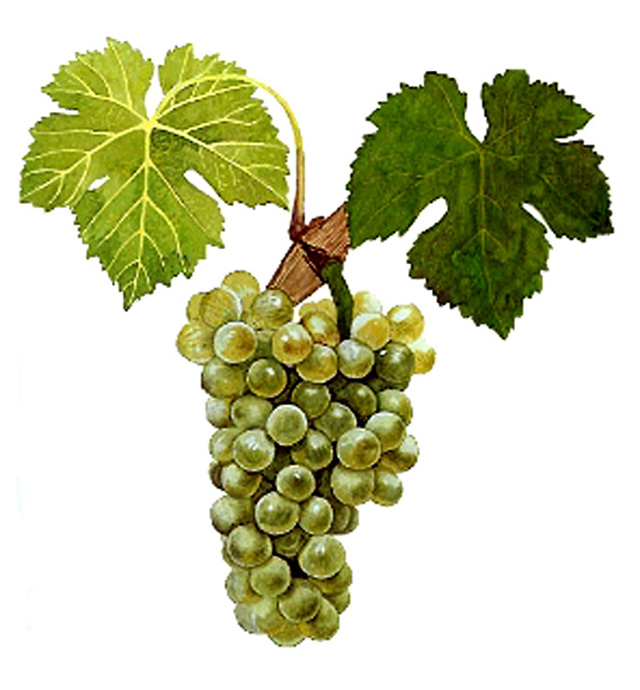
Viognier in Viala & Vermorel
Color of berry skinBlanc
SpeciesVitis vinifera
Also calledBergeron, Barbin, Rebolot, Greffou, Picotin Blanc, Vionnier, Petiti Vionnier, Viogne, Galopine, Vugava bijela[1] (more)
OriginCroatia, France
Notable regionsWorldwide
VIVC number13106
Viognier grapes ripening on the vine in Amador county, California

Viognier (French pronunciation: [vjɔɲje]) is a white wine grape variety. It is the only permitted grape for the French wine Condrieu in the Rhône Valley.[2]

Outside of the Rhône, Viognier can be found in regions of North and South America as well as Australia, New Zealand, the Cape Winelands in South Africa, south Moravia region in Czechia, Israel and in Austria at Weingut Roland Minkowitsch. In some wine regions, the variety is co-fermented with the red wine grape Syrah where it can contribute to the color and aroma of the wine.[3]

Like Chardonnay, Viognier has the potential to produce full-bodied wines with a lush, soft character. In contrast to Chardonnay, the Viognier varietal has more natural aromatics that include notes of peach, pears, violets and minerality. However, these aromatic notes can be easily destroyed by too much exposure to oxygen, which makes barrel fermentation a winemaking technique that requires a high level of skill on the part of any winemaker working with this variety.

The potential quality of Viognier is also highly dependent on viticultural practices and climate, with the grape requiring a long, warm growing season in order to fully ripen but not a climate that is so hot that the grape develops high levels of sugars and potential alcohol before its aromatic notes can develop. The grape is naturally a low-yielding variety, which can make it a less economically viable planting for some vineyards.[3]

History

[edit]

The origin of the Viognier grape is unknown; it is presumed to be an ancient grape, possibly originating in Dalmatia (present day Croatia) and then brought to the Rhône by the Romans.[4] One legend states that the Roman emperor Probus brought the vine to the region in 281 AD; another has the grape packaged with Syrah on a cargo ship navigating the Rhône river, en route to Beaujolais when it was captured, near the site of present-day Condrieu, by a local group of outlaws known as culs de piaux.[5]

The origin of the name Viognier is also obscure. The most common namesake is the French city of Vienne, which was a major Roman outpost. Another legend has it drawing its name from the Roman pronunciation of the via Gehennae, meaning the "Road of the Valley of Hell". Probably this is an allusion to the difficulty of growing the grape.[5]

Viognier was once fairly common. In 1965, the grape was almost extinct, and a source reported only eight acres in Northern Rhône producing just 1,900 liters of wine at that time.[4] The popularity and price of the wine have risen, and the number of plantings has increased. Rhône now has over 740 acres (299.5 hectares) planted.[4]

In 2004, DNA profiling conducted at University of California, Davis showed the grape to be closely related to the Piedmont grape Freisa, and to be a genetic cousin of Nebbiolo.[2]

Viticulture

[edit]
Viognier leaf growing in Red Willow Vineyard in Washington State

Viognier can be a difficult grape to grow because it is prone to powdery mildew. It has low and unpredictable yields and should be picked only when fully ripe. When picked too early, the grape fails to develop the full extent of its aromas and tastes. When picked too late, the grape produces wine that is oily and lacks perfume. Winemakers in the Condrieu often pick the grapes with a level of sugar that will produce wine with alcohol in the 13% range.[6] When fully ripe the grapes have a deep yellow color and produce wine with a strong perfume and high in alcohol .[2] The grape prefers warmer environments and a long growing season, but can grow in cooler areas as well.

In France, the Mistral has a distinct effect on the Viognier vineyards in the Northern Rhône. The wind tempers the Mediterranean climate of the region, and cools the vines down after the severe heat of summer.[6]

Wine expert Remington Norman has identified two distinct strains of Viognier — an "Old World" strain, most common in Condrieu, and a "New World" strain, which is found in the Languedoc and other areas. Although made from the same grape, the two strains produce distinctly different wines.[5]

The age of the vine also has an effect on the quality of the wine produced. Viognier vines start to hit their peak after 15–20 years. In the Rhône, there are vines at least 70 years old.[7]

Regional production

[edit]
A sparkling Viognier from Washington State

Viognier has been planted much more extensively around the world since the early 1990s. Both California and Australia now have significant amounts of land devoted to the Viognier grape. There are also notable planting increases in areas of moderate climate such as Virginia's Monticello AVA region.

The decline of Viognier in France from its historic peak has much to do with the disastrous predations of the phylloxera insects from North America in Europe in the mid- and late-19th century, followed by the abandonment of the vineyards due to the chaos of World War I. By 1965, only about 30 acres (12 hectares) of Viognier vines remained in France, and the variety was nearly extinct. Even as late as the mid-1980s, Viognier in France was endangered. In parallel to the growth of Viognier in the rest of the world, plantings in France have grown dramatically since then. The grape has been enjoying some success in South Africa, New Zealand, Greece[8] and Japan.[9]

France

[edit]
A Viognier Vin de Pays d'Oc from Languedoc

In France, Viognier is the single permitted grape variety in the Rhône appellations of Condrieu and Château Grillet, which are located on the west bank of the Rhône, about 40 km south of Lyon. In the rest of the Rhône wine region whites, the grape is often blended with Roussanne, Marsanne, Grenache blanc, and Rolle. In the Northern Rhône, the grape is sometimes blended with Chardonnay.[2] In the Côte-Rôtie AOC, red wine blends can include up to 20% of Viognier though most growers add no more than 5%. Since Viognier ripens earlier than Syrah, the grape is normally harvested separately and added to the Syrah during fermentation. One of the benefits of adding Viognier is that the process of co-pigmentation stabilizes the coloring of the red wine.[10]

Vignerons in the rest of France often look to plant Viognier in areas rich in granite soil that have a heat retaining quality that the grape seems to thrive in.[6] Beaujolais winemaker Georges Duboeuf helped expand the reach of the grape with plantings in the Ardèche region.[11] The majority of French Viogniers are now grown in the Languedoc and sold as Vin de Pays.

North America

[edit]
A Viognier-based white "Rhone-style blend" from Washington State

Since the late 1980s, plantings of Viognier in the United States and Canada have increased dramatically. California's Central Coast is the leading producer with over 2,000 acres (809 hectares) of the grape planted. Californian Viogniers are noticeably higher in alcohol compared to other wines made from the grape.[2] The Rhone Rangers of the mid-1980s helped spark the increased interest in Viognier in California.[12] It has received international attention growing in Virginia, and in 2011 was named Virginia's signature white grape.

The grape can also be found in Georgia, North Carolina, Texas, Washington, Oregon, Michigan, Idaho, Colorado, New Mexico, Pennsylvania, Maryland, New Jersey, New York, Missouri and Arizona, Valle de Guadalupe, Baja California as well as British Columbia and the Niagara and Lake Erie North Shore regions of Ontario.[9]

South America

[edit]

Both Argentina and Chile have significant plantings of the grape with some producers in Brazil and Uruguay also experimenting with the varietal.[2]

Australia

[edit]

In Australia, Yalumba is the country's largest producer of the grape making both a white wine varietal and making extensive use of the grape in its Shiraz blends.[2] Yalumba grows the grape in the loam and clay soil of the Eden Valley.[6] Other areas with Viognier plantings include Clare Valley, Rutherglen, Murray River, McLaren Vale, Geelong, Nagambie Lakes, Canberra, Mornington Peninsula, Barossa Valley, Adelaide Hills, Geographe, South Burnett, Yarra Valley (Pimpernel Vineyards) and Pyrenees

New Zealand

[edit]

In New Zealand, small amounts of Viognier are grown on Waiheke Island and Wairarapa. In the Hawke's Bay Region, the grape is used as a single varietal as well as being blended with Syrah to produce a traditional Rhône style red wine.

Israel

[edit]

Many Israeli wineries, particularly in the north, such as Yarden, Tishbi and Dalton have cultivated the grape and produced Viognier wines and blends with it with much success.

Wine

[edit]
A Viognier wine from California

Viognier wines are well known for their floral aromas, and terpenes, which are also found in Muscat and Riesling wines. There are also many other powerful flower and fruit aromas which can be perceived in these wines depending on where they were grown, the weather conditions and how old the vines were. Although some of these wines, especially those from old vines and the late-harvest wines, are suitable for aging, most are intended to be consumed young. Viogniers more than three years old tend to lose many of the floral aromas that make this wine unique. Aging these wines will often yield a very crisp drinking wine which is almost completely flat in the nose. The color and the aroma of the wine suggest a sweet wine but Viognier wines are predominantly dry, although sweet late-harvest dessert wines have been made.

It is a grape with low acidity; it is sometimes used to soften wines made predominantly with the red Syrah grape. In addition to its softening qualities the grape also adds a colour-stabilizing agent and enhanced perfume to the red wine.[2] In the Rhone region, the grapes normally are not affected by the fungus Botrytis cinerea though botrytized Viognier is not unheard of.

In winemaking, the grapes are often harvested early in the morning to produce the clearest juice possible. Some winemakers will allow contact with the skins. The skin of Viognier is high in phenols - compounds that can leave an astringent component to the wine if juice is left in contact with the skins for too long. Sometimes the wine is put through malolactic fermentation to give the wine more weight and to decrease acidity. In New World Viognier, the lees may be stirred in a process called batonnage in order to increase the smooth texture of the wine. The wine is then left on the lees till bottling in a manner similar to sparkling wine production.[7]

In the creation of the dessert style Viognier, the grapes are often picked in late October or early November in the Northern Hemisphere. A common harvest technique used in the Condrieu is known as à l'assiette where a plate is held underneath a Viognier vine that is then shaken to allow the overripe grapes to drop onto the plate. Fermentation is then stopped early through the use of sulphur dioxide to allow the wine to retain a high level of residual sugar. The wine is then chilled and put through sterile filtration to ensure that the wine is stable and will not start fermenting again in the bottle.[7]

Depending on the winemaking style the grape can often hit its peak at one-two years of age, though some can stay at high levels of quality up to ten years. Typically Condrieu wines are the Viogniers most often meant to be drunk young while Californian and Australian wines can handle age a little bit better.[13]

Food pairing

[edit]

The highly aromatic and fruit forward nature of the grape allows Viognier to pair well with spicy foods such as Thai cuisine.[14]

References

[edit]
[edit]

Further reading

[edit]
Revisions and contributorsEdit on WikipediaRead on Wikipedia
from Grokipedia
Viognier is a white grape variety renowned for producing aromatic, full-bodied wines with pronounced floral and stone fruit flavors, originating from the northern Rhône Valley in . Its history traces back potentially to the , with legends suggesting Emperor Probus introduced it to the region around 281 AD, though it likely became established in Condrieu by the and spread to areas like Château Grillet by the . By the mid-20th century, Viognier plantings had dwindled to fewer than 10 hectares due to low yields and disease susceptibility, nearly facing extinction until revival efforts by producers like Georges Vernay in the 1960s. Global interest surged in the late 20th century, propelled by pioneers such as Josh Jensen in and Peter in , leading to an expansion to over 16,000 hectares as of 2016, with significant growth in new plantings worldwide up to that point. Viticulturally, Viognier is an early-budding vine susceptible to spring frosts, requiring careful in sunny climates with cool nights to achieve optimal ripeness, typically harvested in late or early . It yields unpredictably low crops and is prone to diseases, but improved clones and management techniques, such as trellising, have enhanced its reliability in regions like . The resulting wines exhibit a medium lemon color, intense aromas of honeysuckle, apricot, peach, and sometimes tangerine or violet, with a rich, oily texture, medium to high alcohol levels (often 13.5%–15% ABV), and notably low acidity. Styles range from light and spritzy to bold and creamy, especially when oak-aged, which can introduce notes of vanilla, nutmeg, and clove, and the grape is best enjoyed young to preserve its vibrant fruit character. Viognier thrives primarily in France, where over 50% of global plantings occur, particularly in the appellations of Condrieu and Château Grillet for premium varietal wines, as well as in blends like up to 20% with Syrah in Côte-Rôtie. Outside France, it has found success in California (notably Paso Robles), South Australia, Washington State, Virginia, South Africa, Chile, Argentina, and Italy, often as a standalone varietal or in white blends.

History

Ancient Origins and Introduction to France

The origins of the Viognier grape remain obscure, but historical and linguistic evidence points to a possible beginning in , the coastal region of modern-day , from where it was reportedly introduced to by the Romans around the 1st century AD. Tradition holds that Emperor Probus facilitated its planting in the Rhône Valley in 281 AD to encourage among soldiers, though this account lacks direct corroboration and may reflect broader Roman practices of grape dissemination across the empire. The name Viognier is thought to derive from the nearby city of Vienne, a major Roman outpost, reflecting its deep roots in the region's Gallo-Roman heritage. While specific early references to the grape are scarce, in the area dates back to Roman times. Genetic analysis has provided further insights into Viognier's lineage, with 2004 DNA profiling by Italian researchers revealing a genetic link to the red grape Freisa, positioning Viognier as a distant relative or cousin to . By the , Viognier had become a cornerstone of in the Northern Rhône, particularly in the Condrieu area, where it was grown as a standalone variety for premium white wines noted for their floral and peachy notes. Historically, it was sometimes co-planted with to aid pollination and enhance blending options in the region's reds.

Near-Extinction and Revival

By the mid-20th century, Viognier had declined precipitously due to its inherently low and unpredictable yields, heightened susceptibility to diseases like powdery mildew, and the lingering impacts of devastation in the late , which prompted widespread replanting with more reliable varieties. Plantings in the Northern , particularly in Condrieu, had shrunk to an estimated 15 acres by the 1960s, rendering the grape on the brink of extinction. Revival efforts began in the 1960s, led by producers like Georges Vernay in Condrieu, and gained further momentum in the 1970s, driven by pioneering producers such as the Château-Grillet estate and E. Guigal, who persisted with replanting and elevated Viognier's profile through high-quality bottlings from Condrieu and co-fermentation in Syrah-based wines from Côte-Rôtie. This resurgence was bolstered by the export of cuttings to the , including by pioneers such as Josh Jensen of Calera Winery, who imported and planted Viognier in in the 1970s. Yalumba in further catalyzed global interest by establishing the country's first commercial Viognier planting in 1980 in the Eden Valley, conducting extensive trials to adapt the variety to local conditions. Post-1980s expansion was rapid, with French acreage growing from approximately 30 acres in —mostly confined to the —to over 3,000 hectares worldwide by the early 2000s, fueled by New World enthusiasm in , , and beyond. Adoption outside accelerated the grape's popularity, as producers developed clonal selections that addressed yield inconsistencies and disease vulnerabilities, enabling more consistent and broader commercial viability.

Viticulture

Climatic and Terroir Requirements

Viognier thrives in warm, Mediterranean-style climates characterized by long growing seasons, typically requiring 170 to 180 frost-free days to achieve full physiological without succumbing to excessive stress. This extended period allows the to accumulate sufficient heat units, often measured as 2,500 to 3,500 (GDD), enabling the development of its signature aromatic compounds while avoiding incomplete maturation. In such conditions, the can balance its naturally high sugar potential with moderate acidity, though it remains sensitive to late-season excesses that might push alcohol levels beyond optimal thresholds. The variety performs best in well-drained soils such as , , or , particularly in hilly or steep terrains that promote root penetration and minimize water retention. These soil types, common in regions like the Northern Rhône's slopes, facilitate excellent drainage and nutrient uptake, averting the risks associated with heavy clay or waterlogged areas that can lead to and uneven vigor. Viognier shows aversion to poorly aerated, compacted soils, which exacerbate its susceptibility to fungal diseases and hinder the vine's ability to regulate water stress effectively. In cooler climates, Viognier often struggles with under-ripeness, resulting in elevated acidity and subdued aromatics that fail to capture the grape's potential for floral and stone-fruit intensity. Optimal temperatures during —around 20 to 25°C (68 to 77°F)—support color change and sugar accumulation without compromising freshness, as deviations can delay phenological stages or amplify green, herbaceous notes. profoundly influences aroma development; for instance, soils impart a distinctive minerality and flinty undertone to the wines, enhancing complexity, while warmer sites contribute to higher alcohol potential, frequently reaching 13 to 15% ABV, which amplifies ripe and expressions.

Cultivation Challenges and Practices

Viognier vines typically produce low yields of 2 to 4 tons per acre, attributed to uneven berry ripening, small cluster sizes, and poor fruit set during flowering. These characteristics necessitate hand-harvesting, particularly on the steep slopes of regions like Condrieu, where terracing and manual labor are essential to manage the terrain and ensure quality. The variety exhibits high susceptibility to powdery mildew caused by Erysiphe necator and black rot, exacerbated by its preference for warm climates that promote fungal growth. Effective management requires vigilant canopy practices, such as shoot thinning to improve air circulation, and regular applications timed to critical growth stages like pre-bloom and fruit set. Viognier exists in two primary clonal strains: the clone from Condrieu, featuring smaller berries and higher quality potential, and the clone derived from selections, which offers higher yields but less concentration. Vines reach peak production at 15 to 20 years of age, though some in the Rhône Valley exceed 70 years, contributing to complex flavors from old-vine characteristics. Key cultivation practices address these challenges through shoot thinning to balance crop load, leaf removal to enhance sun exposure and reduce humidity, and supplemental in arid areas to mitigate water stress without promoting excessive vigor. issues, including poor fruit set prone to coulure in wet or windy conditions, can be partially alleviated by co-planting with pollinator varieties like in traditional settings.

Regional Production

France

Viognier is predominantly cultivated in the Northern Valley of , where it forms the backbone of prestigious production. The is permitted at 100% in the , which spans approximately 221 hectares of vineyards dedicated exclusively to Viognier, producing elegant, limited-quantity wines from this steep, terraced landscape. Adjacent to Condrieu lies the Château-Grillet AOC, the smallest in at just 4 hectares, also entirely planted to Viognier and owned by a single estate, yielding around 10,000 bottles annually from its unique and granite-dominated soils. In the nearby , Viognier plays a supporting role, with regulations allowing up to 20% co-fermentation with to enhance the red wines' aromatic complexity and color stability, a practice unique to this northern cru. Beyond the Northern Rhône, Viognier production has expanded significantly into the region since the late , where it is grown on over 1,000 hectares for higher-volume, more affordable blended whites suited to the and diverse and soils. This southern expansion has contributed to France's total Viognier plantings of approximately 8,800 hectares as of 2021, representing more than half of global acreage and reflecting the grape's adaptability outside its traditional heartland. In Condrieu, the features steep granite slopes—often decomposed into sandy, mica-flecked "gore" soils—that retain heat and provide excellent drainage, resulting in low-yield vines that produce concentrated, premium wines commanding high prices due to their scarcity and labor-intensive terracing. French appellation regulations strictly control Viognier cultivation to preserve quality, particularly in Condrieu where maximum yields are capped at 41 hectoliters per (approximately 8 tons per hectare), enforcing low production to concentrate flavors and maintain the AOC's reputation for excellence. Historically, Viognier held a near-monopoly in the Northern until the , when revived plantings—sparked in the —began enabling exports that popularized the variety worldwide.

North America

Viognier cultivation in is led by the , where the variety has thrived since the importation of cuttings from in the late 1980s, with initial plantings occurring in by 1992. accounts for the majority of production, particularly along the Central Coast and in Paso Robles, where over 3,000 acres were under vine by 2019—more than all other white varieties combined in the state—but total acreage stood at 2,418 acres (2,272 bearing) as of 2024 per USDA data. As of 2021, total U.S. plantings were approximately 3,700 acres, reflecting stabilization after earlier growth. Virginia ranks as the second-largest hub for Viognier in the U.S., with 259 acres planted statewide as of recent assessments, supported by state programs promoting adaptations for cooler, more humid conditions. Prominent producers include Barboursville Vineyards, which pioneered techniques like forgoing oak aging and to highlight the grape's floral qualities, often incorporating it into innovative blends. In , Alban Vineyards stands out for its premium estate-grown Viogniers, emphasizing the grape's intensity from old vines in Edna Valley. Regional adaptations address local challenges effectively. In California's arid zones, systems are standard to control water delivery, preventing stress while promoting balanced ripening and flavor concentration. growers utilize hybrid rootstocks to combat humidity-related diseases like and , enhancing vine vigor in the state's variable weather. Experimental sparkling Viogniers have also emerged in cooler microclimates, such as pét-nats from 's October One Vineyard and California's Meeker Vineyard, showcasing the variety's potential beyond still wines. Canada's Viognier production remains modest but promising, centered in British Columbia's Okanagan Valley with approximately 235 acres planted as of 2022, representing about 4.5% of the province's white grape acreage. Here, the focus is on aromatic styles that leverage the valley's warm days and cool nights, with producers like Moon Curser Vineyards exploring sparkling expressions to highlight freshness.

Australia and New Zealand

Viognier production in Australia began in the late 1970s, with Yalumba establishing the country's first commercial planting of 1.2 hectares in the Barossa Valley in 1980, drawing from experimental vines trialed at the Nuriootpa Research Station since 1968. Yalumba's pioneering efforts in the Barossa and nearby Eden Valley have emphasized old-vine expressions, where low-yielding bush vines contribute to concentrated flavors of apricot, peach, and spice, often harvested late to manage the region's intense summer heat. In the warmer Riverland, producers like Yalumba cultivate Viognier for more approachable, fruit-forward styles, frequently co-fermented or blended with Shiraz to enhance aromatic lift and soften tannins in red wines. Nationally, Viognier plantings totaled 765 hectares as of 2024, representing about 1.6% of Australia's white grape acreage, with significant concentrations in South Australia. In , Viognier occupies a smaller niche, with total plantings around 97 hectares as of recent estimates, primarily in the warmer, coastal regions of Gisborne and , where maritime influences impart brighter acidity and floral notes to balance the variety's inherent richness. Gisborne's early plantings, such as those at Millton Vineyard established in the 1990s, highlight biodynamic approaches that yield textured wines with stone fruit and ginger aromas. producers, including Falconhead, focus on cooler sub-sites to produce higher-acid versions, sometimes experimenting with extended skin contact to add phenolic structure and orange zest complexity, as seen in limited releases from estates like Millton. Across both countries, Viognier is commonly integrated into GSM (Grenache-Syrah-Mourvèdre) and blends, providing perfumed elegance and viscosity, a trend that gained momentum in the alongside rising global exports of these aromatic whites. Australian growers, particularly in Barossa and Eden Valley, employ sustainable practices like dry-farming in established vineyards to promote deep root systems and resilient flavors amid variable climates. New Zealand's emphasis on organic and biodynamic farming complements this, fostering freshness through cooler, moderated harvests influenced by Pacific breezes.

Emerging Regions

In , Viognier has gained traction in high-altitude sites that temper its tendency toward overripeness, particularly in Argentina's and Mendoza regions, where plantings total approximately 1,910 acres (773 hectares) nationwide as of 2021. In 's elevated vineyards, producers like those in the Calchaquí Valley leverage the cool nights and intense sunlight to craft aromatic expressions with vibrant acidity. Mendoza's complements this with granitic soils that enhance mineral notes, as seen in wines from DiamAndes and Piedra Negra, often vinified as varietals or blended with for added freshness. Chile's Limarí Valley represents an experimental frontier for Viognier, where coastal fog and maritime breezes from the Pacific moderate the region's warmth, allowing for small but promising plantings amid the country's total of approximately 2,073 acres (839 hectares) as of 2021. Producers such as Tabalí have pioneered high-elevation sites in the Río Hurtado subzone, at altitudes up to 1,600 meters, yielding concentrated yet balanced wines with stone fruit and floral profiles, frequently co-fermented with to underscore the grape's versatility in blends. These coastal influences distinguish Limarí's Viognier from warmer central valleys, fostering a style of restrained opulence. In , the Winery has led Viognier cultivation since the 1990s, managing over 100 acres within its broader 1,500-acre portfolio of volcanic soils and high-altitude terraces that mimic Mediterranean climates. The winery's Yarden Viognier, a kosher-certified flagship, benefits from adaptations to the arid conditions, ensuring precise water delivery amid low rainfall and promoting deep root systems for resilient yields. This approach has enabled consistent production of perfumed, full-bodied wines with apricot and spice aromas, positioning as a niche player in Viognier revival. South Africa's , encompassing and , hosts over 2,000 acres (822 hectares) of Viognier as of 2021, with significant growth since the early 2000s driven by old-vine plantings that impart complexity. Producers like Mullineux & Blaeuwklippen emphasize dry-farmed, bush-vine expressions in granitic and soils, yielding textured wines often blended with for enhanced structure and ageworthiness. 's cooler microclimates further support varietal bottlings with and notes, contributing to the region's expanding portfolio. Beyond these hubs, Viognier appears in small, experimental plantings elsewhere, such as Italy's , where under 100 acres are dedicated to the variety, primarily for aromatic blends with or as single-varietal wines from producers like Cecchi and Poggio Argentiera. In China's region, emergence is nascent with fewer than 100 acres as of 2025, focused on Helan Mountain East sites; wineries like Château Mihope and Domaine Charme produce floral, peach-driven Viognier suited to the arid, high-desert , marking early steps in diversifying beyond dominance. Globally, these emerging areas contributed to stable total plantings of around 16,000 hectares as of 2021, with adaptations to higher elevations amid . Emerging Viognier regions are increasingly influenced by , prompting shifts to higher latitudes and elevations for cooler ripening conditions, as seen in South American and Israeli plantings. Sustainable and organic practices dominate, with and regenerative farming mitigating and soil degradation in arid zones like and the .

Wine and Enjoyment

Characteristics and Styles

Viognier wines are renowned for their pronounced aromatic profile, featuring intense floral notes of and , complemented by ripe stone fruit aromas such as and . In riper examples, secondary hints of ginger, , and emerge, adding exotic spice and tropical depth to the bouquet. On the palate, Viognier typically presents a full-bodied with low to medium acidity, contributing to its lush, rounded . The wine's high alcohol content, often ranging from 13% to 15% ABV, enhances an oily texture derived from the grape's low yields and thick skins, leading to a dry finish underscored by subtle undertones. Viognier is produced in various styles, most commonly as a standalone that showcases elegance, as exemplified by the refined, perfumed wines of Condrieu in the Valley. It is also frequently blended, with up to 20% Viognier incorporated into Syrah-based reds to enhance color stability and aromatic complexity, particularly in Côte-Rôtie. In the , rarer off-dry or sparkling versions appear, offering fresher, effervescent interpretations of the grape's floral and fruity character. Most Viognier wines are best consumed young, within 1 to 3 years of , to preserve their vibrant freshness and primary fruit aromas. Premium examples, such as those from old-vine plantings, demonstrate greater aging potential of 5 to 10 years, during which they evolve to reveal richer, honeyed notes alongside developed complexity.

Food Pairings

Viognier wines, with their full-bodied texture and low acidity, pair effectively with dishes featuring bold, aromatic flavors that complement the wine's richness without overwhelming its structure. These wines excel alongside spicy Asian cuisines, such as Thai curries or Indian tandoori dishes, where the floral aromatics and subtle sweetness balance the heat and spices. For instance, coconut-chicken curry finds harmony with Viognier's ripe fruit notes, tempering the dish's intensity. Seafood pairings highlight Viognier's opulent , making it suitable for richer options like grilled fish, , or , which benefit from the wine's body in contrast to more acidic whites. Examples include seared scallops or soft-shell crabs, where the wine enhances the natural sweetness of the without clashing. Beyond , Viognier complements such as , as well as creamy cheeses like or baked with jam, and vegetarian dishes incorporating ginger or fruit elements, like a vegetable stir-fry or stone fruit galette. It generally avoids pairings with red meats or high-tannin foods, which can overpower its delicate balance. For optimal enjoyment, serve Viognier chilled to 10-12°C (50-54°F) to preserve its aromatics, and consider decanting premium styles to allow fuller expression of flavors.

References

Add your contribution
Related Hubs
User Avatar
No comments yet.