
Recent from talks
Elfriede Jelinek
Knowledge base stats:
Talk channels stats:
Members stats:
Elfriede Jelinek
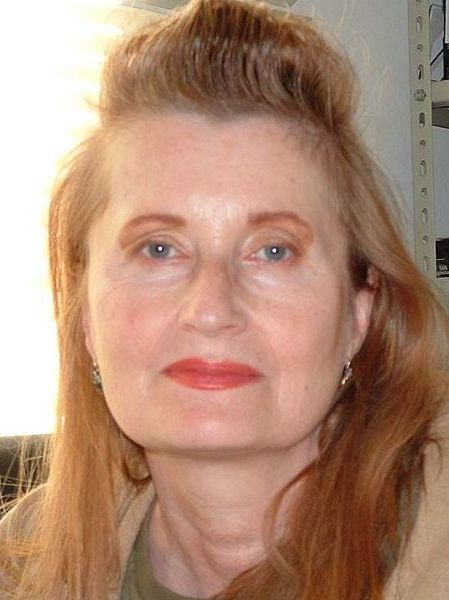
Elfriede Jelinek (German: [ɛlˈfʁiːdə ˈjɛlinɛk]; born 20 October 1946) is an Austrian playwright and novelist. She is one of the most decorated authors to write in German and was awarded the 2004 Nobel Prize in Literature for her "musical flow of voices and counter-voices in novels and plays that, with extraordinary linguistic zeal, reveal the absurdity of society's clichés and their subjugating power". She is considered to be among the most important living playwrights of the German language.
Elfriede Jelinek was born on 20 October 1946 in Mürzzuschlag, Styria, Austria, the daughter of Olga Ilona (née Buchner), a personnel director, and Friedrich Jelinek. She was raised in Vienna by her Romanian-German Catholic mother and a non-observant Czech Jewish father (whose surname Jelínek means "little deer" in Czech). Her mother's family was of a bourgeois background, while her father was a working-class socialist.
Her father was a chemist, who managed to avoid persecution during the Second World War by working in strategically important industrial production. However, many of his relatives became victims of the Holocaust. Her mother, with whom she had a strained relationship, was from a formerly prosperous Vienna family. At the age of six, Jelinek was a patient of Hans Asperger, which she later described as "a crime [...] Instead of sending me out to play in the company of kids my age, my mother sent me into the company of severe neurotics and psychopaths." In 1995, she stated that she was "[n]ot an Asperger autistic, though indeed not far off." As a child, she attended a Roman Catholic convent school in Vienna. Her mother planned a career for her as a musical "Wunderkind". She was instructed in piano, organ, guitar, violin, viola, and recorder from an early age. Later, she went on to study at the Vienna Conservatory, where she graduated with an organist diploma; during this time, she tried to meet her mother's high expectations, while coping with her psychologically ill father. She studied art history and theater at the University of Vienna. However, she had to discontinue her studies due to an anxiety disorder, which resulted in self-isolation at her parents' house for a year. During this time, she began serious literary work as a form of therapy. After a year, she began to feel comfortable leaving the house, often with her mother. She began writing poetry at a young age. She made her literary debut with Lisas Schatten (Lisa's Shadow) in 1967, and received her first literary prize in 1969. During the 1960s, she became active politically, read a great deal, and "spent an enormous amount of time watching television".
She married Gottfried Hüngsberg on 12 June 1974.
I was 27; he was 29. I knew enough men. Sexuality was, strangely, the only area where I emancipated myself early on. Our marriage takes place in two cities. It's a kind of Tale of Two Cities in the Dickensian sense. I've always commuted between Vienna and Munich. Vienna is where I've always lived because my friends are here and because I've never wanted to leave Vienna. In the end I've been caught up here. Munich is my husband's city and so I've always traveled to and from, and that's been good for our marriage.
Despite the author's own differentiation from Austria (due to her criticism of Austria's Nazi past), Jelinek's writing is deeply rooted in the tradition of Austrian literature, showing the influence of Austrian writers such as Ingeborg Bachmann, Marlen Haushofer, and Robert Musil.
Editor Friederike Eigler states that Jelinek has three major and inter-related "targets" in her writing: what she views as capitalist consumer society and its commodification of all human beings and relationships, what she views as the remnants of Austria's fascist past in public and private life, and what she views as the systematic exploitation and oppression of women in a capitalist-patriarchal society. Jelinek has claimed in multiple interviews that the Austrian-Jewish satirical tradition has been a formative influence on her writing, citing Karl Kraus, Elias Canetti, and Jewish cabaret in particular. In an interview with Sigrid Löffler, Jelinek claimed that her work is considered an oddity in contemporary Austria, where she claims satire is unappreciated and misunderstood, "because the Jews are dead." She has stressed her Jewish identity as the daughter of a Holocaust survivor, claiming a continuity with a Jewish-Viennese tradition that she believes has been destroyed by fascism and is dying out. In 2024, Jelinek signed an open letter denouncing the Palestinian Campaign for the Academic and Cultural Boycott of Israel.
Jelinek's output has included radio plays, poetry, theatre texts, polemical essays, anthologies, novels, translations, screenplays, musical compositions, libretti and ballets, film and video art. Jelinek's work is multi-faceted, and highly controversial. It has been praised and condemned by leading literary critics. In the wake of the Fritzl case, for example, she was accused of "executing 'hysterical' portraits of Austrian perversity". Likewise, her political activism has encountered divergent and often heated reactions. Despite the controversy surrounding her work, Jelinek has won many distinguished awards; among them are the Georg Büchner Prize in 1998; the Mülheim Dramatists Prize in 2002 and 2004; the Franz Kafka Prize in 2004; and the Nobel Prize in Literature, also in 2004.
Hub AI
Elfriede Jelinek AI simulator
(@Elfriede Jelinek_simulator)
Elfriede Jelinek
Elfriede Jelinek (German: [ɛlˈfʁiːdə ˈjɛlinɛk]; born 20 October 1946) is an Austrian playwright and novelist. She is one of the most decorated authors to write in German and was awarded the 2004 Nobel Prize in Literature for her "musical flow of voices and counter-voices in novels and plays that, with extraordinary linguistic zeal, reveal the absurdity of society's clichés and their subjugating power". She is considered to be among the most important living playwrights of the German language.
Elfriede Jelinek was born on 20 October 1946 in Mürzzuschlag, Styria, Austria, the daughter of Olga Ilona (née Buchner), a personnel director, and Friedrich Jelinek. She was raised in Vienna by her Romanian-German Catholic mother and a non-observant Czech Jewish father (whose surname Jelínek means "little deer" in Czech). Her mother's family was of a bourgeois background, while her father was a working-class socialist.
Her father was a chemist, who managed to avoid persecution during the Second World War by working in strategically important industrial production. However, many of his relatives became victims of the Holocaust. Her mother, with whom she had a strained relationship, was from a formerly prosperous Vienna family. At the age of six, Jelinek was a patient of Hans Asperger, which she later described as "a crime [...] Instead of sending me out to play in the company of kids my age, my mother sent me into the company of severe neurotics and psychopaths." In 1995, she stated that she was "[n]ot an Asperger autistic, though indeed not far off." As a child, she attended a Roman Catholic convent school in Vienna. Her mother planned a career for her as a musical "Wunderkind". She was instructed in piano, organ, guitar, violin, viola, and recorder from an early age. Later, she went on to study at the Vienna Conservatory, where she graduated with an organist diploma; during this time, she tried to meet her mother's high expectations, while coping with her psychologically ill father. She studied art history and theater at the University of Vienna. However, she had to discontinue her studies due to an anxiety disorder, which resulted in self-isolation at her parents' house for a year. During this time, she began serious literary work as a form of therapy. After a year, she began to feel comfortable leaving the house, often with her mother. She began writing poetry at a young age. She made her literary debut with Lisas Schatten (Lisa's Shadow) in 1967, and received her first literary prize in 1969. During the 1960s, she became active politically, read a great deal, and "spent an enormous amount of time watching television".
She married Gottfried Hüngsberg on 12 June 1974.
I was 27; he was 29. I knew enough men. Sexuality was, strangely, the only area where I emancipated myself early on. Our marriage takes place in two cities. It's a kind of Tale of Two Cities in the Dickensian sense. I've always commuted between Vienna and Munich. Vienna is where I've always lived because my friends are here and because I've never wanted to leave Vienna. In the end I've been caught up here. Munich is my husband's city and so I've always traveled to and from, and that's been good for our marriage.
Despite the author's own differentiation from Austria (due to her criticism of Austria's Nazi past), Jelinek's writing is deeply rooted in the tradition of Austrian literature, showing the influence of Austrian writers such as Ingeborg Bachmann, Marlen Haushofer, and Robert Musil.
Editor Friederike Eigler states that Jelinek has three major and inter-related "targets" in her writing: what she views as capitalist consumer society and its commodification of all human beings and relationships, what she views as the remnants of Austria's fascist past in public and private life, and what she views as the systematic exploitation and oppression of women in a capitalist-patriarchal society. Jelinek has claimed in multiple interviews that the Austrian-Jewish satirical tradition has been a formative influence on her writing, citing Karl Kraus, Elias Canetti, and Jewish cabaret in particular. In an interview with Sigrid Löffler, Jelinek claimed that her work is considered an oddity in contemporary Austria, where she claims satire is unappreciated and misunderstood, "because the Jews are dead." She has stressed her Jewish identity as the daughter of a Holocaust survivor, claiming a continuity with a Jewish-Viennese tradition that she believes has been destroyed by fascism and is dying out. In 2024, Jelinek signed an open letter denouncing the Palestinian Campaign for the Academic and Cultural Boycott of Israel.
Jelinek's output has included radio plays, poetry, theatre texts, polemical essays, anthologies, novels, translations, screenplays, musical compositions, libretti and ballets, film and video art. Jelinek's work is multi-faceted, and highly controversial. It has been praised and condemned by leading literary critics. In the wake of the Fritzl case, for example, she was accused of "executing 'hysterical' portraits of Austrian perversity". Likewise, her political activism has encountered divergent and often heated reactions. Despite the controversy surrounding her work, Jelinek has won many distinguished awards; among them are the Georg Büchner Prize in 1998; the Mülheim Dramatists Prize in 2002 and 2004; the Franz Kafka Prize in 2004; and the Nobel Prize in Literature, also in 2004.
Recent media