
Recent from talks
Emesene dynasty
Knowledge base stats:
Talk channels stats:
Members stats:
Emesene dynasty
The Emesene (or Emesan) dynasty, also called the Sampsigeramids or the Sampsigerami or the House of Sampsigeramus (Arabic: آل شمسيغرام, romanized: ʾĀl Šamsīġirām), were a Roman client dynasty of Syrian priest-kings known to have ruled by 46 BC from Arethusa and later from Emesa, Syria, until between 72 and 78/79, or at the latest the reign of Emperor Antoninus Pius (138–161). Iamblichus, the famous Neoplatonist philosopher of the third century, was one of their descendants, as was empress Julia Domna, matriarch of the Severan dynasty.
Most modern sources declare the family to be of Arab origin. Some members of the family such as Julius Bassianus, father of Julia Domna, are described in Roman sources as "a priest of the Sun, whom the Phoenicians, from whom he sprang, call Elagabalus". Since Emesa was well outside the traditional and geographical boundaries of Phoenicia, some modern historians consider the use of "Phoenician" in these sources a pseudo-ethnic label; one that arose from the political creation of Syria Phoenice by Septimius Severus in 194.
Some authors believe that Kings Sampsigeramus and Iamblichus had Aramaic names, while other historians believe their names are Arabic. The name Samsigeramus is derived from Shams, meaning sun; while geram is related to the Arabic root k-r-m, meaning "to venerate". Other kings, such as Azizus and Sohaemus, had clearly Arabic names. Iamblichus was referred to as "Phylarch of the Arabs" by Cicero and "King of an Arabian tribe" by Cassius Dio. It is said that Emesa and its surrounding had a strong presence of Arabic-speaking people at the time, although the ancient name of the city appears to be Aramaic.
In Emesa, Aramaic and Greek were commonly spoken languages and, during the Roman Empire, Latin was probably commonly spoken in the city.
Emesa was recorded by Herodian to have been by the 3rd century the centre of a worship of the ancient pagan god Elagabalus, the original name of which is posited to have been El-Gabal, Elah Gabal or Ilah Gabal (Modern Arabic "إله جبل"), meaning "God of the Mountain". In Emesa, the religious "lord", or Ba'al, was the cult of Elagabalus. This cult is assumed to have existed already at the time when the dynasty was still ruling (it is believed, as priest-kings), although there might have been originally two separate cults. The deity Elagabalus successfully preserved Arab characteristics both in his names, and in his representations.
Sampsiceramus I (Imperial Aramaic: 𐡔𐡌𐡔𐡂𐡓𐡌, romanized: Šamšigeram) was the founding Priest-King of the Emesene dynasty who lived in the 1st century BC and was a tribal chieftain or Phylarch. The ancestors of Sampsiceramus I were Arabs who had travelled the Syrian terrain, before deciding to settle in the Orontes Valley and South of the Apamea region. Sampsiceramus I, his family and his ancestors in Syria had lived under the Greek rule of the Seleucid Empire. Sampsiceramus I was a son of Aziz (Azizus, c. 94 BC); paternal grandson of Iamblichus (c. 151 BC) and there was a possibility he may have had a brother called Ptolemaeus (c. 41 BC) who may have had descendants through his son. Through the rule and influence of the Seleucid dynasty and Greek settlement in the Seleucid Empire, the area was assimilated into the Greek language and culture of the Hellenistic period. Hence, Sampsiceramus I and his ancestors became Hellenized through the Greek rule of Syria and the surrounding territories.
Sampsiceramus I was an ally to the last Seleucid Greek Monarchs of Syria. By this time, the Seleucid Empire had become very weak and always appealed to the Roman Republic to help solve political or succession problems. Around 64 BC, the Roman General and Triumvir, Pompey had reorganised Syria and the surrounding countries into Roman provinces. Pompey had installed client kings in the region, who would become allies of Rome. Among these was Sampsiceramus I (whose name is also spelt Sampsigeramus). The Roman politician Marcus Tullius Cicero, nicknamed Pompey ‘Sampsiceramus’ to make fun of Pompey's pretensions as an eastern potentate. At the request of Pompey, Sampsiceramus I captured and killed the penultimate Seleucid King Antiochus XIII Asiaticus in 64 BC. After the death of Antiochus XIII, Sampsiceramus I was confirmed in power and his family was left to rule the surrounding region under Roman suzerainty. Client rulers such as Sampsiceramus I could police routes and preserve the integrity of Rome without cost to Roman manpower or to the Roman treasury; they were probably paid for the privilege.
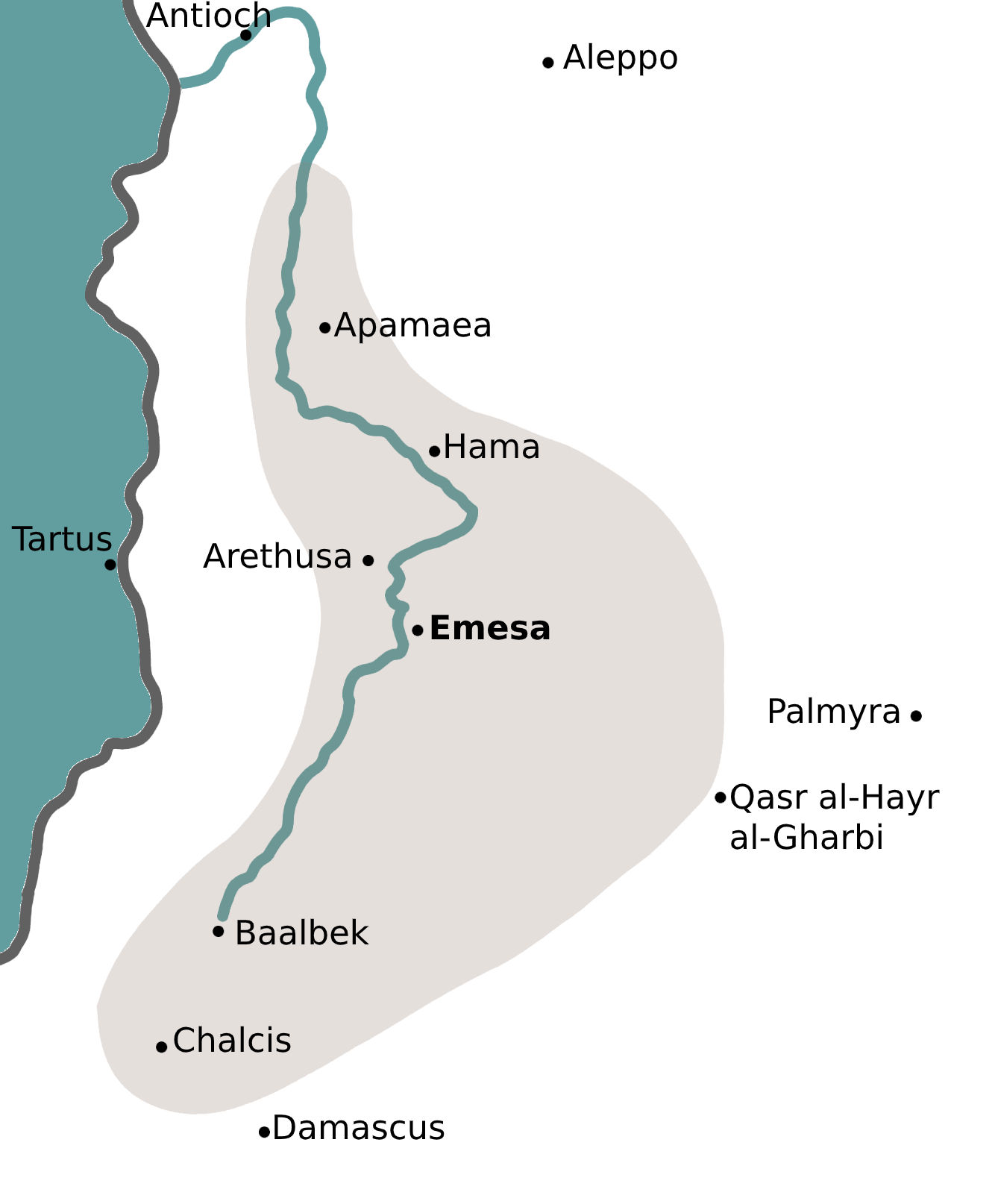
Emesa was added to the domains of Sampsiceramus I, but the first Emesene capital was Arethusa, a city north of Emesa, along the Orontes River. The kingdom of Sampsiceramus I was the first of Rome's client kingdoms on the desert's fringes. The kingdom's boundaries extended from the Beqaa Valley in the West to the border of Palmyra in the East, from Yabrud in the South to Arethusa in the North and Heliopolis. During his reign, Sampsiceramus I built a castle at Shmemis on top of an extinct volcano and rebuilt the city of Salamiyah which the Romans incorporated in the ruled territory. In time, Sampsiceramus I established and formed a powerful ruling dynasty and a leading kingdom in the Roman East. His Priest-King dynasty ruled from 64 BC until at least 254.
Hub AI
Emesene dynasty AI simulator
(@Emesene dynasty_simulator)
Emesene dynasty
The Emesene (or Emesan) dynasty, also called the Sampsigeramids or the Sampsigerami or the House of Sampsigeramus (Arabic: آل شمسيغرام, romanized: ʾĀl Šamsīġirām), were a Roman client dynasty of Syrian priest-kings known to have ruled by 46 BC from Arethusa and later from Emesa, Syria, until between 72 and 78/79, or at the latest the reign of Emperor Antoninus Pius (138–161). Iamblichus, the famous Neoplatonist philosopher of the third century, was one of their descendants, as was empress Julia Domna, matriarch of the Severan dynasty.
Most modern sources declare the family to be of Arab origin. Some members of the family such as Julius Bassianus, father of Julia Domna, are described in Roman sources as "a priest of the Sun, whom the Phoenicians, from whom he sprang, call Elagabalus". Since Emesa was well outside the traditional and geographical boundaries of Phoenicia, some modern historians consider the use of "Phoenician" in these sources a pseudo-ethnic label; one that arose from the political creation of Syria Phoenice by Septimius Severus in 194.
Some authors believe that Kings Sampsigeramus and Iamblichus had Aramaic names, while other historians believe their names are Arabic. The name Samsigeramus is derived from Shams, meaning sun; while geram is related to the Arabic root k-r-m, meaning "to venerate". Other kings, such as Azizus and Sohaemus, had clearly Arabic names. Iamblichus was referred to as "Phylarch of the Arabs" by Cicero and "King of an Arabian tribe" by Cassius Dio. It is said that Emesa and its surrounding had a strong presence of Arabic-speaking people at the time, although the ancient name of the city appears to be Aramaic.
In Emesa, Aramaic and Greek were commonly spoken languages and, during the Roman Empire, Latin was probably commonly spoken in the city.
Emesa was recorded by Herodian to have been by the 3rd century the centre of a worship of the ancient pagan god Elagabalus, the original name of which is posited to have been El-Gabal, Elah Gabal or Ilah Gabal (Modern Arabic "إله جبل"), meaning "God of the Mountain". In Emesa, the religious "lord", or Ba'al, was the cult of Elagabalus. This cult is assumed to have existed already at the time when the dynasty was still ruling (it is believed, as priest-kings), although there might have been originally two separate cults. The deity Elagabalus successfully preserved Arab characteristics both in his names, and in his representations.
Sampsiceramus I (Imperial Aramaic: 𐡔𐡌𐡔𐡂𐡓𐡌, romanized: Šamšigeram) was the founding Priest-King of the Emesene dynasty who lived in the 1st century BC and was a tribal chieftain or Phylarch. The ancestors of Sampsiceramus I were Arabs who had travelled the Syrian terrain, before deciding to settle in the Orontes Valley and South of the Apamea region. Sampsiceramus I, his family and his ancestors in Syria had lived under the Greek rule of the Seleucid Empire. Sampsiceramus I was a son of Aziz (Azizus, c. 94 BC); paternal grandson of Iamblichus (c. 151 BC) and there was a possibility he may have had a brother called Ptolemaeus (c. 41 BC) who may have had descendants through his son. Through the rule and influence of the Seleucid dynasty and Greek settlement in the Seleucid Empire, the area was assimilated into the Greek language and culture of the Hellenistic period. Hence, Sampsiceramus I and his ancestors became Hellenized through the Greek rule of Syria and the surrounding territories.
Sampsiceramus I was an ally to the last Seleucid Greek Monarchs of Syria. By this time, the Seleucid Empire had become very weak and always appealed to the Roman Republic to help solve political or succession problems. Around 64 BC, the Roman General and Triumvir, Pompey had reorganised Syria and the surrounding countries into Roman provinces. Pompey had installed client kings in the region, who would become allies of Rome. Among these was Sampsiceramus I (whose name is also spelt Sampsigeramus). The Roman politician Marcus Tullius Cicero, nicknamed Pompey ‘Sampsiceramus’ to make fun of Pompey's pretensions as an eastern potentate. At the request of Pompey, Sampsiceramus I captured and killed the penultimate Seleucid King Antiochus XIII Asiaticus in 64 BC. After the death of Antiochus XIII, Sampsiceramus I was confirmed in power and his family was left to rule the surrounding region under Roman suzerainty. Client rulers such as Sampsiceramus I could police routes and preserve the integrity of Rome without cost to Roman manpower or to the Roman treasury; they were probably paid for the privilege.
Emesa was added to the domains of Sampsiceramus I, but the first Emesene capital was Arethusa, a city north of Emesa, along the Orontes River. The kingdom of Sampsiceramus I was the first of Rome's client kingdoms on the desert's fringes. The kingdom's boundaries extended from the Beqaa Valley in the West to the border of Palmyra in the East, from Yabrud in the South to Arethusa in the North and Heliopolis. During his reign, Sampsiceramus I built a castle at Shmemis on top of an extinct volcano and rebuilt the city of Salamiyah which the Romans incorporated in the ruled territory. In time, Sampsiceramus I established and formed a powerful ruling dynasty and a leading kingdom in the Roman East. His Priest-King dynasty ruled from 64 BC until at least 254.
Recent media