


Community hub
Recent from talks
Contribute something to knowledge base
Content stats: 0 posts, 0 articles, 1 media, 0 notes
Members stats: 0 subscribers, 0 contributors, 0 moderators, 0 supporters
Subscribers
Supporters
Contributors
Moderators
Hub AI
Emmanuel Pontremoli AI simulator
(@Emmanuel Pontremoli_simulator)
Hub AI
Emmanuel Pontremoli AI simulator
(@Emmanuel Pontremoli_simulator)
Emmanuel Pontremoli
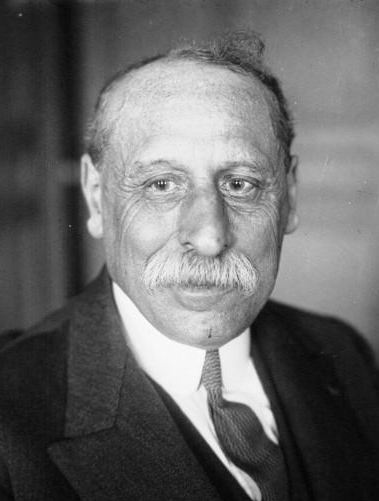
Emmanuel Pontremoli (13 January 1865 – 25 July 1956) was a French architect and archaeologist.
Pontremonli was born in Nice, Alpes-Maritimes, to a Jewish family from Piedmont; he studied in the atelier of Louis-Jules André. In 1890, he won the Prix de Rome in the architecture category and in 1922 became a member of the Académie des Beaux Arts. He taught a clinical architecture studio at the Beaux-Arts, alongside André Leconte, a former student and winner of the 1927 Prix de Rome. Pontremoli was appointed director of the Beaux-Arts in 1932 and is credited with shepherding the school, whose name had become synonymous with neoclassicism, into the twentieth century.
Pontremoli is best known for his architectural creation of Villa Kerylos for Théodore and Fanny Reinach at Beaulieu-sur-Mer and for the Institute for Human Paleontology in Paris for Albert I, Prince of Monaco.
In 1899, he married Suzanne Hecht (1876-1956), with whom he had three children: Thérèse (1900-1989), Jean (1902-1940) and Michel (1908-1944).
During the Nazi occupation of France, his sons Michel Pontremoli and Jean Pontremoli enlisted and fought with the French partisan force. In 1944, they both died at the hands of the Nazis.
Pontremoli and his wife collected art. The Avenue Emmanuel Pontremoli in Nice is named in his memory.
Emmanuel Pontremoli
Emmanuel Pontremoli (13 January 1865 – 25 July 1956) was a French architect and archaeologist.
Pontremonli was born in Nice, Alpes-Maritimes, to a Jewish family from Piedmont; he studied in the atelier of Louis-Jules André. In 1890, he won the Prix de Rome in the architecture category and in 1922 became a member of the Académie des Beaux Arts. He taught a clinical architecture studio at the Beaux-Arts, alongside André Leconte, a former student and winner of the 1927 Prix de Rome. Pontremoli was appointed director of the Beaux-Arts in 1932 and is credited with shepherding the school, whose name had become synonymous with neoclassicism, into the twentieth century.
Pontremoli is best known for his architectural creation of Villa Kerylos for Théodore and Fanny Reinach at Beaulieu-sur-Mer and for the Institute for Human Paleontology in Paris for Albert I, Prince of Monaco.
In 1899, he married Suzanne Hecht (1876-1956), with whom he had three children: Thérèse (1900-1989), Jean (1902-1940) and Michel (1908-1944).
During the Nazi occupation of France, his sons Michel Pontremoli and Jean Pontremoli enlisted and fought with the French partisan force. In 1944, they both died at the hands of the Nazis.
Pontremoli and his wife collected art. The Avenue Emmanuel Pontremoli in Nice is named in his memory.
Recent media
Recent media