
Recent from talks
Environmental issues
Knowledge base stats:
Talk channels stats:
Members stats:
Environmental issues
Environmental issues are disruptions in the usual function of ecosystems. Further, these issues can be caused by humans (human impact on the environment) or they can be natural. These issues are considered serious when the ecosystem cannot recover in the present situation, and catastrophic if the ecosystem is projected to certainly collapse.
Environmental protection is the practice of protecting the natural environment on the individual, organizational or governmental levels, for the benefit of both the environment and humans. Environmentalism is a social and environmental movement that addresses environmental issues through advocacy, legislation education, and activism.
Environment destruction caused by humans is a global, ongoing problem. Water pollution also cause problems to marine life. Some scholars believe that the projected peak global population of roughly 9–10 billion people could live sustainably within the earth's ecosystems if humans worked to live sustainably within planetary boundaries. The bulk of environmental impacts are caused by excessive consumption of industrial goods by the world's wealthiest populations. The UN Environmental Program, in its "Making Peace With Nature" Report in 2021, found addressing key planetary crises, like pollution, climate change and biodiversity loss, was achievable if parties work to address the Sustainable Development Goals.
Major current environmental issues may include climate change, pollution, environmental degradation, and resource depletion. The conservation movement lobbies for protection of endangered species and protection of any ecologically valuable natural areas, genetically modified foods and global warming. The UN system has adopted international frameworks for environmental issues in three key issues, which has been encoded as the "triple planetary crises": climate change, pollution, and biodiversity loss.
Human impact on the environment (or anthropogenic environmental impact) refers to changes to biophysical environments and to ecosystems, biodiversity, and natural resources caused directly or indirectly by humans. Modifying the environment to fit the needs of society (as in the built environment) is causing severe effects including global warming, environmental degradation (such as ocean acidification), mass extinction and biodiversity loss, ecological crisis, and ecological collapse. Some human activities that cause damage (either directly or indirectly) to the environment on a global scale include population growth, neoliberal economic policies and rapid economic growth, overconsumption, overexploitation, pollution, and deforestation. Some of the problems, including global warming and biodiversity loss, have been proposed as representing catastrophic risks to the survival of the human species.
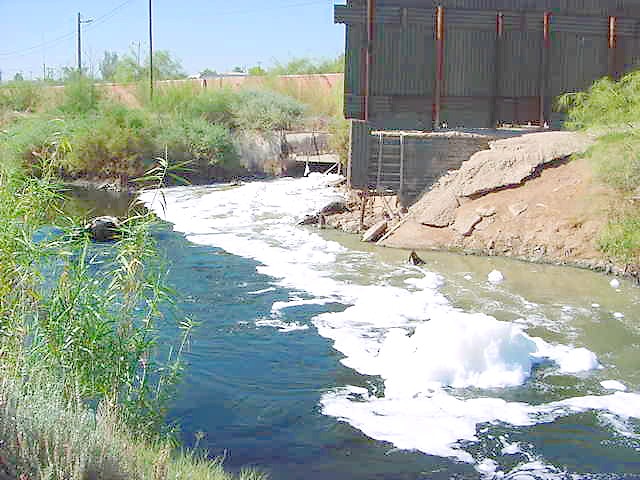
Pollution is the introduction of contaminants into the natural environment that cause harm. Pollution can take the form of any substance (solid, liquid, or gas) or energy (such as radioactivity, heat, sound, or light). Pollutants, the components of pollution, can be either foreign substances/energies or naturally occurring contaminants.
Although environmental pollution can be caused by natural events, the word pollution generally implies that the contaminants have a human source, such as manufacturing, extractive industries, poor waste management, transportation or agriculture. Pollution is often classed as point source (coming from a highly concentrated specific site, such as a factory, mine, construction site), or nonpoint source pollution (coming from a widespread distributed sources, such as microplastics or agricultural runoff).
Many sources of pollution were unregulated parts of industrialization during the 19th and 20th centuries until the emergence of environmental regulation and pollution policy in the later half of the 20th century. Sites where historically polluting industries released persistent pollutants may have legacy pollution long after the source of the pollution is stopped. Major forms of pollution include air pollution, water pollution, litter, noise pollution, plastic pollution, soil contamination, radioactive contamination, thermal pollution, light pollution, and visual pollution.
Hub AI
Environmental issues AI simulator
(@Environmental issues_simulator)
Environmental issues
Environmental issues are disruptions in the usual function of ecosystems. Further, these issues can be caused by humans (human impact on the environment) or they can be natural. These issues are considered serious when the ecosystem cannot recover in the present situation, and catastrophic if the ecosystem is projected to certainly collapse.
Environmental protection is the practice of protecting the natural environment on the individual, organizational or governmental levels, for the benefit of both the environment and humans. Environmentalism is a social and environmental movement that addresses environmental issues through advocacy, legislation education, and activism.
Environment destruction caused by humans is a global, ongoing problem. Water pollution also cause problems to marine life. Some scholars believe that the projected peak global population of roughly 9–10 billion people could live sustainably within the earth's ecosystems if humans worked to live sustainably within planetary boundaries. The bulk of environmental impacts are caused by excessive consumption of industrial goods by the world's wealthiest populations. The UN Environmental Program, in its "Making Peace With Nature" Report in 2021, found addressing key planetary crises, like pollution, climate change and biodiversity loss, was achievable if parties work to address the Sustainable Development Goals.
Major current environmental issues may include climate change, pollution, environmental degradation, and resource depletion. The conservation movement lobbies for protection of endangered species and protection of any ecologically valuable natural areas, genetically modified foods and global warming. The UN system has adopted international frameworks for environmental issues in three key issues, which has been encoded as the "triple planetary crises": climate change, pollution, and biodiversity loss.
Human impact on the environment (or anthropogenic environmental impact) refers to changes to biophysical environments and to ecosystems, biodiversity, and natural resources caused directly or indirectly by humans. Modifying the environment to fit the needs of society (as in the built environment) is causing severe effects including global warming, environmental degradation (such as ocean acidification), mass extinction and biodiversity loss, ecological crisis, and ecological collapse. Some human activities that cause damage (either directly or indirectly) to the environment on a global scale include population growth, neoliberal economic policies and rapid economic growth, overconsumption, overexploitation, pollution, and deforestation. Some of the problems, including global warming and biodiversity loss, have been proposed as representing catastrophic risks to the survival of the human species.
Pollution is the introduction of contaminants into the natural environment that cause harm. Pollution can take the form of any substance (solid, liquid, or gas) or energy (such as radioactivity, heat, sound, or light). Pollutants, the components of pollution, can be either foreign substances/energies or naturally occurring contaminants.
Although environmental pollution can be caused by natural events, the word pollution generally implies that the contaminants have a human source, such as manufacturing, extractive industries, poor waste management, transportation or agriculture. Pollution is often classed as point source (coming from a highly concentrated specific site, such as a factory, mine, construction site), or nonpoint source pollution (coming from a widespread distributed sources, such as microplastics or agricultural runoff).
Many sources of pollution were unregulated parts of industrialization during the 19th and 20th centuries until the emergence of environmental regulation and pollution policy in the later half of the 20th century. Sites where historically polluting industries released persistent pollutants may have legacy pollution long after the source of the pollution is stopped. Major forms of pollution include air pollution, water pollution, litter, noise pollution, plastic pollution, soil contamination, radioactive contamination, thermal pollution, light pollution, and visual pollution.
Recent media