
Environmental issues
View on Wikipedia | The examples and perspective in this article may not represent a worldwide view of the subject. (March 2020) |
 | This article may incorporate text from a large language model. (September 2025) |

Environmental issues are disruptions in the usual function of ecosystems.[1] Further, these issues can be caused by humans (human impact on the environment)[2] or they can be natural. These issues are considered serious when the ecosystem cannot recover in the present situation, and catastrophic if the ecosystem is projected to certainly collapse.
Environmental protection is the practice of protecting the natural environment on the individual, organizational or governmental levels, for the benefit of both the environment and humans. Environmentalism is a social and environmental movement that addresses environmental issues through advocacy, legislation education, and activism.[3]
Environment destruction caused by humans is a global, ongoing problem.[4] Water pollution also cause problems to marine life.[5] Some scholars believe that the projected peak global population of roughly 9–10 billion people could live sustainably within the earth's ecosystems if humans worked to live sustainably within planetary boundaries.[6][7][8] The bulk of environmental impacts are caused by excessive consumption of industrial goods by the world's wealthiest populations.[9][10][11] The UN Environmental Program, in its "Making Peace With Nature" Report in 2021, found addressing key planetary crises, like pollution, climate change and biodiversity loss, was achievable if parties work to address the Sustainable Development Goals.[12]
Types
[edit]Major current environmental issues may include climate change, pollution, environmental degradation, and resource depletion. The conservation movement lobbies for protection of endangered species and protection of any ecologically valuable natural areas, genetically modified foods and global warming. The UN system has adopted international frameworks for environmental issues in three key issues, which has been encoded as the "triple planetary crises": climate change, pollution, and biodiversity loss.[13]
Human impact
[edit]
.jpg)


| Part of a series on |
| Sociology |
|---|
.svg) |


Human impact on the environment (or anthropogenic environmental impact) refers to changes to biophysical environments[14] and to ecosystems, biodiversity, and natural resources[15] caused directly or indirectly by humans. Modifying the environment to fit the needs of society (as in the built environment) is causing severe effects[16][17] including global warming,[14][18][19] environmental degradation[14] (such as ocean acidification[14][20]), mass extinction and biodiversity loss,[21][22][23][24] ecological crisis, and ecological collapse. Some human activities that cause damage (either directly or indirectly) to the environment on a global scale include population growth,[25][26][27] neoliberal economic policies[28][29][30] and rapid economic growth,[31] overconsumption, overexploitation, pollution, and deforestation.[32] Some of the problems, including global warming and biodiversity loss, have been proposed as representing catastrophic risks to the survival of the human species.[33][34]
The term anthropogenic designates an effect or object resulting from human activity. The term was first used in the technical sense by Russian geologist Alexey Pavlov, and it was first used in English by British ecologist Arthur Tansley in reference to human influences on climax plant communities.[35] The atmospheric scientist Paul Crutzen introduced the term "Anthropocene" in the mid-1970s.[36] The term is sometimes used in the context of pollution produced from human activity since the start of the Agricultural Revolution but also applies broadly to all major human impacts on the environment.[37][38][39] Many of the actions taken by humans that contribute to a heated environment stem from the burning of fossil fuel from a variety of sources, such as: electricity, cars, planes, space heating, manufacturing, or the destruction of forests.[40]Pollution
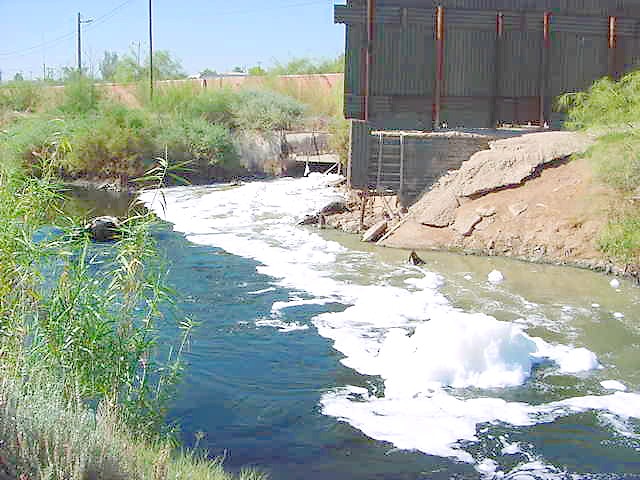
[edit]Pollution is the introduction of contaminants into the natural environment that cause harm.[41] Pollution can take the form of any substance (solid, liquid, or gas) or energy (such as radioactivity, heat, sound, or light). Pollutants, the components of pollution, can be either foreign substances/energies or naturally occurring contaminants.
Although environmental pollution can be caused by natural events, the word pollution generally implies that the contaminants have a human source, such as manufacturing, extractive industries, poor waste management, transportation or agriculture. Pollution is often classed as point source (coming from a highly concentrated specific site, such as a factory, mine, construction site), or nonpoint source pollution (coming from a widespread distributed sources, such as microplastics or agricultural runoff).
Many sources of pollution were unregulated parts of industrialization during the 19th and 20th centuries until the emergence of environmental regulation and pollution policy in the later half of the 20th century. Sites where historically polluting industries released persistent pollutants may have legacy pollution long after the source of the pollution is stopped. Major forms of pollution include air pollution, water pollution, litter, noise pollution, plastic pollution, soil contamination, radioactive contamination, thermal pollution, light pollution, and visual pollution.[42]
Pollution has widespread consequences on human and environmental health, having systematic impact on social and economic systems. In 2019, pollution killed approximately nine million people worldwide (about one in six deaths that year); about three-quarters of these deaths were caused by air pollution.[43][44] A 2022 literature review found that levels of anthropogenic chemical pollution have exceeded planetary boundaries and now threaten entire ecosystems around the world.[45][46] Pollutants frequently have outsized impacts on vulnerable populations, such as children and the elderly, and marginalized communities, because polluting industries and toxic waste sites tend to be collocated with populations with less economic and political power.[47] This outsized impact is a core reason for the formation of the environmental justice movement,[48][49] and continues to be a core element of environmental conflicts, particularly in the Global South.
Because of the impacts of these chemicals, local and international countries' policy have increasingly sought to regulate pollutants, resulting in increasing air and water quality standards, alongside regulation of specific waste streams. Regional and national policy is typically supervised by environmental agencies or ministries, while international efforts are coordinated by the UN Environmental Program and other treaty bodies. Pollution mitigation is an important part of all of the Sustainable Development Goals.[50]Degradation
[edit]
Environmental degradation is the deterioration of the environment through depletion of resources such as quality of air, water and soil; the destruction of ecosystems; habitat destruction; the extinction of wildlife; and pollution. It is defined as any change or disturbance to the environment perceived to be deleterious or undesirable.[51][52] The environmental degradation process amplifies the impact of environmental issues which leave lasting impacts on the environment.[citation needed]
Environmental degradation is one of the ten threats officially cautioned by the High-level Panel on Threats, Challenges and Change of the United Nations. The United Nations International Strategy for Disaster Reduction defines environmental degradation as "the reduction of the capacity of the environment to meet social and ecological objectives, and needs".[53]
Environmental degradation comes in many types. When natural habitats are destroyed or natural resources are depleted, the environment is degraded; direct environmental degradation, such as deforestation, which is readily visible; this can be caused by more indirect process, such as the build up of plastic pollution over time or the buildup of greenhouse gases that causes tipping points in the climate system. Efforts to counteract this problem include environmental protection and environmental resources management. Mismanagement that leads to degradation can also lead to environmental conflict where communities organize in opposition to the forces that mismanaged the environment.Conflict
[edit]| Part of a series on |
| Environmental justice |
|---|
 |
 Category Category |
.jpg)
Environmental conflicts, socio-environmental conflict or ecological distribution conflicts (EDCs) are social conflicts caused by environmental degradation or by unequal distribution of environmental resources.[54][55][56] The Environmental Justice Atlas documented 3,100 environmental conflicts worldwide as of April 2020 and emphasised that many more conflicts remained undocumented.[54]
Parties involved in these conflicts include locally affected communities, states, companies and investors, and social or environmental movements;[57][58] typically environmental defenders are protecting their homelands from resource extraction or hazardous waste disposal.[54] Resource extraction and hazardous waste activities often create resource scarcities (such as by overfishing or deforestation), pollute the environment, and degrade the living space for humans and nature, resulting in conflict.[59] A particular case of environmental conflicts are forestry conflicts, or forest conflicts which "are broadly viewed as struggles of varying intensity between interest groups, over values and issues related to forest policy and the use of forest resources".[60] In the last decades, a growing number of these have been identified globally.[61]
Frequently environmental conflicts focus on environmental justice issues, the rights of indigenous people, the rights of peasants, or threats to communities whose livelihoods are dependent on the ocean.[54] Outcomes of local conflicts are increasingly influenced by trans-national environmental justice networks that comprise the global environmental justice movement.[54][62]
Environmental conflict can complicate response to natural disaster or exacerbate existing conflicts – especially in the context of geopolitical disputes or where communities have been displaced to create environmental migrants.[63][56][59] The study of these conflicts is related to the fields of ecological economics, political ecology, and environmental justice.Costs
[edit]![[icon]](https://en.wikipedia.org/wiki/File:Wiki_letter_w_cropped.svg) | This section needs expansion. You can help by adding to it. (October 2016) |
Action
[edit]Justice
[edit]Environmental justice is a social movement that addresses injustice that occurs when poor or marginalized communities are harmed by hazardous waste, resource extraction, and other land uses from which they do not benefit.[64][65] The movement has generated hundreds of studies showing that exposure to environmental harm is inequitably distributed.[66] Additionally, many marginalized communities, including the LGBTQ community, are disproportionately impacted by natural disasters.
The movement began in the United States in the 1980s. It was heavily influenced by the American civil rights movement and focused on environmental racism within rich countries. The movement was later expanded to consider gender, LGBTQ people, international environmental injustice, and inequalities within marginalized groups. As the movement achieved some success in rich countries, environmental burdens were shifted to the Global South (as for example through extractivism or the global waste trade). The movement for environmental justice has thus become more global, with some of its aims now being articulated by the United Nations. The movement overlaps with movements for Indigenous land rights and for the human right to a healthy environment.[67]

The goal of the environmental justice movement is to achieve agency for marginalized communities in making environmental decisions that affect their lives. The global environmental justice movement arises from local environmental conflicts in which environmental defenders frequently confront multi-national corporations in resource extraction or other industries. Local outcomes of these conflicts are increasingly influenced by trans-national environmental justice networks.[68][69]
Environmental justice scholars have produced a large interdisciplinary body of social science literature that includes contributions to political ecology, environmental law, and theories on justice and sustainability.[65][70][71]The 2023 IPCC report highlighted the disproportionate effects of climate change on vulnerable populations. The report's findings make it clear that every increment of global warming exacerbates challenges such as extreme heatwaves, heavy rainfall, and other weather extremes, which in turn amplify risks for human health and ecosystems. With nearly half of the world's population residing in regions highly susceptible to climate change, the urgency for global actions that are both rapid and sustained is underscored. The importance of integrating diverse knowledge systems, including scientific, Indigenous, and local knowledge, into climate action is highlighted as a means to foster inclusive solutions that address the complexities of climate impacts across different communities.[72]
In addition, the report points out the critical gap in adaptation finance, noting that developing countries require significantly more resources to effectively adapt to climate challenges than what is currently available. This financial disparity raises questions about the global commitment to equitable climate action and underscores the need for a substantial increase in support and resources. The IPCC's analysis suggests that with adequate financial investment and international cooperation, it is possible to embark on a pathway towards resilience and sustainability that benefits all sections of society.[72]
Law
[edit]Environmental laws are laws that protect the environment.[73] The term "environmental law" encompasses treaties, statutes, regulations, conventions, and policies designed to protect the natural environment and manage the impact of human activities on ecosystems and natural resources, such as forests, minerals, or fisheries. It addresses issues such as pollution control, resource conservation, biodiversity protection, climate change mitigation, and sustainable development. As part of both national and international legal frameworks, environmental law seeks to balance environmental preservation with economic and social needs, often through regulatory mechanisms, enforcement measures, and incentives for compliance.
The field emerged prominently in the mid-20th century as industrialization and environmental degradation spurred global awareness, culminating in landmark agreements like the 1972 Stockholm Conference and the 1992 Rio Declaration. Key principles include the precautionary principle, the polluter pays principle, and intergenerational equity. Modern environmental law intersects with human rights, international trade, and energy policy.
Internationally, treaties such as the Paris Agreement (2015), the Kyoto Protocol (1997), and the Convention on Biological Diversity (1992) establish cooperative frameworks for addressing transboundary issues. Nationally, laws like the UK's Clean Air Act 1956 and the US Toxic Substances Control Act of 1976 establish regulations to limit pollution and manage chemical safety. Enforcement varies by jurisdiction, often involving governmental agencies, judicial systems, and international organizations. Environmental impact assessments are a common way to enforce environmental law.
Challenges in environmental law include reconciling economic growth with sustainability, determining adequate levels of compensation, and addressing enforcement gaps in international contexts. The field continues to evolve in response to emerging crises such as biodiversity loss, plastic pollution in oceans, and climate change.Assessment
[edit]Environmental impact assessment (EIA) is the assessment of the environmental consequences of a plan, policy, program, or actual projects prior to the decision to move forward with the proposed action. In this context, the term "environmental impact assessment" is usually used when applied to actual projects by individuals or companies and the term "strategic environmental assessment" (SEA) applies to policies, plans and programmes most often proposed by organs of state.[74][75] It is a tool of environmental management forming a part of project approval and decision-making.[76] Environmental assessments may be governed by rules of administrative procedure regarding public participation and documentation of decision making, and may be subject to judicial review.
The purpose of the assessment is to ensure that decision-makers consider the environmental impacts when deciding whether or not to proceed with a project. The International Association for Impact Assessment (IAIA) defines an environmental impact assessment as "the process of identifying, predicting, evaluating and mitigating the biophysical, social, and other relevant effects of development proposals prior to major decisions being taken and commitments made".[77] EIAs are unique in that they do not require adherence to a predetermined environmental outcome, but rather they require decision-makers to account for environmental values in their decisions and to justify those decisions in light of detailed environmental studies and public comments on the potential environmental impacts.[78]Movement
[edit]
The environmental movement (sometimes referred to as the ecology movement) is a social movement that aims to protect the natural world from harmful environmental practices in order to create sustainable living.[79] In its recognition of humanity as a participant in (not an enemy of) ecosystems, the movement is centered on ecology, health, as well as human rights.
The environmental movement is an international movement, represented by a range of environmental organizations, from enterprises to grassroots and varies from country to country. Due to its large membership, varying and strong beliefs, and occasionally speculative nature, the environmental movement is not always united in its goals. At its broadest, the movement includes private citizens, professionals, religious devotees, politicians, scientists, nonprofit organizations, and individual advocates like former Wisconsin Senator Gaylord Nelson and Rachel Carson in the 20th century.
Since the 1970s, public awareness, environmental sciences, ecology, and technology have advanced to include modern focus points like ozone depletion, climate change, acid rain, mutation breeding, genetically modified crops and genetically modified livestock.
The climate movement can be regarded as a sub-type of the environmental movement.Organizations
[edit]Environmental issues are addressed at a regional, national or international level by government organizations.
The largest international agency, set up in 1972, is the United Nations Environment Programme. The International Union for Conservation of Nature brings together 83 states, 108 government agencies, 766 Non-governmental organizations and 81 international organizations and about 10,000 experts, scientists from countries around the world.[80] International non-governmental organizations include Greenpeace, Friends of the Earth and World Wide Fund for Nature. Governments enact environmental policy and enforce environmental law and this is done to differing degrees around the world.
Film and television
[edit]There are an increasing number of films being produced on environmental issues, especially on climate change and global warming. Al Gore's 2006 film An Inconvenient Truth gained commercial success and a high media profile.
See also
[edit]- Citizen science
- Ecotax
- Environmental impact statement
- Environmentalism
- Green politics
- Index of environmental articles
- Nature-based solutions
- Triple planetary crisis
Issues
- List of environmental issues (includes mitigation and conservation)
Specific issues
- Air pollution
- Environmental impact of agriculture
- Environmental impact of aviation
- Environmental impact of reservoirs
- Environmental impact of the energy industry
- Environmental impact of fishing
- Environmental impact of irrigation
- Environmental impact of mining
- Environmental impact of paint
- Environmental impact of paper
- Environmental impact of pesticides
- Environmental implications of nanotechnology
- Environmental impact of shipping
- Environmental impact of war
- Marine pollution
- Pollution
References
[edit]- ^ Lim, Chi Hong; Lim, Bong Soon; Kim, A. Reum; Kim, Dong Uk; Seol, Jae Won; Pi, Jeong Hoon; Lee, Hansol; Lee, Chang Seok (2022). "Climate change adaptation through ecological restoration". Natural Resources Conservation and Advances for Sustainability. pp. 151–172. doi:10.1016/B978-0-12-822976-7.00013-2. ISBN 978-0-12-822976-7.
- ^ "Human Impacts on the Environment". education.nationalgeographic.org. Retrieved 2023-05-06.
- ^ Eccleston, Charles H.; March, Frederic (2010). "Environmental management systems". Global Environmental Policy. pp. 219–254. doi:10.1201/b17375-14. ISBN 978-0-429-11186-0.
- ^ McNeill, Z. Zane (2022-09-07). "Humans Destroying Ecosystems: How to Measure Our Impact on the Environment". Retrieved 2023-05-06.
- ^ "Marine Pollution". education.nationalgeographic.org. Retrieved 2023-05-06.
- ^ Alberro, Heather (28 January 2020). "Why we should be wary of blaming 'overpopulation' for the climate crisis". The Conversation. Retrieved 2020-12-31.
- ^ "David Attenborough's claim that humans have overrun the planet is his most popular comment". www.newstatesman.com. 4 November 2020. Retrieved 2021-08-03.
- ^ "Dominic Lawson: The population timebomb is a myth The doom-sayers are becoming more fashionable just as experts are coming to the view it has all been one giant false alarm". The Independent. UK. 18 January 2011. Retrieved 30 November 2011.
- ^ Nässén, Jonas; Andersson, David; Larsson, Jörgen; Holmberg, John (June 2015). "Explaining the Variation in Greenhouse Gas Emissions Between Households: Socioeconomic, Motivational, and Physical Factors". Journal of Industrial Ecology. 19 (3): 480–489. Bibcode:2015JInEc..19..480N. doi:10.1111/jiec.12168.
- ^ Moser, Stephanie; Kleinhückelkotten, Silke (July 2018). "Good Intents, but Low Impacts: Diverging Importance of Motivational and Socioeconomic Determinants Explaining Pro-Environmental Behavior, Energy Use, and Carbon Footprint". Environment and Behavior. 50 (6): 626–656. Bibcode:2018EnvBe..50..626M. doi:10.1177/0013916517710685.
- ^ Lynch, Michael J.; Long, Michael A.; Stretesky, Paul B.; Barrett, Kimberly L. (August 2019). "Measuring the Ecological Impact of the Wealthy: Excessive Consumption, Ecological Disorganization, Green Crime, and Justice". Social Currents. 6 (4): 377–395. doi:10.1177/2329496519847491.
- ^ "Making Peace With Nature". UNEP - UN Environment Programme. 11 February 2021.
- ^ "SDGs will address 'three planetary crises' harming life on Earth". UN News. 2021-04-27. Retrieved 2022-02-18.
- ^ a b c d Wuebbles DJ, Fahey DW, Hibbard KA, DeAngelo B, Doherty S, Hayhoe K, Horton R, Kossin JP, Taylor PC, Waple AM, Weaver CP (2017). "Executive Summary". In Wuebbles DJ, Fahey DW, Hibbard KA, Dokken DJ, Stewart BC, Maycock TK (eds.). Climate Science Special Report – Fourth National Climate Assessment (NCA4). Vol. I. Washington, DC: U.S. Global Change Research Program. pp. 12–34. doi:10.7930/J0DJ5CTG.
- ^ Sahney, Benton & Ferry (2010); Hawksworth & Bull (2008); Steffen et al. (2006) Chapin, Matson & Vitousek (2011)
- ^ Stockton, Nick (22 April 2015). "The Biggest Threat to the Earth? We Have Too Many Kids". Wired.com. Archived from the original on 18 December 2019. Retrieved 24 November 2017.
- ^ Ripple, William J.; Wolf, Christopher; Newsome, Thomas M.; Barnard, Phoebe; Moomaw, William R. (5 November 2019). "World Scientists' Warning of a Climate Emergency". BioScience. doi:10.1093/biosci/biz088. hdl:1808/30278. Archived from the original on 3 January 2020. Retrieved 8 November 2019.
Still increasing by roughly 80 million people per year, or more than 200,000 per day (figure 1a–b), the world population must be stabilized—and, ideally, gradually reduced—within a framework that ensures social integrity. There are proven and effective policies that strengthen human rights while lowering fertility rates and lessening the impacts of population growth on GHG emissions and biodiversity loss. These policies make family-planning services available to all people, remove barriers to their access and achieve full gender equity, including primary and secondary education as a global norm for all, especially girls and young women (Bongaarts and O'Neill 2018).
- ^ Cook, John (13 April 2016). "Consensus on consensus: a synthesis of consensus estimates on human-caused global warming". Environmental Research Letters. 11 (4) 048002. Bibcode:2016ERL....11d8002C. doi:10.1088/1748-9326/11/4/048002. hdl:1983/34949783-dac1-4ce7-ad95-5dc0798930a6.
The consensus that humans are causing recent global warming is shared by 90%–100% of publishing climate scientists according to six independent studies
- ^ Lenton, Timothy M.; Xu, Chi; Abrams, Jesse F.; Ghadiali, Ashish; Loriani, Sina; Sakschewski, Boris; Zimm, Caroline; Ebi, Kristie L.; Dunn, Robert R.; Svenning, Jens-Christian; Scheffer, Marten (2023). "Quantifying the human cost of global warming". Nature Sustainability. 6 (10): 1237–1247. Bibcode:2023NatSu...6.1237L. doi:10.1038/s41893-023-01132-6. hdl:10871/132650.
- ^ "Increased Ocean Acidity". Epa.gov. United States Environmental Protection Agency. 30 August 2016. Archived from the original on 23 June 2011. Retrieved 23 November 2017.
Carbon dioxide is added to the atmosphere whenever people burn fossil fuels. Oceans play an important role in keeping the Earth's carbon cycle in balance. As the amount of carbon dioxide in the atmosphere rises, the oceans absorb a lot of it. In the ocean, carbon dioxide reacts with seawater to form carbonic acid. This causes the acidity of seawater to increase.
- ^ Weston, Phoebe (March 26, 2025). "Biodiversity loss in all species and every ecosystem linked to humans – report". The Guardian. Retrieved March 29, 2025.
- ^ Leakey, Richard and Roger Lewin, 1996, The Sixth Extinction : Patterns of Life and the Future of Humankind, Anchor, ISBN 0-385-46809-1
- ^ Ceballos, Gerardo; Ehrlich, Paul R.; Barnosky, Anthony D.; Garcia, Andrés; Pringle, Robert M.; Palmer, Todd M. (2015). "Accelerated modern human–induced species losses: Entering the sixth mass extinction". Science Advances. 1 (5) e1400253. Bibcode:2015SciA....1E0253C. doi:10.1126/sciadv.1400253. PMC 4640606. PMID 26601195.
- ^ Pimm, S. L.; Jenkins, C. N.; Abell, R.; Brooks, T. M.; Gittleman, J. L.; Joppa, L. N.; Raven, P. H.; Roberts, C. M.; Sexton, J. O. (30 May 2014). "The biodiversity of species and their rates of extinction, distribution, and protection". Science. 344 (6187). doi:10.1126/science.1246752. PMID 24876501.
The overarching driver of species extinction is human population growth and increasing per capita consumption.
- ^ Crist, Eileen; Ripple, William J.; Ehrlich, Paul R.; Rees, William E.; Wolf, Christopher (November 2022). "Scientists' warning on population" (PDF). Science of the Total Environment. 845 157166. Bibcode:2022ScTEn.84557166C. doi:10.1016/j.scitotenv.2022.157166. PMID 35803428.
- ^ Perkins, Sid (11 July 2017). "The best way to reduce your carbon footprint is one the government isn't telling you about". Science. doi:10.1126/science.aan7083.
- ^ Nordström, Jonas; Shogren, Jason F.; Thunström, Linda (15 April 2020). "Do parents counter-balance the carbon emissions of their children?". PLOS One. 15 (4) e0231105. Bibcode:2020PLoSO..1531105N. doi:10.1371/journal.pone.0231105. PMC 7159189. PMID 32294098.
It is well understood that adding to the population increases CO2 emissions.
- ^ Harvey, David (2005). A Brief History of Neoliberalism. Oxford University Press. p. 173. ISBN 978-0-19-928327-9.
- ^ Rees, William E. (2020). "Ecological economics for humanity's plague phase" (PDF). Ecological Economics. 169 106519. Bibcode:2020EcoEc.16906519R. doi:10.1016/j.ecolecon.2019.106519.
the neoliberal paradigm contributes significantly to planetary unraveling. Neoliberal thinking treats the economy and the ecosphere as separate independent systems and essentially ignores the latter.
- ^ Jones, Ellie-Anne; Stafford, Rick (2021). "Neoliberalism and the Environment: Are We Aware of Appropriate Action to Save the Planet and Do We Think We Are Doing Enough?". Earth. 2 (2): 331–339. Bibcode:2021Earth...2..331J. doi:10.3390/earth2020019.
- ^ Cafaro, Philip (November 2022). "Reducing Human Numbers and the Size of our Economies is Necessary to Avoid a Mass Extinction and Share Earth Justly with Other Species". Philosophia. 50 (5): 2263–2282. doi:10.1007/s11406-022-00497-w.
Conservation biologists agree that humanity is on the verge of causing a mass extinction and that its primary driver is our immense and rapidly expanding global economy.
- ^ Badri, Adarsh (2024-03-04). "Feeling for the Anthropocene: affective relations and ecological activism in the global South". International Affairs. 100 (2): 731–749. doi:10.1093/ia/iiae010. ISSN 0020-5850.
- ^ "New Climate Risk Classification Created to Account for Potential "Existential" Threats". Scripps Institution of Oceanography. 14 September 2017. Archived from the original on 15 September 2017. Retrieved 24 November 2017.
A new study evaluating models of future climate scenarios has led to the creation of the new risk categories "catastrophic" and "unknown" to characterize the range of threats posed by rapid global warming. Researchers propose that unknown risks imply existential threats to the survival of humanity.
- ^ Torres, Phil (11 April 2016). "Biodiversity loss: An existential risk comparable to climate change". Thebulletin.org. Taylor & Francis. Archived from the original on 13 April 2016. Retrieved 24 November 2017.
- ^ Bampton, M. (1999) "Anthropogenic Transformation" Archived 22 September 2020 at the Wayback Machine in Encyclopedia of Environmental Science, D. E. Alexander and R. W. Fairbridge (eds.), Kluwer Academic Publishers, Dordrecht, The Netherlands, ISBN 0412740508.
- ^ Crutzen, Paul and Eugene F. Stoermer. "The 'Anthropocene'" in International Geosphere-Biosphere Programme Newsletter. 41 (May 2000): 17–18
- ^ Scott, Michon (2014). "Glossary". NASA Earth Observatory. Archived from the original on 17 September 2008. Retrieved 3 November 2008.
- ^ Syvitski, Jaia; Waters, Colin N.; Day, John; et al. (2020). "Extraordinary human energy consumption and resultant geological impacts beginning around 1950 CE initiated the proposed Anthropocene Epoch". Communications Earth & Environment. 1 (32): 32. Bibcode:2020ComEE...1...32S. doi:10.1038/s43247-020-00029-y. hdl:10810/51932.
- ^ Elhacham, Emily; Ben-Uri, Liad; et al. (2020). "Global human-made mass exceeds all living biomass". Nature. 588 (7838): 442–444. Bibcode:2020Natur.588..442E. doi:10.1038/s41586-020-3010-5. PMID 33299177.
- ^ Trenberth, Kevin E. (2 October 2018). "Climate change caused by human activities is happening and it already has major consequences". Journal of Energy & Natural Resources Law. 36 (4): 463–481. Bibcode:2018JENRL..36..463T. doi:10.1080/02646811.2018.1450895.
- ^ "Pollution – Definition from the Merriam-Webster Online Dictionary". Merriam-Webster. 13 August 2010. Retrieved 26 August 2010.
- ^ Gaur, Nidhi; Sharma, Swati; Yadav, Nitin (2024). "Chapter 2 - Environmental pollution". Green Chemistry Approaches to Environmental Sustainability: 23–41. doi:10.1016/B978-0-443-18959-3.00010-0. ISBN 978-0-443-18959-3.
- ^ Dickie, Gloria (18 May 2022). "Pollution killing 9 million people a year, Africa hardest hit - study". Reuters. Retrieved 23 June 2022.
- ^ Fuller, Richard; Landrigan, Philip J; Balakrishnan, Kalpana; Bathan, Glynda; Bose-O'Reilly, Stephan; Brauer, Michael; Caravanos, Jack; Chiles, Tom; Cohen, Aaron; Corra, Lilian; Cropper, Maureen; Ferraro, Greg; Hanna, Jill; Hanrahan, David; Hu, Howard; Hunter, David; Janata, Gloria; Kupka, Rachael; Lanphear, Bruce; Lichtveld, Maureen; Martin, Keith; Mustapha, Adetoun; Sanchez-Triana, Ernesto; Sandilya, Karti; Schaefli, Laura; Shaw, Joseph; Seddon, Jessica; Suk, William; Téllez-Rojo, Martha María; Yan, Chonghuai (June 2022). "Pollution and health: a progress update". The Lancet Planetary Health. 6 (6): e535 – e547. doi:10.1016/S2542-5196(22)00090-0. PMC 11995256. PMID 35594895. S2CID 248905224.
- ^ Persson, Linn; et al. (2022). "Outside the Safe Operating Space of the Planetary Boundary for Novel Entities". Environmental Science & Technology. 56 (3): 1510–1521. Bibcode:2022EnST...56.1510P. doi:10.1021/acs.est.1c04158. PMC 8811958. PMID 35038861.
- ^ Carrington, Damian (18 January 2022). "Chemical pollution has passed safe limit for humanity, say scientists". The Guardian. Retrieved 18 January 2022.
- ^ "Targeting minority, low-income neighborhoods for hazardous waste sites". University of Michigan News. 19 January 2016. Retrieved 11 March 2023.
- ^ Schlosberg, David (2002). Light, Andrew; De-Shalit, Avner (eds.). Moral and Political Reasoning in Environmental Practice. The Justice of Environmental Justice. Cambridge, Massachusetts: The MIT Press. p. 79. ISBN 0-262-62164-9.
- ^ Schlosberg, David. (2007) Defining Environmental Justice: Theories, Movements, and Nature. Oxford University Press.
- ^ Environment, U. N. (21 February 2020). "A Global response to Pollution". Beat Pollution. Retrieved 11 March 2023.
- ^ Johnson, D. L.; Ambrose, S. H.; Bassett, T. J.; Bowen, M. L.; Crummey, D. E.; Isaacson, J. S.; Johnson, D. N.; Lamb, P.; Saul, M.; Winter-Nelson, A. E. (1 May 1997). "Meanings of Environmental Terms". Journal of Environmental Quality. 26 (3): 581–589. Bibcode:1997JEnvQ..26..581J. doi:10.2134/jeq1997.00472425002600030002x.
- ^ Yeganeh, Kia Hamid (1 January 2020). "A typology of sources, manifestations, and implications of environmental degradation". Management of Environmental Quality. 31 (3): 765–783. Bibcode:2020MEnvQ..31..765Y. doi:10.1108/MEQ-02-2019-0036.
- ^ "Terminology". The International Strategy for Disaster Reduction. 2004-03-31. Retrieved 2010-06-09.
- ^ a b c d e Scheidel, Arnim; Del Bene, Daniela; Liu, Juan; Navas, Grettel; Mingorría, Sara; Demaria, Federico; Avila, Sofía; Roy, Brototi; Ertör, Irmak; Temper, Leah; Martínez-Alier, Joan (2020-07-01). "Environmental conflicts and defenders: A global overview". Global Environmental Change. 63 102104. Bibcode:2020GEC....6302104S. doi:10.1016/j.gloenvcha.2020.102104. ISSN 0959-3780. PMC 7418451. PMID 32801483.
- ^ Lee, James R. (2019-06-12). "What is a field and why does it grow? Is there a field of environmental conflict?". Environmental Conflict and Cooperation. Routledge. pp. 69–75. doi:10.4324/9781351139243-9. ISBN 978-1-351-13924-3. S2CID 198051009.
- ^ a b Libiszewski, Stephan (1991). "What is an Environmental Conflict?" (PDF). Journal of Peace Research. 28 (4): 407–422.
- ^ Cardoso, Andrea (December 2015). "Behind the life cycle of coal: Socio-environmental liabilities of coal mining in Cesar, Colombia". Ecological Economics. 120: 71–82. Bibcode:2015EcoEc.120...71C. doi:10.1016/j.ecolecon.2015.10.004.
- ^ Orta-Martínez, Martí; Finer, Matt (December 2010). "Oil frontiers and indigenous resistance in the Peruvian Amazon". Ecological Economics. 70 (2): 207–218. Bibcode:2010EcoEc..70..207O. doi:10.1016/j.ecolecon.2010.04.022.
- ^ a b Mason, Simon; Spillman, Kurt R (2009-11-17). "Environmental Conflicts and Regional Conflict Management". WELFARE ECONOMICS AND SUSTAINABLE DEVELOPMENT – Volume II. EOLSS Publications. ISBN 978-1-84826-010-8.
- ^ Hellström, Eeva (2001). Conflict cultures: qualitative comparative analysis of environmental conflicts in forestry. Helsinki, Finland: Finnish Society of Forest Science [and] Finnish Forest Research Institute. ISBN 951-40-1777-3. OCLC 47207066.
- ^ Mola-Yudego, Blas; Gritten, David (October 2010). "Determining forest conflict hotspots according to academic and environmental groups". Forest Policy and Economics. 12 (8): 575–580. Bibcode:2010ForPE..12..575M. doi:10.1016/j.forpol.2010.07.004.
- ^ Martinez Alier, Joan; Temper, Leah; Del Bene, Daniela; Scheidel, Arnim (2016). "Is there a global environmental justice movement?". Journal of Peasant Studies. 43 (3): 731–755. doi:10.1080/03066150.2016.1141198. S2CID 156535916.
- ^ "Environment, Conflict and Peacebuilding". International Institute for Sustainable Development. Retrieved 2022-02-18.
- ^ Size, Julie; London, Jonathan K. (July 2008). "Environmental Justice at the Crossroads". Sociology Compass. 2 (4): 1331–1354. doi:10.1111/j.1751-9020.2008.00131.x.
- ^ a b Schlosberg 2007, p. [page needed].
- ^ Malin, Stephanie (June 25, 2019). "Environmental justice and natural resource extraction: intersections of power, equity and access". Environmental Sociology. 5 (2): 109–116. Bibcode:2019EnvSo...5..109M. doi:10.1080/23251042.2019.1608420. S2CID 198588483.
- ^ Martinez-Alier 2002, p. [page needed].
- ^ Scheidel, Arnim (July 2020). "Environmental conflicts and defenders: A global overview". Global Environmental Change. 63 102104. Bibcode:2020GEC....6302104S. doi:10.1016/j.gloenvcha.2020.102104. PMC 7418451. PMID 32801483.
- ^ Martinez-Alier, Joan; Temper, Leah; Del Bene, Daniela; Scheidel, Arnim (3 May 2016). "Is there a global environmental justice movement?". The Journal of Peasant Studies. 43 (3): 731–755. doi:10.1080/03066150.2016.1141198. S2CID 156535916.
- ^ Miller, G. Tyler Jr. (2003). Environmental Science: Working With the Earth (9th ed.). Pacific Grove, California: Brooks/Cole. p. G5. ISBN 0-534-42039-7.
- ^ Sze, Julie (2018). Sustainability: Approaches to Environmental Justice and Social Power. NYU Press. ISBN 978-1-4798-9456-7.[page needed]
- ^ a b "Urgent climate action can secure a liveable future for all — IPCC". Retrieved 2024-02-26.
- ^ Sands, Philippe (2003). Principles of International Environmental Law. doi:10.1017/CBO9780511813511. ISBN 978-0-521-81794-3.[page needed]
- ^ MacKinnon, A. J., Duinker, P. N., Walker, T. R. (2018). The Application of Science in Environmental Impact Assessment. Routledge.
- ^ Eccleston, Charles H. (2011). Environmental Impact Assessment: A Guide to Best Professional Practices. Chapter 5. ISBN 978-1439828731
- ^ Caves, R. W. (2004). Encyclopedia of the City. Routledge. p. 227.
- ^ "Principle of Environmental Impact Assessment Best Practice" (PDF). International Association for Impact Assessment. 1999. Archived from the original (PDF) on May 7, 2012. Retrieved September 15, 2020.
- ^ Holder, J., (2004), Environmental Assessment: The Regulation of Decision Making, Oxford University Press, New York; For a comparative discussion of the elements of various domestic EIA systems, see Christopher Wood Environmental Impact Assessment: A Comparative Review (2 ed, Prentice Hall, Harlow, 2002).
- ^ McCormick, John (1991). Reclaiming Paradise: The Global Environmental Movement. Indiana University Press. ISBN 978-0-253-20660-2. Archived from the original on 8 April 2023. Retrieved 8 April 2023.
- ^ "About". IUCN. 2014-12-03. Retrieved 2017-05-20.
Works cited
[edit]- Chapin, F. Stuart; Matson, Pamela A.; Vitousek, Peter (September 2, 2011). Principles of Terrestrial Ecosystem Ecology. Springer Science+Business Media. ISBN 978-1-4419-9504-9. Retrieved October 4, 2022.
- Hawksworth, David L.; Bull, Alan T. (2008). Biodiversity and Conservation in Europe. Springer. p. 3390. ISBN 978-1402068645.
- Martinez-Alier, Joan (2002). The Environmentalism of the Poor. doi:10.4337/9781843765486. ISBN 978-1-84376-548-6.
- Sahney, S.; Benton, M.J.; Ferry, P.A. (2010). "Links between global taxonomic diversity, ecological diversity and the expansion of vertebrates on land". Biology Letters. 6 (4): 544–547. doi:10.1098/rsbl.2009.1024. PMC 2936204. PMID 20106856.
- Steffen, Will; Sanderson, Regina Angelina; Tyson, Peter D.; Jäger, Jill; Matson, Pamela A.; Moore III, Berrien; Oldfield, Frank; Richardson, Katherine; Schellnhuber, Hans-Joachim (January 27, 2006). Global Change and the Earth System: A Planet Under Pressure. Springer Science+Business Media. ISBN 978-3-540-26607-5. Retrieved October 4, 2022.
- Schlosberg, David (2007). Defining Environmental Justice. doi:10.1093/acprof:oso/9780199286294.001.0001. ISBN 978-0-19-928629-4.
Further reading
[edit]- Ferguson, Robert (1999). Environmental Public Awareness Handbook: Case Studies and Lessons Learned in Mongolia. Ulaanbaatar: DSConsulting. ISBN 99929-50-13-7.
External links
[edit] Media related to Environmental problems at Wikimedia Commons

| International | |
|---|---|
| National | |


Environmental issues
View on GrokipediaDefinition and Scope
Core Concepts and Terminology
Environmental issues refer to adverse changes in the natural environment, often driven by human activities, that impair ecosystem functioning, resource availability, or human health and welfare. These include phenomena such as contamination of air, water, and soil; depletion of natural resources; and disruption of biological communities. Central to understanding these issues is the interdisciplinary field of environmental science, which examines interactions among physical, chemical, biological, and social components of the Earth system to identify stressors and responses.[11][12] A foundational concept is sustainability, defined as practices that meet present needs without compromising the ability of future generations to meet theirs, emphasizing efficient resource use and ecological resilience. This involves balancing economic development with environmental protection, often measured through indicators like resource consumption rates and biodiversity indices. Another key idea is ecosystem services, the benefits humans derive from natural processes, including provisioning services (e.g., food and water), regulating services (e.g., climate moderation and pollination), cultural services (e.g., recreation), and supporting services (e.g., nutrient cycling and habitat provision). Degradation of these services, such as through habitat loss, reduces societal resilience to environmental stressors.[13][14] Terminology in environmental issues distinguishes between anthropogenic factors (human-induced, e.g., emissions from fossil fuel combustion) and natural variability (e.g., volcanic eruptions or solar cycles), though empirical data indicate anthropogenic dominance in recent trends. Pollution denotes the introduction of harmful substances or energy into the environment, categorized as point-source (e.g., factory effluents) or non-point-source (e.g., agricultural runoff). Biodiversity encompasses the variety of life forms at genetic, species, and ecosystem levels, with loss often quantified by species extinction rates exceeding background levels by factors of 100 to 1,000. Carrying capacity represents the maximum population size an environment can sustain indefinitely without degradation, influenced by resource limits and waste assimilation. Resilience refers to an ecosystem's ability to absorb disturbances and maintain structure and function, while degradation describes the deterioration of environmental quality, such as soil erosion reducing arable land by an estimated 24 billion tons annually worldwide. These terms frame analyses of causal mechanisms and mitigation strategies, grounded in observable data rather than speculative models.[11][15][16]Historical Development of Awareness
Early observations of environmental influences on human health appeared in ancient texts, such as Hippocrates' On Airs, Waters, and Places (c. 400 BCE), which detailed how local air quality, water sources, and seasonal changes affected disease patterns and population well-being.[17] Similar concerns over resource depletion and pollution surfaced sporadically in antiquity and the medieval period, including Vedic hymns praising forests (c. 1500–500 BCE) and King Edward I's 1306 proclamation banning coal burning in London to reduce smoke pollution from households and early industry.[18][19] The Industrial Revolution intensified awareness of pollution's scale, as rapid urbanization and factory expansion led to visible degradation of air and water in European and North American cities. In Britain, coal smoke from thousands of chimneys contributed to chronic respiratory issues; by the late 19th century, Manchester alone had nearly 2,000 industrial chimneys emitting pollutants, prompting public complaints and early regulatory efforts like the Alkali Act of 1863, which mandated emission controls for chemical plants producing soda ash.[20] In the United States, similar worries over waste dumping into rivers and deforestation spurred utilitarian conservation ideas, rooted in colonial resource management traditions.[21] The late 19th and early 20th centuries marked the formalization of conservation as a movement, driven by fears of resource exhaustion from logging, mining, and agriculture. In the U.S., the establishment of Yellowstone National Park in 1872 as the world's first national park symbolized a shift toward preserving wilderness for public use and future utility, influenced by figures like George Perkins Marsh, whose 1864 book Man and Nature argued that human actions could irreversibly alter landscapes.[21] European scientific forestry, developed in the 1700s and refined in the 19th century, emphasized sustainable timber harvesting to prevent shortages, informing policies in Germany and influencing transatlantic thinkers. Organizations like the Sierra Club, founded by John Muir in 1892, advocated for habitat protection against commercial exploitation.[22][23] Post-World War II chemical proliferation, including pesticides like DDT, catalyzed broader public and scientific scrutiny of synthetic pollutants' ecological effects. Rachel Carson's 1962 book Silent Spring documented bioaccumulation in food chains and wildlife declines, selling over 2 million copies and galvanizing opposition to unchecked agrochemical use despite industry pushback claiming exaggerated risks.[24] This culminated in the modern environmental movement's surge during the 1960s–1970s, with events like the 1969 Cuyahoga River fire highlighting water pollution and the first Earth Day on April 22, 1970, drawing 20 million U.S. participants to protest degradation.[25] International recognition grew via the 1972 UN Conference on the Human Environment in Stockholm, which established foundational principles for global cooperation on issues like pollution and habitat loss, leading to agencies such as the UN Environment Programme.[26] These developments reflected empirical evidence from monitoring data and disasters, shifting awareness from localized concerns to systemic anthropogenic impacts.[27]Classification of Issues
Atmospheric and Air Quality Problems
Atmospheric and air quality problems encompass tropospheric pollution from fine particulate matter (PM2.5), ground-level ozone, nitrogen dioxide (NO2), and sulfur dioxide (SO2), as well as stratospheric ozone depletion. These issues arise primarily from anthropogenic emissions via fossil fuel combustion, industrial processes, and biomass burning, leading to adverse health effects including respiratory diseases and cardiovascular conditions. Globally, air pollution contributed to 8.1 million premature deaths in 2021, ranking as the second-leading mortality risk factor behind high blood pressure, with over 700,000 such deaths occurring in children under five.[28] [29] Ambient outdoor pollution alone caused an estimated 4.2 million deaths in 2019, predominantly in low- and middle-income countries where exposure levels exceed World Health Organization (WHO) guidelines by wide margins.[30] In developed nations, regulatory interventions have driven marked improvements. United States criteria pollutant concentrations have declined since 1980, with 2023 emissions totaling 66 million tons—far below historical peaks—and SO2 levels reduced by over 90% through Clean Air Act measures targeting acid rain precursors.[31] Europe similarly achieved an 84% drop in SO2 emissions, mitigating acid rain's ecological damage to forests and waters, though residual effects persist in sensitive areas.[32] These gains stem from technological advancements like scrubbers and fuel standards, demonstrating causal efficacy of targeted emission controls over broad narratives of inevitable degradation. Stratospheric ozone depletion, driven by chlorofluorocarbons (CFCs) from refrigerants and aerosols, peaked in the 1990s but has reversed due to the 1987 Montreal Protocol's phase-out mandates. The 2024 Antarctic ozone hole ranked as the seventh-smallest since recovery began, with total column ozone higher across much of the globe compared to prior decades, projecting mid-century restoration absent major violations.[33] [34] Conversely, tropospheric challenges endure in rapidly industrializing regions; South Asian cities like Delhi experienced severe haze in October 2025 post-Diwali, with PM10 levels surpassing 300 μg/m³—over 10 times WHO limits—exacerbated by crop residue burning and vehicular exhaust.[35] Global PM2.5 averaged 1.5% higher in 2023 than 2022, remaining nearly fivefold above guidelines, underscoring uneven progress amid population growth and lax enforcement.[36]Water Resource and Pollution Challenges
Freshwater constitutes approximately 2.5% of global water resources, with much of it locked in glaciers and aquifers, leaving limited accessible supplies for human use. In 2022, about half of the world's population faced severe water scarcity for at least part of the year, while one quarter experienced extremely high levels, driven by population growth, agricultural demands, and uneven distribution. [37] Global water stress has remained at 18% since 2015, with one in ten people living under high or critical stress conditions, particularly in regions like the Middle East and South Asia. [38] Overexploitation exacerbates scarcity, as agriculture accounts for roughly 70% of freshwater withdrawals worldwide, followed by industry at under 20% and domestic use at the remainder. [39] Groundwater depletion represents a critical resource challenge, occurring in 71% of monitored aquifers globally, with rates accelerating in many areas due to excessive pumping for irrigation and urban supply. [40] Of 37 major aquifers worldwide, 21 are depleting faster than natural recharge, leading to consequences such as drying wells, reduced surface water flows, land subsidence, and increased salinity in coastal zones. [41] Notable examples include the Ogallala Aquifer in the U.S. High Plains, where depletion has lowered water tables by tens of meters since the mid-20th century, raising pumping costs and threatening agricultural productivity; similarly, California's Central Valley has seen significant drawdown, contributing to subsidence of up to 30 feet in some areas. [42] [43] Water pollution compounds resource challenges by rendering supplies unusable, with agriculture as the primary source of degradation through nutrient runoff, pesticides, and sediments. [44] Approximately 80% of marine pollution originates from land-based activities, including industrial effluents, untreated sewage, and agricultural wastewater, while globally, at least 1.7 billion people consume fecal-contaminated drinking water, heightening disease risks. [45] [46] Nitrogen pollution from fertilizers and human waste is projected to intensify clean water shortages by 2050, particularly in densely populated basins, causing eutrophication that depletes oxygen in rivers and lakes. [47] In 2024, only 56% of global domestic wastewater (332 billion cubic meters) was safely treated, unchanged from 2020 levels, underscoring persistent treatment gaps. [48] Heavy metals and toxic chemicals from mining and industry further degrade ecosystems, as seen in Spain's Rio Tinto river, where acidic drainage has sustained high metal concentrations for centuries, limiting biodiversity and usability. [49]Land Degradation and Soil Issues
Land degradation refers to the long-term loss or reduction of land's productive capacity through processes such as soil erosion, nutrient depletion, salinization, and contamination, often exacerbated by human activities like agriculture, deforestation, and urbanization. Globally, approximately 1.66 billion hectares of land—over 10% of the world's total land area—have been degraded primarily due to anthropogenic factors, with more than 60% of this affecting agricultural lands. Between 2015 and 2019, over 100 million hectares of productive land were degraded annually, impacting food security and ecosystems in arid, semi-arid, and dry sub-humid regions.[50][51] Soil erosion, the removal of topsoil by water, wind, or tillage, represents a primary form of degradation, with global models estimating average annual rates of 16.6 megagrams per hectare, though medians are lower at around 7.4 Mg/ha/yr due to variations in land use and topography. Agricultural practices, including tillage and monocropping on sloped lands, accelerate erosion beyond natural geological rates of 0.016 to 0.024 mm/yr, leading to sediment loads of up to 80 billion Mg globally per year. In regions like Africa and Asia, erosion rates reach 3.5-3.9 Mg/ha/yr, reducing soil fertility and contributing to sedimentation in waterways. Conservation agriculture, such as no-till farming, has mitigated some losses, but expansion of annual croplands—covering 16% of global land in 2015—continues to drive higher rates.[52][53][54] Soil salinization occurs when soluble salts accumulate in the root zone, primarily from irrigation with saline water or poor drainage in arid climates, rendering up to 20% of irrigated lands unproductive worldwide. Human-induced factors, including over-irrigation and the use of salt-based fertilizers, raise groundwater tables and evaporate salts to the surface, with natural processes like low precipitation amplifying the issue in semi-arid areas. This affects crop yields, as most plants are sensitive to salinity levels exceeding 4-8 dS/m electrical conductivity. In agricultural hotspots, secondary salinization from inefficient water management has degraded millions of hectares, though improved drainage and salt-tolerant crops offer mitigation.[55][56][57] Desertification, defined as persistent land degradation in drylands, affects up to 40% of global land area, driven by overgrazing, deforestation, and climate variability rather than advancing deserts per se. The UNCCD identifies human activities as the dominant cause in affected regions, with 24 billion tons of fertile soil lost annually, home to 3.2 billion people; however, empirical data emphasize reversible degradation over irreversible "desert" formation. In Asia and Africa, expanding drylands from poor land management encroach on productive areas, but restoration efforts like reforestation have reclaimed portions in targeted zones.[58][59][60] Soil contamination by heavy metals (e.g., cadmium, lead, arsenic) and pesticides stems from industrial discharges, mining, and agrochemical applications, polluting 14-17% of global croplands and exposing 0.9-1.4 billion people to risks via food chains. Fertilizers and pesticides contribute persistent residues, with over-standard rates for metals like Cd at 1.5% in surveyed soils, accumulating in plants and reducing microbial activity. Legacy pollution from historical uses persists, though regulatory limits (e.g., EU thresholds for Hg at 0.20 ppm) guide remediation; natural attenuation occurs slowly, underscoring the need for precise monitoring over alarmist projections.[61][62][63]Biodiversity Loss and Habitat Alteration
Biodiversity loss refers to the reduction in the variety of life forms within ecosystems, including declines in species numbers, population sizes, genetic diversity, and ecosystem functions.[64] Habitat alteration encompasses changes to natural environments through conversion, degradation, and fragmentation, primarily driven by human land-use practices.[65] These processes have accelerated since the mid-20th century, with empirical indicators showing consistent declines across terrestrial, freshwater, and marine realms.[66] The International Union for Conservation of Nature (IUCN) Red List, as of 2025, documents 172,620 assessed species, of which 48,646 are classified as threatened with extinction, representing approximately 28% of evaluated taxa.[67] This includes increases in threats to groups like European butterflies (76% rise in threatened species over the past decade) and fungi affected by deforestation and agriculture.[68] Observed extinction rates exceed background levels—estimated at 0.1 to 1 species per million per year—by factors of 100 to 1,000 or more, based on documented vertebrate declines and fossil record comparisons, though precise quantification remains debated due to incomplete species inventories.[69] Population trends underscore the scale: monitored vertebrate populations have declined by an average of 73% since 1970, per the World Wildlife Fund's Living Planet Index.[70] Habitat loss through conversion is the dominant driver, with approximately 75% of global ice-free land surface significantly altered by human activities such as agriculture and urbanization.[64] Deforestation exemplifies this, with the Food and Agriculture Organization (FAO) reporting an annual gross loss of 10.9 million hectares of forest worldwide in recent years, though net loss has slowed to 4.12 million hectares per year from 2015 to 2025 due to afforestation efforts in some regions.[71] Tropical regions bear the brunt, accounting for over 90% of losses, often converting forests to cropland or pasture, which reduces habitat availability and connectivity.[72] Habitat fragmentation, the division of continuous landscapes into isolated patches, compounds these effects by increasing edge habitats susceptible to invasive species, altered microclimates, and human disturbance, thereby elevating extinction risks for habitat specialists.[73] Meta-analyses indicate fragmentation per se exerts weaker influences on biodiversity than total habitat amount, with effects varying by taxon—sometimes positive for generalists but negative for edge-sensitive species—and not uniformly detrimental.[74] In marine environments, bottom-trawling disrupts benthic habitats, akin to terrestrial plowing, leading to reduced biodiversity in fished areas. Freshwater systems face similar pressures from damming and channelization, fragmenting rivers and isolating populations.[75] Overexploitation and indirect alterations, such as pollution-induced habitat degradation, further erode biodiversity; for instance, wetland loss has exceeded 35% globally since 1970, critical for avian and amphibian diversity.[64] While natural processes like succession and disturbances contribute to habitat dynamics, anthropogenic rates outpace them, with IPBES assessments attributing 75-85% of terrestrial biodiversity change to direct human interventions.[76] Conservation data reveal localized successes, such as protected areas halting some declines, but global trends persist amid ongoing habitat pressures.[77]Causal Factors
Anthropogenic Contributions
Human activities have driven the majority of observed environmental degradation in recent centuries, primarily through greenhouse gas emissions, habitat conversion, and pollutant releases that exceed natural variability. Fossil fuel combustion for energy and industry constitutes the largest source, releasing 71.6% of global CO2 emissions in 2022, with methane from agriculture and waste adding 21% to total greenhouse gases.[78] Global anthropogenic GHG emissions reached an estimated 51.8 gigatons of CO2-equivalent in 2023, a 1.2% increase from the prior year, predominantly from coal (44%), oil (32%), and natural gas (22%) in fuel combustion.[79] [80] Land use changes, especially agriculture and urbanization, account for approximately 75% of annual tropical deforestation, which totals around 5 million hectares globally each year, with 95% occurring in tropical regions. In 2024, tropical primary rainforest loss reached 16.6 million acres, equivalent to 18 soccer fields per minute, releasing 2.7 gigatons of CO2 in 2022 alone from such activities. These conversions fragment habitats and drive biodiversity loss, where land/sea use change emerges as the dominant direct anthropogenic driver worldwide.[81] [82] [83] Overexploitation of resources exacerbates issues, with about one-third of global fish stocks overfished as of recent assessments, reducing large ocean fish populations to roughly 10% of pre-industrial levels by 2003 and contributing to ecosystem disruptions like coral reef depletion. Plastic pollution, largely from land-based mismanaged waste, discharges 19-23 million tonnes annually into aquatic systems, with rivers transporting nearly 80% of riverine inputs to oceans from just 1,000 major waterways. Industrial activities further contribute through chemical releases and mining, altering soil and water quality, while population growth amplifies per capita demands, though technological advances in some sectors have decoupled emissions from economic output in developed regions.[84] [85] [86][87]Natural Processes and Variability
Natural processes, including astronomical forcings, solar irradiance variations, volcanic eruptions, and internal climate oscillations, have long driven variability in Earth's climate, ecosystems, and geomorphology, independent of human influence. These mechanisms operate across timescales from decades to millennia, contributing to fluctuations in temperature, precipitation, sea levels, and biodiversity that predate industrial emissions. Empirical reconstructions from ice cores, tree rings, and sediment records confirm that such variability has repeatedly reshaped environments, with magnitudes often exceeding recent anthropogenic signals in paleoclimate contexts.[88][89] Milankovitch cycles—periodic changes in Earth's orbital eccentricity (cycle length ~100,000 years), axial tilt (41,000 years), and precession (23,000 years)—modulate seasonal solar insolation, triggering ice ages and interglacials. During periods of reduced summer insolation in the Northern Hemisphere, ice sheets expand, amplifying cooling through albedo feedback; for instance, the last glacial maximum around 21,000 years ago saw global temperatures ~4–7°C cooler than today, with sea levels 120 meters lower. These cycles explain ~50–60% of variance in paleoclimate proxies over the past million years, as validated by spectral analysis of oxygen isotope data from deep-sea cores.[90][91] Solar variability, including 11-year sunspot cycles and longer grand minima like the Maunder Minimum (1645–1715), influences global temperatures via changes in total solar irradiance (TSI), which varies by ~0.1% but amplifies through atmospheric and oceanic feedbacks. Reconstructions show Northern Hemisphere temperature anomalies correlating strongly (r > 0.8) with TSI proxies during the 20th century, with solar forcing contributing ~0.1–0.3°C to warming phases; peer-reviewed analyses indicate solar activity as a dominant factor in pre-1950 temperature trends.[92][93] Volcanic eruptions inject sulfur dioxide aerosols into the stratosphere, reflecting sunlight and inducing short-term global cooling of 0.1–0.5°C lasting 1–3 years. The 1991 Mount Pinatubo eruption released ~20 million tons of SO2, lowering Northern Hemisphere temperatures by ~0.5°C and disrupting monsoon patterns; historically, the 1815 Tambora eruption caused the "Year Without a Summer" in 1816, with global cooling ~0.4–0.7°C, crop failures, and famines across Europe and North America. Large igneous provinces, like the Siberian Traps ~252 million years ago, released CO2 and volatiles over millennia, driving hyperthermal events and mass extinctions via initial warming followed by acidification.[94][95][96] Internal climate modes, such as the El Niño-Southern Oscillation (ENSO), generate interannual variability through equatorial Pacific sea surface temperature anomalies of 2–3°C, altering global atmospheric circulation. El Niño phases suppress Atlantic hurricanes while intensifying droughts in Indonesia and Australia, with the 1997–1998 event causing ~$35–45 billion in economic losses worldwide; La Niña counterparts enhance Pacific typhoons and Midwest U.S. flooding. ENSO has operated for at least 21,000 years, as evidenced by coral and sediment records, contributing to natural fluctuations in precipitation and ecosystem productivity.[97][98] Natural disturbances like wildfires, driven by lightning in fire-prone biomes, maintain ecosystem heterogeneity and nutrient cycling. In frequent-fire forests, such as California's chaparral or Australian eucalypt woodlands, pre-suppression fire return intervals of 5–30 years promote serotinous seed release and understory diversity; exclusion policies since the early 20th century have increased fuel loads, elevating severity, but paleorecords show wildfires as integral to carbon fluxes and biodiversity, with post-fire regeneration enhancing soil fertility and species turnover.[99][100]Empirical Trends and Data
Measured Improvements Over Time
In the United States, implementation of the Clean Air Act since 1970 has led to substantial reductions in criteria air pollutants; for instance, aggregate emissions of six major pollutants dropped by 78% between 1970 and 2022, with fine particulate matter (PM2.5) concentrations declining in most urban areas due to controls on industrial sources and vehicles. Similarly, sulfur dioxide (SO2) emissions in Europe and North America decreased by approximately 90% from peak levels in the 1970s and 1980s through regulatory caps and fuel switching, resulting in measurable improvements in ambient air quality and reduced respiratory health incidents linked to smog.[101] Lead concentrations in the atmosphere fell dramatically after the phase-out of leaded gasoline, with U.S. blood lead levels in children dropping over 90% from 1976 to 2010.[102] Water quality in many industrialized rivers and lakes has improved markedly over decades following pollution controls; under the U.S. Clean Water Act of 1972, the percentage of assessed river miles supporting primary human contact uses rose from 55% in the 1970s to over 70% by 2020, with phosphorus and nitrogen loads in the Great Lakes decreasing by 20-40% since the 1980s due to wastewater treatment upgrades and agricultural runoff regulations.[103] In the United Kingdom, the River Thames transitioned from biologically dead in the 1950s—supporting fewer than one fish species—to hosting over 125 species by the 2010s, attributed to sewage treatment investments and industrial effluent limits.[104] Comparable recoveries occurred in U.S. waterways like the Charles River and Lake Erie, where dissolved oxygen levels increased and algal blooms diminished after targeted nutrient reductions.[105] Stratospheric ozone depletion has reversed following the 1987 Montreal Protocol's phase-out of chlorofluorocarbons (CFCs); the Antarctic ozone hole area peaked at 29 million square kilometers in 2000 but shrank to about 22 million square kilometers by 2024, with projections indicating full recovery to 1980 levels by 2066 if compliance continues.[106] Acid rain, driven by SO2 and nitrogen oxide emissions, has similarly abated; U.S. sulfate concentrations in precipitation declined by over 70% from 1980 to 2017, restoring soil pH and aquatic life in acid-sensitive lakes across the Northeast and Appalachians, as evidenced by rising fish populations in previously barren Adirondack waters.[107]| Pollutant/Issue | Peak Period | Reduction Achieved | Key Driver |
|---|---|---|---|
| SO2 Emissions (U.S./Europe) | 1970s-1980s | 90% decline by 2016 | Power plant scrubbers and fuel standards[108] |
| Vehicle Tailpipe Pollutants (U.S.) | Pre-1970 | 98-99% cleaner by 2020s | Catalytic converters and emission standards[109] |
| Forest Loss Rate (Global) | 1990s | Down to 10 million ha/year by 2015-2020 from 16 million ha/year | Reforestation in temperate zones and slower tropical net loss[110] |