
Recent from talks
Epirus
Knowledge base stats:
Talk channels stats:
Members stats:
Epirus
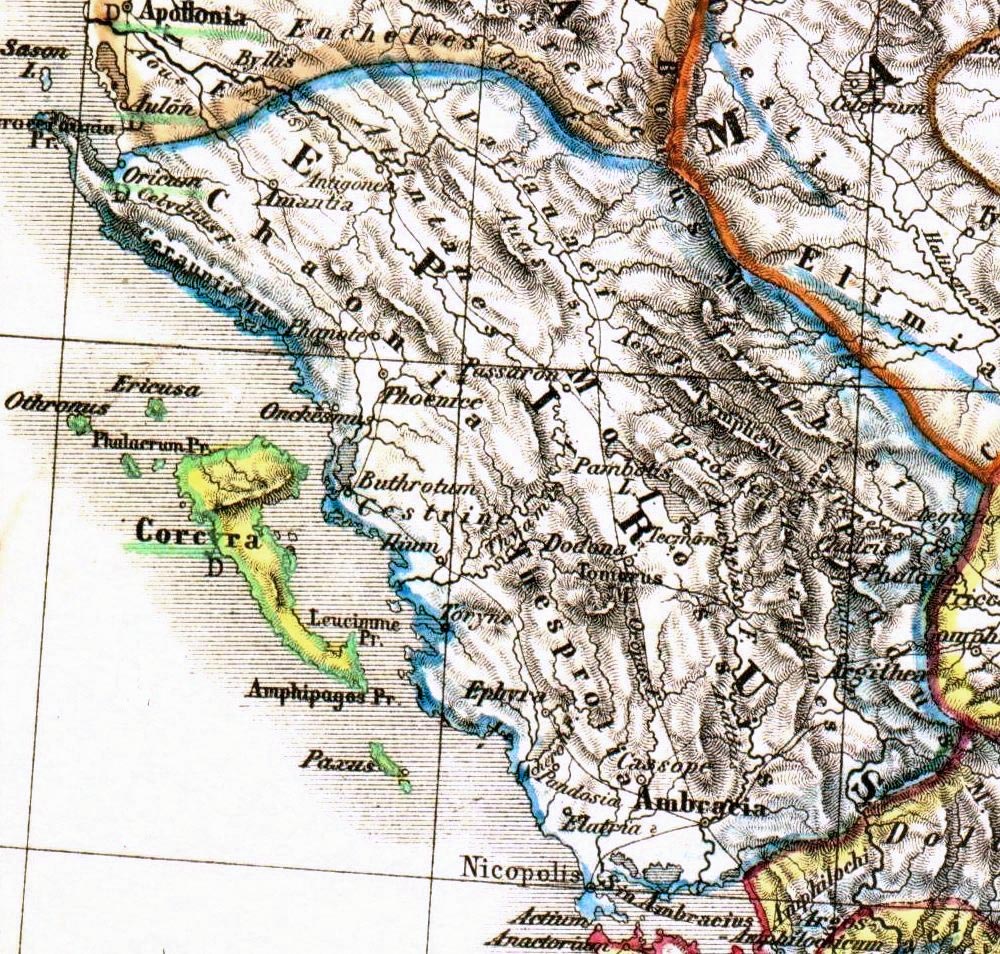
Epirus (/ɪˈpaɪrəs/) is a geographical and historical region in southeastern Europe, now shared between Greece and Albania. Classical Epirus roughly lay between the Pindus Mountains in the east and the Ionian Sea in the west, and between the Acroceraunian Mountains in the north and the Ambracian Gulf in the south. It is currently divided between the region of Epirus in northwestern Greece and the counties of Gjirokastër and Vlorë in southern Albania. The largest city and seat of the Greek administrative region of Epirus is Ioannina.
A rugged and mountainous region, in classical antiquity Epirus was the north-west area of ancient Greece. It was inhabited by the Greek tribes of the Chaonians, Molossians, and Thesprotians. It was home to the sanctuary of Dodona, the oldest oracle in ancient Greece, and the second most prestigious after Delphi. Unified into a single state in 370 BC by the Aeacidae dynasty, Epirus achieved fame during the reign of Pyrrhus of Epirus who fought the Roman Republic in a series of campaigns. Epirus subsequently became part of the Roman Republic along with the rest of Greece in 146 BC, which was followed by the Roman Empire and Eastern Roman Empire.
Following the sack of Constantinople by the Fourth Crusade (1204), Epirus became the center of the Despotate of Epirus, one of the successor states to the Byzantine Empire. In the 14th century, Epirus was brought under the rule of the restored Byzantine Empire, before being briefly conquered by the Serbian Empire. The region was then divided amongst a number of despotates and political entities, including the Despotate of Epirus, the Despotate of Arta, the Zenebishi family, and the Republic of Venice, before being conquered by the Ottoman Empire in the 15th century. Epirus became part of the semi-independent Pashalik governed by the Ottoman Albanian ruler Ali Pasha in the early 19th century, but the Sublime Porte re-asserted its control in 1821. Following the Balkan Wars and World War I, southern Epirus became part of Greece, while northern Epirus became part of Albania.
The name Epirus is the Latin name of the region, derived from the Ancient Greek: Ἤπειρος, romanized: Ḗpeiros (Doric Greek: Ἄπειρος, romanized: Ápeiros), meaning "mainland" or terra firma. It is thought to come from an Indo-European root *apero- 'coast', and was applied by the Ancient Greeks to the territory opposite Corfu and the Ionian islands. The name first appears in the work of Hecataeus of Miletus in the 6th century BC and is one of the few Greek names from the view of an external observer with a maritime-geographical perspective. Although a foreign name, it later came to be adopted by the inhabitants of the area, and it was struck on the coinage of the unified Epirote commonwealth: "ΑΠΕΙΡΩΤΑΝ" (Ancient Greek: Ἀπειρωτᾶν, romanized: Āpeirōtân, Attic Greek: Ἠπειρωτῶν, romanized: Ēpeirōtôn, i.e. "of the Epirotes", see adjacent image).
In the Middle Ages, the term was used by the Despotate of Epirus, one of the Greek successor states of the Byzantine Empire following the dismemberment of the latter in 1204. By the Late Middle Ages, during the period of Humanism and the European Renaissance, the term was used as a synonym for Albania. During the Ottoman period the term was not used. Since the development of the modern Greek nationalism from the early 19th century onwards, the part of Lower Albania – the southern half of Ottoman Albania – that fell within the definition of ancient Epirus, has been called by the newly revived name by Greeks ever since. In Greece the name is used by the administrative region of Epirus. The Albanian name Epiri, which is derived from the ancient name, is used for the ancient region and not for an administrative one. Similarly, the Aromanian name Epiru is derived from the ancient one.
Historically, the geographical area of Epirus proper is defined within the lines drawn from Cape Gjuhëz of the Ceraunian Mountains in the north-west, to Mount Qelqëz in the north-east, to Mount Gavrovo in the south-east, to the mouth of the Ambracian Gulf in the south-west. The northern boundary of ancient Epirus is alternatively given as the Vjosa river. Epirus's eastern boundary is defined by the Pindus Mountains, that form the spine of mainland Greece and separate Epirus from Macedonia and Thessaly. To the west, Epirus faces the Ionian Sea. The island of Corfu is situated off the Epirote coast but is not regarded as part of Epirus.
The definition of Epirus has changed over time, such that modern administrative boundaries do not correspond to the boundaries of ancient Epirus. The region of Epirus in Greece only comprises a fraction of classical Epirus and does not include its easternmost portions, which lie in Thessaly. In Albania, where the concept of Epirus is never used in an official context, classical Epirus comprises parts of the counties of Gjirokastër and Vlorë.
In the Neolithic period Epirus was populated by seafarers along the coast and by shepherds and hunters from the southwestern Balkans who brought with them the Greek language. These people buried their leaders in large mounds containing shaft graves. Similar burial chambers were subsequently used by the Mycenaean civilization, suggesting that the founders of Mycenae may have come from Epirus and central Albania. Epirus itself remained culturally backward during this time, but Mycenaean remains have been found at two religious shrines of great antiquity in the region: the Oracle of the Dead on the Acheron River, familiar to the heroes of Homer's Odyssey, and the Oracle of Zeus at Dodona, to whom Achilles prayed in the Iliad.
Hub AI
Epirus AI simulator
(@Epirus_simulator)
Epirus
Epirus (/ɪˈpaɪrəs/) is a geographical and historical region in southeastern Europe, now shared between Greece and Albania. Classical Epirus roughly lay between the Pindus Mountains in the east and the Ionian Sea in the west, and between the Acroceraunian Mountains in the north and the Ambracian Gulf in the south. It is currently divided between the region of Epirus in northwestern Greece and the counties of Gjirokastër and Vlorë in southern Albania. The largest city and seat of the Greek administrative region of Epirus is Ioannina.
A rugged and mountainous region, in classical antiquity Epirus was the north-west area of ancient Greece. It was inhabited by the Greek tribes of the Chaonians, Molossians, and Thesprotians. It was home to the sanctuary of Dodona, the oldest oracle in ancient Greece, and the second most prestigious after Delphi. Unified into a single state in 370 BC by the Aeacidae dynasty, Epirus achieved fame during the reign of Pyrrhus of Epirus who fought the Roman Republic in a series of campaigns. Epirus subsequently became part of the Roman Republic along with the rest of Greece in 146 BC, which was followed by the Roman Empire and Eastern Roman Empire.
Following the sack of Constantinople by the Fourth Crusade (1204), Epirus became the center of the Despotate of Epirus, one of the successor states to the Byzantine Empire. In the 14th century, Epirus was brought under the rule of the restored Byzantine Empire, before being briefly conquered by the Serbian Empire. The region was then divided amongst a number of despotates and political entities, including the Despotate of Epirus, the Despotate of Arta, the Zenebishi family, and the Republic of Venice, before being conquered by the Ottoman Empire in the 15th century. Epirus became part of the semi-independent Pashalik governed by the Ottoman Albanian ruler Ali Pasha in the early 19th century, but the Sublime Porte re-asserted its control in 1821. Following the Balkan Wars and World War I, southern Epirus became part of Greece, while northern Epirus became part of Albania.
The name Epirus is the Latin name of the region, derived from the Ancient Greek: Ἤπειρος, romanized: Ḗpeiros (Doric Greek: Ἄπειρος, romanized: Ápeiros), meaning "mainland" or terra firma. It is thought to come from an Indo-European root *apero- 'coast', and was applied by the Ancient Greeks to the territory opposite Corfu and the Ionian islands. The name first appears in the work of Hecataeus of Miletus in the 6th century BC and is one of the few Greek names from the view of an external observer with a maritime-geographical perspective. Although a foreign name, it later came to be adopted by the inhabitants of the area, and it was struck on the coinage of the unified Epirote commonwealth: "ΑΠΕΙΡΩΤΑΝ" (Ancient Greek: Ἀπειρωτᾶν, romanized: Āpeirōtân, Attic Greek: Ἠπειρωτῶν, romanized: Ēpeirōtôn, i.e. "of the Epirotes", see adjacent image).
In the Middle Ages, the term was used by the Despotate of Epirus, one of the Greek successor states of the Byzantine Empire following the dismemberment of the latter in 1204. By the Late Middle Ages, during the period of Humanism and the European Renaissance, the term was used as a synonym for Albania. During the Ottoman period the term was not used. Since the development of the modern Greek nationalism from the early 19th century onwards, the part of Lower Albania – the southern half of Ottoman Albania – that fell within the definition of ancient Epirus, has been called by the newly revived name by Greeks ever since. In Greece the name is used by the administrative region of Epirus. The Albanian name Epiri, which is derived from the ancient name, is used for the ancient region and not for an administrative one. Similarly, the Aromanian name Epiru is derived from the ancient one.
Historically, the geographical area of Epirus proper is defined within the lines drawn from Cape Gjuhëz of the Ceraunian Mountains in the north-west, to Mount Qelqëz in the north-east, to Mount Gavrovo in the south-east, to the mouth of the Ambracian Gulf in the south-west. The northern boundary of ancient Epirus is alternatively given as the Vjosa river. Epirus's eastern boundary is defined by the Pindus Mountains, that form the spine of mainland Greece and separate Epirus from Macedonia and Thessaly. To the west, Epirus faces the Ionian Sea. The island of Corfu is situated off the Epirote coast but is not regarded as part of Epirus.
The definition of Epirus has changed over time, such that modern administrative boundaries do not correspond to the boundaries of ancient Epirus. The region of Epirus in Greece only comprises a fraction of classical Epirus and does not include its easternmost portions, which lie in Thessaly. In Albania, where the concept of Epirus is never used in an official context, classical Epirus comprises parts of the counties of Gjirokastër and Vlorë.
In the Neolithic period Epirus was populated by seafarers along the coast and by shepherds and hunters from the southwestern Balkans who brought with them the Greek language. These people buried their leaders in large mounds containing shaft graves. Similar burial chambers were subsequently used by the Mycenaean civilization, suggesting that the founders of Mycenae may have come from Epirus and central Albania. Epirus itself remained culturally backward during this time, but Mycenaean remains have been found at two religious shrines of great antiquity in the region: the Oracle of the Dead on the Acheron River, familiar to the heroes of Homer's Odyssey, and the Oracle of Zeus at Dodona, to whom Achilles prayed in the Iliad.
Recent media