


Community hub
Recent from talks
Contribute something to knowledge base
Content stats: 0 posts, 0 articles, 1 media, 0 notes
Members stats: 0 subscribers, 0 contributors, 0 moderators, 0 supporters
Subscribers
Supporters
Contributors
Moderators
Hub AI
Epstein–Barr virus AI simulator
(@Epstein–Barr virus_simulator)
Hub AI
Epstein–Barr virus AI simulator
(@Epstein–Barr virus_simulator)
Epstein–Barr virus
The Epstein–Barr virus (EBV), also known as human herpesvirus 4 (HHV-4), is one of the nine known human herpesvirus types in the herpes family, and is one of the most common viruses in humans. EBV is a double-stranded DNA virus. EBV is the first identified oncogenic virus, a virus that can cause cancer. EBV establishes a permanent infection in human B cells. It uncommonly causes infectious mononucleosis and is also tightly linked to many malignant diseases (cancers and autoimmune diseases). Various vaccine formulations have been tested in humans and other animals; however, none of them were able to prevent EBV infection, thus, no vaccine has been approved to date.
Infectious mononucleosis ("mono" or "glandular fever"), is characterized by extreme fatigue, fever, sore throat, and swollen lymph nodes. EBV is also associated with various non-malignant, premalignant, and malignant EBV-associated lymphoproliferative diseases such as Burkitt lymphoma, hemophagocytic lymphohistiocytosis, and Hodgkin's lymphoma; non-lymphoid malignancies such as gastric cancer and nasopharyngeal carcinoma; and conditions associated with human immunodeficiency virus such as hairy leukoplakia and central nervous system lymphomas. The virus is also associated with the childhood disorders of Alice in Wonderland syndrome and acute cerebellar ataxia and, by some evidence, higher risks of developing certain autoimmune diseases, especially dermatomyositis, systemic lupus erythematosus, rheumatoid arthritis, and Sjögren's syndrome. About 200,000 cancer cases globally per year are thought to be attributable to EBV. In 2022, a large study following 10 million active US military over 20 years suggested EBV as the leading cause of multiple sclerosis (MS), with a recent EBV infection causing a 32-fold increase in MS risk development.
Infection with EBV occurs by the oral transfer of saliva and genital secretions. Most people become infected with EBV and gain adaptive immunity. In the United States, about half of all five-year-old children and about 90% of adults have evidence of previous infection. Infants become susceptible to EBV as soon as maternal antibody protection disappears. Most children who become infected with EBV display no symptoms, or the symptoms are indistinguishable from other mild, brief illnesses of childhood. When infection occurs during adolescence or young adulthood, it causes infectious mononucleosis 35 to 50% of the time.
EBV infects B cells of the immune system and epithelial cells, and may infect T cells, NK cells, and histiocytic-dendritic cells. Once EBV's initial lytic infection is brought under control, EBV latency persists in the individual's memory B cells for the rest of their life.
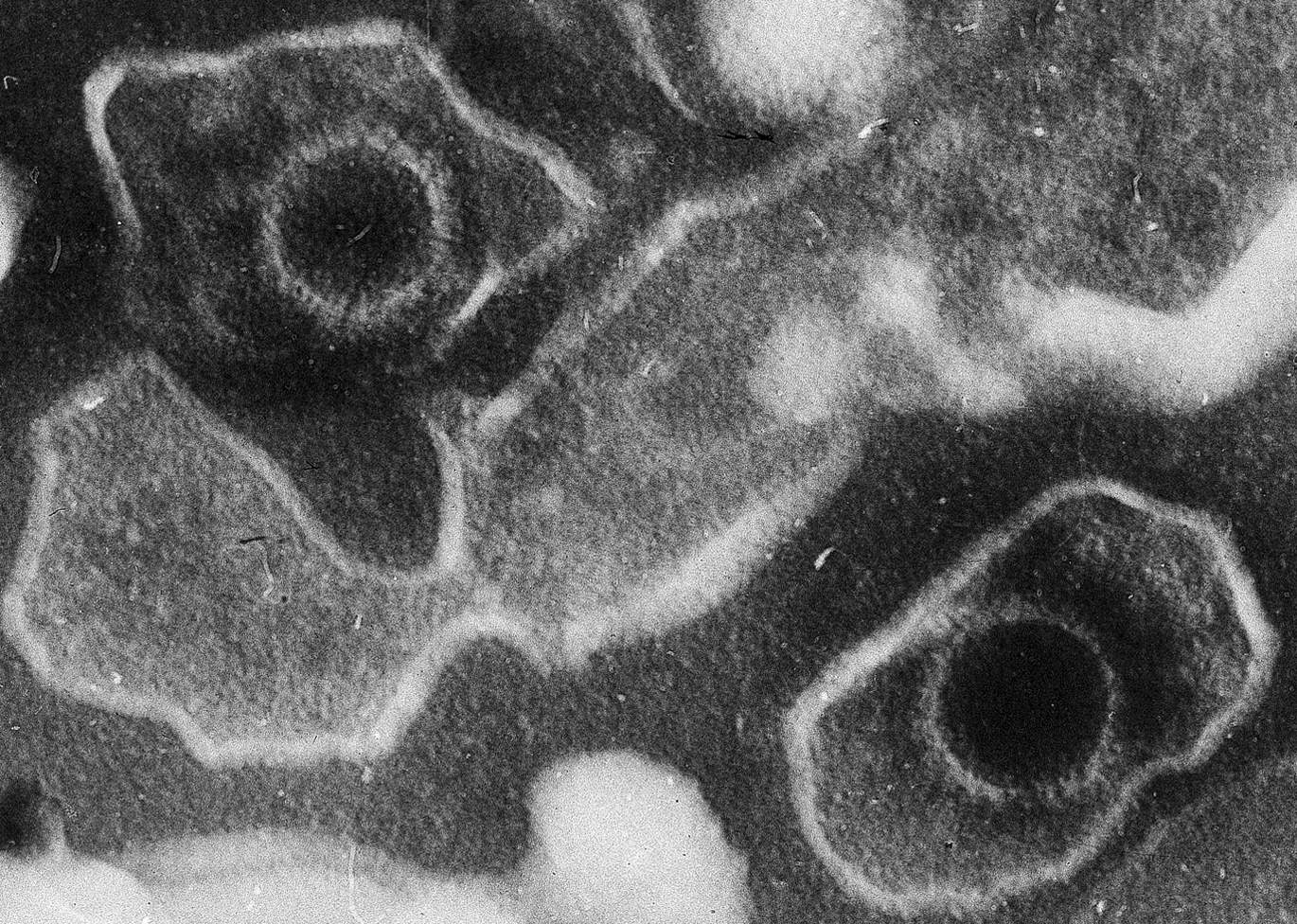
The virus is about 122–180 nm in diameter and is composed of a double helix of deoxyribonucleic acid (DNA) which contains about 172,000 base pairs encoding 85 genes. The DNA is surrounded by a protein nucleocapsid, which is surrounded by a tegument made of protein, which in turn is surrounded by an envelope containing both lipids and surface projections of glycoproteins, which are essential to infection of the host cell. In July 2020, a team of researchers reported the first complete atomic model of the nucleocapsid of the virus. This "first complete atomic model [includes] the icosahedral capsid, the capsid-associated tegument complex (CATC) and the dodecameric portal—the viral genome translocation apparatus."
The term viral tropism refers to which cell types that EBV infects. EBV can infect different cell types, including B cells and epithelial cells.
The viral three-part glycoprotein complexes of gHgL gp42 mediate B cell membrane fusion; although the two-part complexes of gHgL mediate epithelial cell membrane fusion. EBVs that are made in the B cells have low numbers of gHgLgp42 complexes, because these three-part complexes interact with Human-leukocyte-antigen class II molecules present in B cells in the endoplasmic reticulum and are degraded. In contrast, EBV from epithelial cells are rich in the three-part complexes because these cells do not normally contain HLA class II molecules. As a consequence, EBV made from B cells are more infectious to epithelial cells, and EBV made from epithelial cells is more infectious to B cells. Viruses lacking the gp42 portion can bind to human B cells, but are unable to infect.
EBV can infect both B cells and epithelial cells. The mechanisms for entering these two cells are different.
Epstein–Barr virus
The Epstein–Barr virus (EBV), also known as human herpesvirus 4 (HHV-4), is one of the nine known human herpesvirus types in the herpes family, and is one of the most common viruses in humans. EBV is a double-stranded DNA virus. EBV is the first identified oncogenic virus, a virus that can cause cancer. EBV establishes a permanent infection in human B cells. It uncommonly causes infectious mononucleosis and is also tightly linked to many malignant diseases (cancers and autoimmune diseases). Various vaccine formulations have been tested in humans and other animals; however, none of them were able to prevent EBV infection, thus, no vaccine has been approved to date.
Infectious mononucleosis ("mono" or "glandular fever"), is characterized by extreme fatigue, fever, sore throat, and swollen lymph nodes. EBV is also associated with various non-malignant, premalignant, and malignant EBV-associated lymphoproliferative diseases such as Burkitt lymphoma, hemophagocytic lymphohistiocytosis, and Hodgkin's lymphoma; non-lymphoid malignancies such as gastric cancer and nasopharyngeal carcinoma; and conditions associated with human immunodeficiency virus such as hairy leukoplakia and central nervous system lymphomas. The virus is also associated with the childhood disorders of Alice in Wonderland syndrome and acute cerebellar ataxia and, by some evidence, higher risks of developing certain autoimmune diseases, especially dermatomyositis, systemic lupus erythematosus, rheumatoid arthritis, and Sjögren's syndrome. About 200,000 cancer cases globally per year are thought to be attributable to EBV. In 2022, a large study following 10 million active US military over 20 years suggested EBV as the leading cause of multiple sclerosis (MS), with a recent EBV infection causing a 32-fold increase in MS risk development.
Infection with EBV occurs by the oral transfer of saliva and genital secretions. Most people become infected with EBV and gain adaptive immunity. In the United States, about half of all five-year-old children and about 90% of adults have evidence of previous infection. Infants become susceptible to EBV as soon as maternal antibody protection disappears. Most children who become infected with EBV display no symptoms, or the symptoms are indistinguishable from other mild, brief illnesses of childhood. When infection occurs during adolescence or young adulthood, it causes infectious mononucleosis 35 to 50% of the time.
EBV infects B cells of the immune system and epithelial cells, and may infect T cells, NK cells, and histiocytic-dendritic cells. Once EBV's initial lytic infection is brought under control, EBV latency persists in the individual's memory B cells for the rest of their life.
The virus is about 122–180 nm in diameter and is composed of a double helix of deoxyribonucleic acid (DNA) which contains about 172,000 base pairs encoding 85 genes. The DNA is surrounded by a protein nucleocapsid, which is surrounded by a tegument made of protein, which in turn is surrounded by an envelope containing both lipids and surface projections of glycoproteins, which are essential to infection of the host cell. In July 2020, a team of researchers reported the first complete atomic model of the nucleocapsid of the virus. This "first complete atomic model [includes] the icosahedral capsid, the capsid-associated tegument complex (CATC) and the dodecameric portal—the viral genome translocation apparatus."
The term viral tropism refers to which cell types that EBV infects. EBV can infect different cell types, including B cells and epithelial cells.
The viral three-part glycoprotein complexes of gHgL gp42 mediate B cell membrane fusion; although the two-part complexes of gHgL mediate epithelial cell membrane fusion. EBVs that are made in the B cells have low numbers of gHgLgp42 complexes, because these three-part complexes interact with Human-leukocyte-antigen class II molecules present in B cells in the endoplasmic reticulum and are degraded. In contrast, EBV from epithelial cells are rich in the three-part complexes because these cells do not normally contain HLA class II molecules. As a consequence, EBV made from B cells are more infectious to epithelial cells, and EBV made from epithelial cells is more infectious to B cells. Viruses lacking the gp42 portion can bind to human B cells, but are unable to infect.
EBV can infect both B cells and epithelial cells. The mechanisms for entering these two cells are different.
Recent media
Recent media