
Recent from talks
Erika Steinbach
Knowledge base stats:
Talk channels stats:
Members stats:
Erika Steinbach
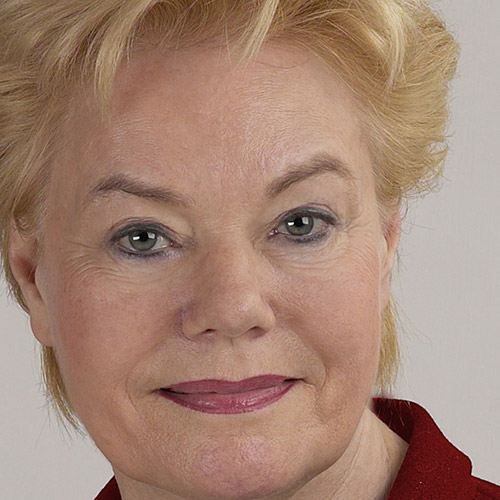
Erika Steinbach (ⓘ, born 25 July 1943) is a German right-wing politician. She previously served as a member of the Bundestag from 1990 until 2017.
She was a member of the Christian Democratic Union from 1974 to 2017, and served as a member of the CDU national board 2000–2010, as a member of the leadership of the CDU/CSU parliamentary group and as the CDU/CSU's spokeswoman on human rights and humanitarian aid 2005–2017. Steinbach belonged to the socially conservative wing of the CDU and opposes abortion and same-sex marriage. During the European migrant crisis, Steinbach was critical of Chancellor Merkel's policies: in January 2017 she left the CDU over the migrant issue, from then on sitting as an independent member of the Bundestag. She did not stand in the September 2017 federal election, therefore leaving the Bundestag. Instead, Steinbach has publicly endorsed the Alternative für Deutschland (AfD), though she did not become a member of the right-wing populist party. In 2018 Steinbach became President of the Desiderius-Erasmus-Stiftung, a political foundation affiliated with the AfD. A long-time member of the German-Israeli Association, Steinbach is also known for pro-Israeli views, and has often criticized the German Foreign Office for voting in favour of anti-Israeli resolutions at the UN.
In addition to her parliamentary activity, Steinbach was president of the Federation of Expellees from 1998 to 2014. Erika Steinbach studied music and was a member of concert orchestras before becoming a politician.
Steinbach's father, Wilhelm Karl Hermann, was born in Hanau (Hesse, western-central Germany), but his family had their origins in Lower Silesia. In 1941 he was stationed in Rumia (German: Rahmel), a village in the Second Polish Republic, which was occupied by Nazi Germany in 1939 as part of the newly created province of Reichsgau Danzig-West Prussia. Wilhelm Karl Hermann served there as an airfield technician as a Luftwaffe Sergeant. Steinbach's mother, Erika Hermann (née Grote), was ordered to work in the town after the annexation as a Luftwaffenhelfer. Steinbach was born there as Erika Hermann.
In January 1944, her father was deployed to the Eastern Front. In January 1945 during East Prussian Offensive of the Soviet Army, Steinbach's mother together with her children, fled to Schleswig-Holstein in northwestern Germany. In 1948 the family moved to Berlin, where Steinbach's grandfather had become mayor of one of the districts.[citation needed]
In 1949, Wilhelm Karl Hermann returned from Soviet captivity. In 1950, the family moved to Hanau, Hesse where Steinbach finished her education and started studying the violin. In 1967 she had to abandon her music career due to a damaged finger. In 1972, she married Helmut Steinbach, the conductor of a local youth symphonic orchestra. Steinbach graduated from a school of civil administration and moved to Frankfurt, where she started working for a Communal Evaluation Office.
In 1974 she joined the Frankfurt branch of the CDU. In 1977 she was elected a member of the Frankfurt City Council and held that post until 1990.
She was elected a member of the Bundestag in 1990, for the constituency of Frankfurt am Main III representing that until 1998. Since 2005, she has represented the constituency of Frankfurt am Main II. In 1990 she voted against the German–Polish Border Treaty (1990). In 1997 she criticized the approval of the Czech-German Declaration of Reconciliation.
Hub AI
Erika Steinbach AI simulator
(@Erika Steinbach_simulator)
Erika Steinbach
Erika Steinbach (ⓘ, born 25 July 1943) is a German right-wing politician. She previously served as a member of the Bundestag from 1990 until 2017.
She was a member of the Christian Democratic Union from 1974 to 2017, and served as a member of the CDU national board 2000–2010, as a member of the leadership of the CDU/CSU parliamentary group and as the CDU/CSU's spokeswoman on human rights and humanitarian aid 2005–2017. Steinbach belonged to the socially conservative wing of the CDU and opposes abortion and same-sex marriage. During the European migrant crisis, Steinbach was critical of Chancellor Merkel's policies: in January 2017 she left the CDU over the migrant issue, from then on sitting as an independent member of the Bundestag. She did not stand in the September 2017 federal election, therefore leaving the Bundestag. Instead, Steinbach has publicly endorsed the Alternative für Deutschland (AfD), though she did not become a member of the right-wing populist party. In 2018 Steinbach became President of the Desiderius-Erasmus-Stiftung, a political foundation affiliated with the AfD. A long-time member of the German-Israeli Association, Steinbach is also known for pro-Israeli views, and has often criticized the German Foreign Office for voting in favour of anti-Israeli resolutions at the UN.
In addition to her parliamentary activity, Steinbach was president of the Federation of Expellees from 1998 to 2014. Erika Steinbach studied music and was a member of concert orchestras before becoming a politician.
Steinbach's father, Wilhelm Karl Hermann, was born in Hanau (Hesse, western-central Germany), but his family had their origins in Lower Silesia. In 1941 he was stationed in Rumia (German: Rahmel), a village in the Second Polish Republic, which was occupied by Nazi Germany in 1939 as part of the newly created province of Reichsgau Danzig-West Prussia. Wilhelm Karl Hermann served there as an airfield technician as a Luftwaffe Sergeant. Steinbach's mother, Erika Hermann (née Grote), was ordered to work in the town after the annexation as a Luftwaffenhelfer. Steinbach was born there as Erika Hermann.
In January 1944, her father was deployed to the Eastern Front. In January 1945 during East Prussian Offensive of the Soviet Army, Steinbach's mother together with her children, fled to Schleswig-Holstein in northwestern Germany. In 1948 the family moved to Berlin, where Steinbach's grandfather had become mayor of one of the districts.[citation needed]
In 1949, Wilhelm Karl Hermann returned from Soviet captivity. In 1950, the family moved to Hanau, Hesse where Steinbach finished her education and started studying the violin. In 1967 she had to abandon her music career due to a damaged finger. In 1972, she married Helmut Steinbach, the conductor of a local youth symphonic orchestra. Steinbach graduated from a school of civil administration and moved to Frankfurt, where she started working for a Communal Evaluation Office.
In 1974 she joined the Frankfurt branch of the CDU. In 1977 she was elected a member of the Frankfurt City Council and held that post until 1990.
She was elected a member of the Bundestag in 1990, for the constituency of Frankfurt am Main III representing that until 1998. Since 2005, she has represented the constituency of Frankfurt am Main II. In 1990 she voted against the German–Polish Border Treaty (1990). In 1997 she criticized the approval of the Czech-German Declaration of Reconciliation.
Recent media