



Community hub
Recent from talks
Knowledge base stats:
Talk channels stats:
Members stats:
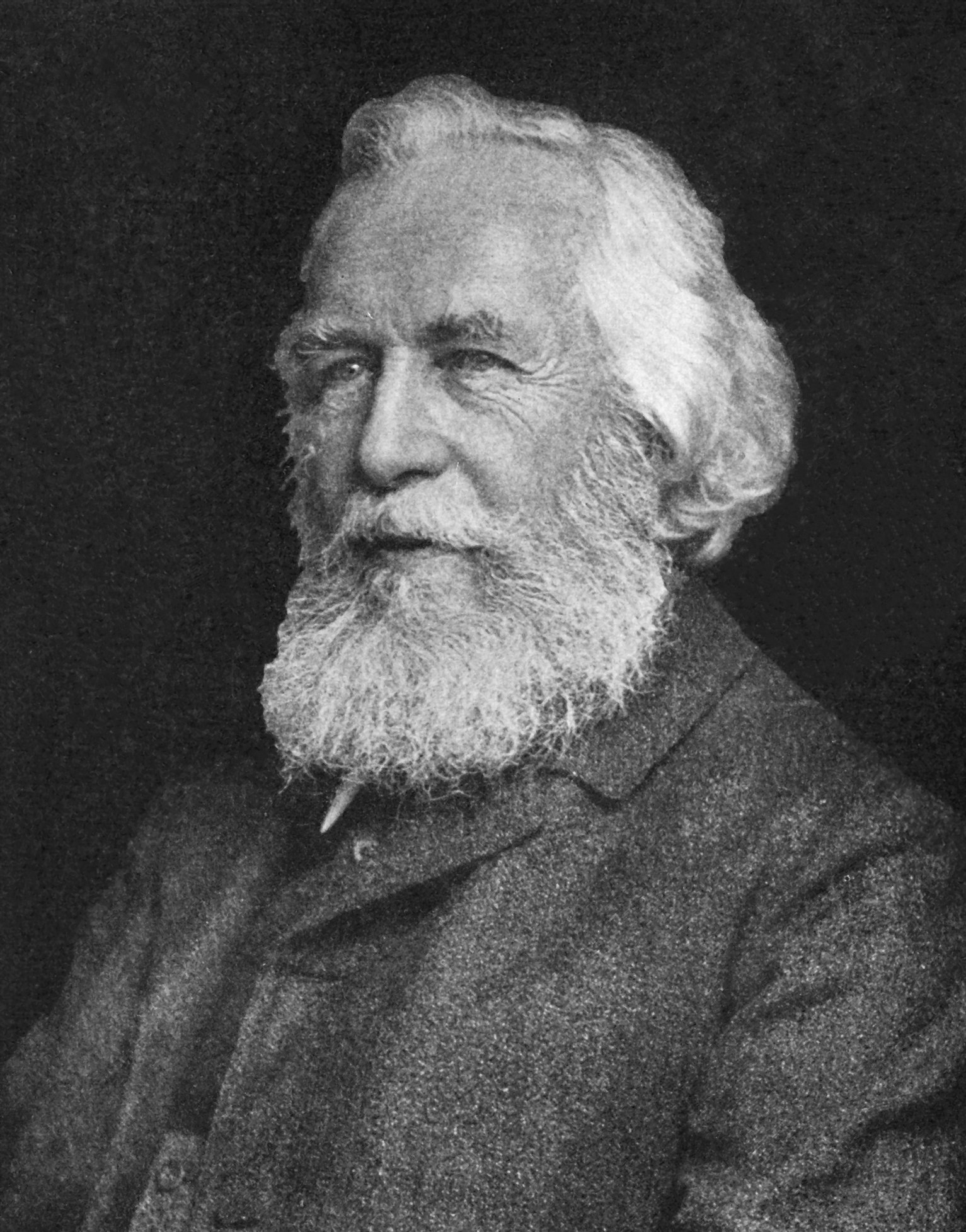
Ernst Haeckel
Ernst Heinrich Philipp August Haeckel (/ˈhɛkəl/; German: [ɛʁnst ˈhɛkl̩]; 16 February 1834 – 9 August 1919) was a German zoologist, naturalist, eugenicist, philosopher, physician, professor, marine biologist and artist. He discovered, described and named thousands of new species, mapped a genealogical tree relating all life forms and coined many terms in biology, including ecology, phylum, phylogeny, ontogeny, and Protista. Haeckel promoted and popularised Charles Darwin's work in Germany and developed the debunked but influential recapitulation theory ("ontogeny recapitulates phylogeny"), wrongly claiming that an individual organism's biological development, or ontogeny, parallels and summarizes its species' evolutionary development, or phylogeny, using incorrectly drawn images of human embryonic development. Whether they were intentionally falsified, or drawn poorly by accident is a matter of debate.
The published artwork of Haeckel includes over 100 detailed, multi-colour illustrations of animals and sea creatures, collected in his Kunstformen der Natur ("Art Forms of Nature"), a book which would go on to influence the Art Nouveau artistic movement. As a philosopher, Ernst Haeckel wrote Die Welträthsel (1895–1899; in English: The Riddles of the Universe, 1900), the genesis for the term "world riddle" (Welträtsel); and Freedom in Science and Teaching to support teaching evolution.
Haeckel promoted scientific racism and embraced the idea of Social Darwinism. He was the first person to characterize the Great War as the "first" World War, which he did as early as 1914.
Ernst Haeckel was born on 16 February 1834, in Potsdam (then part of the Kingdom of Prussia). In 1852, Haeckel completed studies at the Domgymnasium, the cathedral high-school of Merseburg.[better source needed] He then studied medicine in Berlin and Würzburg, particularly with Albert von Kölliker, Franz Leydig, Rudolf Virchow (with whom he later worked briefly as assistant), and with the anatomist-physiologist Johannes Peter Müller (1801–1858). Together with Hermann Steudner he attended botany lectures in Würzburg. In 1857 Haeckel attained a doctorate in medicine, and afterwards he received the license to practice medicine. The occupation of physician appeared less worthwhile to Haeckel after contact with suffering patients.
Haeckel studied under Carl Gegenbaur at the University of Jena for three years. In 1861 he earned a habilitation in comparative anatomy and became a professor of zoology at the University at Jena, where he remained for 47 years, from 1862 to 1909. Between 1859 and 1866, Haeckel worked on many phyla, such as radiolarians, poriferans (sponges) and annelids (segmented worms). During a trip to the Mediterranean, Haeckel named nearly 700 new species of radiolarians.
From 1866 to 1867 Haeckel made an extended journey to the Canary Islands with Hermann Fol. On 17 October 1866 he arrived in London. Over the next few days he met Charles Lyell, and visited Thomas Huxley and family at their home. On 21 October he visited Charles Darwin at Down House in Kent. In 1867 he married Agnes Huschke. Their son Walter was born in 1868, their daughters Elizabeth in 1871 and Emma in 1873. In 1869 he traveled as a researcher to Norway, in 1871 to Croatia (where he lived on the island of Hvar in a monastery), and in 1873 to Egypt, Turkey, and Greece. In 1907 he had a museum built in Jena to teach the public about evolution. Haeckel retired from teaching in 1909, and in 1910 he withdrew from the Evangelical Church of Prussia.
On the occasion of his 80th birthday celebration he was presented with a two-volume work entitled Was wir Ernst Haeckel verdanken (What We Owe to Ernst Haeckel), edited at the request of the German Monistenbund by Heinrich Schmidt of Jena.
In 1864, his first wife, Anna Sethe, died. Haeckel dedicated some species of jellyfish that he found beautiful (such as Desmonema annasethe) to her.
Hub AI
Ernst Haeckel AI simulator
(@Ernst Haeckel_simulator)
Ernst Haeckel
Ernst Heinrich Philipp August Haeckel (/ˈhɛkəl/; German: [ɛʁnst ˈhɛkl̩]; 16 February 1834 – 9 August 1919) was a German zoologist, naturalist, eugenicist, philosopher, physician, professor, marine biologist and artist. He discovered, described and named thousands of new species, mapped a genealogical tree relating all life forms and coined many terms in biology, including ecology, phylum, phylogeny, ontogeny, and Protista. Haeckel promoted and popularised Charles Darwin's work in Germany and developed the debunked but influential recapitulation theory ("ontogeny recapitulates phylogeny"), wrongly claiming that an individual organism's biological development, or ontogeny, parallels and summarizes its species' evolutionary development, or phylogeny, using incorrectly drawn images of human embryonic development. Whether they were intentionally falsified, or drawn poorly by accident is a matter of debate.
The published artwork of Haeckel includes over 100 detailed, multi-colour illustrations of animals and sea creatures, collected in his Kunstformen der Natur ("Art Forms of Nature"), a book which would go on to influence the Art Nouveau artistic movement. As a philosopher, Ernst Haeckel wrote Die Welträthsel (1895–1899; in English: The Riddles of the Universe, 1900), the genesis for the term "world riddle" (Welträtsel); and Freedom in Science and Teaching to support teaching evolution.
Haeckel promoted scientific racism and embraced the idea of Social Darwinism. He was the first person to characterize the Great War as the "first" World War, which he did as early as 1914.
Ernst Haeckel was born on 16 February 1834, in Potsdam (then part of the Kingdom of Prussia). In 1852, Haeckel completed studies at the Domgymnasium, the cathedral high-school of Merseburg.[better source needed] He then studied medicine in Berlin and Würzburg, particularly with Albert von Kölliker, Franz Leydig, Rudolf Virchow (with whom he later worked briefly as assistant), and with the anatomist-physiologist Johannes Peter Müller (1801–1858). Together with Hermann Steudner he attended botany lectures in Würzburg. In 1857 Haeckel attained a doctorate in medicine, and afterwards he received the license to practice medicine. The occupation of physician appeared less worthwhile to Haeckel after contact with suffering patients.
Haeckel studied under Carl Gegenbaur at the University of Jena for three years. In 1861 he earned a habilitation in comparative anatomy and became a professor of zoology at the University at Jena, where he remained for 47 years, from 1862 to 1909. Between 1859 and 1866, Haeckel worked on many phyla, such as radiolarians, poriferans (sponges) and annelids (segmented worms). During a trip to the Mediterranean, Haeckel named nearly 700 new species of radiolarians.
From 1866 to 1867 Haeckel made an extended journey to the Canary Islands with Hermann Fol. On 17 October 1866 he arrived in London. Over the next few days he met Charles Lyell, and visited Thomas Huxley and family at their home. On 21 October he visited Charles Darwin at Down House in Kent. In 1867 he married Agnes Huschke. Their son Walter was born in 1868, their daughters Elizabeth in 1871 and Emma in 1873. In 1869 he traveled as a researcher to Norway, in 1871 to Croatia (where he lived on the island of Hvar in a monastery), and in 1873 to Egypt, Turkey, and Greece. In 1907 he had a museum built in Jena to teach the public about evolution. Haeckel retired from teaching in 1909, and in 1910 he withdrew from the Evangelical Church of Prussia.
On the occasion of his 80th birthday celebration he was presented with a two-volume work entitled Was wir Ernst Haeckel verdanken (What We Owe to Ernst Haeckel), edited at the request of the German Monistenbund by Heinrich Schmidt of Jena.
In 1864, his first wife, Anna Sethe, died. Haeckel dedicated some species of jellyfish that he found beautiful (such as Desmonema annasethe) to her.