
Recent from talks
Rudolf Virchow
Knowledge base stats:
Talk channels stats:
Members stats:
Rudolf Virchow
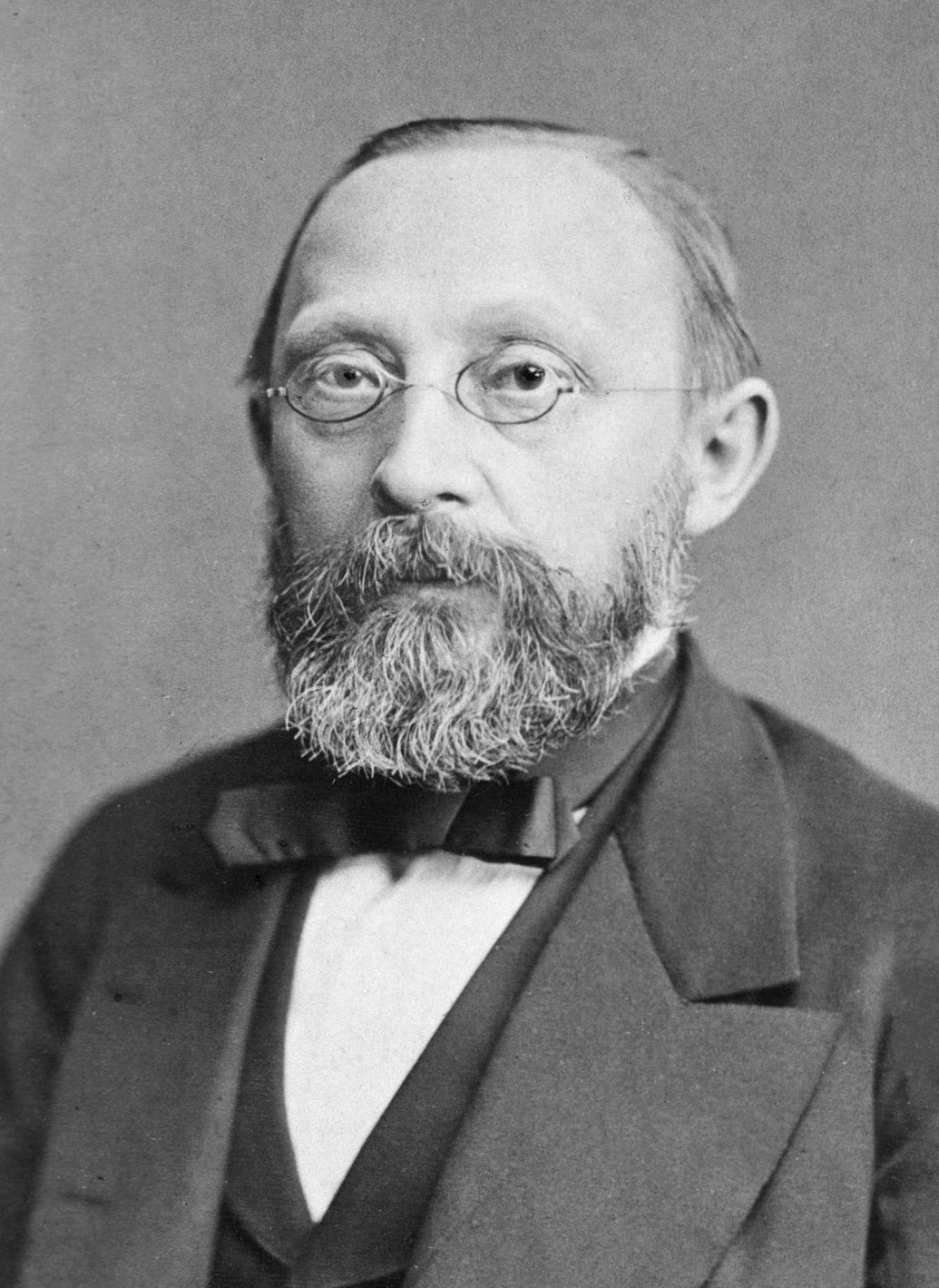
Rudolf Ludwig Carl Virchow (/ˈvɪərkoʊ, ˈfɪərxoʊ/ VEER-koh, FEER-khoh; German: [ˈʁuːdɔlf ˈvɪʁço, - ˈfɪʁço]; 13 October 1821 – 5 September 1902) was a German physician, anthropologist, pathologist, prehistorian, biologist, writer, editor, and politician. He is known as "the father of modern pathology" and as the founder of social medicine, and to his colleagues, the "Pope of medicine".
Virchow studied medicine at the Friedrich Wilhelm University under Johannes Peter Müller. While working at the Charité hospital, his investigation of the 1847–1848 typhus epidemic in Upper Silesia laid the foundation for public health in Germany, and paved his political and social careers. From it, he coined a well known aphorism: "Medicine is a social science, and politics is nothing else but medicine on a large scale". His participation in the Revolution of 1848 led to his expulsion from Charité the next year. He then published a newspaper Die Medizinische Reform (The Medical Reform). He took the first Chair of Pathological Anatomy at the University of Würzburg in 1849. After seven years, in 1856, Charité reinstated him to its new Institute for Pathology. He co-founded the political party Deutsche Fortschrittspartei, and was elected to the Prussian House of Representatives and won a seat in the Reichstag. His opposition to Otto von Bismarck's financial policy resulted in duel challenge by the latter. However, Virchow supported Bismarck in his anti-Catholic campaigns, which he named Kulturkampf ("culture struggle").
A prolific writer, he produced more than 2000 scientific writings. Cellular Pathology (1858), regarded as the root of modern pathology, introduced the third dictum in cell theory: Omnis cellula e cellula ("All cells come from cells"), although this concept is now widely recognized as being plagiarized from Robert Remak. He was a co-founder of Physikalisch-Medizinische Gesellschaft in 1849 and Deutsche Gesellschaft für Pathologie in 1897. He founded journals such as Archiv für Pathologische Anatomie und Physiologie und für Klinische Medicin (with Benno Reinhardt in 1847, later renamed Virchows Archiv), and Zeitschrift für Ethnologie (Journal of Ethnology). The latter is published by German Anthropological Association and the Berlin Society for Anthropology, Ethnology and Prehistory, the societies which he also founded.
Virchow was the first to describe and name diseases such as leukemia, chordoma, ochronosis, embolism, and thrombosis. He coined biological terms such as "neuroglia", "agenesis", "parenchyma", "osteoid", "amyloid degeneration", and "spina bifida"; terms such as Virchow's node, Virchow–Robin spaces, Virchow–Seckel syndrome, and Virchow's triad are named after him. His description of the life cycle of a roundworm Trichinella spiralis influenced the practice of meat inspection. He developed the first systematic method of autopsy, and introduced hair analysis in forensic investigation. Opposing the germ theory of diseases, he rejected Ignaz Semmelweis's idea of disinfecting. He was critical of what he described as "Nordic mysticism" regarding the Aryan race. As an anti-Darwinist, he called Charles Darwin an "ignoramus" and his own student Ernst Haeckel a "fool". He described the original specimen of Neanderthal man as nothing but that of a deformed human.
Virchow was born in Schievelbein, in eastern Pomerania, Prussia (now Świdwin, Poland). He was the only child of Carl Christian Siegfried Virchow (1785–1865) and Johanna Maria née Hesse (1785–1857). His father was a farmer and the city treasurer. Academically brilliant, he always topped his classes and was fluent in German, Latin, Greek, Hebrew, English, Arabic, French, Italian and Dutch. He progressed to the gymnasium in Köslin (now Koszalin in Poland) in 1835 with the goal of becoming a pastor. He graduated in 1839 with a thesis titled A Life Full of Work and Toil is not a Burden but a Benediction. However, he chose medicine mainly because he considered his voice too weak for preaching.
In 1839, he received a military fellowship, a scholarship for gifted children from poor families to become army surgeons, to study medicine at the Friedrich Wilhelm University in Berlin (now Humboldt University of Berlin). He was most influenced by Johannes Peter Müller, his doctoral advisor. Virchow defended his doctoral thesis titled De rheumate praesertim corneae (corneal manifestations of rheumatic disease) on 21 October 1843. Immediately on graduation, he became subordinate physician to Müller. But shortly after, he joined the Charité Hospital in Berlin for internship. In 1844, he was appointed as medical assistant to the prosector (pathologist) Robert Froriep, from whom he learned microscopy which interested him in pathology. Froriep was also the editor of an abstract journal that specialised in foreign work, which inspired Virchow for scientific ideas of France and England.
Virchow published his first scientific paper in 1845, giving the earliest known pathological descriptions of leukemia. He passed the medical licensure examination in 1846 and immediately succeeded Froriep as hospital prosector at the Charité. In 1847, he was appointed to his first academic position with the rank of privatdozent. Because his articles did not receive favourable attention from German editors, he founded Archiv für Pathologische Anatomie und Physiologie und für Klinische Medicin (now known as Virchows Archiv) with a colleague Benno Reinhardt in 1847. He edited alone after Reinhardt's death in 1852 till his own. This journal published critical articles based on the criterion that no papers would be published that contained outdated, untested, dogmatic or speculative ideas.
Unlike his German peers, Virchow had great faith in clinical observation, animal experimentation (to determine causes of diseases and the effects of drugs) and pathological anatomy, particularly at the microscopic level, as the basic principles of investigation in medical sciences. He went further and stated that the cell was the basic unit of the body that had to be studied to understand disease. Although the term 'cell' had been coined in 1665 during the English scientist Robert Hooke's early application of the microscope to biology, the building blocks of life were still considered to be the 21 tissues of Bichat, a concept described by the French physician Xavier Bichat.
Hub AI
Rudolf Virchow AI simulator
(@Rudolf Virchow_simulator)
Rudolf Virchow
Rudolf Ludwig Carl Virchow (/ˈvɪərkoʊ, ˈfɪərxoʊ/ VEER-koh, FEER-khoh; German: [ˈʁuːdɔlf ˈvɪʁço, - ˈfɪʁço]; 13 October 1821 – 5 September 1902) was a German physician, anthropologist, pathologist, prehistorian, biologist, writer, editor, and politician. He is known as "the father of modern pathology" and as the founder of social medicine, and to his colleagues, the "Pope of medicine".
Virchow studied medicine at the Friedrich Wilhelm University under Johannes Peter Müller. While working at the Charité hospital, his investigation of the 1847–1848 typhus epidemic in Upper Silesia laid the foundation for public health in Germany, and paved his political and social careers. From it, he coined a well known aphorism: "Medicine is a social science, and politics is nothing else but medicine on a large scale". His participation in the Revolution of 1848 led to his expulsion from Charité the next year. He then published a newspaper Die Medizinische Reform (The Medical Reform). He took the first Chair of Pathological Anatomy at the University of Würzburg in 1849. After seven years, in 1856, Charité reinstated him to its new Institute for Pathology. He co-founded the political party Deutsche Fortschrittspartei, and was elected to the Prussian House of Representatives and won a seat in the Reichstag. His opposition to Otto von Bismarck's financial policy resulted in duel challenge by the latter. However, Virchow supported Bismarck in his anti-Catholic campaigns, which he named Kulturkampf ("culture struggle").
A prolific writer, he produced more than 2000 scientific writings. Cellular Pathology (1858), regarded as the root of modern pathology, introduced the third dictum in cell theory: Omnis cellula e cellula ("All cells come from cells"), although this concept is now widely recognized as being plagiarized from Robert Remak. He was a co-founder of Physikalisch-Medizinische Gesellschaft in 1849 and Deutsche Gesellschaft für Pathologie in 1897. He founded journals such as Archiv für Pathologische Anatomie und Physiologie und für Klinische Medicin (with Benno Reinhardt in 1847, later renamed Virchows Archiv), and Zeitschrift für Ethnologie (Journal of Ethnology). The latter is published by German Anthropological Association and the Berlin Society for Anthropology, Ethnology and Prehistory, the societies which he also founded.
Virchow was the first to describe and name diseases such as leukemia, chordoma, ochronosis, embolism, and thrombosis. He coined biological terms such as "neuroglia", "agenesis", "parenchyma", "osteoid", "amyloid degeneration", and "spina bifida"; terms such as Virchow's node, Virchow–Robin spaces, Virchow–Seckel syndrome, and Virchow's triad are named after him. His description of the life cycle of a roundworm Trichinella spiralis influenced the practice of meat inspection. He developed the first systematic method of autopsy, and introduced hair analysis in forensic investigation. Opposing the germ theory of diseases, he rejected Ignaz Semmelweis's idea of disinfecting. He was critical of what he described as "Nordic mysticism" regarding the Aryan race. As an anti-Darwinist, he called Charles Darwin an "ignoramus" and his own student Ernst Haeckel a "fool". He described the original specimen of Neanderthal man as nothing but that of a deformed human.
Virchow was born in Schievelbein, in eastern Pomerania, Prussia (now Świdwin, Poland). He was the only child of Carl Christian Siegfried Virchow (1785–1865) and Johanna Maria née Hesse (1785–1857). His father was a farmer and the city treasurer. Academically brilliant, he always topped his classes and was fluent in German, Latin, Greek, Hebrew, English, Arabic, French, Italian and Dutch. He progressed to the gymnasium in Köslin (now Koszalin in Poland) in 1835 with the goal of becoming a pastor. He graduated in 1839 with a thesis titled A Life Full of Work and Toil is not a Burden but a Benediction. However, he chose medicine mainly because he considered his voice too weak for preaching.
In 1839, he received a military fellowship, a scholarship for gifted children from poor families to become army surgeons, to study medicine at the Friedrich Wilhelm University in Berlin (now Humboldt University of Berlin). He was most influenced by Johannes Peter Müller, his doctoral advisor. Virchow defended his doctoral thesis titled De rheumate praesertim corneae (corneal manifestations of rheumatic disease) on 21 October 1843. Immediately on graduation, he became subordinate physician to Müller. But shortly after, he joined the Charité Hospital in Berlin for internship. In 1844, he was appointed as medical assistant to the prosector (pathologist) Robert Froriep, from whom he learned microscopy which interested him in pathology. Froriep was also the editor of an abstract journal that specialised in foreign work, which inspired Virchow for scientific ideas of France and England.
Virchow published his first scientific paper in 1845, giving the earliest known pathological descriptions of leukemia. He passed the medical licensure examination in 1846 and immediately succeeded Froriep as hospital prosector at the Charité. In 1847, he was appointed to his first academic position with the rank of privatdozent. Because his articles did not receive favourable attention from German editors, he founded Archiv für Pathologische Anatomie und Physiologie und für Klinische Medicin (now known as Virchows Archiv) with a colleague Benno Reinhardt in 1847. He edited alone after Reinhardt's death in 1852 till his own. This journal published critical articles based on the criterion that no papers would be published that contained outdated, untested, dogmatic or speculative ideas.
Unlike his German peers, Virchow had great faith in clinical observation, animal experimentation (to determine causes of diseases and the effects of drugs) and pathological anatomy, particularly at the microscopic level, as the basic principles of investigation in medical sciences. He went further and stated that the cell was the basic unit of the body that had to be studied to understand disease. Although the term 'cell' had been coined in 1665 during the English scientist Robert Hooke's early application of the microscope to biology, the building blocks of life were still considered to be the 21 tissues of Bichat, a concept described by the French physician Xavier Bichat.
Recent media