


Community hub
Recent from talks
Contribute something
Nothing was collected or created yet.
World riddle
View on Wikipedia
World riddle (Welträtsel in German) is a philosophical term concerning fundamental questions about the nature of the universe and the meaning of life. The term gained prominence in the late 19th century and is most closely associated with two key figures: the philosopher Friedrich Nietzsche and the biologist Ernst Haeckel.
Nietzsche mentioned Welträthsel in several of his writings, exploring profound existential questions. However, it was Haeckel who popularized the term with his influential book, Die Welträthsel (1895–1899), later published in English as The Riddle of the Universe (1901).[1] In this work, Haeckel attempted to resolve these riddles using a scientific and monistic worldview.
The World Riddle has also been explored as an inspiration or allegorical theme in some musical compositions, notably the unresolved harmonic progression at the end of Richard Strauss's 1896 tone poem, Also sprach Zarathustra.[2][3]
View of Nietzsche
[edit]![[icon]](https://en.wikipedia.org/wiki/File:Wiki_letter_w_cropped.svg) | This section needs expansion. You can help by adding to it. (April 2024) |

Friedrich Nietzsche referred to the "World Riddle" (Welträthsel) in several of his writings.
Emil du Bois-Reymond
[edit]Emil du Bois-Reymond used the term "World Riddle" in 1880 for seven great questions of science, such as the ultimate nature of matter and the origin of simple sensations. In a lecture to the Berlin Academy of Sciences he declared that neither science nor philosophy could ever explain these riddles.[4][5]
View of Haeckel
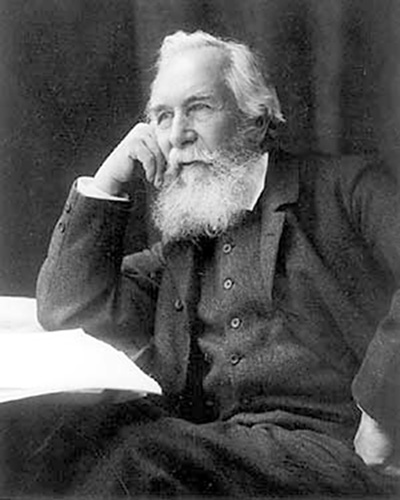
[edit]Ernst Haeckel viewed the World Riddle as a dual-question of the form, "What is the nature of the physical universe and what is the nature of human thinking?" which he explained, in a lecture in 1892, would have a single answer since humans and the universe were contained within one system, a mono-system:
The "exacting" Berlin physiologist [du Bois-Reymond] shut this knowledge out from his mind, and, with a short-sightedness almost inconceivable, placed this special neurological question alongside of the one great "world-riddle", the fundamental question of substance, the general question of the connection between matter and energy. As I long ago pointed out, these two great questions are not two separate "world-riddles". The neurological problem of consciousness is only a special case of the all-comprehending cosmological problem, the question of substance. "If we understood the nature of matter and energy, we should also understand how the substance underlying them can under certain conditions feel, desire, and think." Consciousness, like feeling and willing, among the higher animals is a mechanical work of the ganglion-cells, and as such must be carried back to chemical and physical events in the plasma of these.
Haeckel had written that human behavior and feeling could be explained, within the laws of the physical universe, as "mechanical work of the ganglion-cells" as stated.
View of William James
[edit]The philosopher and psychologist William James has questioned the attitude of thinking that a single answer applies to everything or everyone. In his book Pragmatism (1907) he satirized the world-riddle as follows:
All the great single-word answers to the world's riddle, such as God, the One, Reason, Law, Spirit, Matter, Nature, Polarity, the Dialectic Process, the Idea, the Self, the Oversoul, draw the admiration that men have lavished on them from this oracular role. By amateurs in philosophy and professionals alike, the universe is represented as a queer sort of petrified sphinx whose appeal to man consists in a monotonous challenge to his divining powers. THE Truth: what a perfect idol of the rationalistic mind!
— William James, Pragmatism, 1907[8]
See also
[edit]- Epistemology - study of the nature of knowledge.
- Existentialism - philosophy of being/existence.
- Weltschmerz
Notes
[edit]- ^ Chisholm, Hugh, ed. (1911). . Encyclopædia Britannica. Vol. 12 (11th ed.). Cambridge University Press. p. 804.
- ^ "Colorado Symphony Orchestra - Richard Strauss (1864–1949): Also Sprach Zarathustra" (program notes), Charley Samson, Colorado Symphony Orchestra, 2004, webpage: CSO-AlsoSprach.
- ^ "Classic Records Catalog / LSC-1806: Liner Notes" (description), Chicago Symphony Orchestra, R. D. Darrell, Radio Corporation of America (RCA), 1960, webpage: CSO-AlsoSprach.
- ^ Finkelstein, Gabriel Ward (2013). Emil du Bois-Reymond: Neuroscience, Self, and Society in Nineteenth-Century Germany. Cambridge, Massachusetts: The MIT Press. p. 272. ISBN 9780262019507.
- ^ du Bois-Reymond, Emil Heinrich (1891). Über die Grenzen des Naturerkennens: Die sieben Welträtsel [On the limits of natural cognition: The seven world-riddles]. Veit – via The Internet Archive.
- ^ "Kelvin Smith Library", Case Western Reserve University, Cleveland, Ohio, 2004. Notes the essay as dated 1895.
- ^ Haeckel, Ernst (1982). Monism as Connecting Religion and Science. Project Gutenberg. Translated by J. Gilchrist. Accessed 1 May 2020. Dates the lecture to 1892.
- ^ James, William (1907). Pragmatism: A New Name for Some Old Ways of Thinking. Project Gutenberg. Accessed 1 May 2020.
References
[edit]- Ernst Haeckel, The Riddle of the Universe (Die Welträthsel or Die Weltraetsel, 1895–1899), Publisher: Prometheus Books, Buffalo, New York, 1992, reprint edition, paperback, 405 pages, illustrated, ISBN 0-87975-746-9.
- Ernst Haeckel, Monism as Connecting Religion and Science ("translated from German by J. Gilchrist, M.A., B.Sc., PH.D."), Project Gutenberg Literary Archive Foundation, Gutenberg.org webpage: GutenbergOrg-7mono10 (for free download).
World riddle
View on GrokipediaDefinition and Historical Origins
The Concept of the World Riddle
The "world riddle" (Welträtsel), a term in philosophy, denotes the profound and enduring mysteries concerning the fundamental nature of the universe, encompassing questions about the origins of matter, life, and consciousness that elude resolution through empirical scientific methods alone.[7] These inquiries probe the essence of existence itself, distinguishing them from provisional scientific hypotheses by their resistance to definitive answers based on observable evidence.[8] The roots of the world riddle concept trace back to ancient Greek philosophy, where early thinkers grappled with the origins of the cosmos. Thales of Miletus, regarded as the inaugural Western philosopher, posited water as the primordial substance underlying all matter and change, seeking a unified principle for the world's genesis.[9] Aristotle further advanced this tradition in his Metaphysics, introducing the notion of an unmoved mover as the eternal, unchanging first cause that initiates all motion without itself being moved, addressing the riddle of cosmic order and purpose. During the Enlightenment, Immanuel Kant's Critique of Pure Reason highlighted the limitations of human cognition through the antinomies of pure reason, demonstrating how attempts to comprehend ultimate reality—such as the world's beginning or the nature of substance—lead to irreconcilable contradictions, confining knowledge to phenomena rather than things-in-themselves.[10] The term "world riddle" emerged prominently in the late 19th century, amid the transformative impact of Charles Darwin's theory of evolution by natural selection and the ascendancy of scientific materialism, which sought to explain natural phenomena without recourse to supernatural causes.[11] This period contrasted resolvable scientific puzzles—gaps in knowledge amenable to future empirical advances—with deeper riddles deemed inherently beyond human comprehension.[8] The distinction underscores that world riddles represent not temporary unknowns, but limits imposed by the structure of cognition and reality itself, as exemplified in Emil du Bois-Reymond's pivotal 1880 formalization of such enigmas.[12]du Bois-Reymond's Formulation
Emil du Bois-Reymond, a prominent German physiologist known for bridging empirical science and philosophical inquiry, delivered his influential lecture "Die sieben Welträtsel" (The Seven World-Riddles) on July 8, 1880, before the Prussian Academy of Sciences in Berlin, as part of a commemoration of Gottfried Wilhelm Leibniz's birthday.[13] As a collaborator and close associate of Hermann von Helmholtz, du Bois-Reymond drew on physiological insights to challenge the prevailing scientific optimism of the post-Darwinian era, which envisioned a mechanistic worldview capable of resolving all natural phenomena through empirical investigation.[14] He argued that certain fundamental questions lay beyond the reach of scientific methods, emphasizing the boundaries of human cognition in an age of rapid advances in biology and physics.[13] In the lecture, du Bois-Reymond enumerated seven specific "world-riddles," each representing a profound limit to natural knowledge. He classified some as potentially resolvable through future science while deeming others inherently transcendental, incapable of mechanical explanation. The riddles are:- The nature of matter and force: The ultimate essence of matter and force remains inscrutable, as scientific inquiry can only describe their manifestations without penetrating their intrinsic reality.[13]
- The origin of motion: How motion arises from a state of rest, without invoking supernatural causes, defies comprehension, as it presupposes an unexplained initiation in the physical world.[13]
- The first appearance of living beings: The transition from inorganic matter to life may eventually yield to mechanical explanations under appropriate conditions, though the precise origin remains elusive.[13]
- Intentional versus mechanical actions: The apparent purposiveness in animal behavior, seemingly directed by intent rather than blind mechanics, finds a partial resolution in Darwinian natural selection, which accounts for adaptive traits without teleology.[13]
- The origin of simple sensations: The generation of basic perceptual experiences, such as the qualitative awareness of color or sound from neural processes, constitutes a transcendental barrier, as no mechanical model can bridge matter to subjective sensation.[13]
- The origin of language and thought: The emergence of rational thought and linguistic capacity from lower organisms could be traceable if the foundations of sensation were understood, though this chain remains incomplete.[13]
- Free will: The question of whether human volition is free can be resolved by denying free will, though this requires a significant shift in our understanding of human nature; affirming it renders the problem transcendental and unknowable.[13]
19th-Century Philosophical Responses
Nietzsche's Critique
Friedrich Nietzsche's engagement with the concept of the world riddle, particularly as articulated by Emil du Bois-Reymond, appears in his early writings, where he rejects it as a product of human linguistic and perceptual limitations rather than an objective enigma inherent to the cosmos. In On Truth and Lies in a Nonmoral Sense (1873), Nietzsche portrays such riddles as emerging from metaphors that humans invent to navigate existence, arguing that language transforms chaotic sensations into fixed concepts, thereby creating artificial problems. He writes, "What, then, is truth? A mobile army of metaphors, metonyms, and anthropomorphisms—in short, a sum of human relations which have been enhanced, transposed, and embellished poetically and rhetorically, and which after long use seem firm, canonical, and obligatory to a people: truths are illusions about which one has forgotten that this is what they are." This critique underscores how scientific inquiries into "essences," such as those in du Bois-Reymond's seven riddles, stem from anthropomorphic projections—imposing human categories like cause, substance, and purpose onto an indifferent reality—thus rendering the riddles illusory constructs born of cognitive needs rather than genuine mysteries. In Human, All Too Human (1878), Nietzsche extends this deconstruction by examining how science itself perpetuates these flaws, assuming knowable underlying essences that mirror human logic while overlooking the perspectival nature of all knowledge. He contends that the drive to solve world riddles reflects an anthropocentric error, where observers mistake their interpretive frameworks for universal truths, as seen in the grammatical structure of language that posits subjects and predicates where none exist in nature, exerting a tyrannical influence through its logical assumptions. Unlike du Bois-Reymond's agnostic declaration of "ignorabimus"—that certain riddles are forever unknowable—Nietzsche deems the questions themselves invalid, products of a will to truth that fabricates problems to affirm human centrality in an uncaring universe. This stance aligns with his emerging perspectivism, where no single, objective "riddle" of the world exists; instead, reality unfolds through competing interpretive drives shaped by biology and culture, rendering absolute knowledge an unattainable fiction. Nietzsche's dismissal of the world riddle as anthropocentric illusion prefigures key elements of postmodern epistemology, influencing thinkers who view knowledge as constructed rather than discovered. By portraying riddles as metaphors arising from language's limitations—equalizing the unequal and schematizing chaos for survival—he shifts focus from solving cosmic enigmas to critiquing the human impulse behind them, emphasizing interpretive multiplicity over futile quests for essences. This radical rejection not only contrasts with du Bois-Reymond's measured agnosticism but also liberates philosophy from the burden of illusory absolutes, advocating instead for a free-spirited affirmation of life's flux.Haeckel's Monistic Solution
In 1899, Ernst Haeckel published Die Welträtsel (The Riddle of the Universe), a bestselling work that popularized scientific materialism in Germany and beyond, selling hundreds of thousands of copies and spawning multiple editions and translations within years.[11] The book argued that the world riddles, as posed by earlier thinkers, dissolve under the framework of evolutionary theory, offering a monistic resolution grounded in Darwinian principles.[11] Haeckel, a prominent zoologist and Darwin's leading advocate in Germany, blended biology with philosophy to assert that empirical science could address metaphysical questions without resorting to supernatural explanations.[16] At the core of Haeckel's monism was the rejection of dualism, positing that mind and matter constitute a single, unified substance—eternal and indestructible—governed by mechanical laws and evolving through natural selection.[11] This substance, often termed "psychoplasm," encompasses both physical and psychic phenomena, eliminating any separation between body and soul or spirit and matter.[11] Haeckel envisioned the universe as a dynamic, self-evolving system where all changes arise from inherent transformative forces, without creation or annihilation, aligning with a pantheistic view that equates God with nature itself.[11] Haeckel's framework provided naturalistic solutions to specific riddles: free will was dismissed as an illusion, fully determined by heredity, environment, and causal chains akin to those in animals; the origin of life was explained through abiogenesis, with simple protoplasmic forms like Monera arising spontaneously from inorganic matter under solar influence; and consciousness emerged as a byproduct of mechanical processes in the nervous system and brain, dependent on neuroplasm and physiological functions rather than an immaterial entity.[11] These ideas extended to ethics and society, influencing Haeckel's later founding of the Monist League in 1906 to promote ethical monism as a secular alternative to traditional religion.[16] Directly challenging Emil du Bois-Reymond's doctrine of "ignorabimus"—the claim that certain riddles like consciousness and the origin of motion are forever unknowable—Haeckel contended that 19th-century advances in evolution and cell theory had rendered such pessimism obsolete, allowing mechanical and empirical explanations to illuminate these phenomena.[11] By integrating Darwinism with monistic philosophy, Haeckel's solution aimed to unify science, ethics, and worldview, portraying the riddles not as insoluble mysteries but as resolvable through ongoing naturalistic inquiry.[11]Early 20th-Century Perspectives
William James' Pragmatist Interpretation
William James, a pioneering psychologist and philosopher, engaged with the world riddle in the early 20th century amid ongoing debates between idealism and materialism, framing it as a metaphysical puzzle that pragmatism could address through its emphasis on practical consequences rather than absolute ontology.[17] In his 1907 lectures compiled as Pragmatism: A New Name for Some Old Ways of Thinking, James referenced Ernst Haeckel's materialistic monism—exemplified by Haeckel's conception of an "ether-god" and his jest portraying God as a "gaseous vertebrate"—as a tough-minded empiricist response to such riddles, contrasting it with tender-minded rationalist approaches that prioritize ideals over harsh facts.[17] James characterized the world riddle as one of several enduring metaphysical disputes, such as whether the universe is governed by matter or spirit, or if it embodies a single unifying principle or a plurality of elements.[17] Echoing aspects of du Bois-Reymond's emphasis on human cognitive limits and unknowability, James acknowledged the riddle's depth but argued that its resolution lies not in seeking a singular, all-encompassing truth—like the "great single-word answers" such as God, Matter, or the Dialectic Process—but in evaluating what practical difference various answers make to human experience and action.[17] For instance, he critiqued the obsession with solving the riddle as potentially paralyzing, diverting energy from ethical and practical pursuits; instead, pragmatism urges the adoption of provisional beliefs that "work" in guiding conduct and fostering hope.[17] Central to James' interpretation was the pragmatist criterion of truth: ideas are true insofar as they prove useful in concrete life, allowing judgments like monism versus pluralism to be assessed by their ethical and practical outcomes rather than ontological claims.[17] In discussing monism's vision of a reconciled whole against pluralism's acceptance of irreducible losses and sacrifices, James favored the latter for its alignment with life's realities, such as the presence of genuine negation and moral struggle, thereby promoting a more dynamic engagement with the world.[17] This approach marked a shift in American philosophy away from rigid European metaphysical systems toward experiential empiricism, encouraging philosophers to prioritize actionable hypotheses over speculative finality.[17]Influence on Pragmatism and Empiricism
The extension of pragmatism beyond William James found a prominent exponent in John Dewey, whose instrumentalism reframed the world riddle not as an eternal metaphysical conundrum but as a practical tool for inquiry and problem-solving within the flux of experience. In his 1925 work Experience and Nature, Dewey critiqued traditional philosophies for generating artificial "puzzles rather than problems" that obstruct empirical engagement, instead advocating for reflection on such riddles to enhance understanding and control over natural events.[18] He emphasized that philosophical issues, including those resembling du Bois-Reymond's enigmas, arise from the precarious and contingent aspects of existence—such as the interplay of stability and hazard—and should be addressed through experimental methods that transform them into opportunities for reconstructing experience.[18] This approach shifted focus from speculative resolution to instrumental use, where riddles guide adaptive responses in a dynamic world rather than demanding absolute answers. Links to empiricism emerged strongly through the logical positivists of the Vienna Circle in the 1920s, who echoed du Bois-Reymond's acknowledgment of scientific limits but dismissed unverifiable world riddles as meaningless pseudo-problems outside empirical scrutiny. Members like Rudolf Carnap and Moritz Schlick viewed metaphysical inquiries into origins or consciousness—core to du Bois-Reymond's seven riddles—as lacking cognitive content, aligning with their verification principle that only observable or logically analytic statements hold significance.[19] This stance built on earlier positivist traditions by rejecting the "ignorabimus" (we shall never know) as an excuse for non-empirical speculation, instead promoting a scientific worldview where such riddles dissolve through logical analysis and empirical testing. A.J. Ayer's 1936 Language, Truth and Logic popularized these ideas in English, arguing that questions about ultimate reality are neither true nor false but nonsensical if untestable, thereby reinforcing the dismissal of world riddles as barriers to analytic philosophy. Key developments in early 20th-century thought marked a broader shift from speculative metaphysics to an analytic emphasis, where the world riddle concept served to critique overly ambitious scientific narratives. Albert Einstein's theory of relativity, introduced in 1905 and 1915, exemplified this by challenging du Bois-Reymond's riddle of matter's absolute nature, demonstrating through spacetime curvature that substance is relational and observer-dependent rather than fixed.[7] This undermined grand, eternal explanations, aligning with pragmatist and empiricist trends toward provisional, context-bound knowledge over timeless certainties. The world riddle also permeated cultural expressions, notably in literature, where H.G. Wells popularized its exploration in science fiction as a lens for human progress amid uncertainty. In his 1933 novel The Shape of Things to Come, Wells referenced the "world riddle" in discussions of geopolitical obscurity and future scientific advancements, portraying it as a catalyst for societal evolution rather than an insurmountable barrier.[20] This literary adaptation reflected the era's philosophical currents, using the riddle to probe anti-metaphysical themes of inquiry and adaptation in an empirically driven world.Modern Interpretations and Legacy
Scientific and Philosophical Developments
In the early 20th century, the development of quantum mechanics fundamentally reframed du Bois-Reymond's first two world riddles concerning the nature of matter and force. Formulated in the 1920s by pioneers such as Werner Heisenberg and Erwin Schrödinger, quantum mechanics describes matter not as classical particles but as wave functions governed by probabilistic principles, integrating force interactions through quantized fields like the electromagnetic force.[21] This shift provided a mathematical framework for atomic and subatomic behaviors, resolving classical paradoxes in energy conservation and stability, though the ultimate origin of these quantum laws remains unexplained. Advancements in abiogenesis research addressed the third riddle on the origin of life. The 1952 Miller-Urey experiment simulated primordial Earth conditions by sparking a mixture of gases (methane, ammonia, hydrogen, and water vapor), producing amino acids essential for proteins and thus demonstrating a plausible chemical pathway from inorganic matter to organic building blocks.[22] Building on this, the 1953 discovery of DNA's double-helix structure by James Watson and Francis Crick elucidated the molecular basis for genetic inheritance, refining Ernst Haeckel's monistic views on evolution by revealing how life's complexity arises from informational replication rather than vital forces.[23] Further progress includes the 2024 Salk Institute experiment, in which researchers developed an RNA polymerase ribozyme capable of accurately replicating other RNA strands, supporting the RNA world hypothesis as a bridge from prebiotic chemistry to self-replicating life.[24] Regarding du Bois-Reymond's fourth riddle on the apparent finality or teleological arrangements in nature, evolutionary biology offers a naturalistic resolution through Charles Darwin's theory of natural selection, which explains adaptations and complex structures as outcomes of differential survival and reproduction rather than inherent purpose or design.[25] Neuroscience and linguistics progressed toward du Bois-Reymond's fifth and sixth riddles on the origins of sensation and consciousness. Noam Chomsky's 1957 theory of universal grammar posited an innate human capacity for language acquisition, suggesting syntactic structures are biologically hardwired, thus contributing to understanding the mind's role in the sixth riddle on the body-mind relation. Concurrently, mid-20th-century neuroscientific models, drawing from electrophysiology, began mapping sensory processing in the brain, linking simple sensations to neural firings, though integrating these into full consciousness proved elusive. Philosophically, Alfred North Whitehead's process philosophy, outlined in his 1929 work Process and Reality, reconceived the world riddles as dynamic processes rather than static enigmas. Whitehead argued that reality consists of evolving events and relations, where matter, force, and consciousness emerge from creative becoming, influenced by quantum indeterminacy and relativity.[26] In contrast, 1940s existentialism, exemplified by Jean-Paul Sartre's Being and Nothingness, embraced the riddles' absurdity, asserting human freedom amid an indifferent universe without seeking resolution, prioritizing subjective existence over objective explanations.[27] Debates on the seventh riddle of free will evolved through compatibilism, notably Daniel Dennett's 1984 analysis in Elbow Room, which reconciled determinism with agency by defining free will as the capacity for rational control within causal chains, informed by evolutionary biology and cognitive science.[28] Despite these developments, limitations persist; David Chalmers' 1996 formulation of the "hard problem of consciousness" highlights that while neural correlates of awareness are identifiable, explaining why physical processes yield subjective experience remains unresolved, underscoring enduring gaps in du Bois-Reymond's framework.[29]Contemporary Relevance
In contemporary scientific discourse, du Bois-Reymond's world riddles continue to frame discussions on cosmic origins and the nature of consciousness, with partial advancements highlighting both progress and persistent limits. The Big Bang theory and multiverse hypotheses, developed extensively since Stephen Hawking's 1988 work, address the riddle of matter's origin by positing a singular event approximately 13.8 billion years ago from which the universe expanded, while multiverse models suggest infinite parallel realities emerging from quantum fluctuations. These frameworks provide mechanistic explanations for the universe's structure but leave unresolved the ultimate "why" of existence, echoing du Bois-Reymond's ignorabimus. Similarly, in AI ethics, debates on machine consciousness revisit the sixth riddle concerning the origin of thought and volition, evolving from Alan Turing's 1950 test to modern assessments of large language models' sentience, where ethicists grapple with whether algorithms can possess subjective experience without resolving the underlying explanatory gap.[30] Philosophical inquiries in the 21st century extend du Bois-Reymond's fifth riddle on the origin of sensations through analytic philosophy's focus on qualia, as articulated in Thomas Nagel's 1974 essay questioning the subjective "what it is like" to experience phenomena like bat echolocation, a problem that persists in debates over whether physicalism can account for phenomenal consciousness. This connects to the broader hard problem of consciousness, where David Chalmers has drawn parallels to du Bois-Reymond's pessimism, arguing that no amount of functional or neuroscientific description bridges the gap between objective processes and subjective awareness.[30] Feminist perspectives critique such framings for their anthropocentric and gendered biases, with Donna Haraway's 1985 cyborg manifesto challenging dualistic views of nature and mind by envisioning hybrid human-machine entities that disrupt traditional boundaries, thereby reframing riddles of consciousness and purpose in relational, non-hierarchical terms.[31] The world riddles permeate popular media, as seen in Christopher Nolan's 2014 film Interstellar, which explores cosmic origins through wormholes and black holes, confronting human limits in understanding time and survival amid existential threats. Environmental philosophy links these enigmas to Anthropocene consciousness, where humanity's role in planetary change prompts reevaluation of the fourth riddle on apparent finality in nature, urging sustainable ethics amid ecological unknowability. Technological advances offer partial resolutions, such as CRISPR-Cas9 gene editing since 2012, which illuminates the third riddle of life's origin by enabling synthetic biology experiments that recreate primordial molecular processes, yet the core transition from non-life to life remains elusive. This unknowability fuels transhumanist movements, which seek to transcend biological limits through enhancement technologies, inspired by du Bois-Reymond's caution as a call to augment human cognition and longevity.References
- https://en.wikisource.org/wiki/The_World_as_Will_and_Representation/Appendix_of_Volume_I
- https://en.wikisource.org/wiki/Popular_Science_Monthly/Volume_20/February_1882/The_Seven_World-Problems