



Community hub
Recent from talks
Knowledge base stats:
Talk channels stats:
Members stats:
Execration texts
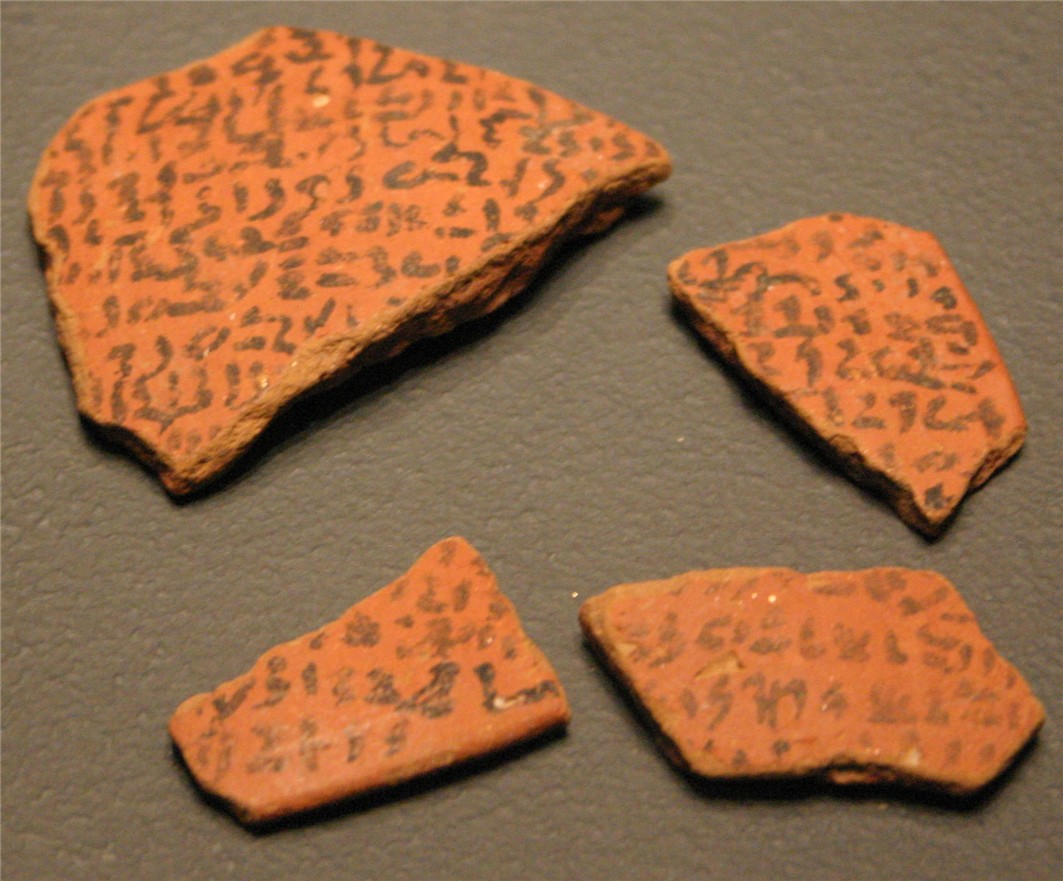
Execration texts, also referred to as proscription lists, are ancient Egyptian hieratic texts, listing enemies of the pharaoh, most often enemies of the Egyptian state or troublesome foreign neighbors. The texts were most often written upon statuettes of bound foreigners, bowls, or blocks of clay or stone, which were subsequently destroyed. The ceremonial process of breaking the names and burying them was intended to be a sort of sympathetic magic that would affect the persons or entities named in the texts. The fragments were usually placed near tombs or ritual sites. This practice was most common during times of conflict with the Asiatic neighbors of Egypt.
Execration texts are attested from the late Old Kingdom (c. 2686–2160 BCE) up into the New Kingdom (c. 1550–1069 BCE).
The earliest physical execration texts date to the 6th dynasty (24th–22nd century BCE) during Egypt's Old Kingdom. They are statuettes made from unbaked clay and fashioned into the shape of bound foreigners with name labels inscribed on their chests, sometimes in red ink. Over 400 of these statuettes were excavated from the cemetery at Giza, while a few others have been unearthed at the settlements of Elephantine and Balat.
In the Middle Kingdom (c. 2055–1650), Egyptians continued to use statuettes as execration texts. For example, a group of both large and small figurines dating to the end of the 12th dynasty was excavated at the necropolis of Saqqara. Middle Kingdom Egyptians also began to use pottery vessels for execration texts, which is evidenced by an excavation of over 175 vessels outside the Egyptian fortress at Mirgissa in Lower Nubia. These vessels, dating to the middle of the 12th dynasty, were inscribed with lengthy execration texts and appear to have been deliberately broken, likely as part of the execration ritual.
Only a few examples of execration texts dating to the Second Intermediate Period (c. 1700–1550) and New Kingdom (c. 1550–1069) have been found.
It has been noted that the later execration texts created during the Middle Kingdom, at least partially repeat, with some updates, formulas from the older, Old Kingdom texts. Ben-Tor therefore argues that Middle Kingdom texts don't reflect, either in part or entirely, the historical reality of their time, but that of the Old Kingdom or, archaeologically speaking, of the Early Bronze Age (EB) rather than the Middle Bronze Age (MB). He points out that the identified sites were all occupied during the EB, most of them being fortified.
There have been over 1,000 execration deposits found, with sites at Semna, Uronarti, Mirgissa, Elephantine, Thebes, Balat, Abydos, Helwan, Saqqara, and Giza. Because the execration jars, figurines, vases, and statues were almost destroyed during the rituals, archaeologists have to put all the pieces they find from execration pits back together to learn about the rituals. Four deposits have been uncovered at Giza, which contained figurines packed into pottery jars.
At the Middle Kingdom fortress of Mirgissa, execration remains included 200 broken inscribed red vases, over 400 broken uninscribed red vases, nearly 350 mud figurines, four limestone figures, small traces of beeswax dyed red — probably the remnants of melted figurines, and one human — whose head was ritually severed. Other evidence of human sacrifice and execration victims, as well as animal sacrifice was found at Avaris, probably from the 18th dynasty. Two execration pits were found: one containing skulls and fingers while the other had two full male skeletons.
Hub AI
Execration texts AI simulator
(@Execration texts_simulator)
Execration texts
Execration texts, also referred to as proscription lists, are ancient Egyptian hieratic texts, listing enemies of the pharaoh, most often enemies of the Egyptian state or troublesome foreign neighbors. The texts were most often written upon statuettes of bound foreigners, bowls, or blocks of clay or stone, which were subsequently destroyed. The ceremonial process of breaking the names and burying them was intended to be a sort of sympathetic magic that would affect the persons or entities named in the texts. The fragments were usually placed near tombs or ritual sites. This practice was most common during times of conflict with the Asiatic neighbors of Egypt.
Execration texts are attested from the late Old Kingdom (c. 2686–2160 BCE) up into the New Kingdom (c. 1550–1069 BCE).
The earliest physical execration texts date to the 6th dynasty (24th–22nd century BCE) during Egypt's Old Kingdom. They are statuettes made from unbaked clay and fashioned into the shape of bound foreigners with name labels inscribed on their chests, sometimes in red ink. Over 400 of these statuettes were excavated from the cemetery at Giza, while a few others have been unearthed at the settlements of Elephantine and Balat.
In the Middle Kingdom (c. 2055–1650), Egyptians continued to use statuettes as execration texts. For example, a group of both large and small figurines dating to the end of the 12th dynasty was excavated at the necropolis of Saqqara. Middle Kingdom Egyptians also began to use pottery vessels for execration texts, which is evidenced by an excavation of over 175 vessels outside the Egyptian fortress at Mirgissa in Lower Nubia. These vessels, dating to the middle of the 12th dynasty, were inscribed with lengthy execration texts and appear to have been deliberately broken, likely as part of the execration ritual.
Only a few examples of execration texts dating to the Second Intermediate Period (c. 1700–1550) and New Kingdom (c. 1550–1069) have been found.
It has been noted that the later execration texts created during the Middle Kingdom, at least partially repeat, with some updates, formulas from the older, Old Kingdom texts. Ben-Tor therefore argues that Middle Kingdom texts don't reflect, either in part or entirely, the historical reality of their time, but that of the Old Kingdom or, archaeologically speaking, of the Early Bronze Age (EB) rather than the Middle Bronze Age (MB). He points out that the identified sites were all occupied during the EB, most of them being fortified.
There have been over 1,000 execration deposits found, with sites at Semna, Uronarti, Mirgissa, Elephantine, Thebes, Balat, Abydos, Helwan, Saqqara, and Giza. Because the execration jars, figurines, vases, and statues were almost destroyed during the rituals, archaeologists have to put all the pieces they find from execration pits back together to learn about the rituals. Four deposits have been uncovered at Giza, which contained figurines packed into pottery jars.
At the Middle Kingdom fortress of Mirgissa, execration remains included 200 broken inscribed red vases, over 400 broken uninscribed red vases, nearly 350 mud figurines, four limestone figures, small traces of beeswax dyed red — probably the remnants of melted figurines, and one human — whose head was ritually severed. Other evidence of human sacrifice and execration victims, as well as animal sacrifice was found at Avaris, probably from the 18th dynasty. Two execration pits were found: one containing skulls and fingers while the other had two full male skeletons.