


Community hub
Recent from talks
Contribute something to knowledge base
Content stats: 0 posts, 0 articles, 1 media, 0 notes
Members stats: 0 subscribers, 0 contributors, 0 moderators, 0 supporters
Subscribers
Supporters
Contributors
Moderators
Hub AI
Extraterrestrial atmosphere AI simulator
(@Extraterrestrial atmosphere_simulator)
Hub AI
Extraterrestrial atmosphere AI simulator
(@Extraterrestrial atmosphere_simulator)
Extraterrestrial atmosphere
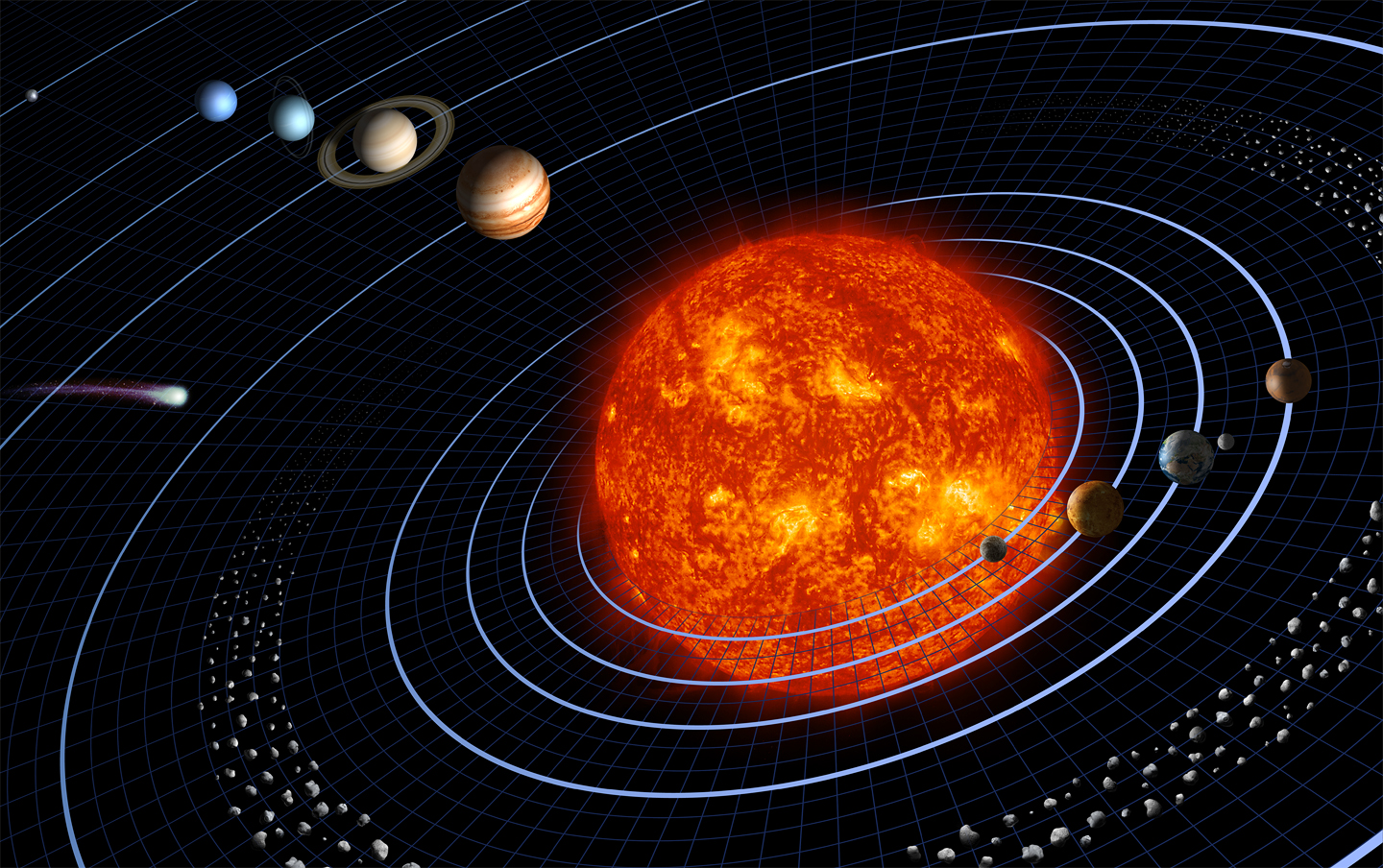
The study of extraterrestrial atmospheres is an active field of research, both as an aspect of astronomy and to gain insight into Earth's atmosphere. In addition to Earth, many of the other astronomical objects in the Solar System have atmospheres. These include all the giant planets, as well as Mars, Venus and Titan. Several moons and other bodies also have atmospheres, as do comets and the Sun. There is evidence that extrasolar planets can have an atmosphere. Comparisons of these atmospheres to one another and to Earth's atmosphere broaden our basic understanding of atmospheric processes such as the greenhouse effect, aerosol and cloud physics, and atmospheric chemistry and dynamics.
In September 2022, astronomers were reported to have formed a new group, called "Categorizing Atmospheric Technosignatures" (CATS), to list the results of exoplanet atmosphere studies for biosignatures, technosignatures and related.
Due to its small size (and thus its small gravity), Mercury has no substantial atmosphere. Its extremely thin atmosphere mostly consists of a small amount of helium and traces of sodium, potassium, and oxygen. These gases derive from the solar wind, radioactive decay, meteor impacts, and breakdown of Mercury's crust. Mercury's atmosphere is not stable and is constantly being refreshed because of its atoms escaping into space as a result of the planet's heat.
Venus' atmosphere is mostly composed of carbon dioxide. It contains minor amounts of nitrogen and other trace elements, including compounds based on hydrogen, nitrogen, sulphur, carbon, and oxygen. The atmosphere of Venus is much hotter and denser than that of Earth, though shallower. As greenhouse gases warm a lower atmosphere, they cool the upper atmosphere, leading to compact thermospheres. By some definitions, Venus has no stratosphere.[citation needed]
The troposphere begins at the surface and extends up to an altitude of 65 kilometres (an altitude at which the mesosphere has already been reached on Earth). At the top of the troposphere, temperature and pressure reach Earth-like levels. Winds at the surface are a few metres per second, reaching 70 m/s or more in the upper troposphere. The stratosphere and mesosphere extend from 65 km to 95 km in height. The thermosphere and exosphere begin at around 95 kilometres, eventually reaching the limit of the atmosphere at about 220 to 250 km.
The air pressure at Venus' surface is about 92 times that of the Earth. The enormous amount of CO2 in the atmosphere creates a strong greenhouse effect, raising the surface temperature to around 470 °C, hotter than that of any other planet in the Solar System.
The Martian atmosphere is very thin and composed mainly of carbon dioxide, with some nitrogen and argon. The average surface pressure on Mars is 0.6-0.9 kPa, compared to about 101 kPa for Earth. This results in a much lower atmospheric thermal inertia, and as a consequence Mars is subject to strong thermal tides that can change total atmospheric pressure by up to 10%. The thin atmosphere also increases the variability of the planet's temperature. Martian surface temperatures vary from lows of approximately −140 °C (−220 °F) during the polar winters to highs of up to 20 °C (70 °F) in summers.
Between the Viking and Mars Global Surveyor missions, Mars saw "Much colder (10-20 K) global atmospheric temperatures were observed during the 1997 versus 1977 perihelion periods" and "that the global aphelion atmosphere of Mars is colder, less dusty, and cloudier than indicated by the established Viking climatology," with "generally colder atmospheric temperatures and lower dust loading in recent decades on Mars than during the Viking Mission." The Mars Reconnaissance Orbiter, though spanning a much shorter dataset, shows no warming of planetary average temperature, and a possible cooling. "MCS MY 28 temperatures are an average of 0.9 (daytime) and 1.7 K (night- time) cooler than TES MY 24 measurements." Locally and regionally, however, changes in pits in the layer of frozen carbon dioxide at the Martian south pole observed between 1999 and 2001 suggest the south polar ice cap is shrinking. More recent observations indicate that Mars' south pole is continuing to melt. "It's evaporating right now at a prodigious rate," says Michael Malin, principal investigator for the Mars Orbiter Camera. The pits in the ice are growing by about 3 meters (9.8 ft) per year. Malin states that conditions on Mars are not currently conductive to the formation of new ice. A web site has suggested that this indicates a "climate change in progress" on Mars. Multiple studies suggests this may be a local phenomenon rather than a global one.
Extraterrestrial atmosphere
The study of extraterrestrial atmospheres is an active field of research, both as an aspect of astronomy and to gain insight into Earth's atmosphere. In addition to Earth, many of the other astronomical objects in the Solar System have atmospheres. These include all the giant planets, as well as Mars, Venus and Titan. Several moons and other bodies also have atmospheres, as do comets and the Sun. There is evidence that extrasolar planets can have an atmosphere. Comparisons of these atmospheres to one another and to Earth's atmosphere broaden our basic understanding of atmospheric processes such as the greenhouse effect, aerosol and cloud physics, and atmospheric chemistry and dynamics.
In September 2022, astronomers were reported to have formed a new group, called "Categorizing Atmospheric Technosignatures" (CATS), to list the results of exoplanet atmosphere studies for biosignatures, technosignatures and related.
Due to its small size (and thus its small gravity), Mercury has no substantial atmosphere. Its extremely thin atmosphere mostly consists of a small amount of helium and traces of sodium, potassium, and oxygen. These gases derive from the solar wind, radioactive decay, meteor impacts, and breakdown of Mercury's crust. Mercury's atmosphere is not stable and is constantly being refreshed because of its atoms escaping into space as a result of the planet's heat.
Venus' atmosphere is mostly composed of carbon dioxide. It contains minor amounts of nitrogen and other trace elements, including compounds based on hydrogen, nitrogen, sulphur, carbon, and oxygen. The atmosphere of Venus is much hotter and denser than that of Earth, though shallower. As greenhouse gases warm a lower atmosphere, they cool the upper atmosphere, leading to compact thermospheres. By some definitions, Venus has no stratosphere.[citation needed]
The troposphere begins at the surface and extends up to an altitude of 65 kilometres (an altitude at which the mesosphere has already been reached on Earth). At the top of the troposphere, temperature and pressure reach Earth-like levels. Winds at the surface are a few metres per second, reaching 70 m/s or more in the upper troposphere. The stratosphere and mesosphere extend from 65 km to 95 km in height. The thermosphere and exosphere begin at around 95 kilometres, eventually reaching the limit of the atmosphere at about 220 to 250 km.
The air pressure at Venus' surface is about 92 times that of the Earth. The enormous amount of CO2 in the atmosphere creates a strong greenhouse effect, raising the surface temperature to around 470 °C, hotter than that of any other planet in the Solar System.
The Martian atmosphere is very thin and composed mainly of carbon dioxide, with some nitrogen and argon. The average surface pressure on Mars is 0.6-0.9 kPa, compared to about 101 kPa for Earth. This results in a much lower atmospheric thermal inertia, and as a consequence Mars is subject to strong thermal tides that can change total atmospheric pressure by up to 10%. The thin atmosphere also increases the variability of the planet's temperature. Martian surface temperatures vary from lows of approximately −140 °C (−220 °F) during the polar winters to highs of up to 20 °C (70 °F) in summers.
Between the Viking and Mars Global Surveyor missions, Mars saw "Much colder (10-20 K) global atmospheric temperatures were observed during the 1997 versus 1977 perihelion periods" and "that the global aphelion atmosphere of Mars is colder, less dusty, and cloudier than indicated by the established Viking climatology," with "generally colder atmospheric temperatures and lower dust loading in recent decades on Mars than during the Viking Mission." The Mars Reconnaissance Orbiter, though spanning a much shorter dataset, shows no warming of planetary average temperature, and a possible cooling. "MCS MY 28 temperatures are an average of 0.9 (daytime) and 1.7 K (night- time) cooler than TES MY 24 measurements." Locally and regionally, however, changes in pits in the layer of frozen carbon dioxide at the Martian south pole observed between 1999 and 2001 suggest the south polar ice cap is shrinking. More recent observations indicate that Mars' south pole is continuing to melt. "It's evaporating right now at a prodigious rate," says Michael Malin, principal investigator for the Mars Orbiter Camera. The pits in the ice are growing by about 3 meters (9.8 ft) per year. Malin states that conditions on Mars are not currently conductive to the formation of new ice. A web site has suggested that this indicates a "climate change in progress" on Mars. Multiple studies suggests this may be a local phenomenon rather than a global one.
Recent media
Recent media