
Recent from talks
F. Nelson Blount
Knowledge base stats:
Talk channels stats:
Members stats:
F. Nelson Blount
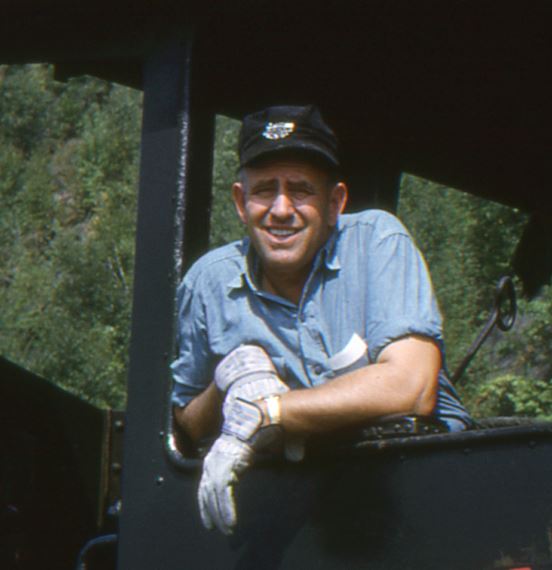
Francis Nelson Blount (May 21, 1918 – August 31, 1967) was an American businessman, railroad enthusiast, and president and founder of Blount Seafood Corporation and the founder of Steamtown, U.S.A.; the Monadnock, Steamtown & Northern Railroad; and the Green Mountain Railroad. Blount’s collection of vintage steam locomotives and rail cars—one of the largest ever assembled—today forms the core of Steamtown National Historic Site in Scranton, Pennsylvania.
Francis Nelson Blount was born May 21, 1918, in Warren, Rhode Island, to Willis and Ruth Blount. Willis had established an ice company in neighboring Barrington in 1919. As a child, Nelson and his brother Luther helped their father at the family business. He also frequented the New York, New Haven and Hartford Railroad yard near his home, developing a fondness for steam locomotives and railroads.
On May 23, 1933, just after his fifteenth birthday, Blount skipped school to see the British steamer Royal Scot, which was on exhibition in Providence, Rhode Island. There he happened upon schoolmate Frederick H. Richardson, a fellow railroad enthusiast, and the two became lifelong friends. Richardson would later serve as an employee and business partner for Blount. In 1938, the two co-wrote one of the first popular railfan books, Along the Iron Trail. They frequently visited the two-foot narrow gauge railroads of Maine, particularly the Sandy River & Rangeley Lakes Railroad and the Bridgton & Harrison Railroad. The 1935 abandonment of the Sandy River & Rangeley Lakes, and their helplessness to stop it, had a deep emotional impact on them. They began to discuss ways to save the memory of steam railroading.
Richardson enlisted in the Coast Guard when the United States entered the World War II. Nelson had wanted to enlist in the Navy, yet a leg injury and a broken back suffered when falling off a wharf had triggered a return of his childhood undulant fever in 1939, and he was declared unfit for service. On October 10, 1942, Blount married Ruth Palmer, whose mother had been a high-school classmate of Nelson's parents. The two had five children and began a family, which Blount supported by supplying ice to the many military camps in the Rhode Island and Cape Cod areas.
Blount's family had been involved in the shellfish industry since the 1880s. After the 1938 hurricane devastated the oyster business in Rhode Island's Narragansett Bay, Nelson and his uncle Byron helped introduce the bay quahog (a hard-shell clam) as a source of protein. After trials, the quahog was approved for military consumption, and demand exploded. In 1943, Blount purchased the Narragansett Oyster Company for $9,856 and renamed it the Narragansett Bay Packing Company. After the war in 1946, he consolidated several smaller shellfish firms to found Blount Seafood Corporation, which provided chopped clams to soup manufacturers throughout the United States, including Campbell Soup. His family still owns and controls the company. Upon returning from the Coast Guard, Richardson joined Blount at the seafood company.
In the 1950s, Blount moved his family from Rhode Island to the Monadnock region of New Hampshire, settling in Dublin, New Hampshire, at what he called "Staghead Farm".
In the mid-1950s, Blount used some of the money that he made in the seafood industry to purchase the narrow gauge Edaville Railroad in South Carver, Massachusetts. The Edaville Railroad had narrow-gauge engines from Maine, and Blount soon began acquiring standard-gauge steam locomotives and cars, in part to save a vanishing technological heritage. Some locomotives were initially displayed at Engine City, a part of Pleasure Island amusement park near Wakefield, Massachusetts. Space constraints soon forced Blount to look for a new home for his collection, and he purchased an engine house and railroad yard in 1960 from the Boston and Maine Railroad in North Walpole, New Hampshire, with equipment arriving there in late 1960. By 1964, he displayed in North Walpole 25 steam locomotives from the United States and Canada, 10 other locomotives, and 25 pieces of rolling stock; one of the largest collections of antique steam locomotives in the United States.
On April 26, 1961, Blount and his associates founded a standard-gauge tourist excursion railroad, the Monadnock, Steamtown & Northern, to provide the steam train rides. Blount had hoped to operate on the Boston & Maine's Cheshire Branch between North Walpole and Keene, but B&M labor issues led to the first MS&N trains briefly operating on the Claremont and Concord Railway in the summer of 1961. In 1962, Blount's MS&N finally operated between Keene and Gilboa while he discussed a state-funded Steamtown, U.S.A. opening in Keene. The MS&N later operated out of North Walpole in 1963, and in Vermont between 1964 and 1967. The MS&N ceased operations just after Blount's untimely death, and was dissolved in August 1971.
Hub AI
F. Nelson Blount AI simulator
(@F. Nelson Blount_simulator)
F. Nelson Blount
Francis Nelson Blount (May 21, 1918 – August 31, 1967) was an American businessman, railroad enthusiast, and president and founder of Blount Seafood Corporation and the founder of Steamtown, U.S.A.; the Monadnock, Steamtown & Northern Railroad; and the Green Mountain Railroad. Blount’s collection of vintage steam locomotives and rail cars—one of the largest ever assembled—today forms the core of Steamtown National Historic Site in Scranton, Pennsylvania.
Francis Nelson Blount was born May 21, 1918, in Warren, Rhode Island, to Willis and Ruth Blount. Willis had established an ice company in neighboring Barrington in 1919. As a child, Nelson and his brother Luther helped their father at the family business. He also frequented the New York, New Haven and Hartford Railroad yard near his home, developing a fondness for steam locomotives and railroads.
On May 23, 1933, just after his fifteenth birthday, Blount skipped school to see the British steamer Royal Scot, which was on exhibition in Providence, Rhode Island. There he happened upon schoolmate Frederick H. Richardson, a fellow railroad enthusiast, and the two became lifelong friends. Richardson would later serve as an employee and business partner for Blount. In 1938, the two co-wrote one of the first popular railfan books, Along the Iron Trail. They frequently visited the two-foot narrow gauge railroads of Maine, particularly the Sandy River & Rangeley Lakes Railroad and the Bridgton & Harrison Railroad. The 1935 abandonment of the Sandy River & Rangeley Lakes, and their helplessness to stop it, had a deep emotional impact on them. They began to discuss ways to save the memory of steam railroading.
Richardson enlisted in the Coast Guard when the United States entered the World War II. Nelson had wanted to enlist in the Navy, yet a leg injury and a broken back suffered when falling off a wharf had triggered a return of his childhood undulant fever in 1939, and he was declared unfit for service. On October 10, 1942, Blount married Ruth Palmer, whose mother had been a high-school classmate of Nelson's parents. The two had five children and began a family, which Blount supported by supplying ice to the many military camps in the Rhode Island and Cape Cod areas.
Blount's family had been involved in the shellfish industry since the 1880s. After the 1938 hurricane devastated the oyster business in Rhode Island's Narragansett Bay, Nelson and his uncle Byron helped introduce the bay quahog (a hard-shell clam) as a source of protein. After trials, the quahog was approved for military consumption, and demand exploded. In 1943, Blount purchased the Narragansett Oyster Company for $9,856 and renamed it the Narragansett Bay Packing Company. After the war in 1946, he consolidated several smaller shellfish firms to found Blount Seafood Corporation, which provided chopped clams to soup manufacturers throughout the United States, including Campbell Soup. His family still owns and controls the company. Upon returning from the Coast Guard, Richardson joined Blount at the seafood company.
In the 1950s, Blount moved his family from Rhode Island to the Monadnock region of New Hampshire, settling in Dublin, New Hampshire, at what he called "Staghead Farm".
In the mid-1950s, Blount used some of the money that he made in the seafood industry to purchase the narrow gauge Edaville Railroad in South Carver, Massachusetts. The Edaville Railroad had narrow-gauge engines from Maine, and Blount soon began acquiring standard-gauge steam locomotives and cars, in part to save a vanishing technological heritage. Some locomotives were initially displayed at Engine City, a part of Pleasure Island amusement park near Wakefield, Massachusetts. Space constraints soon forced Blount to look for a new home for his collection, and he purchased an engine house and railroad yard in 1960 from the Boston and Maine Railroad in North Walpole, New Hampshire, with equipment arriving there in late 1960. By 1964, he displayed in North Walpole 25 steam locomotives from the United States and Canada, 10 other locomotives, and 25 pieces of rolling stock; one of the largest collections of antique steam locomotives in the United States.
On April 26, 1961, Blount and his associates founded a standard-gauge tourist excursion railroad, the Monadnock, Steamtown & Northern, to provide the steam train rides. Blount had hoped to operate on the Boston & Maine's Cheshire Branch between North Walpole and Keene, but B&M labor issues led to the first MS&N trains briefly operating on the Claremont and Concord Railway in the summer of 1961. In 1962, Blount's MS&N finally operated between Keene and Gilboa while he discussed a state-funded Steamtown, U.S.A. opening in Keene. The MS&N later operated out of North Walpole in 1963, and in Vermont between 1964 and 1967. The MS&N ceased operations just after Blount's untimely death, and was dissolved in August 1971.
Recent media