Hubbry Logo
B2 (classification)B2 (classification)Main
Open search
B2 (classification)
Community hub
B2 (classification)
logo
8 pages, 0 posts
0 subscribers
Be the first to start a discussion here.
B2 (classification)
B2 (classification)
from Wikipedia
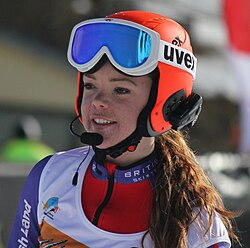
Britain's Jade Etherington is a B2 classified Paralympic athlete

B2 is a medical based Paralympic classification for blind sport. Competitors in this classification have vision that falls between the B1 and B3 classes. The International Blind Sports Federation (IBSA) defines this classification as "visual acuity ranging from LogMAR 1.50 to 2.60 (inclusive) and/or visual field constricted to a diameter of less than 10 degrees."[1] It is used by a number of blind sports including para-alpine skiing, para-Nordic skiing, blind cricket, blind golf, five-a-side football, goalball and judo. Some sports, including adaptive rowing, athletics and swimming, have equivalents to this class.

The B2 classification was first created by the IBSA in the 1970s, and has largely remained unchanged since despite an effort by the International Paralympic Committee (IPC) to move towards a more functional and evidence-based classification system. Classification is often handled on the international level by IBSA although it is also handled by national sport federations. There are exceptions for sports like athletics and cycling, where classification is handled by their own governing bodies.

Equipment utilized by competitors in this class may differ from sport to sport, and may include sighted guides, guide rails, beeping balls and clapsticks. There may be some modifications related to equipment and rules to specifically address needs of competitors in this class to allow them to compete in specific sports. Some sports specifically do not allow a guide, whereas cycling and skiing require one.

Definition

[edit]

B2 is a disability sport classification for people who are visually impaired.[2] The International Blind Sports Federation (IBSA) defines this classification as "visual acuity ranging from LogMAR 1.50 to 2.60 (inclusive) and/or visual field constricted to a diameter of less than 10 degrees."[1] It thus falls between the B1 and B3 classifications.[1] The Canadian Paralympic Committee defined this classification as "Up to approximately 3-5% functional vision."[3] This classification is borrowed by some other sports, including blind golf who also define the class as "From ability to recognise the shape of a hand up to visual acuity of 2/60 or visual field of less than 5 degrees".[4] Para-alpine skiing sport specific versions of this definition include one by the Australian Paralympic Committee which defined this classification as this classification as "Athletes with some partial vision or the ability to recognise the shape of a hand but have a field of vision less than five degrees."[5][6] The International Paralympic Committee defined this classification for alpine skiing as "From ability to recognise the shape of a hand up to a visual acuity of 2/60 and/or visual field of less than 5 degrees."[7]

This classification has parallels in other sports. The comparative classification in adaptive rowing is LTA-B2.[8] In equestrian, Grade 4 is equivalent to B2.[9][10] The B2 equivalent for swimming is S12.[11]

Governance

[edit]

IBSA handles classification for a number of sports internationally including five-a-side football, goalball and judo.[2][12][13] Part of being classified involves assessing vision for factors including visual acuity, contrast sensitivity, color vision, motion detections and visual field.[11] When being assessed into this class by the IBSA, the process first includes the athlete filling out a consent form, submitting a photograph, and scheduling an appointment with a classifier for evaluation. During the actual evaluation, the competitor may be accompanied by another person to assist them in communicating with the classifiers. If necessary, the person can also bring a translator. A medical assessment is then conducted. There are several status groups used by classifiers that assist in classification. This includes Confirmed for competitors who have a visual impairment unlikely to change, Review for competitors who have vision that may fluctuate, New for competitors who have never been classified before, Not Eligible for competitors who have a visual impairment that is not severe enough and not likely to deteriorate in the future to the point where they could be eligible.[14]

Classification is also handled on a national and by sport level.[8][15] Australians seeking classification for blind sports can be classified by an IBSA classifier or an Australian Paralympic Committee vision impairment classifier.[8] In the United Kingdom, blind sport is handled by British Blind Sport,[16][17] which is recognised nationally by Sport England.[18] In the United States, governance related to this classification is handled by the United States Association for Blind Athletes (USABA).[15]

Not all sports use IBSA classifiers. For adaptive rowing, classification assignment may be handled by the Fédération Internationale des Sociétés d'Aviron (FISA),[19] cycling by the Union Cycliste Internationale (UCI),[19] para-equestrian, by the Fédération Équestre Internationale (FEI).[19] Swimming classification is handled by IPC Swimming,[13] while in athletics, classification assignment for this class is handled by the IPC.[19]

History

[edit]

This classification traces its history to the early history of blind sport. There was a belief that those with vision impairment that was less severe had a competitive advantage over competitors who had more severe impairment. Classification was developed by the IBSA to insure more even competition across the different bands of visual acuity.[20] In 1976, the International Sports Organization for the Disabled (ISOD) developed a blind classification system. Parallel to this, IBSA and national blind sport associations were developing their own classification system, with the IBSA one based on visual acuity in place by 1980. The rise of the IBSA classification system for blind sport meant the ISOD classification system failed to gain traction in blind sports competition.[11][20][21]

The IBSA classification system has largely remained unchanged since it was put in place,[21] even as the International Paralympic Committee (IPC) attempted to move towards a more functional disability and evidence based system that does not rely on medical based classification.[22][23] In 2003, the IPC made an attempt to address "the overall objective to support and co-ordinate the ongoing development of accurate, reliable, consistent and credible sport focused classification systems and their implementation."[23] It approved the classification at the IPC General Assembly in 2007 as part of the overall blind class group, but was still medically based despite changes in other disability types. IBSA was not prepared at the time to move towards a more functional classification system similar to that utilized by other disability groups and sports.[14]

In some cases, non-Paralympic, non-IBSA affiliated sports have developed their own classification systems. This is the case with blind golf, where a classification existed by 1990 and was used at the Australian Open Golf Tournament for the Blind and Visually Impaired. At that time, four classifications existed and were the same as the IBSA for this class.[4]

In 1990, the Equestrian Federation of Australia did not have specific classifications for competitors with disabilities, including those with visual impairments. Acknowledging membership needs, some rules had organically developed that looked like classifications based on rule modification for different disability types, including blind riders. These included allowing blind riders, when they reached a marker, being given an auditory signal to inform them of this.[4]

Equipment

[edit]
B2 classified Canadian skier Viviane Forest and guide Chloe Lauzon-Gauthier in action at the IPC Alpine World Championships in 2013
B2 classified Spanish skier Jon Santacana and guide Miguel Galindo in action at the IPC Alpine World Championships in 2013

Equipment utilized by competitors in this class may include sighted guides, guide rails, beeping balls and clap sticks.[24] For blind archery, archers in this class use a tactile sighting device and must not be able to use a bow sight.[25]

The use of a sighted guide by people in this class is dependent on the specific requirements of the sport.[26] Guides are used in para-alpine and para-Nordic skiing. Guides for B2 and B3 skiers often position themselves differently from for B1 skiers as the skiers in this class have some vision, which means the things a guide assists with will be different from what is required of a skier who has almost no sight. The guide may ski in front of the skier and use visual cues to inform the skier of what is ahead of them on the course.[27] For cyclists in this class, a guide is used with the guide sitting at the front of a tandem bicycle.[26][28][29]

For S12 classified swimmers, a tapper may stand on the pool deck to tap the swimmer as they approach the wall.[11] The swimmer has to bring their own tapper,[30] but having a tapper is optional.[31] In blind cricket, B2 batsmen have the option of having a runner.[32]

Rules

[edit]

There are some rule differences for this class in competition that are sport specific and which differ from able bodied versions of the sport.[32][33] In adaptive rowing's Coxed Four, LTA4+, the maximum number of vision impaired rowers in a boat is two.[34] In blind cricket, three players in this class are required to be on the field at the same out of the eleven total players on the pitch. B2 batsmen have the option of having a runner.[32] In judo, all three blind sport classes compete against each other, with competitors classified by weight for the purposes of competition. Weight classes use the international standards used in the Olympics.[35] In IBSA sailing competitions, the three person boat can have a maximum of five points, and must include at least one female and one male sailor on the boat.[36] In competitions run by Blind Sailing International, this class sometimes competes only against other boats with where all the sailors are in this class.[37]

Sports

[edit]

On the Paralympic level, a number of disability sports are not open to this classification or other visually impaired competitors including archery, basketball, boccia, curling, fencing, ice sledge hockey, powerlifting, rugby, shooting, table tennis, tennis, volleyball. Five-a-side football is not open to women.[38] Eligible Paralympic sports for this classification include adaptive rowing, athletics, cycling five-a-side football, goalball, judo, para-equestrian, para-alpine skiing, para-Nordic skiing, and swimming.[38] This classification is not eligible to compete at the Paralympic Games in archery.[38]

The classification is used in other sports including blind golf and lawn bowls.[4][39] While this classifications is open to five-a-side blind football,[2] women are not eligible to compete at the Paralympic Games.[38] This classification is eligible to play goalkeeper but in some competitions is not allowed to be a field player.[32]

Athletics

[edit]

The B2 classification is used in athletics,[40] where the equivalent athletics classification is "T12". Athletes in this class can generally perceive the lines on the track.[41] At the 2008 Summer Paralympics, classification assignment for this class was handled by the IPC.[19]

Guides

[edit]

In athletics, competitors have the option of using a guide.[26][42] For field events such as the long jump or discus, a caller may be used.[43] For runners in this class, using a guide is often a personal preference; some use guides only in practice, others only in competition, or both competition and practice, and some never use guides.[33] When a runner is looking for a guide, they are encouraged to find one with a gait similar to their own,[26] where a rope or tether may be used to connect the runner to the guide.[43]

At the elite level, guides are treated the same as the blind runner. Guides and runners must both use blocks for any race shorter than 400 metres (440 yd). In 400-metre (440 yd) races, the guide runs on the right side of the runner. For races of 800 metres (870 yd) or longer, a runner may use up to two guides, but the course officials must be informed of any decision to use more than one guide in advance of the race. In the marathon, the runner may use up to four different guides. The runner must finish ahead of the guide. In running, the guide attempts to match the running pattern of the runner, not the other way around.[33]

At the 2012 Summer Paralympics, sighted guides in athletics were awarded medals for the first time.[33]

References

[edit]
Revisions and contributorsEdit on WikipediaRead on Wikipedia
from Grokipedia
B2 is a used in the Paralympic Movement for athletes with s. It is one of three classes (B1, B2, B3) defined by the (IPC) and the International Blind Sports Federation (IBSA) to group competitors with similar levels of vision loss, ensuring fair participation across various . Athletes in the B2 class have a moderate , specifically a ranging from LogMAR 1.50 to 2.60 (approximately 20/630 to 20/4000) and/or a of less than 10 degrees in their better eye with the best correction. This places B2 between B1 (severe impairment, no perception to LogMAR >2.60 and/or field <5 degrees) and B3 (milder impairment, LogMAR 1.00 to 1.40 and/or field <40 degrees). involves medical assessments to verify eligibility and assign the appropriate class, with sport-specific rules applying in events like athletics, football, and .

Definition and Eligibility

Core Definition

B2 is the second level in the International Blind Sports Federation (IBSA)'s three-tier visual impairment classification system for athletes in para-sports, positioned between B1, which denotes total blindness or no light perception to minimal light perception, and B3, which covers athletes with better remaining vision. This system ensures that competitors are grouped based on their functional visual abilities to promote fair and equitable participation across various sports such as , , and . The primary purpose of the B2 classification is to enable athletes with moderate to severe visual impairments to compete against peers with similar limitations, minimizing advantages or disadvantages stemming from varying degrees of sight. Athletes qualify for B2 if their best-corrected visual acuity in the better eye ranges from LogMAR 1.50 to 2.60 (inclusive), equivalent to approximately 20/600 to 20/4000 on the Snellen scale, and/or if their visual field is constricted to a diameter of less than 10 degrees. This grouping allows for balanced competition by accounting for both central acuity and peripheral vision constraints that impact sports performance. Unlike purely medical classifications that focus on clinical , B2 is a sport-specific functional category designed to assess how affects athletic activity rather than the underlying alone. Qualifying impairments often include conditions causing severe low vision, such as , which progressively narrows the , or , which can severely reduce central acuity. Within the broader Paralympic framework, B2 aligns with standards for visual impairments to facilitate inclusive international events.

Visual Impairment Criteria

The B2 classification delineates athletes with moderate visual impairments that impact sports performance, ensuring fair competition by grouping those with similar functional vision limitations. According to the International Blind Sports Federation (IBSA), which oversees visual impairment classifications for Paralympic sports, B2 eligibility requires a best-corrected visual acuity in the better eye ranging from LogMAR 1.50 to 2.60 inclusive. This acuity level equates to the ability to recognize shapes or objects up to approximately 2 meters away or count fingers at a short distance, distinguishing functional vision from more severe or milder impairments. Visual field restrictions further define B2 status, with the better eye exhibiting a constriction to a diameter of less than 10 degrees (equivalent to a radius of less than 5 degrees), often assessed via perimetry tools like the Goldmann perimeter. In cases where the visual field meets this threshold in the better eye, the other eye may have no light perception or equivalent severe impairment without altering the classification, as criteria focus on the functional better eye. Assessments for B2 classification employ best-corrected vision, incorporating optical aids such as spectacles, contact lenses, or permitted low-vision devices to achieve the optimal stable measurement; temporary surgical enhancements, like those not yet fully healed or reversible, are not permitted during testing to reflect the athlete's inherent impairment accurately. This approach prioritizes the underlying condition post-permanent corrections, aligning with IBSA protocols for equitable evaluation. B2 differs from B1, reserved for athletes with the most profound impairments including no light perception or visual acuity worse than LogMAR 2.60 in the better eye, rendering shape recognition impossible at any . In contrast, B3 encompasses milder impairments with visual acuity from LogMAR 1.00 to 1.40 in the better eye and/or a constriction less than 40 degrees diameter, allowing recognition of contours up to 6 meters. These thresholds support fair play by minimizing the impact of varying vision levels within competitions.

Governance and History

Governing Organizations

The International Blind Sports Federation (IBSA) serves as the primary global authority for B2 classification in sports for athletes with visual impairments, having defined the category since the to ensure fair competition based on and field of vision criteria. IBSA develops and updates rules for its member sports, including , football, and , with B2 encompassing athletes with visual acuity ranging from LogMAR 1.50 to 2.60 (inclusive) and/or a visual field constricted to a diameter of less than 10 degrees in the better eye with the best possible correction. B2 athletes participate in the under the oversight of the (IPC), which integrates IBSA's vision-specific classifications into its broader framework while maintaining overall Paralympic governance. As a founding member of the IPC, IBSA certifies international classifiers in collaboration with the IPC to standardize assessments and uphold evidence-based protocols across Paralympic events. At the national level, organizations adapt IBSA standards to local contexts; for instance, the U.S. Association of Blind Athletes (USABA) administers B2 classifications for American athletes in alignment with IBSA and IPC policies, facilitating participation in domestic and international competitions. Similarly, British Blind Sport coordinates sight classifications, including B2, for athletes, arranging evaluations and promoting inclusive opportunities in sports like football and . These governing bodies collaborate with the (WADA) to maintain classification integrity, ensuring compliance with anti-doping codes that address intentional misrepresentation of impairments as a form of prohibited conduct. IBSA, as a WADA signatory, integrates anti-doping education and testing with processes to safeguard fair play in B2 events.

Historical Evolution

The origins of the B2 classification trace back to the , when nascent federations for blind sports, such as those organizing early international competitions in and , identified the need to differentiate athletes by visual function to maintain competitive equity. These initial efforts grouped competitors into rudimentary categories based on light perception and object recognition, laying the groundwork for more structured systems as participation grew. With the establishment of the International Blind Sports Association (IBSA) in , standardization became a priority, culminating in the formal adoption of the B1, B2, and B3 classes by 1983 to promote consistency across global events and address variations in national approaches. The B2 tier specifically targeted athletes with moderate visual limitations, bridging total blindness (B1) and milder impairments (B3), influenced by emerging medical diagnostics in . A pivotal milestone occurred in 1984, when the B2 classification was integrated into the Summer Paralympics across events in New York and Stoke Mandeville, enabling visually impaired athletes to compete under unified international rules for the first time and expanding the Games' scope beyond wheelchair and ambulatory categories. This inclusion highlighted the practical application of IBSA's framework, with B2 athletes participating in sports like athletics and swimming, though early implementations relied heavily on self-reported visual acuity without advanced functional testing. Post-2000, refinements emphasized evidence-based functional assessments to better align classes with sport-specific demands, incorporating athlete performance data and biomechanical studies to reduce misclassification risks; for instance, research from the mid-2010s validated updated criteria for visual tasks like shape recognition under dynamic conditions. In 2020, the International Paralympic Committee (IPC) revised its classification guidelines ahead of the Tokyo Games, prioritizing inclusivity by streamlining evaluation protocols and mandating periodic reviews to accommodate evolving medical technologies and athlete feedback. The evolution from broad "partially sighted" groupings in the —often encompassing diverse impairments without precise boundaries—to the refined B2 tier was shaped by iterative input from athletes, coaches, and clinicians, alongside advancements in testing and contrast sensitivity measurements. This progression ensured that B2 focused on functional impacts relevant to sports performance, such as tracking moving objects, rather than solely medical diagnoses. Controversies at the 2012 Paralympics, including allegations of intentional misrepresentation in classes during and athletics events, underscored vulnerabilities in verification and led to enhanced protocols for B2 assessments, such as mandatory ophthalmological re-evaluations and on-site functional demonstrations to bolster integrity. IBSA maintains oversight of these developments today, collaborating with the IPC to sustain the system's relevance. In 2024, the IPC announced plans to centralize classification services to optimize assessments for athletes, including those in B2. The updated IPC Classification , effective January 2025, incorporates these changes while maintaining core VI criteria.

Classification Procedures

Assessment Methods

The assessment of athletes for B2 classification in visually impaired para sports begins with an initial ophthalmological evaluation to verify the underlying health condition and measure visual function under best correction. This involves a comprehensive , including via to determine the optimal corrective lenses or low-vision aids, followed by testing of using LogMAR charts or Snellen equivalents, and assessment through perimetry with devices such as the Goldmann perimeter or Humphrey Field Analyzer. These medical diagnostics confirm eligibility against B2 thresholds, defined by the International Blind Sports Federation (IBSA) as ranging from LogMAR 1.50 to 2.60 (inclusive) in the better eye and/or a constriction to less than 10 degrees. Low-vision aids, if used by the athlete, are tested during the evaluation to ensure measurements reflect maximum corrected vision. Assessment is conducted by a certified panel comprising at least one medical classifier (an ophthalmologist) and one technical classifier to minimize variability. Functional tests supplement the medical evaluation by simulating sport-specific demands to gauge the impairment's practical impact. Examples include tasks such as tracking a moving ball or recognizing shapes and patterns under competition lighting conditions, often observed during in-competition assessments to validate the assigned class. These tests, aligned with (IPC) guidelines, help ensure the classification reflects activity limitation without being trainable. Evaluations are typically scheduled pre-competition, every 2 to 4 years for review status classifications, or more frequently following events like injury or medical changes that could alter visual function; panels limit sessions to a maximum of 12 athletes per day to maintain accuracy.

Certification and Appeals

Following a successful assessment by an IBSA-certified classification panel, athletes meeting the criteria for B2 —defined as between LogMAR 1.50 and 2.60 and/or a of less than 10 degrees in the better eye—are allocated the B2 sport class along with a sport class status such as Confirmed (C), Review (R), or Review with Fixed Review Date (FRD). The outcome is documented on the IBSA Classification Master , and athletes receive notification of their status, which is published for verification by relevant parties including national federations. This allocation effectively serves as the issuance of an IBSA classification, valid internationally across all IBSA-sanctioned events without requiring re-evaluation solely for portability, provided the status remains active. Validity periods depend on the assigned status: Confirmed status indicates a stable impairment with no scheduled re-evaluation unless triggered by specific events, while Review status requires reassessment before the next international competition, and Review with Fixed Review Date mandates evaluation by a predetermined date, such as the first eligible event in a given year. For Paralympic participation, B2 classification is mandatory under IPC rules, often necessitating a current or updated evaluation to confirm eligibility and compliance with minimum impairment criteria. Reclassification may be triggered by a significant change in visual function, such as progression or improvement in acuity or field, submitted via a Medical Review Request with supporting ophthalmological evidence; doping violations that could affect impairment assessment; or outcomes from successful protests. Athletes or their national federations have the right to protest a B2 classification decision, typically within one hour of the outcome's publication (or by 9:00 AM the following day if notified after 9:00 PM), submitted via a formal Protest Form accompanied by a fee to the chief classifier. The protest is reviewed by a new panel of classifiers, excluding those from the original evaluation, who conduct a re-assessment to confirm or adjust the sport class. For broader IPC-governed events like the Paralympics, protests follow federation-specific timelines but are resolved by a dedicated Protest Panel, with decisions appealable to the IPC's Board of Appeal of Classification if procedural irregularities are alleged, generally within seven days of the protest outcome. Appeals focus on classification process errors rather than re-disputing the sport class itself. Intentional misrepresentation of to secure B2 status, such as falsifying medical documentation or underperforming during assessment, constitutes a serious disciplinary offense under both IBSA and IPC rules, potentially resulting in immediate disqualification from the event, assignment of Not Eligible (NE) status with a fixed review date of one to four years (or lifetime for repeat offenses), and suspensions ranging from one to four years or permanent bans. In cases where misrepresentation reveals a different eligible impairment level, reclassification to a more appropriate class like B1 (for greater impairment) may occur alongside penalties, ensuring fairness in competition.

Equipment and Adaptations

Standard Requirements

B2 athletes, characterized by moderate allowing recognition of shapes up to of 20/600 or a less than 5 degrees, utilize baseline equipment across to promote safety and equitable competition. The (IPC) mandates that international federations specify permitted equipment for visual impairment classes, including B2, ensuring adaptive aids do not confer undue advantages and must be disclosed during . This framework minimizes the impact of impairment while standardizing essentials like protective gear and sensory supports. Eye protection addresses common issues like in B2 competitors. Tinted visors or shields are allowed to mitigate light sensitivity, provided they are non-corrective; any refractive elements require pre-approval to avoid altering beyond the athlete's natural capabilities. For instance, specialized tinted visors developed by (UAB) optometrists enable vision-challenged athletes to reduce glare during dynamic activities without enhancing performance. Corrective lenses, if used, must be evaluated to confirm compliance with B2 eligibility criteria. Audio cues are commonly used in certain B2 events, such as and partially sighted football, compensating for reduced visual input during critical moments. Whistles, clappers, or verbal announcements signal starts, turns, and finishes, with electronic devices prohibited unless explicitly authorized by sport-specific rules. This auditory reliance ensures fairness, as evidenced in Paralympic venues for these sports where spectators maintain silence to preserve cue audibility, preventing advantages for athletes with varying residual vision. Uniforms and basic aids prioritize visibility and non-enhancement. High-contrast clothing, often in bright or reflective materials, aids athlete orientation and official monitoring without altering competition dynamics. Basic low-vision glasses are permitted if they solely correct to the athlete's baseline without benefits, subject to classifier . Specialized options, such as RUSEEN's reflective apparel designed for visually impaired participants, enhance by improving detectability in group settings. Safety gear in contact sports underscores for B2 athletes, whose limited vision heightens collision risks. Padded elements on helmets, vests, and limbs—using impact-absorbing materials like —are required to cushion blows and protect vulnerable areas. Eye-specific safeguards, integrated into standard protective wear, further guard against trauma that could worsen impairment, aligning with broader recommendations for visually impaired competitors in physical disciplines.

Sport-Specific Modifications

In sports adapted for B2 athletes, who possess partial vision allowing recognition of hand shapes up to visual acuity of 20/600 and/or a visual field less than 5 degrees, equipment modifications emphasize enhanced visibility, auditory cues, and tactile feedback to ensure fair competition without fully compensating for the impairment. These alterations are tailored to individual sports, prioritizing high-contrast colors, sound-emitting elements, and structural aids that leverage residual vision while maintaining the sport's integrity. Ball modifications commonly include larger sizes, brighter or high-contrast colors, and audible features to aid tracking. In , the standard incorporates internal bells or rattles for auditory localization, enabling B2 players—who compete blindfolded like B1 and B3 athletes—to detect its movement across the court. For partially sighted football ( variant for B2 and B3), the must contrast sharply with the pitch surface, such as a vivid against a dark floor, without auditory elements to preserve the partially sighted nature of play. Field markings and boundaries often feature tactile or luminous elements to delineate play areas. Tactile markers, such as raised tape or strings, define court edges in sports like or , allowing B2 athletes to feel boundaries during movement. Goalposts may include visibility aids like colored flags or high-contrast framing, while overall field lighting is standardized to avoid or shadows, ensuring even illumination across the surface as required in partially sighted football. Assistive devices focus on guidance and sensory augmentation without direct performance aid. In running events, B2 athletes use harnesses or tethers connected to sighted guides to maintain direction and pace on the track. For archery, tactile sighting aids—such as pressure-sensitive devices mounted on tripods that provide repeatable hand-reference points—enable precise aiming, often paired with foot locators for consistent stance. Sport-specific examples illustrate these adaptations. In powerlifting, platform lighting is adjusted for uniform brightness and contrast to help B2 athletes visualize bars and weights clearly during lifts. In archery, sighted assistants are restricted to spotting arrow impacts and providing verbal distance feedback, without influencing the shot execution.

Rules and Formats

General Competition Rules

In IBSA-sanctioned events, starting procedures for B2 athletes prioritize auditory cues to ensure accessibility and fairness for those with moderate visual impairments. All starts utilize audio signals, such as electronic tones, clappers, or starter's guns amplified through loudspeakers, with commands like "On your marks" and "Set" delivered verbally before the signal. Visual flags or lights are not permitted unless accompanied by an audible backup, such as a simultaneous tone, to prevent any disadvantage to athletes unable to perceive visual aids. For track events, B2 athletes (corresponding to T12 in World Para Athletics) may optionally use a tethered guide-runner, with the tether limited to 30 cm, allowing the guide to provide directional audio cues during the race without altering the start itself. Classification verification is mandatory for all B2 athletes prior to competing in IBSA events, conducted by an international panel of certified classifiers, including ophthalmologists, to confirm eligibility based on between LogMAR 1.50 and 2.60 or a less than 10 degrees. Athletes must submit a completed Diagnostics Form, no older than 12 months, detailing their impairment, and undergo an evaluation session where they demonstrate their abilities with any prescribed aids or medications disclosed. Mixing B2 athletes with other classes, such as B1 or B3, is prohibited to maintain competitive equity, as classes are allocated strictly by degree of impairment to group athletes with similar functional abilities. Failure to verify or any intentional of visual function results in disqualification from the event. Performance adjustments for B2 athletes focus on enabling participation without conferring scoring advantages, emphasizing modifications that address visual limitations in track events. In sprints and middle-distance races up to 400 m, B2 athletes are allocated dedicated lanes (typically two adjacent lanes, such as 1 and 2) with staggered starts to account for curvature, and proximity positioning allows optional guide-runners to start immediately adjacent if tethered. No time allowances are applied to final results; instead, adjustments like extended trial times in field events (e.g., 1 minute starting after orientation) or assistant assistance for block setup ensure fair access, but raw performances determine rankings and records. These measures align with broader IBSA guidelines to minimize environmental barriers while preserving the integrity of competition outcomes. Doping and ethical standards for B2 athletes adhere strictly to the (WADA) Code, as incorporated into IBSA's Anti-Doping Rules, prohibiting any use of banned substances or methods that enhance performance. Athletes must comply with testing protocols at all IBSA-sanctioned events, with violations leading to sanctions regardless of intent. Vision-related exemptions, such as Therapeutic Use Exemptions (TUEs) for medications treating ocular conditions (e.g., drugs), are reviewed case-by-case by IBSA's TUE Committee in alignment with WADA guidelines, requiring medical documentation to ensure no unfair advantage. Ethical conduct extends to accurate reporting of impairments during , with breaches treated as anti-doping violations.

Enforcement and Penalties

Enforcement of B2 rules in IBSA-sanctioned events is overseen by certified classifiers present at competitions to ensure compliance with criteria, such as between LogMAR 1.50 and 2.60. At major events like world championships, a minimum of two classification panels, each consisting of at least two international classifiers (typically ophthalmologists or optometrists), conduct evaluations and monitor athlete eligibility on-site. The chief classifier supervises the process, posting daily classification lists and verifying medical diagnostic forms submitted prior to the event. To address potential disputes, video recording or of athletes during assessments may be used for review, allowing panels to re-evaluate visual function if discrepancies arise. Additionally, athletes assigned a B2 class may receive a "review status" designation, requiring random or targeted re-checks at subsequent events to confirm ongoing eligibility and prevent changes in impairment that could affect classification. Common violations in B2 classification include intentional misrepresentation of visual impairment, such as using unauthorized or incorrect optical aids to alter assessed acuity, or competing without a valid sport class status. Penalties for such violations range from immediate disqualification from the event to a two-year suspension from classification evaluations for a first offense, with lifetime bans imposed for repeat intentional misrepresentation; support personnel involved face equivalent sanctions. In cases of misclassification without intent, outcomes may result in reassignment to an adjacent class like B1 or B3, but persistent non-compliance leads to exclusion from competition. Protest procedures allow for on-site challenges to B2 classifications, initiated by a national federation representative or the chief classifier within one hour of the session's conclusion or results posting. A €100 fee accompanies the formal protest form, which is reviewed by the chief classifier and reassessed by a new panel; if upheld, the fee is reimbursed, and a revised classification form is issued, potentially altering the athlete's status. Decisions are final and binding, with escalation to IBSA's medical director only in exceptional circumstances, ensuring minimal disruption to ongoing competitions. During the 2008 Beijing Paralympics, classification enforcement highlighted vulnerabilities in visual impairment assessments, prompting the to refine protocols in subsequent code revisions for enhanced monitoring and sanction consistency across impairments, including B2.

Applications in Sports

Athletics Events

In , B2 classification, equivalent to the (IPC) T12 sport class, applies to athletes with severe who have ranging from LogMAR 1.50 to 2.60 (approximately 20/200 to 20/800) and/or a constricted to a of less than 10 degrees in the better eye with correction. Eligible events for B2/T12 athletes include sprints from 100m to 1500m, as well as field events such as , , and , where adaptations ensure fair competition without relying solely on visual precision. For track events, B2 athletes often compete with a guide runner, who provides tethered assistance via a non-restrictive strap around the waist or arm, ensuring the athlete maintains control. The guide runs immediately behind the athlete, using verbal cues for direction and pace but prohibited from pulling, pushing, or any physical propulsion that could impart momentum; the athlete must cross the finish line ahead of the guide to validate the result. Guides are not subject to classification and can be substituted in longer races (800m and above), with up to two allowed but only one active at a time. Performance in B2 events highlights the effectiveness of these adaptations; for instance, the men's 100m T12 world record stands at 10.42 seconds, set by Norway's Salum Ageze Kashafali at the in . India's Simran Sharma clocked a personal best of 11.95 seconds in the 100m T12 final at the same championships, initially securing , though the result is pending due to a doping violation by her guide runner as of October 2025. For field events, adaptations include cone markers to delineate throwing circles or jump takeoff boards, allowing B2 athletes to align positions through limited or tactile verification. In , athletes like those in T12 rely on stride counting and occasional verbal markers from officials, achieving distances up to 6.25 meters, as seen in Zubkovska's season-best performance in 2015. Discus throwers in this class use similar cone-guided sectors to orient releases, focusing on rotational technique over precise sighting. events for B2 athletes incorporate tactile and auditory aids for positioning and release. Training for B2 para-athletes emphasizes audio-tactile cues to build spatial awareness and synchronization, particularly post-2020 Paralympics where enhanced protocols integrated more consistent verbal and haptic feedback. Athletes practice with tethers for rhythmic pacing in sprints and use sound-emitting devices or coach calls for timing jumps and throws, improving reaction times by up to 20% in simulated environments. This approach, refined through data from and subsequent championships, prioritizes non-visual sensory integration to simulate competition conditions.

Team and Combat Sports

In team and combat sports under the B2 classification, athletes with ranging from LogMAR 1.5 to 2.6 and/or a less than 10 degrees participate in adapted formats that emphasize non-visual cues such as sound, touch, and verbal communication to ensure equitable competition. These sports, governed primarily by the International Blind Sports Federation (IBSA), integrate B2 athletes into mixed-class teams or divisions, focusing on collaborative strategies and physical engagements that mitigate visual impairments. Goalball exemplifies a premier for B2 athletes, where teams consist of three players on the , all classified as B1, B2, or B3, but required to wear eyeshades to equalize conditions regardless of residual vision. The game is played on a 9-meter by 18-meter divided into defensive, neutral, and offensive zones, with players using their bodies to block a bell-filled ball rolled, bounced, or slid by opponents aiming to score past the 9-meter-wide goal line. Matches last 24 minutes, split into two 12-minute halves, with penalties for infractions like high balls (not touching the floor before the center line) or illegal use of hands, emphasizing defensive positioning and rapid auditory tracking of the ball's bells. Following the 2024 Paralympics, where Turkey's women's team secured gold with an 8-3 victory over and Japan's men's team claimed gold in a 4-3 overtime win against , has seen continued dominance by these nations in international IBSA competitions. In blind football, specifically the 5-a-side partially sighted variant for B2 and B3 athletes, teams field five players on a 20-meter by 40-meter pitch, with outfield players required to wear eyeshades and relying on a ringer-equipped for orientation. Unlike fully blind (B1) formats, partially sighted teams mix B2 and B3 classifications, mandating at least two B2 players among the four outfielders to maintain competitive balance, while the —classified as B1, B2, B3, or fully sighted—remains unrestricted within their penalty area. A guide positioned behind the goal provides verbal directions to outfielders, facilitating passing, shooting, and defensive maneuvers in 40-minute matches (two 20-minute halves) adapted from futsal rules, including no offside and throw-ins from the sidelines. This structure promotes tactical interplay, with B2 athletes often anchoring defensive roles due to their more severe impairments. Combat sports like judo and fencing incorporate B2 athletes through touch- and audio-based adaptations, allowing direct confrontations without visual reliance. In IBSA para judo, B1, B2, and B3 athletes compete together in J1 (severe impairment, including all B1 and some B2) or J2 (less severe, including remaining B2 and B3) divisions, gripping opponents' judogi to initiate throws, pins, or submissions on a standard tatami mat under International Judo Federation rules modified for vision impairment, such as starting in a grip position and using referee announcements for timing. Engagements emphasize tactile feedback and spatial awareness, with B2 judoka leveraging partial residual vision for anticipation during randori (free practice). Emerging blind fencing, developed in collaboration with IBSA and World Abilitysport, follows epee rules on a standard piste with adaptations like a raised tactile starting line and audio cues from an electric bell system, enabling B2 fencers to lunge and parry based on weapon contact vibrations and opponent footwork sounds; competitions remain developmental, with the first international event held in 2025. Tactical adaptations in these sports heavily rely on enhanced sound localization, where B2 athletes train to pinpoint auditory cues—such as the goalball's bells or football's ringer—at distances up to 10 meters with accuracy exceeding 80% in controlled tests, compensating for limited visual fields. Team quotas, like the minimum two B2 outfielders in partially sighted football, enforce impairment parity, while guides in football and verbal commands in judo and fencing facilitate coordinated strategies, such as zonal defenses in goalball or feinted grips in judo. These elements underscore a shift toward inclusive, sensory-driven play in IBSA events post-Paris 2024.

References

Add your contribution
Related Hubs
User Avatar
No comments yet.