



Community hub
Recent from talks
Contribute something to knowledge base
Content stats: 0 posts, 0 articles, 1 media, 0 notes
Members stats: 0 subscribers, 0 contributors, 0 moderators, 0 supporters
Subscribers
Supporters
Contributors
Moderators
Hub AI
House of Farnese AI simulator
(@House of Farnese_simulator)
Hub AI
House of Farnese AI simulator
(@House of Farnese_simulator)
House of Farnese
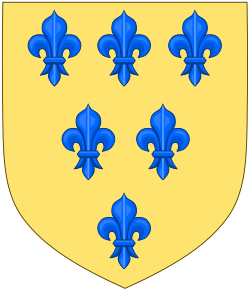
The House of Farnese (/fɑːrˈneɪzi, -zeɪ/, also US: /-eɪsi/, Italian: [farˈneːze, -eːse]) was an influential family in Renaissance Italy. The titles of Duke of Parma and Piacenza, Duke of Latera and Duke of Castro were held by various members of the family.
Its most important members included Pope Paul III, Alessandro Farnese (a cardinal), Alexander Farnese, Duke of Parma and Piacenza (a military commander and Governor of the Spanish Netherlands), and Elisabeth Farnese, who became Queen of Spain and whose legacy was brought to her Bourbon descendants.
A number of important architectural works and antiquities are associated with the Farnese family, either through construction or acquisition. Buildings include the Palazzo Farnese in Rome and the Villa Farnese at Caprarola, and ancient artifacts include the Farnese Marbles.
The family could trace its origins back to around AD 984 and took its name from one of its oldest feudal possessions - Castrum Farneti. There has been some debate as to the origins of the name Farnesi/Farnese. Some suggest that it derives from the vernacular name for an oak found in the region, the Farnia (Quercus robur), but others believe that the name owes its origins to the Fara, a term of Lombard origin used to denote a particular social group.
In the 12th century, they are recorded as minor feudatories in the areas of Tuscania and Orvieto, several members holding political positions in the latter commune. One Pietro defeated the Tuscan Ghibellines in 1110 and, most likely, fought against the Italo-Normans in 1134. His son Prudenzio was consul in Orvieto and defeated the Orvieto Ghibellines backed by Siena; another Pietro defended the town against Emperor Henry VI. In 1254, one Ranuccio defeated Todi's troops and fought for Pope Urban IV against Manfred of Sicily. His son Niccolò was in the Guelph army in the Battle of Benevento (1266).
The Farnese returned to Tuscia (southern Tuscany-northern Lazio) in 1319, when they acquired Farnese, Ischia di Castro, and the castles of Sala and San Savino. In 1354, Cardinal Albornoz, in return for the family's help in the war against the Papal riotous barons, gave them the territory of Valentano. In this period they fought against the fierce Papal rivals, the Prefetti di Vico.
In 1362, Pietro Farnese was commander-in-chief of the Florentine army against Pisa in the war for Volterra. Six years later Niccolò Farnese saved Pope Urban V from the attack of Giovanni di Vico, first in the castle of Viterbo and then in that of Montefiascone. The loyalty to the Papal cause meant that the Farnese were granted confirmation of their possessions in the northern Lazio and given a series of privileges which raised them to the same level as more ancient and powerful Roman barons of the time, such as the Savelli, Orsini, Monaldeschi and Sforza of Santa Fiora.
The family substantially increased its power in the course of the 15th century, as their territories reached the southern shore of the Lake Bolsena and Montalto, largely due to Ranuccio the Elder. He was commander-in-chief of the forces of neighbouring Siena against the Orsini of Pitigliano and, after his victory, received the title of Senator of Rome. His son, Gabriele Francesco, also took up a military career, a line of employment which disappeared after three generations.
House of Farnese
The House of Farnese (/fɑːrˈneɪzi, -zeɪ/, also US: /-eɪsi/, Italian: [farˈneːze, -eːse]) was an influential family in Renaissance Italy. The titles of Duke of Parma and Piacenza, Duke of Latera and Duke of Castro were held by various members of the family.
Its most important members included Pope Paul III, Alessandro Farnese (a cardinal), Alexander Farnese, Duke of Parma and Piacenza (a military commander and Governor of the Spanish Netherlands), and Elisabeth Farnese, who became Queen of Spain and whose legacy was brought to her Bourbon descendants.
A number of important architectural works and antiquities are associated with the Farnese family, either through construction or acquisition. Buildings include the Palazzo Farnese in Rome and the Villa Farnese at Caprarola, and ancient artifacts include the Farnese Marbles.
The family could trace its origins back to around AD 984 and took its name from one of its oldest feudal possessions - Castrum Farneti. There has been some debate as to the origins of the name Farnesi/Farnese. Some suggest that it derives from the vernacular name for an oak found in the region, the Farnia (Quercus robur), but others believe that the name owes its origins to the Fara, a term of Lombard origin used to denote a particular social group.
In the 12th century, they are recorded as minor feudatories in the areas of Tuscania and Orvieto, several members holding political positions in the latter commune. One Pietro defeated the Tuscan Ghibellines in 1110 and, most likely, fought against the Italo-Normans in 1134. His son Prudenzio was consul in Orvieto and defeated the Orvieto Ghibellines backed by Siena; another Pietro defended the town against Emperor Henry VI. In 1254, one Ranuccio defeated Todi's troops and fought for Pope Urban IV against Manfred of Sicily. His son Niccolò was in the Guelph army in the Battle of Benevento (1266).
The Farnese returned to Tuscia (southern Tuscany-northern Lazio) in 1319, when they acquired Farnese, Ischia di Castro, and the castles of Sala and San Savino. In 1354, Cardinal Albornoz, in return for the family's help in the war against the Papal riotous barons, gave them the territory of Valentano. In this period they fought against the fierce Papal rivals, the Prefetti di Vico.
In 1362, Pietro Farnese was commander-in-chief of the Florentine army against Pisa in the war for Volterra. Six years later Niccolò Farnese saved Pope Urban V from the attack of Giovanni di Vico, first in the castle of Viterbo and then in that of Montefiascone. The loyalty to the Papal cause meant that the Farnese were granted confirmation of their possessions in the northern Lazio and given a series of privileges which raised them to the same level as more ancient and powerful Roman barons of the time, such as the Savelli, Orsini, Monaldeschi and Sforza of Santa Fiora.
The family substantially increased its power in the course of the 15th century, as their territories reached the southern shore of the Lake Bolsena and Montalto, largely due to Ranuccio the Elder. He was commander-in-chief of the forces of neighbouring Siena against the Orsini of Pitigliano and, after his victory, received the title of Senator of Rome. His son, Gabriele Francesco, also took up a military career, a line of employment which disappeared after three generations.
Recent media
Recent media