



Community hub
Recent from talks
Knowledge base stats:
Talk channels stats:
Members stats:
February 28 incident
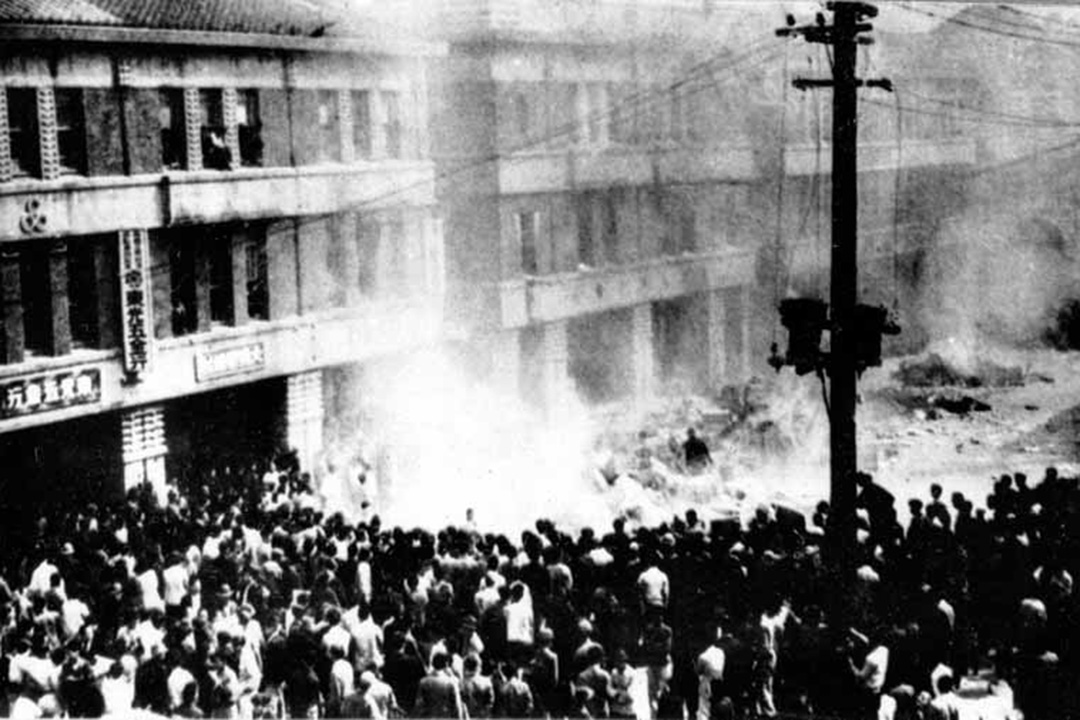
The February 28 incident (also called the February 28 massacre, the 228 incident, or the 228 massacre) was an anti-government uprising in Taiwan in 1947 that was violently suppressed by the Kuomintang–led Nationalist government of the Republic of China (ROC). Directed by provincial governor Chen Yi and president Chiang Kai-shek, thousands of civilians were killed beginning on February 28. The incident is considered to be one of the most important events in Taiwan's modern history and was a critical impetus for the Taiwan independence movement.
In 1945, following the surrender of Japan at the end of World War II, the Allies handed administrative control of Taiwan over to China, thus ending 50 years of Japanese colonial rule. Local residents became resentful of what they saw as high-handed and frequently corrupt conduct on the part of the Kuomintang (KMT) authorities, including the arbitrary seizure of private property, economic mismanagement, and exclusion from political participation. The flashpoint came on February 27, 1947, in Taipei, when agents of the State Monopoly Bureau struck a Taiwanese widow suspected of selling contraband cigarettes. An officer then fired into a crowd of angry bystanders, hitting one man, who died the next day. Soldiers fired upon demonstrators the next day, after which a radio station was seized by protesters and news of the revolt was broadcast to the entire island. As the uprising spread, the KMT-installed governor Chen Yi called for military reinforcements, and the uprising was violently put down by the National Revolutionary Army. Two years later, and for 38 years thereafter, the island would be placed under martial law in a period known as the "White Terror".
During the White Terror, the KMT persecuted perceived political dissidents, and the incident was considered too taboo to be discussed. President Lee Teng-hui became the first president to discuss the incident publicly on its anniversary in 1995. The event is now openly discussed, and its details have become the subject of government and academic investigation. February 28 is now an official public holiday called Peace Memorial Day, on which the president of Taiwan gathers with other officials to ring a commemorative bell in memory of the victims. Monuments and memorial parks to the victims of the February 28 incident have been erected in a number of Taiwanese cities. In particular, Taipei's former Taipei New Park was renamed 228 Peace Memorial Park, and the National 228 Memorial Museum was opened on February 28, 1997. The Kaohsiung Museum of History also has a permanent exhibit detailing the events of the incident in Kaohsiung. In 2019, the Transitional Justice Commission exonerated those who were convicted in the aftermath.
The number of deaths from the incident and massacre was estimated to be between 18,000 and 28,000. Other estimates are much lower. A government commission was set up under the administration of the pro-Taiwan independence president, Lee Teng-hui, to determine the facts. Using the civil registry set up during the Japanese administration, which was acknowledged by all as very efficient, they determined who was living at the time of the handover to the Chinese administration. The commission was given the power to award to the family of anyone who died in the period of the insurrection and the restoration of Nationalist government rule an amount of NT$6,000,000, about US$150,000. The families did not have to prove that the death was related to the above events. A total of 800 people came forward to get the awards for the people who died during the period.
During the 50 years of Japanese rule in Taiwan (1895–1945), Taiwan experienced economic development and an increased standard of living, serving as a supply base for the Japanese main islands. After World War II, Taiwan was placed under the administrative control of the Republic of China to provide stability until a permanent arrangement could be made. Chen Yi, the governor-general of Taiwan, arrived on October 24, 1945, and received the last Japanese governor, Ando Rikichi, who signed the document of surrender on the next day. Chen Yi then proclaimed the day as Retrocession Day to make Taiwan part of the Republic of China.
Taiwanese perceptions of Japanese rule were more positive than perceptions in other parts of East and Southeast Asia that came under Japanese imperialism. Despite this, the Kuomintang troops from Mainland China were initially welcomed by the Taiwanese. Their harsh conduct and the corrupt KMT administration quickly led to Taiwanese discontent during the immediate postwar period. As governor-general, Chen Yi took over and sustained the Japanese system of state monopolies in tobacco, sugar, camphor, tea, paper, chemicals, petroleum refining, mining, and cement, the same way the Nationalists treated people in other former Japanese-controlled areas (earning Chen Yi the nickname "robber" (劫收)). He confiscated some 500 Japanese-owned factories and mines, as well as the homes of former Japanese residents.
Economic mismanagement led to a large black market, runaway inflation, and food shortages. Many commodities were compulsorily bought cheaply by the KMT administration and shipped to mainland China to meet the Civil War shortages, where they were sold at a very high profit, furthering the general shortage of goods in Taiwan. The price of rice rose to 100 times its original value between the time the Nationalists took over and the spring of 1946, increasing to nearly four times the price in Shanghai. It inflated further to 400 times the original price by January 1947. Carpetbaggers from mainland China dominated nearly all industry, as well as political and judicial offices, displacing the Taiwanese who were formerly employed. Many of the ROC garrison troops were highly undisciplined, looting, stealing, and contributing to the overall breakdown of infrastructure and public services. Because the Taiwanese elites had met with some success with self-government under Japanese rule, they had expected the same system from the incoming ruling Chinese Nationalist Government. However, the Chinese Nationalists opted for a different route, aiming for the centralization of government powers and a reduction in local authority. The KMT's nation-building efforts followed this ideology because of unpleasant experiences with the diverging forces during the Warlord Era in 1916–1928 that had torn the government in China. Mainland Communists were even preparing to bring down the government like the Ili Rebellion. The different goals of the Nationalists and the Taiwanese, coupled with cultural and language misunderstandings, served to further inflame tensions on both sides.[citation needed]
On the evening of February 27, 1947, a Tobacco Monopoly Bureau enforcement team in Taipei went to the district of Taiheichō (太平町), Twatutia (Dadaocheng in Mandarin), where they confiscated contraband cigarettes from a 40-year-old widow named Lin Jiang-mai (林江邁) at the Tianma Tea House. When she demanded their return, one of the men struck her in the head with the butt of his gun, prompting the surrounding Taiwanese crowd to challenge the Tobacco Monopoly agents. As they fled, one agent shot his gun into the crowd, hitting a bystander who died the next day. The crowd, which had already been harbouring feelings of frustration from unemployment, inflation, and corruption towards the Nationalist government, reached its breaking point. The crowd protested to both the police and the gendarmes but was mostly ignored.
Hub AI
February 28 incident AI simulator
(@February 28 incident_simulator)
February 28 incident
The February 28 incident (also called the February 28 massacre, the 228 incident, or the 228 massacre) was an anti-government uprising in Taiwan in 1947 that was violently suppressed by the Kuomintang–led Nationalist government of the Republic of China (ROC). Directed by provincial governor Chen Yi and president Chiang Kai-shek, thousands of civilians were killed beginning on February 28. The incident is considered to be one of the most important events in Taiwan's modern history and was a critical impetus for the Taiwan independence movement.
In 1945, following the surrender of Japan at the end of World War II, the Allies handed administrative control of Taiwan over to China, thus ending 50 years of Japanese colonial rule. Local residents became resentful of what they saw as high-handed and frequently corrupt conduct on the part of the Kuomintang (KMT) authorities, including the arbitrary seizure of private property, economic mismanagement, and exclusion from political participation. The flashpoint came on February 27, 1947, in Taipei, when agents of the State Monopoly Bureau struck a Taiwanese widow suspected of selling contraband cigarettes. An officer then fired into a crowd of angry bystanders, hitting one man, who died the next day. Soldiers fired upon demonstrators the next day, after which a radio station was seized by protesters and news of the revolt was broadcast to the entire island. As the uprising spread, the KMT-installed governor Chen Yi called for military reinforcements, and the uprising was violently put down by the National Revolutionary Army. Two years later, and for 38 years thereafter, the island would be placed under martial law in a period known as the "White Terror".
During the White Terror, the KMT persecuted perceived political dissidents, and the incident was considered too taboo to be discussed. President Lee Teng-hui became the first president to discuss the incident publicly on its anniversary in 1995. The event is now openly discussed, and its details have become the subject of government and academic investigation. February 28 is now an official public holiday called Peace Memorial Day, on which the president of Taiwan gathers with other officials to ring a commemorative bell in memory of the victims. Monuments and memorial parks to the victims of the February 28 incident have been erected in a number of Taiwanese cities. In particular, Taipei's former Taipei New Park was renamed 228 Peace Memorial Park, and the National 228 Memorial Museum was opened on February 28, 1997. The Kaohsiung Museum of History also has a permanent exhibit detailing the events of the incident in Kaohsiung. In 2019, the Transitional Justice Commission exonerated those who were convicted in the aftermath.
The number of deaths from the incident and massacre was estimated to be between 18,000 and 28,000. Other estimates are much lower. A government commission was set up under the administration of the pro-Taiwan independence president, Lee Teng-hui, to determine the facts. Using the civil registry set up during the Japanese administration, which was acknowledged by all as very efficient, they determined who was living at the time of the handover to the Chinese administration. The commission was given the power to award to the family of anyone who died in the period of the insurrection and the restoration of Nationalist government rule an amount of NT$6,000,000, about US$150,000. The families did not have to prove that the death was related to the above events. A total of 800 people came forward to get the awards for the people who died during the period.
During the 50 years of Japanese rule in Taiwan (1895–1945), Taiwan experienced economic development and an increased standard of living, serving as a supply base for the Japanese main islands. After World War II, Taiwan was placed under the administrative control of the Republic of China to provide stability until a permanent arrangement could be made. Chen Yi, the governor-general of Taiwan, arrived on October 24, 1945, and received the last Japanese governor, Ando Rikichi, who signed the document of surrender on the next day. Chen Yi then proclaimed the day as Retrocession Day to make Taiwan part of the Republic of China.
Taiwanese perceptions of Japanese rule were more positive than perceptions in other parts of East and Southeast Asia that came under Japanese imperialism. Despite this, the Kuomintang troops from Mainland China were initially welcomed by the Taiwanese. Their harsh conduct and the corrupt KMT administration quickly led to Taiwanese discontent during the immediate postwar period. As governor-general, Chen Yi took over and sustained the Japanese system of state monopolies in tobacco, sugar, camphor, tea, paper, chemicals, petroleum refining, mining, and cement, the same way the Nationalists treated people in other former Japanese-controlled areas (earning Chen Yi the nickname "robber" (劫收)). He confiscated some 500 Japanese-owned factories and mines, as well as the homes of former Japanese residents.
Economic mismanagement led to a large black market, runaway inflation, and food shortages. Many commodities were compulsorily bought cheaply by the KMT administration and shipped to mainland China to meet the Civil War shortages, where they were sold at a very high profit, furthering the general shortage of goods in Taiwan. The price of rice rose to 100 times its original value between the time the Nationalists took over and the spring of 1946, increasing to nearly four times the price in Shanghai. It inflated further to 400 times the original price by January 1947. Carpetbaggers from mainland China dominated nearly all industry, as well as political and judicial offices, displacing the Taiwanese who were formerly employed. Many of the ROC garrison troops were highly undisciplined, looting, stealing, and contributing to the overall breakdown of infrastructure and public services. Because the Taiwanese elites had met with some success with self-government under Japanese rule, they had expected the same system from the incoming ruling Chinese Nationalist Government. However, the Chinese Nationalists opted for a different route, aiming for the centralization of government powers and a reduction in local authority. The KMT's nation-building efforts followed this ideology because of unpleasant experiences with the diverging forces during the Warlord Era in 1916–1928 that had torn the government in China. Mainland Communists were even preparing to bring down the government like the Ili Rebellion. The different goals of the Nationalists and the Taiwanese, coupled with cultural and language misunderstandings, served to further inflame tensions on both sides.[citation needed]
On the evening of February 27, 1947, a Tobacco Monopoly Bureau enforcement team in Taipei went to the district of Taiheichō (太平町), Twatutia (Dadaocheng in Mandarin), where they confiscated contraband cigarettes from a 40-year-old widow named Lin Jiang-mai (林江邁) at the Tianma Tea House. When she demanded their return, one of the men struck her in the head with the butt of his gun, prompting the surrounding Taiwanese crowd to challenge the Tobacco Monopoly agents. As they fled, one agent shot his gun into the crowd, hitting a bystander who died the next day. The crowd, which had already been harbouring feelings of frustration from unemployment, inflation, and corruption towards the Nationalist government, reached its breaking point. The crowd protested to both the police and the gendarmes but was mostly ignored.