



Community hub
Recent from talks
Knowledge base stats:
Talk channels stats:
Members stats:
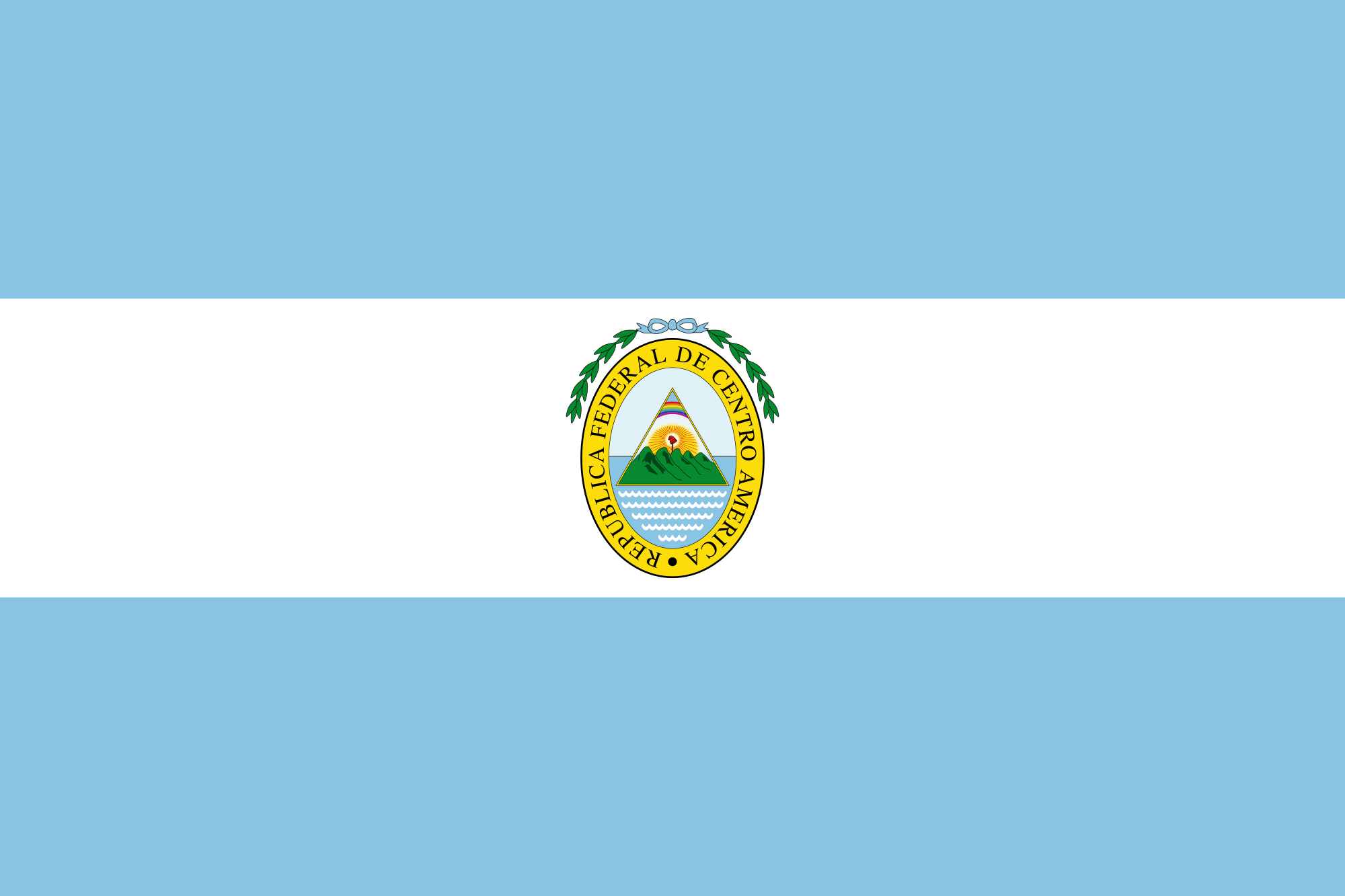
Federal Republic of Central America
The Federal Republic of Central America (Spanish: República Federal de Centro América), initially known as the United Provinces of Central America (Provincias Unidas del Centro de América), was a sovereign state in Central America that existed between 1823 and 1839/1841. The republic was composed of five states (Costa Rica, El Salvador, Guatemala, Honduras, and Nicaragua), and a Federal District from 1835 to 1839. Guatemala City was its capital city until 1834, when the seat of government was relocated to San Salvador. The Federal Republic of Central America was bordered on the north by Mexico, on the south by Gran Colombia and on the east by the Kingdom of Mosquitia and British Honduras, both claimed by the federal republic.
After Central America (then the Captaincy General of Guatemala) declared its independence from the Spanish Empire in September 1821, it was annexed by the First Mexican Empire in January 1822 before regaining its independence and forming a federal republic in 1823. The Federal Republic of Central America adopted its constitution, based on that of the federal government of the United States, in November 1824. It held its first presidential election in April 1825, during which liberal politician Manuel José Arce was elected as the country's first president. Arce subsequently aligned himself with the country's conservatives due to liberal opposition to the concessions he granted conservatives to secure his election as president. The republic was politically unstable, experiencing civil wars, rebellions, and insurrections by liberals and conservatives. From 1827 to 1829, it fell into a civil war between conservatives who supported Arce and liberals who opposed him. Liberal politician Francisco Morazán led the liberals to victory, and was elected president in 1830. The republic descended into a second civil war from 1838 to 1840, by the end of which the states of Central America declared independence and the federal republic ceased to exist.
Historians have attributed the country's political instability to its federal system of government and its economic struggles. Agricultural exports were insufficient and the federal government was unable to repay its foreign loans, despite favorable terms. Central America's economic troubles were caused in part by the federal government's inability to collect taxes and inadequate interstate infrastructure.
Central American politicians, writers, and intellectuals have called for the reunification of Central America since the dissolution of the Federal Republic of Central America. There have been several attempts by the republic's successor states during the 19th and 20th centuries to reunify Central America through diplomatic and military means, but none succeeded in uniting all five former members for more than one year. All five former members of the Federal Republic of Central America are members of the Central American Integration System (SICA), an economic and political organization that promotes regional development.
The country's initial name, adopted at independence from the First Mexican Empire on 1 July 1823, was the United Provinces of Central America (Spanish: Provincias Unidas del Centro de América). Upon the adoption of the country's constitution on 22 November 1824, the United Provinces of Central America changed its name to the Federal Republic of Central America (República Federal de Centro América). In the years shortly after independence, some official government documents referred to the country as the Federated States of Central America (Estados Federados del Centro de América). The federal republic has also been referred to as the Federation of Central America (Federación de Centro América).
The Spanish conquered Central America in the 16th century. The region was divided into several audiencias (jurisdictions) until, in 1542, it was organized into a single audiencia extending north to the Isthmus of Tehuantepec and south to the Isthmus of Panama. Spain transferred control of the Yucatán Peninsula to New Spain (modern-day Mexico) in 1560, and transferred control of Panama to Peru seven years later. In 1568, the Central American audiencia was reorganized as the Captaincy General of Guatemala. The captaincy was subdivided into corregimientos, gobiernos, greater mayorships, and intendancies.
Central America had a caste system, with Spaniards at the top, mixed-race individuals in the middle, and Africans and indigenous Central Americans at the bottom. Spaniards owned most of the region's land and wealth, and indigenous people composed most of its labor force. The Catholic Church dominated all aspects of Central American society during Spanish colonial rule. Although the region's indigenous inhabitants were gradually forced by colonial officials to convert to Catholicism, they retained many of their cultural traditions.
The Spanish king Ferdinand VII was overthrown in 1808 by the French emperor Napoleon, who installed his brother Joseph as king of Spain. Spain's colonies in the Americas (including the Captaincy General of Guatemala) did not recognize Joseph as the legitimate king and established provisional governments, known as juntas, which continued to recognize Ferdinand as king. Although the Central American colonial government remained loyal to Ferdinand, some criollo leaders in Central America wanted greater autonomy. In November 1811, José Matías Delgado and Manuel José Arce launched a rebellion in San Salvador against Spanish rule which was defeated by loyalist forces. Additional independence rebellions occurred in December 1811 in Nicaragua; in 1813 in Guatemala; and in 1814 in San Salvador. All were defeated by loyalist forces, but pro-independence sentiment spread among Central American leaders.
Hub AI
Federal Republic of Central America AI simulator
(@Federal Republic of Central America_simulator)
Federal Republic of Central America
The Federal Republic of Central America (Spanish: República Federal de Centro América), initially known as the United Provinces of Central America (Provincias Unidas del Centro de América), was a sovereign state in Central America that existed between 1823 and 1839/1841. The republic was composed of five states (Costa Rica, El Salvador, Guatemala, Honduras, and Nicaragua), and a Federal District from 1835 to 1839. Guatemala City was its capital city until 1834, when the seat of government was relocated to San Salvador. The Federal Republic of Central America was bordered on the north by Mexico, on the south by Gran Colombia and on the east by the Kingdom of Mosquitia and British Honduras, both claimed by the federal republic.
After Central America (then the Captaincy General of Guatemala) declared its independence from the Spanish Empire in September 1821, it was annexed by the First Mexican Empire in January 1822 before regaining its independence and forming a federal republic in 1823. The Federal Republic of Central America adopted its constitution, based on that of the federal government of the United States, in November 1824. It held its first presidential election in April 1825, during which liberal politician Manuel José Arce was elected as the country's first president. Arce subsequently aligned himself with the country's conservatives due to liberal opposition to the concessions he granted conservatives to secure his election as president. The republic was politically unstable, experiencing civil wars, rebellions, and insurrections by liberals and conservatives. From 1827 to 1829, it fell into a civil war between conservatives who supported Arce and liberals who opposed him. Liberal politician Francisco Morazán led the liberals to victory, and was elected president in 1830. The republic descended into a second civil war from 1838 to 1840, by the end of which the states of Central America declared independence and the federal republic ceased to exist.
Historians have attributed the country's political instability to its federal system of government and its economic struggles. Agricultural exports were insufficient and the federal government was unable to repay its foreign loans, despite favorable terms. Central America's economic troubles were caused in part by the federal government's inability to collect taxes and inadequate interstate infrastructure.
Central American politicians, writers, and intellectuals have called for the reunification of Central America since the dissolution of the Federal Republic of Central America. There have been several attempts by the republic's successor states during the 19th and 20th centuries to reunify Central America through diplomatic and military means, but none succeeded in uniting all five former members for more than one year. All five former members of the Federal Republic of Central America are members of the Central American Integration System (SICA), an economic and political organization that promotes regional development.
The country's initial name, adopted at independence from the First Mexican Empire on 1 July 1823, was the United Provinces of Central America (Spanish: Provincias Unidas del Centro de América). Upon the adoption of the country's constitution on 22 November 1824, the United Provinces of Central America changed its name to the Federal Republic of Central America (República Federal de Centro América). In the years shortly after independence, some official government documents referred to the country as the Federated States of Central America (Estados Federados del Centro de América). The federal republic has also been referred to as the Federation of Central America (Federación de Centro América).
The Spanish conquered Central America in the 16th century. The region was divided into several audiencias (jurisdictions) until, in 1542, it was organized into a single audiencia extending north to the Isthmus of Tehuantepec and south to the Isthmus of Panama. Spain transferred control of the Yucatán Peninsula to New Spain (modern-day Mexico) in 1560, and transferred control of Panama to Peru seven years later. In 1568, the Central American audiencia was reorganized as the Captaincy General of Guatemala. The captaincy was subdivided into corregimientos, gobiernos, greater mayorships, and intendancies.
Central America had a caste system, with Spaniards at the top, mixed-race individuals in the middle, and Africans and indigenous Central Americans at the bottom. Spaniards owned most of the region's land and wealth, and indigenous people composed most of its labor force. The Catholic Church dominated all aspects of Central American society during Spanish colonial rule. Although the region's indigenous inhabitants were gradually forced by colonial officials to convert to Catholicism, they retained many of their cultural traditions.
The Spanish king Ferdinand VII was overthrown in 1808 by the French emperor Napoleon, who installed his brother Joseph as king of Spain. Spain's colonies in the Americas (including the Captaincy General of Guatemala) did not recognize Joseph as the legitimate king and established provisional governments, known as juntas, which continued to recognize Ferdinand as king. Although the Central American colonial government remained loyal to Ferdinand, some criollo leaders in Central America wanted greater autonomy. In November 1811, José Matías Delgado and Manuel José Arce launched a rebellion in San Salvador against Spanish rule which was defeated by loyalist forces. Additional independence rebellions occurred in December 1811 in Nicaragua; in 1813 in Guatemala; and in 1814 in San Salvador. All were defeated by loyalist forces, but pro-independence sentiment spread among Central American leaders.