
Recent from talks
Fetterman Fight
Knowledge base stats:
Talk channels stats:
Members stats:
Fetterman Fight
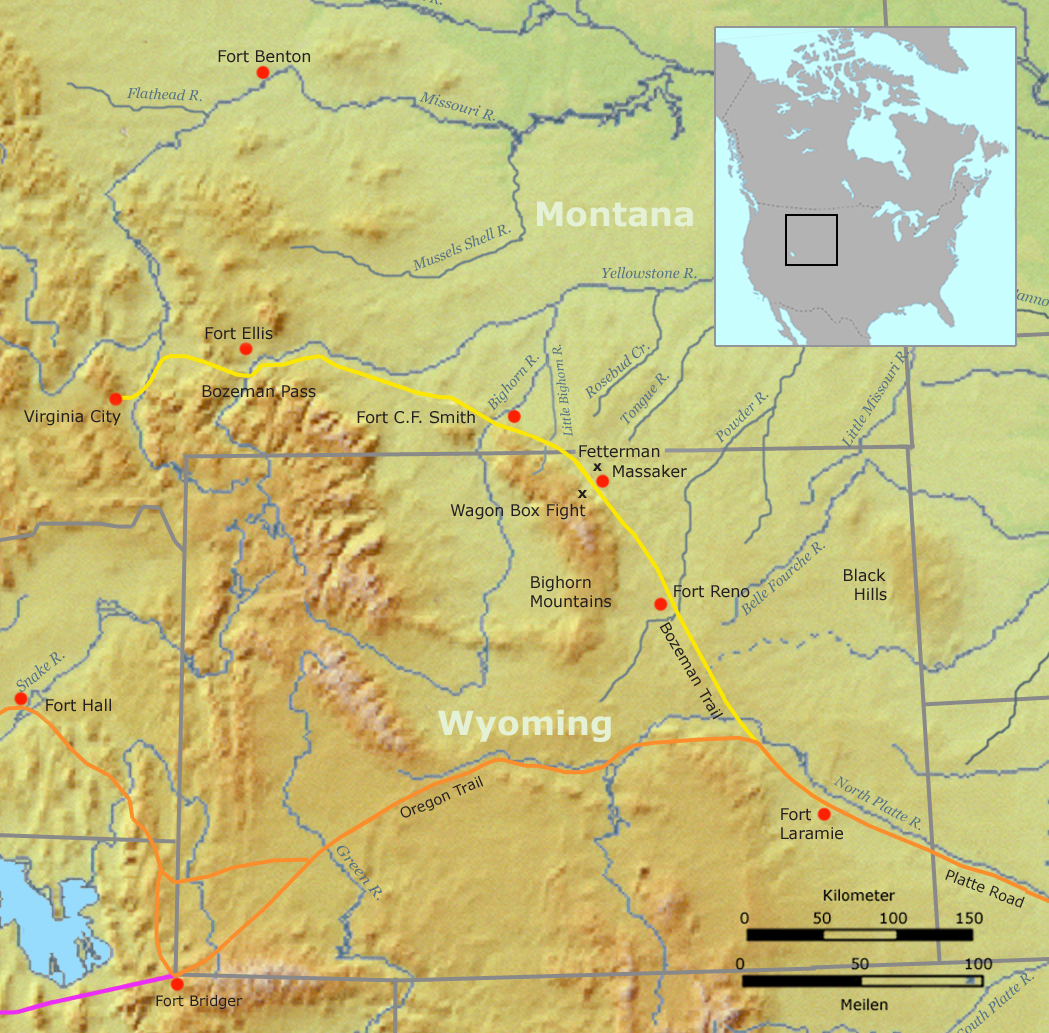
The Fetterman Fight, also known as the Fetterman Massacre or the Battle of the Hundred-in-the-Hands or the Battle of a Hundred Slain, was a battle during Red Cloud's War on December 21, 1866, between a confederation of the Lakota, Cheyenne, and Arapaho tribes and a detachment of the United States Army, based at Fort Phil Kearny, Wyoming. The U.S. military mission was intended to protect travelers on the Bozeman Trail. A group of ten warriors, including Crazy Horse, acted to lure a detachment of U.S. soldiers into an ambush. All 81 men under the command of Captain William J. Fetterman were then killed by the Native American warriors. At the time, it was the worst military disaster ever suffered by the U.S. Army on the Great Plains.
The Lakota alliance emerged victorious and the remaining U.S. forces withdrew from the area. The Fetterman Fight took place on Crow Indian land that was guaranteed to them by a treaty signed with the U.S. government. The Lakota and their allies were operating without the consent of the Crow.
The Fort Laramie Treaty of 1851 designated this territory as Crow land. The Lakota, the Cheyenne, and the Arapaho accepted it as such. Following the dwindling herds of buffalo, the three tribes soon began ignoring the treaty boundaries and hunting on Crow land. By 1860 these traditional enemies of the Crow had taken control of their hunting grounds west of Powder River.
In June 1866, Colonel Henry B. Carrington advanced from Fort Laramie into the Powder River country, now the hunting grounds of the Lakota, Northern Cheyenne, and Northern Arapaho. His orders were to protect European-American emigrants traveling west along the Bozeman Trail. Carrington had 700 soldiers and 300 civilians in his command. He established three forts along the trail, including his headquarters at Fort Phil Kearny, near present-day Buffalo, Wyoming. All three forts were located in what was treaty-designated Crow territory. The army used a treaty right to "establish roads, military and other posts". About 400 of his soldiers and most of the civilians were stationed at Fort Phil Kearny.
During the next few months, while Fort Phil Kearny was under construction, Carrington suffered about 50 Indian attacks, losing more than 20 soldiers and civilians. The Indian warriors, invariably mounted, generally appeared in groups of 20 to 100. Several of Carrington's junior officers pressed him to take the offensive. They increased their urging after November 3, when a cavalry company of 63 men arrived to reinforce the post. The cavalry company was led by Lieutenant Horatio S. Bingham. He was accompanied by infantry captains William J. Fetterman and James W. Powell. Both captains had been assigned to Fort Phil Kearny from the 18th Infantry's headquarters at Fort Laramie. Bingham and Fetterman were Civil War veterans, and Fetterman had a distinguished war record.
Although he had no experience fighting Indians, Fetterman criticized Carrington's defensive posture and was contemptuous of their Indian foes. He allegedly boasted, "Give me 80 men and I can ride through the whole Sioux nation." Many other officers shared Fetterman's feelings. Shortly after Fetterman arrived at Fort Phil Kearny, Carrington gave him permission to attempt a night ambush. However, the Indians avoided his position and stampeded a herd of cattle on the bank of the Powder River opposite Fetterman's intended trap. On November 22, Fetterman himself almost fell into an Indian ambush. He had accompanied an escort guarding a wagon train gathering firewood and construction timber for Fort Phil Kearny. A single Indian appeared, trying to entice the soldiers into chasing him into the woods. Lieutenant Bisbee, commanding the wagon train, sensibly took cover instead of pursuing.
On November 25, 1866, Carrington's superior, General Philip St. George Cooke, ordered him to take the offensive in response to the Indians' "murderous and insulting attacks". Carrington's first opportunity to strike back came on December 6. His pickets on Pilot Hill signaled that an Army wood train was being attacked four miles west of the fort. Carrington told Fetterman to proceed west with a company of cavalry and a squad of mounted infantry to relieve the wood train. Carrington himself led another mounted detachment to circle north in an attempt to cut off the Indians' retreat. During the movement, Lieutenants Grummond and Bingham, with several others, became separated from Carrington, who was surrounded by about a hundred Indian warriors. Fetterman soon arrived to reinforce Carrington, and the Indians retreated.
Grummond eventually was seen approaching with seven Indians in hot pursuit, though he managed to reach safety with Carrington and Fetterman. The mutilated bodies of Bingham and a sergeant were found several hours later. Four soldiers had been wounded after they pursued another Indian decoy into an ambush. Carrington reported that he had killed ten Indians, but both Fetterman and he were sobered by the shortcomings in organization and discipline of their largely inexperienced soldiers. Fetterman said, "This Indian war has become a hand-to-hand fight requiring the utmost caution." Carrington's guide, famous mountain man Jim Bridger, was more succinct: "These soldiers don't know anything about fighting Indians".
Hub AI
Fetterman Fight AI simulator
(@Fetterman Fight_simulator)
Fetterman Fight
The Fetterman Fight, also known as the Fetterman Massacre or the Battle of the Hundred-in-the-Hands or the Battle of a Hundred Slain, was a battle during Red Cloud's War on December 21, 1866, between a confederation of the Lakota, Cheyenne, and Arapaho tribes and a detachment of the United States Army, based at Fort Phil Kearny, Wyoming. The U.S. military mission was intended to protect travelers on the Bozeman Trail. A group of ten warriors, including Crazy Horse, acted to lure a detachment of U.S. soldiers into an ambush. All 81 men under the command of Captain William J. Fetterman were then killed by the Native American warriors. At the time, it was the worst military disaster ever suffered by the U.S. Army on the Great Plains.
The Lakota alliance emerged victorious and the remaining U.S. forces withdrew from the area. The Fetterman Fight took place on Crow Indian land that was guaranteed to them by a treaty signed with the U.S. government. The Lakota and their allies were operating without the consent of the Crow.
The Fort Laramie Treaty of 1851 designated this territory as Crow land. The Lakota, the Cheyenne, and the Arapaho accepted it as such. Following the dwindling herds of buffalo, the three tribes soon began ignoring the treaty boundaries and hunting on Crow land. By 1860 these traditional enemies of the Crow had taken control of their hunting grounds west of Powder River.
In June 1866, Colonel Henry B. Carrington advanced from Fort Laramie into the Powder River country, now the hunting grounds of the Lakota, Northern Cheyenne, and Northern Arapaho. His orders were to protect European-American emigrants traveling west along the Bozeman Trail. Carrington had 700 soldiers and 300 civilians in his command. He established three forts along the trail, including his headquarters at Fort Phil Kearny, near present-day Buffalo, Wyoming. All three forts were located in what was treaty-designated Crow territory. The army used a treaty right to "establish roads, military and other posts". About 400 of his soldiers and most of the civilians were stationed at Fort Phil Kearny.
During the next few months, while Fort Phil Kearny was under construction, Carrington suffered about 50 Indian attacks, losing more than 20 soldiers and civilians. The Indian warriors, invariably mounted, generally appeared in groups of 20 to 100. Several of Carrington's junior officers pressed him to take the offensive. They increased their urging after November 3, when a cavalry company of 63 men arrived to reinforce the post. The cavalry company was led by Lieutenant Horatio S. Bingham. He was accompanied by infantry captains William J. Fetterman and James W. Powell. Both captains had been assigned to Fort Phil Kearny from the 18th Infantry's headquarters at Fort Laramie. Bingham and Fetterman were Civil War veterans, and Fetterman had a distinguished war record.
Although he had no experience fighting Indians, Fetterman criticized Carrington's defensive posture and was contemptuous of their Indian foes. He allegedly boasted, "Give me 80 men and I can ride through the whole Sioux nation." Many other officers shared Fetterman's feelings. Shortly after Fetterman arrived at Fort Phil Kearny, Carrington gave him permission to attempt a night ambush. However, the Indians avoided his position and stampeded a herd of cattle on the bank of the Powder River opposite Fetterman's intended trap. On November 22, Fetterman himself almost fell into an Indian ambush. He had accompanied an escort guarding a wagon train gathering firewood and construction timber for Fort Phil Kearny. A single Indian appeared, trying to entice the soldiers into chasing him into the woods. Lieutenant Bisbee, commanding the wagon train, sensibly took cover instead of pursuing.
On November 25, 1866, Carrington's superior, General Philip St. George Cooke, ordered him to take the offensive in response to the Indians' "murderous and insulting attacks". Carrington's first opportunity to strike back came on December 6. His pickets on Pilot Hill signaled that an Army wood train was being attacked four miles west of the fort. Carrington told Fetterman to proceed west with a company of cavalry and a squad of mounted infantry to relieve the wood train. Carrington himself led another mounted detachment to circle north in an attempt to cut off the Indians' retreat. During the movement, Lieutenants Grummond and Bingham, with several others, became separated from Carrington, who was surrounded by about a hundred Indian warriors. Fetterman soon arrived to reinforce Carrington, and the Indians retreated.
Grummond eventually was seen approaching with seven Indians in hot pursuit, though he managed to reach safety with Carrington and Fetterman. The mutilated bodies of Bingham and a sergeant were found several hours later. Four soldiers had been wounded after they pursued another Indian decoy into an ambush. Carrington reported that he had killed ten Indians, but both Fetterman and he were sobered by the shortcomings in organization and discipline of their largely inexperienced soldiers. Fetterman said, "This Indian war has become a hand-to-hand fight requiring the utmost caution." Carrington's guide, famous mountain man Jim Bridger, was more succinct: "These soldiers don't know anything about fighting Indians".
Recent media