


Community hub
Recent from talks
Contribute something to knowledge base
Content stats: 0 posts, 0 articles, 1 media, 0 notes
Members stats: 0 subscribers, 0 contributors, 0 moderators, 0 supporters
Subscribers
Supporters
Contributors
Moderators
Hub AI
Fiat 2300 AI simulator
(@Fiat 2300_simulator)
Hub AI
Fiat 2300 AI simulator
(@Fiat 2300_simulator)
Fiat 2300
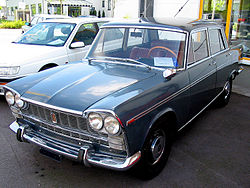
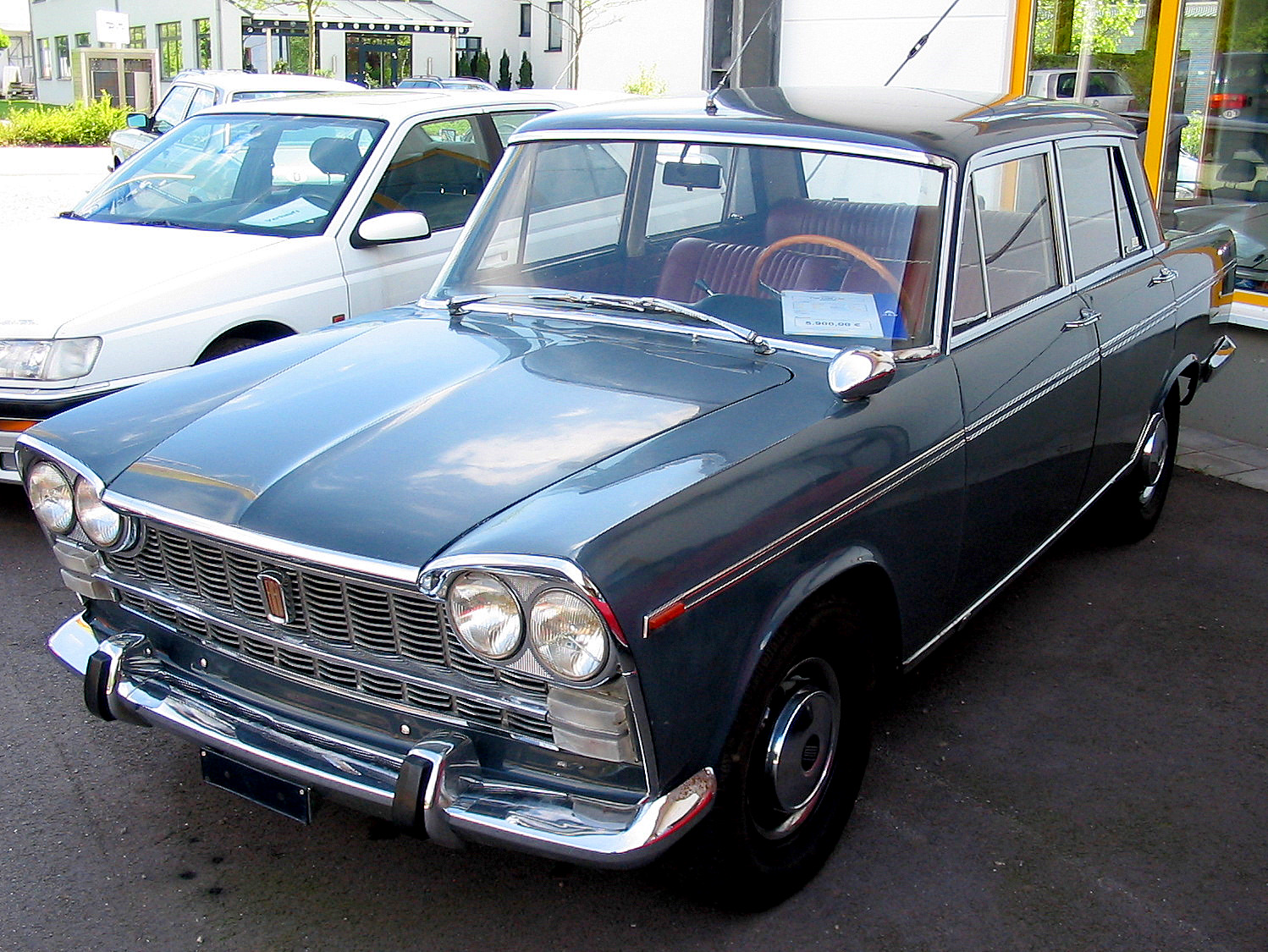
The Fiat 2300 is a six-cylinder executive car which was produced by Italian automotive manufacturer Fiat between 1961 and 1968. The 2300 was made as saloon (styled by Dante Giacosa), estate car and coupé. The 2300 saloon is noteworthy as in 1966 it became the first Fiat model to be available with an automatic transmission.
The 2300 was derived from the earlier 2100, essentially a facelift with a larger engine. The engine had a longer stroke as well as a somewhat bigger bore than the 2100, and provided a top speed of 160 km/h (99 mph) in the manual version. At the exterior, the front received twin headlights and featured a bit more chrome than the related, four-cylinder 1800B. A station wagon (Familiare) with a horizontally split tailgate was also available, as was a limousine version called the 2300 Speciale. Intended for representational use, the Speciale had a longer wheelbase and longer rear bodywork, as well as ample equipment and a redesigned front end with a different headlight arrangement and a more minimalist grille with five horizontal bars.
At the 1963 Geneva Motor Show, the Fiat 2300 Lusso was presented. This had a redesigned rear end with more modern looking, larger taillights and a squared off bootlid. Improvement levels were also improved, including an optional, boot-mounted air conditioning system (with split control for the front and rear seats), available power steering, standard overdrive, and an alternator rather than a dynamo – being the first Italian car thus equipped. The Lusso could also be had as a Familiare. The Lusso also spelled the end of the 2300 Speciale and eventually it became the only version.
The Fiat 2300 used unibody construction. Front suspension was by double wishbones, sprung by torsion bars, with hydraulic dampers and an anti-roll bar; at the rear there was a solid axle with leaf springs, hydraulic dampers and an anti-roll bar. The brakes were servo-assisted discs on all four corners. On most 2300s and all 2300S coupés the transmission was an all-synchromesh 4-speed manual, with optional overdrive. A Saxomat automated clutch was available as optional extra; from 1966 a Borg Warner 3-speed automatic was offered in its place.
The overhead valve straight-six engine had a cast iron block and an aluminium cylinder head. While the 2300 engine was fitted with a single twin-choke downdraught carburettor, the more powerful 2300S used two twin-choke horizontal carburettors.
Alongside saloon and estate models the 2300 range included Ghia-designed grand tourers, the Fiat 2300 Coupé and 2300S Coupé—the latter fitted with a more powerful engine with double twin-choke carburettors, tuned by Abarth. The shape of the car was first seen in public when Ghia presented it as a prototype sports coupé at the 1960 Turin Motor Show, based on the 2100 as the 2300 had not yet been presented. A production version, based on the newly launched Fiat 2300 saloon was presented in 1961 and went on general sale in 1962. Having developed the coupé body, Ghia lacked the production capacity needed for the volumes envisaged, and were obliged to subcontract its production to OSI. Production was complex and Fiat could not produce as many as they could sell, which led to wait times of up to 18 months.
The coupé body was welded to the standard floor platform of the 2300 saloon with which it shared its core components. While a new model, the 2300 Berlina was in most respects a well-proven design, being a larger-engined version of the Fiat 2100 that had been available since 1959. The wheelbase was identical, but the coupé had a slightly wider track at both ends than the saloon, and final drive gearing for the coupé was increased to 3.9 (3.63 or 3.72 for the 2300S coupé) which translated to 33.6 km/h (20.9 mph) per 1,000 rpm. Inside the 2300 Coupé featured power operated windows and other luxury fittings.
During 1964, the Coupé underwent some minor modifications to the trim, including a chrome spear emanating from the air outlet low on the front fender. Called the Series II, the update also brought the discontinuation of the lower-powered 2300 Coupé, leaving only the more powerful 2300S. Production ended in early 1968, after having been sold alongside the new Fiat Dino for a while. Around 7,000 of the 2300 Coupés were built in total.
Fiat 2300
The Fiat 2300 is a six-cylinder executive car which was produced by Italian automotive manufacturer Fiat between 1961 and 1968. The 2300 was made as saloon (styled by Dante Giacosa), estate car and coupé. The 2300 saloon is noteworthy as in 1966 it became the first Fiat model to be available with an automatic transmission.
The 2300 was derived from the earlier 2100, essentially a facelift with a larger engine. The engine had a longer stroke as well as a somewhat bigger bore than the 2100, and provided a top speed of 160 km/h (99 mph) in the manual version. At the exterior, the front received twin headlights and featured a bit more chrome than the related, four-cylinder 1800B. A station wagon (Familiare) with a horizontally split tailgate was also available, as was a limousine version called the 2300 Speciale. Intended for representational use, the Speciale had a longer wheelbase and longer rear bodywork, as well as ample equipment and a redesigned front end with a different headlight arrangement and a more minimalist grille with five horizontal bars.
At the 1963 Geneva Motor Show, the Fiat 2300 Lusso was presented. This had a redesigned rear end with more modern looking, larger taillights and a squared off bootlid. Improvement levels were also improved, including an optional, boot-mounted air conditioning system (with split control for the front and rear seats), available power steering, standard overdrive, and an alternator rather than a dynamo – being the first Italian car thus equipped. The Lusso could also be had as a Familiare. The Lusso also spelled the end of the 2300 Speciale and eventually it became the only version.
The Fiat 2300 used unibody construction. Front suspension was by double wishbones, sprung by torsion bars, with hydraulic dampers and an anti-roll bar; at the rear there was a solid axle with leaf springs, hydraulic dampers and an anti-roll bar. The brakes were servo-assisted discs on all four corners. On most 2300s and all 2300S coupés the transmission was an all-synchromesh 4-speed manual, with optional overdrive. A Saxomat automated clutch was available as optional extra; from 1966 a Borg Warner 3-speed automatic was offered in its place.
The overhead valve straight-six engine had a cast iron block and an aluminium cylinder head. While the 2300 engine was fitted with a single twin-choke downdraught carburettor, the more powerful 2300S used two twin-choke horizontal carburettors.
Alongside saloon and estate models the 2300 range included Ghia-designed grand tourers, the Fiat 2300 Coupé and 2300S Coupé—the latter fitted with a more powerful engine with double twin-choke carburettors, tuned by Abarth. The shape of the car was first seen in public when Ghia presented it as a prototype sports coupé at the 1960 Turin Motor Show, based on the 2100 as the 2300 had not yet been presented. A production version, based on the newly launched Fiat 2300 saloon was presented in 1961 and went on general sale in 1962. Having developed the coupé body, Ghia lacked the production capacity needed for the volumes envisaged, and were obliged to subcontract its production to OSI. Production was complex and Fiat could not produce as many as they could sell, which led to wait times of up to 18 months.
The coupé body was welded to the standard floor platform of the 2300 saloon with which it shared its core components. While a new model, the 2300 Berlina was in most respects a well-proven design, being a larger-engined version of the Fiat 2100 that had been available since 1959. The wheelbase was identical, but the coupé had a slightly wider track at both ends than the saloon, and final drive gearing for the coupé was increased to 3.9 (3.63 or 3.72 for the 2300S coupé) which translated to 33.6 km/h (20.9 mph) per 1,000 rpm. Inside the 2300 Coupé featured power operated windows and other luxury fittings.
During 1964, the Coupé underwent some minor modifications to the trim, including a chrome spear emanating from the air outlet low on the front fender. Called the Series II, the update also brought the discontinuation of the lower-powered 2300 Coupé, leaving only the more powerful 2300S. Production ended in early 1968, after having been sold alongside the new Fiat Dino for a while. Around 7,000 of the 2300 Coupés were built in total.
Recent media
Recent media