Hubbry Logo
Fly on the wallFly on the wallMain
Open search
Fly on the wall
Community hub
Fly on the wall
logo
8 pages, 0 posts
0 subscribers
Be the first to start a discussion here.
Fly on the wall
Fly on the wall
from Wikipedia
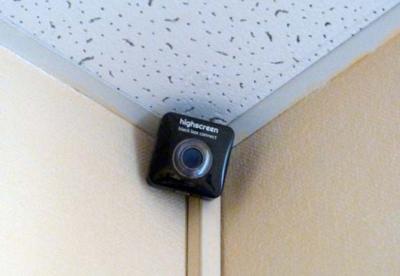
A camera up on a wall recording what is happening in the room

Fly on the wall is a style of documentary-making used in film and television production. The name derived from the idea that events are seen candidly, as a fly on a wall might see them. In the purest form of fly-on-the-wall documentary-making, the camera crew works as unobtrusively as possible; however, it is also common for participants to be interviewed, often by an off-camera voice.[1]

Decades before structured reality shows became popular, the BBC had broadcast fly-on-the-wall film Royal Family (a 1969 documentary produced in association with ITV),[2][3][4] while 1974's The Family, is said to be the earliest example of a reality TV docusoap on the BBC.[5][6][7][8] In 1978 the BBC aired Living in the Past recreating a British Iron Age settlement. In the late 1990s, Chris Terrill's docusoap series The Cruise[9][10][11] made a star of singer[12] and TV personality Jane McDonald,[13][14][15] while Welsh cleaner Maureen Rees[16] became popular after her appearances on BBC One's[17] Driving School.[18]

Other British examples include Airline, Dynamo: Magician Impossible and Channel 4's Educating... series, while in the United States popular examples include American Factory, Cops, Deadliest Catch, Big Brother and Weiner, a film about a political sex scandal which developed during a mayoral election in New York.[19]

See also

[edit]

References

[edit]
Revisions and contributorsEdit on WikipediaRead on Wikipedia
from Grokipedia
A ''fly on the wall'' is an English-language describing a who is able to observe events or situations without being noticed or interfering, much like a fly perched unnoticed on a . The expression often conveys a wish to something discreetly, such as a private conversation. The phrase also names a style of documentary filmmaking, known as observational documentary, , or , in which filmmakers record subjects in natural settings with minimal intrusion, , or staging to capture authentic, unscripted moments as if the camera is an invisible spectator. Emerging in the early through technological advances like lightweight cameras and portable sound equipment, this approach prioritizes ethical non-intervention and long takes to reveal everyday realities, though it raises questions about objectivity due to and subject awareness. The technique has influenced and persists in exploring social, institutional, and personal subjects.

Idiom

Meaning and usage

The "fly on the wall" refers to an unnoticed observer who witnesses events, conversations, or situations without being detected or interfering, evoking the inconspicuous presence of a fly perched silently on a wall. This expression emphasizes passive observation, allowing the individual to gather information or insights as if invisible to those involved. A prevalent phrase incorporating the is "I'd love to be a fly on the wall," which conveys a wish to secretly eavesdrop or view proceedings without participation. Variations such as "fly-on-the-wall perspective" appear in casual speech to describe a detached, impartial viewpoint on unfolding events. In everyday language, the finds application across diverse contexts. For instance, in personal conversations, it might express a desire to observe a heated without taking sides. In professional settings, speakers use it to imagine witnessing confidential boardroom negotiations or colleague interactions. Hypothetical scenarios also employ it, such as pondering what it would be like to be a fly on the wall during pivotal historical moments like political summits. The idiom's usage has evolved notably in , becoming more frequent in 20th-century , , and media to highlight voyeuristic curiosity. Its earliest documented appearance in print dates to a 1921 article in , which quoted: “I'd just love to be a fly on the wall when the Right Man comes along.” This observational concept has briefly influenced related fields, such as documentary filmmaking, where unobtrusive recording mirrors the idiom's essence.

Origin and etymology

The "fly on the wall" derives from the literal image of a common (Musca domestica), an inconspicuous that can perch on walls and observe human activities without drawing attention or interfering. This captures the idea of an unseen , drawing on the fly's natural behavior in domestic settings where it goes unnoticed amid everyday life. While there are no direct ancient precedents for the exact phrase, the concept echoes broader motifs of hidden observers or invisible spies present in various cultural traditions, such as tales of watchful spirits or undetected eavesdroppers. The earliest known printed usage of the in English appears in the on February 20, 1921, in a personal column where the writer states, "I'd just love to be a fly on the wall when the Right Man comes along." This citation marks the phrase's emergence in written form, though it likely circulated in oral traditions among English speakers prior to this date, given the intuitive nature of the imagery. Similar expressions appear in other languages as literal translations rather than independent s; for instance, the French equivalent "mouche sur le mur" is documented in 20th-century bilingual comparisons but does not predate the English version. The phrase originated primarily in , reflecting early 20th-century cultural contexts in the United States, and spread to by the mid-20th century as transatlantic linguistic exchange increased. Linguistically, "fly on the wall" belongs to a category of insect-themed s in English, which often use arthropods to convey subtle disruptions or presences, but it stands apart in emphasizing passive rather than interference. For comparison, the unrelated ""—meaning a minor flaw that ruins something otherwise perfect—traces its roots to Ecclesiastes 10:1 in the , where dead flies are said to cause perfumer's oil to stink and putrefy. Prior to the , no major etymological dictionaries, such as the English Dictionary's early editions, included a formal entry for "fly on the wall," underscoring its relatively recent coinage in the lexicon. This metaphorical adoption later extended to documentary filmmaking in the , where it described unobtrusive .

Documentary genre

History and development

The "fly on the wall" style of documentary filmmaking emerged in the 1960s, drawing inspiration from the longstanding idiom to describe unobtrusive observation of real-life events. The term is often attributed to filmmaker Richard Leacock, a key figure in the movement, who used it to characterize the non-interventionist approach in early works like the 1960 film Primary. This style was closely linked to the French cinéma vérité tradition of the 1950s and 1960s, pioneered by Jean Rouch and Edgar Morin, who emphasized capturing unscripted reality through interactive yet minimal intervention to reveal social truths, as seen in their seminal 1961 collaboration Chronicle of a Summer. Concurrently, the American counterpart, direct cinema, developed in the 1960s under filmmakers like Robert Drew and Leacock, focusing on passive observation without narration or reconstruction to immerse viewers in authentic moments. Technological advancements in the were pivotal to the style's viability, enabling filmmakers to achieve synchronized sound and mobility without disrupting subjects. The introduction of lightweight cameras like the Caméflex in the early allowed small crews to record high-quality 16mm footage with integrated sound, facilitating intimate, handheld shooting that minimized the crew's presence. A landmark example was Robert Drew's documentary Crisis: Behind a Presidential Commitment, which provided unprecedented access to President John F. Kennedy's administration during the integration of the , exemplifying the fly-on-the-wall technique through its candid portrayal of high-stakes political decision-making without directorial commentary. In Britain, the style gained traction in the , adapting observational methods to television formats amid a growing interest in everyday social dynamics. The BBC's 1974 series The , directed by , is widely regarded as the first major fly-on-the-wall in the UK, chronicling the daily life of the working-class Wilkins in Reading over seven episodes and sparking public debate on and representation. This paved the way for broader adoption in the and , with series like Granada Television's (launched in 1963 but evolving to include more observational segments by the ) incorporating unobtrusive filming to expose institutional realities, though it retained an investigative edge. By the 2000s, fly-on-the-wall techniques had permeated global reality television, evolving from pure documentary into hybrid formats that blended observation with structured scenarios for broader entertainment appeal. Shows like MTV's The Real World (debuting in 1992 but peaking in influence during the 2000s) established the fly-on-the-wall aesthetic as a core element of reality TV, using confessional interviews alongside candid footage to drive narrative tension. Into the 2020s, streaming platforms like Netflix have further hybridized the style, as in the 2022 docuseries Harry & Meghan, which combined personal access and archival material with scripted reflections to explore royal family dynamics, reflecting a trend toward accessible, bingeable content that maintains observational intimacy while incorporating dramatic elements.

Characteristics and techniques

The fly-on-the-wall approach in filmmaking is grounded in observational non-intervention, where the filmmaker strives to remain an invisible presence, capturing authentic without the use of , interviews, or staging to allow events to unfold naturally. This principle emphasizes direct observation of real-life interactions, prioritizing the subjects' unmediated experiences over imposed structure or commentary. Technical techniques central to this style include the use of handheld cameras for mobility and spontaneity, often employing lightweight 16mm film in early iterations to enable unobtrusive filming in dynamic environments. Long takes and natural lighting preserve the temporal flow and realism of scenes, while minimal maintains the original sequence of events to avoid artificial reconstruction. Synchronous sound is typically achieved through wireless microphones, enhancing the realism by recording ambient audio directly tied to the visuals without post-synchronization. Stylistically, the approach features handheld shaky footage that conveys immediacy and immersion, coupled with ambient noise that supplants any to immerse viewers in the environment. It focuses on everyday interactions to reveal underlying truths about , with productions often formatted for television at durations of 30 to to suit episodic broadcasting. Variations within the style range from the pure form, where subjects remain unaware of the camera to minimize influence, to the reactive form, in which subjects acknowledge the filming presence but are encouraged to ignore it and proceed naturally. A key challenge is the observer effect, whereby the filmmaker's presence can subtly alter subjects' behavior, potentially compromising the authenticity of the captured moments despite efforts at unobtrusiveness. These methods were innovated in the 1960s by pioneers such as the Maysles brothers, who advanced portable equipment for such non-intrusive observation.

Cultural impact

Notable examples in media

In television, the British series Airline (1998–2007), produced by ITV, exemplified the fly-on-the-wall style by capturing the unscripted daily operations and interpersonal dynamics among staff and passengers at major UK airports, particularly those operated by easyJet, drawing over 12 million viewers at its peak and influencing subsequent workplace reality programming. Similarly, the American MTV series The Osbournes (2002–2005) provided an intimate look at the family life of rock musician Ozzy Osbourne and his relatives, blending humor and chaos to achieve massive popularity, with episodes averaging 4–5 million viewers and pioneering celebrity reality TV formats. The UK Channel 4 Educating... series, beginning with Educating Essex in 2011 and continuing through installments like Educating Yorkshire (2013), adopted the approach to document life in secondary schools, highlighting teacher-student interactions and challenges, which earned acclaim for humanizing educational struggles. In film, the 1969 direct cinema documentary Salesman, directed by Albert and David Maysles and Charlotte Zwerin, followed door-to-door Bible salesmen in the American Midwest, revealing the desperation and ethical ambiguities of their profession through unobtrusive observation, and it remains a seminal work that influenced later cinéma vérité productions. The 1975 documentary Grey Gardens, also by the Maysles brothers, offered a poignant portrait of Edith Bouvier Beale and her daughter "Little Edie," eccentric relatives of Jacqueline Kennedy living in dilapidated conditions in , capturing their quirky routines and strained relationship in a way that sparked cultural fascination and inspired adaptations like a 2006 HBO film and a Broadway musical. The 2004 French miniseries The Staircase, directed by , chronicled novelist Michael Peterson's murder trial in over more than a decade, granting viewers unprecedented access to legal proceedings and family tensions, which earned it two and reshaped true-crime documentary storytelling. Recent streaming examples include Netflix's (2020) delved into the exotic animal trade through the lens of big cat breeder , incorporating fly-on-the-wall elements amid sensational events like rivalries and legal battles, which became a cultural phenomenon during the , topping charts in 90 countries and spawning memes, merchandise, and two follow-up specials. Beyond documentaries, the has appeared in non-documentary media, such as Tony Hillerman's 1971 mystery novel The Fly on the Wall, which follows John Cotton investigating in a state capital, using the phrase to evoke covert observation and earning praise for its taut thriller elements in the tradition of journalistic noir. In podcasting, Fly on the Wall with and , launched in 2021 by the comedy duo, employs the title to frame casual, behind-the-scenes conversations with entertainment industry guests, attracting millions of downloads per episode and blending humor with insider anecdotes from their backgrounds. The fly-on-the-wall approach in filmmaking overlaps with , a style originating in the that emphasizes interactive provocation to uncover social truths, though it differs by incorporating filmmaker intervention rather than passive observation. It also aligns closely with the observational mode outlined in Bill Nichols' 1991 taxonomy of documentary forms, which prioritizes unobtrusive recording of events as a "window on the world" to capture objective reality without narrative imposition or direct address. This mode, exemplified by practices, treats the filmmaker as a neutral observer akin to a "fly on the wall," using handheld cameras and synchronous sound for authenticity. The style further connects to , serving as its foundational influence by normalizing unscripted glimpses into private lives, and to broader , where constant monitoring mirrors the panopticon-like intrusion of cameras into everyday spaces. Theoretically, it draws from anthropological methods like , adapting the ethnographer's immersive yet detached role to visual media, and from in , which posits that unmediated depiction can reveal underlying without artificial constructs. Critics argue that fly-on-the-wall documentaries create an illusion of objectivity, as the observer effect—wherein subjects alter behavior due to camera awareness—undermines claims of unaltered reality. Ethical concerns include privacy invasion, highlighted by the 1974 series The Family, which sparked 1970s backlash for exposing an ordinary household's intimate conflicts, swearing, and sexual discussions, leading to public outrage over the intrusion into personal lives. In commercial formats, the approach risks exploitation, prioritizing dramatic revelations over subject welfare, as filmmakers balance access with potential harm to participants. By 2025, modern debates intensify around in the streaming era, where platforms amplify distribution and raise questions about ongoing participant rights amid viral exposure. Defenders counter that the style democratizes access to hidden truths, fostering public understanding of underrepresented realities, much like social media's voyeuristic appeal invites viewers to peer into others' unfiltered lives.

References

Add your contribution
Related Hubs
User Avatar
No comments yet.