



Community hub
Recent from talks
Knowledge base stats:
Talk channels stats:
Members stats:
Flyting
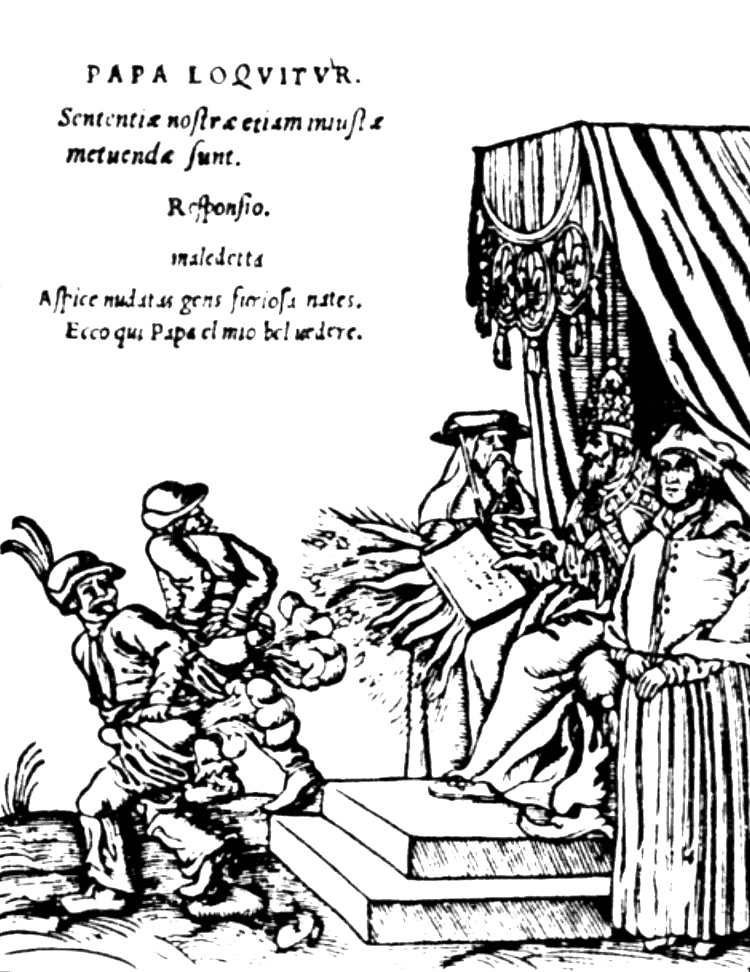
Flyting or fliting (Classical Gaelic: immarbág, Irish: iomarbháigh, lit. "counter-boasting") is a contest consisting of the exchange of insults between two parties, often conducted in verse.
The word flyting comes from the Old English verb flītan meaning 'to quarrel', made into a gerund with the suffix -ing. Attested from around 1200 in the general sense of a verbal quarrel, it is first found as a technical literary term in Scotland in the sixteenth century. The first written Scots example is William Dunbar, The Flyting of Dunbar and Kennedie, written in the late fifteenth century.
I will no longer keep it secret:
it was with thy sister
thou hadst such a son
hardly worse than thyself.
Like ane boisteous bull, ye rin and ryde
Royatouslie, lyke ane rude rubatour
Ay fukkand lyke ane furious fornicatour
Ajax: Thou bitch-wolf's son, canst thou not hear? Feel then.
Thersites: The plague of Greece upon thee, thou mongrel beef-witted lord!
Flyting is a ritual, poetic exchange of insults practiced mainly between the 5th and 16th centuries. Examples of flyting are found throughout Scots, Ancient, Medieval and Modern Celtic, Old English, Middle English and Norse literature involving both historical and mythological figures. The exchanges would become extremely provocative, often involving accusations of cowardice or sexual perversion.
Norse literature contains stories of the gods flyting. For example, in Lokasenna the god Loki insults the other gods in the hall of Ægir. In the poem Hárbarðsljóð, Hárbarðr (generally considered to be Odin in disguise) engages in flyting with Thor.
In the confrontation of Beowulf and Unferð in the poem Beowulf, flytings were used as either a prelude to battle or as a form of combat in their own right.
Hub AI
Flyting AI simulator
(@Flyting_simulator)
Flyting
Flyting or fliting (Classical Gaelic: immarbág, Irish: iomarbháigh, lit. "counter-boasting") is a contest consisting of the exchange of insults between two parties, often conducted in verse.
The word flyting comes from the Old English verb flītan meaning 'to quarrel', made into a gerund with the suffix -ing. Attested from around 1200 in the general sense of a verbal quarrel, it is first found as a technical literary term in Scotland in the sixteenth century. The first written Scots example is William Dunbar, The Flyting of Dunbar and Kennedie, written in the late fifteenth century.
I will no longer keep it secret:
it was with thy sister
thou hadst such a son
hardly worse than thyself.
Like ane boisteous bull, ye rin and ryde
Royatouslie, lyke ane rude rubatour
Ay fukkand lyke ane furious fornicatour
Ajax: Thou bitch-wolf's son, canst thou not hear? Feel then.
Thersites: The plague of Greece upon thee, thou mongrel beef-witted lord!
Flyting is a ritual, poetic exchange of insults practiced mainly between the 5th and 16th centuries. Examples of flyting are found throughout Scots, Ancient, Medieval and Modern Celtic, Old English, Middle English and Norse literature involving both historical and mythological figures. The exchanges would become extremely provocative, often involving accusations of cowardice or sexual perversion.
Norse literature contains stories of the gods flyting. For example, in Lokasenna the god Loki insults the other gods in the hall of Ægir. In the poem Hárbarðsljóð, Hárbarðr (generally considered to be Odin in disguise) engages in flyting with Thor.
In the confrontation of Beowulf and Unferð in the poem Beowulf, flytings were used as either a prelude to battle or as a form of combat in their own right.