



Community hub
Recent from talks
Knowledge base stats:
Talk channels stats:
Members stats:
Force H
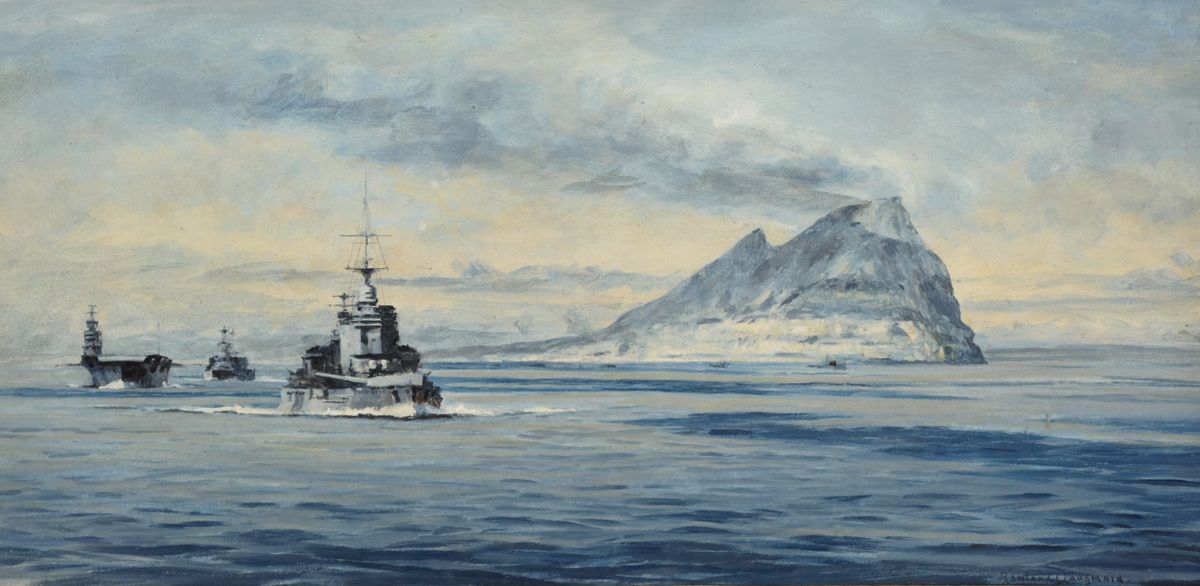
Force H was a British naval formation during the Second World War. It was formed in late-June 1940, to replace French naval power in the western Mediterranean removed by the French armistice with Nazi Germany. The force occupied an odd place within the naval chain of command. Normal British practice was to have naval stations and fleets around the world, whose commanders reported to the First Sea Lord via a flag officer. Force H was based at Gibraltar but there was already a flag officer at the base, Flag Officer Commanding, North Atlantic. The commanding officer of Force H did not report to this Flag Officer but directly to the First Sea Lord, Admiral of the Fleet Sir Dudley Pound.
In anticipation of the outbreak of World War 2 on 3 September 1939 the German Kriegsmarine had already deployed the two heavy cruisers Admiral Graf Spee and Deutschland as commerce raiders in the North and South Atlantic. When these ships started operating against British and French ships in October 1939, the British and French navy responded by forming eight hunting groups, named Force F, G, H, I and Force K, L, M and N. These forces were composed of cruisers, fast battlecruisers and airplane carriers. Force H was stationed in Cape of Good Hope and was composed of the British heavy cruisers Sussex and Shropshire. By December 1939 Deutschland had returned to German port and the Admiral Graf Spee was found by Force G, damaged in the Battle of the River Plate and subsequently scuttled at Montevideo. With the threat of German raiders gone, the hunting groups were disbanded and Force H ceased to exist.
The surrender of France created a void in the Western Mediterranean. On 27 June Vice admiral James Somerville was appointed as commander of Force H stationed In Gibraltar. It was an independend command directly responsible to the Admiralty in London. The first operation that Force H took part in was connected with the reason for its formation. French naval power still existed in the Mediterranean, and the British Government viewed it as a threat to British interests. It was feared that the Vichy government of Philippe Pétain would hand the ships over to Germany, despite a vow that that would never happen. This would almost certainly tip the balance decisively against Britain in the Mediterranean. Consequently, Force H was ordered to execute Operation Catapult.
The most powerful of the remaining French forces was in port at Mers-el-Kébir in Algeria. It consisted of the French battleships Strasbourg, Dunkerque, Bretagne and Provence, and six destroyers. Force H steamed to off the Algerian coast, and an envoy was sent to the French commander. Various terms were offered, including internment of the fleet in a neutral country, joining the British forces, or scuttling the fleet at its berths. However, the commander of the French forces reported only the scuttling option to his superiors, and was consequently ordered to fight the British. The reasons for the omission have been debated by many. It is often thought that the anti-British bias of the French commander was to blame.[citation needed] The result of the action was that Dunkerque and Provence were damaged and put out of action, Bretagne was destroyed with heavy loss of life, but Strasbourg and four destroyers could escape to Toulon, a French base on the Mediterranean coast of metropolitan France.
After this unpleasant operation, Force H settled down to its more normal operations. These involved general naval tasks in the western basin of the Mediterranean. Prominent amongst these tasks was fighting convoys through to Malta. The early convoys came through with relatively light losses. That changed in 1941, when the Germans sent the Luftwaffe's X. Fliegerkorps to Sicily; its bombers took a high toll of both warships and merchantmen. Also, from 1942 the improved combat efficiency of the Regia Aeronautica (and especially of its SM.79 torpedo bombers) and of the Regia Marina's submarines posed a far greater threat to these convoys than the 1940 Italian opposition.
In November 1940, screening convoys to Malta, Force H made an important contribution to Operation MB8, and the resulting success of Operation Judgement, the attack on Taranto harbour.
The most famous incident involving Force H in 1941 did not occur in the Mediterranean, but in the Atlantic Ocean. The German battleship Bismarck had sailed in company with the heavy cruiser Prinz Eugen to attack commercial shipping. She went far to the north of the UK, passing southwest through the Denmark Strait between Iceland and Greenland. There, she was intercepted by a British force made up of the battleship Prince of Wales and the battlecruiser Hood. The engagement was a disaster for the Royal Navy; Prince of Wales was damaged and Hood's magazine exploded, breaking the ship in half. Only three out of 1,418 crew aboard were rescued from the sinking. Every Royal Navy unit available was then given the task of destroying Bismarck.
Force H set sail from Gibraltar to intercept Bismarck with the aircraft carrier Ark Royal, the battlecruiser Renown and the light cruiser Sheffield. Bismarck had not come out of the Denmark Strait engagement completely unscathed: a shell from Prince of Wales had ruptured the ship's fuel tanks, causing her to lose oil. The commerce-raiding cruise was thus cut short, and the ship headed for the port of Brest in occupied France. Bismarck was temporarily lost to the Royal Navy after she evaded the radar of the shadowing cruisers Suffolk and Norfolk. She was found again, but the only way of stopping her was if something slowed the ship down. To try to do this, Ark Royal launched a strike with her Fairey Swordfish torpedo bombers. However, the aircrews were wrongly informed of the location of Sheffield and attacked her instead, mistaking her for Bismarck. The torpedoes that the Swordfish had dropped carried a new type of magnetic detonator which proved too unreliable. A second strike was flown carrying the older, and more reliable, contact detonator. Bismarck was found and a torpedo jammed her steering gear. Unable to evade the British ships closing in, the German battleship was scuttled following incapacitating battle damage dealt by a force including King George V and Rodney.
Hub AI
Force H AI simulator
(@Force H_simulator)
Force H
Force H was a British naval formation during the Second World War. It was formed in late-June 1940, to replace French naval power in the western Mediterranean removed by the French armistice with Nazi Germany. The force occupied an odd place within the naval chain of command. Normal British practice was to have naval stations and fleets around the world, whose commanders reported to the First Sea Lord via a flag officer. Force H was based at Gibraltar but there was already a flag officer at the base, Flag Officer Commanding, North Atlantic. The commanding officer of Force H did not report to this Flag Officer but directly to the First Sea Lord, Admiral of the Fleet Sir Dudley Pound.
In anticipation of the outbreak of World War 2 on 3 September 1939 the German Kriegsmarine had already deployed the two heavy cruisers Admiral Graf Spee and Deutschland as commerce raiders in the North and South Atlantic. When these ships started operating against British and French ships in October 1939, the British and French navy responded by forming eight hunting groups, named Force F, G, H, I and Force K, L, M and N. These forces were composed of cruisers, fast battlecruisers and airplane carriers. Force H was stationed in Cape of Good Hope and was composed of the British heavy cruisers Sussex and Shropshire. By December 1939 Deutschland had returned to German port and the Admiral Graf Spee was found by Force G, damaged in the Battle of the River Plate and subsequently scuttled at Montevideo. With the threat of German raiders gone, the hunting groups were disbanded and Force H ceased to exist.
The surrender of France created a void in the Western Mediterranean. On 27 June Vice admiral James Somerville was appointed as commander of Force H stationed In Gibraltar. It was an independend command directly responsible to the Admiralty in London. The first operation that Force H took part in was connected with the reason for its formation. French naval power still existed in the Mediterranean, and the British Government viewed it as a threat to British interests. It was feared that the Vichy government of Philippe Pétain would hand the ships over to Germany, despite a vow that that would never happen. This would almost certainly tip the balance decisively against Britain in the Mediterranean. Consequently, Force H was ordered to execute Operation Catapult.
The most powerful of the remaining French forces was in port at Mers-el-Kébir in Algeria. It consisted of the French battleships Strasbourg, Dunkerque, Bretagne and Provence, and six destroyers. Force H steamed to off the Algerian coast, and an envoy was sent to the French commander. Various terms were offered, including internment of the fleet in a neutral country, joining the British forces, or scuttling the fleet at its berths. However, the commander of the French forces reported only the scuttling option to his superiors, and was consequently ordered to fight the British. The reasons for the omission have been debated by many. It is often thought that the anti-British bias of the French commander was to blame.[citation needed] The result of the action was that Dunkerque and Provence were damaged and put out of action, Bretagne was destroyed with heavy loss of life, but Strasbourg and four destroyers could escape to Toulon, a French base on the Mediterranean coast of metropolitan France.
After this unpleasant operation, Force H settled down to its more normal operations. These involved general naval tasks in the western basin of the Mediterranean. Prominent amongst these tasks was fighting convoys through to Malta. The early convoys came through with relatively light losses. That changed in 1941, when the Germans sent the Luftwaffe's X. Fliegerkorps to Sicily; its bombers took a high toll of both warships and merchantmen. Also, from 1942 the improved combat efficiency of the Regia Aeronautica (and especially of its SM.79 torpedo bombers) and of the Regia Marina's submarines posed a far greater threat to these convoys than the 1940 Italian opposition.
In November 1940, screening convoys to Malta, Force H made an important contribution to Operation MB8, and the resulting success of Operation Judgement, the attack on Taranto harbour.
The most famous incident involving Force H in 1941 did not occur in the Mediterranean, but in the Atlantic Ocean. The German battleship Bismarck had sailed in company with the heavy cruiser Prinz Eugen to attack commercial shipping. She went far to the north of the UK, passing southwest through the Denmark Strait between Iceland and Greenland. There, she was intercepted by a British force made up of the battleship Prince of Wales and the battlecruiser Hood. The engagement was a disaster for the Royal Navy; Prince of Wales was damaged and Hood's magazine exploded, breaking the ship in half. Only three out of 1,418 crew aboard were rescued from the sinking. Every Royal Navy unit available was then given the task of destroying Bismarck.
Force H set sail from Gibraltar to intercept Bismarck with the aircraft carrier Ark Royal, the battlecruiser Renown and the light cruiser Sheffield. Bismarck had not come out of the Denmark Strait engagement completely unscathed: a shell from Prince of Wales had ruptured the ship's fuel tanks, causing her to lose oil. The commerce-raiding cruise was thus cut short, and the ship headed for the port of Brest in occupied France. Bismarck was temporarily lost to the Royal Navy after she evaded the radar of the shadowing cruisers Suffolk and Norfolk. She was found again, but the only way of stopping her was if something slowed the ship down. To try to do this, Ark Royal launched a strike with her Fairey Swordfish torpedo bombers. However, the aircrews were wrongly informed of the location of Sheffield and attacked her instead, mistaking her for Bismarck. The torpedoes that the Swordfish had dropped carried a new type of magnetic detonator which proved too unreliable. A second strike was flown carrying the older, and more reliable, contact detonator. Bismarck was found and a torpedo jammed her steering gear. Unable to evade the British ships closing in, the German battleship was scuttled following incapacitating battle damage dealt by a force including King George V and Rodney.