
Recent from talks
Forests of the Iberian Peninsula
Knowledge base stats:
Talk channels stats:
Members stats:
Forests of the Iberian Peninsula
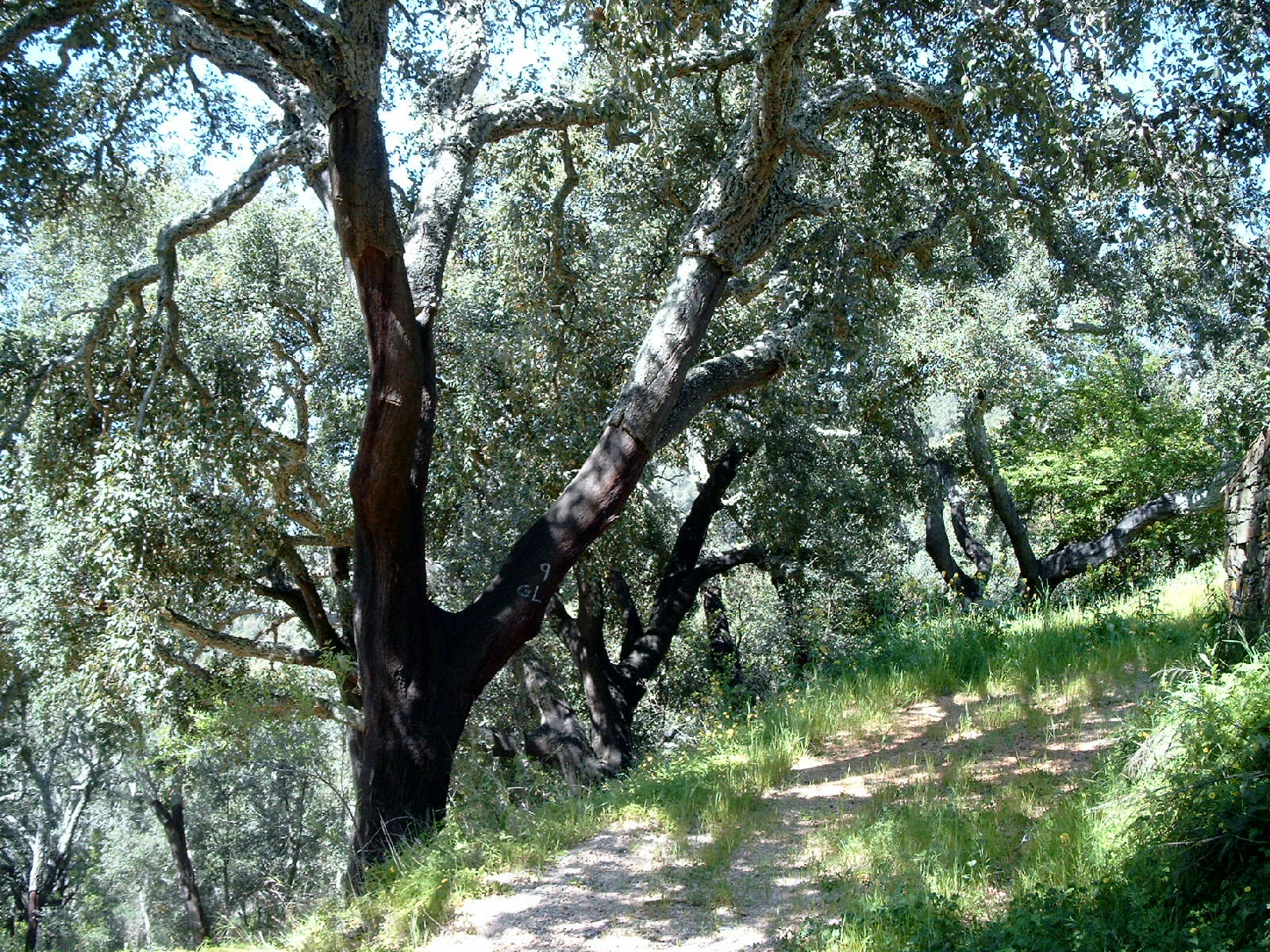
The woodlands of the Iberian Peninsula are distinct ecosystems on the Iberian Peninsula (which includes Spain, Portugal, Andorra, Gibraltar and Southern France). Although the various regions are each characterized by distinct vegetation, the borders between these regions are not clearly defined, and there are some similarities across the peninsula.
It is now known that the Mediterranean Sea went through great changes in sea level and variations in the relative positions of the continental plates of Europe and Africa. These brought changes in climate and vegetation.
The Iberian Peninsula is in the south west of Europe and located near North Africa, and as a result, saw the arrival from both regions of many types of plant species, including wetland thermophilic plant species (those that require a great deal of heat), xerophilic plants (those that require a dry climate), orophilic (sub-alpine) plants, boreo-alpine plants, and so on, many of which managed to remain, thanks to the diversity of environments that exist in the peninsula's mountain ranges, and which allowed plant species to rise in elevation if the climate became too warm, or descend if it became too cold. The geological complexity of the majority of Iberian mountains, especially of the Cordillera Bética, Sistema Ibérico, and Pyrenees, also greatly increased the number of environments in which it was possible for plant species to adapt, resulting in today's wide variety of flora.
The "Eurosiberian" Atlantic zone extends through northern Portugal, the Galician Massif, Cantabrian Mountains and the western and central Pyrenees. It is characterized by a humid climate which is moderated by the influence of the ocean, with somewhat cold winters and the lack of a distinct dry season. The mainland extends to the north of Portugal, the greater part of Galicia, Asturias, Cantabria, the Basque Country, northwest of Navarre, and western Pyrenees. However, its influence in the form of communities or defined species extends inwards, especially in the north and west.
The vegetation is deciduous oak forest: both sessile oaks (Quercus petraea) and pedunculate oaks (Quercus robur), with European ash (Fraxinus excelsior) and hazels in the coolest and deepest soil at the bottom of the valley. The mountain layer is characterised by the presence of beeches and at times, in the Pyrenees, by silver firs (Abies alba); these beeches and silver firs occupy the cool slopes with shallow soil. The Mediterranean influence is felt in the presence of Holm oaks (Quercus rotundifolia) with bay laurel, which are situated on the warmest crests and slopes, especially above chalky soil, where the dryness becomes more pronounced.
Improvement by humans has transformed much of this woodland into meadows, which conserve at their edges remnant hedgerows, "setos", of the species of the primitive forest. Clumps of thorny shrubs grow also in glades and clearings, such as the wild rose, blackberry bushes, blackthorn, hawthorn and other more or less thorny shrubs; this role can also be filled by smaller thorny plants, los piornales, and clumps of broom.
The major forests in this area are beech, oak, birch, and fir.
Beech forests (Fagus sylvatica) are found in the mountain layer of the Iberian Eurosiberian region from 800 to 1500 metres up. The soil is cool, as often chalky as siliceous (rich in silica), and nearly always acidified by rain. The layer is characterised by the beech tree. The beech tree projects a deep shadow, and so its dense foliage usually excludes other woodland species. It therefore has little undergrowth.
Hub AI
Forests of the Iberian Peninsula AI simulator
(@Forests of the Iberian Peninsula_simulator)
Forests of the Iberian Peninsula
The woodlands of the Iberian Peninsula are distinct ecosystems on the Iberian Peninsula (which includes Spain, Portugal, Andorra, Gibraltar and Southern France). Although the various regions are each characterized by distinct vegetation, the borders between these regions are not clearly defined, and there are some similarities across the peninsula.
It is now known that the Mediterranean Sea went through great changes in sea level and variations in the relative positions of the continental plates of Europe and Africa. These brought changes in climate and vegetation.
The Iberian Peninsula is in the south west of Europe and located near North Africa, and as a result, saw the arrival from both regions of many types of plant species, including wetland thermophilic plant species (those that require a great deal of heat), xerophilic plants (those that require a dry climate), orophilic (sub-alpine) plants, boreo-alpine plants, and so on, many of which managed to remain, thanks to the diversity of environments that exist in the peninsula's mountain ranges, and which allowed plant species to rise in elevation if the climate became too warm, or descend if it became too cold. The geological complexity of the majority of Iberian mountains, especially of the Cordillera Bética, Sistema Ibérico, and Pyrenees, also greatly increased the number of environments in which it was possible for plant species to adapt, resulting in today's wide variety of flora.
The "Eurosiberian" Atlantic zone extends through northern Portugal, the Galician Massif, Cantabrian Mountains and the western and central Pyrenees. It is characterized by a humid climate which is moderated by the influence of the ocean, with somewhat cold winters and the lack of a distinct dry season. The mainland extends to the north of Portugal, the greater part of Galicia, Asturias, Cantabria, the Basque Country, northwest of Navarre, and western Pyrenees. However, its influence in the form of communities or defined species extends inwards, especially in the north and west.
The vegetation is deciduous oak forest: both sessile oaks (Quercus petraea) and pedunculate oaks (Quercus robur), with European ash (Fraxinus excelsior) and hazels in the coolest and deepest soil at the bottom of the valley. The mountain layer is characterised by the presence of beeches and at times, in the Pyrenees, by silver firs (Abies alba); these beeches and silver firs occupy the cool slopes with shallow soil. The Mediterranean influence is felt in the presence of Holm oaks (Quercus rotundifolia) with bay laurel, which are situated on the warmest crests and slopes, especially above chalky soil, where the dryness becomes more pronounced.
Improvement by humans has transformed much of this woodland into meadows, which conserve at their edges remnant hedgerows, "setos", of the species of the primitive forest. Clumps of thorny shrubs grow also in glades and clearings, such as the wild rose, blackberry bushes, blackthorn, hawthorn and other more or less thorny shrubs; this role can also be filled by smaller thorny plants, los piornales, and clumps of broom.
The major forests in this area are beech, oak, birch, and fir.
Beech forests (Fagus sylvatica) are found in the mountain layer of the Iberian Eurosiberian region from 800 to 1500 metres up. The soil is cool, as often chalky as siliceous (rich in silica), and nearly always acidified by rain. The layer is characterised by the beech tree. The beech tree projects a deep shadow, and so its dense foliage usually excludes other woodland species. It therefore has little undergrowth.
Recent media