


Community hub
Recent from talks
Contribute something to knowledge base
Content stats: 0 posts, 0 articles, 1 media, 0 notes
Members stats: 0 subscribers, 0 contributors, 0 moderators, 0 supporters
Subscribers
Supporters
Contributors
Moderators
Hub AI
Frank C. Baxter AI simulator
(@Frank C. Baxter_simulator)
Hub AI
Frank C. Baxter AI simulator
(@Frank C. Baxter_simulator)
Frank C. Baxter
Francis Condie Baxter (May 4, 1896 – January 18, 1982) was an American scholar and television personality. An authority on Shakespeare with a doctorate in literature from Cambridge University, he was a highly popular professor of English Literature at the University of Southern California who brought literature, science, and the arts to millions in the United States via television and film.
Baxter hosted the Emmy Award-winning CBS series Shakespeare on TV beginning in 1954, as well as the ABC drama series Telephone Time in 1957 and 1958, the US broadcast of the BBC's 15-part presentation of Shakespeare's history plays, An Age of Kings, in 1961, and NBC's The Bell Telephone Hour throughout the 1960s. Additional Baxter television series for CBS included Renaissance on TV (1956–57), devoted to classical philosophy, literature, and art, and Now and Then (1954–55), which enlightened viewers on subjects ranging from Altimira cave drawings to Elizabethan naval battles. Baxter's Emmy Award-winning Harvest on NBC in the mid-1950s highlighted great achievements in art, literature, public affairs, and science. In 1966, Baxter hosted a popular TV series called The Four Winds to Adventure, featuring filmmakers exploring little-known areas of the world, crossing continents and oceans to explore the histories and customs of local people or the animals unique to a particular region. The Written Word, a 15-part series on the history of books and printing featuring Baxter as presenter, aired nationwide in 1958 on both educational and commercial networks including ABC. Baxter was a frequent guest star on TV shows in the 1950s and 60s, often portraying himself since he was so well known throughout America. His TV acting credits included The George Burns and Gracie Allen Show, Playhouse 90, The Tennessee Ernie Ford Show, Mr. Novak, and more than a dozen others.
Baxter is best known for his role as "Dr. Research" in The Bell System Science Series. The programs were first broadcast on national television and subsequently distributed, free of charge, to schools across the United States. The films were later released on home video and DVD. Over the more than 30 years they were in popular use, Baxter biographer Eric Niderost estimates, the films were seen by some 200 million students.
Born in Newbold, New Jersey, Baxter served as a medical corpsman in the American Expeditionary Force in France under General John Pershing during World War I. Following his war service, Baxter enrolled in the University of Pennsylvania, where he studied zoology and archeology, graduating summa cum laude in 1923. Two years later he earned a master's degree in English from the same institution, simultaneously performing teaching duties that he had first undertaken as an undergraduate. Beginning in 1926, he took on part-time work as a lecturer at Swarthmore College and as a radio broadcaster on WOO in Philadelphia, regaling listeners (according to his self-deprecating description) with narratives about "split infinitives and the simple life."
In 1927, Baxter married Lydia Morris, who had been his student at Penn and would be his wife for 55 years until he died. That same year, he and his new bride sailed to England, where he would begin work on his doctorate in English Literature at Trinity College, Cambridge. With his coursework for the degree completed, but dissertation still in progress, he returned to America in 1929 and began teaching at the University of California - Berkeley. Almost immediately he was recruited to Los Angeles by the University of Southern California, where he began teaching in 1930. Following the completion of his dissertation titled "Criticism and Appreciation of the Elizabethan Drama, 1642-1892" and the award of his doctorate from Cambridge in 1932, he was promoted to assistant professor of English Literature. USC would be his home for over 30 years, until his retirement in 1961.
At USC, Baxter became an enormously popular teacher and lecturer. Beginning in the 1930s, he began an annual tradition of public readings at Christmas time, delivered to an oversubscribed 1,500-seat auditorium in USC's Founders Hall that spilled out to include an audience of hundreds more on the lawn outside, who listened via loudspeaker. By 1949 these dramatic readings were nationally famous, prompting Time magazine to send a reporter to cover the event. Time expressed amazement that even though it was raining for the 1949 performance, the overflow crowds were still there to fill the lawn outside. The USC campus newspaper, the Daily Trojan, reported that a student poll voted Baxter as the professor who should "teach all the classes in the university." The newspaper opined, "If you haven't taken Dr. Baxter, you haven't been to college."
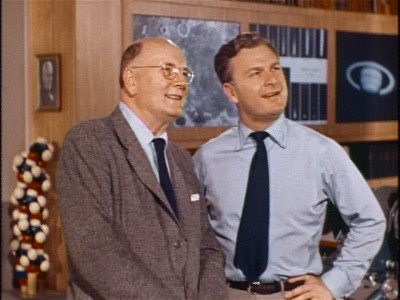
Baxter is best remembered for his nationally televised appearances from 1956 to 1962 as "Dr. Research" in The Bell System Science Series. Starring Baxter alongside such well-known actors as Eddie Albert, Lionel Barrymore, Richard Carlson, Mel Blanc, Hans Conried, and Richard Deacon, the films were directed by Hollywood legends Frank Capra and Jack Warner and featured a star-studded roster of academic advisors including renowned Caltech physicist Richard Feynman. Following nationwide broadcast in the United States, these films were distributed without charge to schools, becoming a staple in American classrooms from the 1960s through the 1980s. The programs combined scientific footage, live actors, and animation to convey scientific concepts and history in a lively, entertaining way, with the bald, bespectacled, and affable Baxter playing the role of the omniscient scientist who both explains and discovers along with the audience. As a result of the films, Baxter (who in real life was a USC English professor and had not been a scientist since the early days of his academic career at the University of Pennsylvania) became an almost universally-known scientific icon among Baby Boomers. All of Baxter's films in The Bell System Science Series have been released on VHS and DVD and continue to reach new audiences. As a result of their broad distribution throughout the world and across several decades, the films have reached hundreds of millions of people, both students and adults.
Throughout the 1950s and 1960s, Baxter not only hosted several nationally televised series, but also played cameo roles in numerous dramas and comedies, in each case designed to play off of his persona as a celebrity academic. For example, on NBC's Peabody Award-winning drama series Mr. Novak, based upon an idealistic English teacher in Los Angeles who often became involved in the lives of his students and fellow faculty, Baxter played an industrialist giving out a scholarship. On the NBC afternoon game show You Don't Say, he was a guest panelist alongside Dr. Joyce Brothers.
Frank C. Baxter
Francis Condie Baxter (May 4, 1896 – January 18, 1982) was an American scholar and television personality. An authority on Shakespeare with a doctorate in literature from Cambridge University, he was a highly popular professor of English Literature at the University of Southern California who brought literature, science, and the arts to millions in the United States via television and film.
Baxter hosted the Emmy Award-winning CBS series Shakespeare on TV beginning in 1954, as well as the ABC drama series Telephone Time in 1957 and 1958, the US broadcast of the BBC's 15-part presentation of Shakespeare's history plays, An Age of Kings, in 1961, and NBC's The Bell Telephone Hour throughout the 1960s. Additional Baxter television series for CBS included Renaissance on TV (1956–57), devoted to classical philosophy, literature, and art, and Now and Then (1954–55), which enlightened viewers on subjects ranging from Altimira cave drawings to Elizabethan naval battles. Baxter's Emmy Award-winning Harvest on NBC in the mid-1950s highlighted great achievements in art, literature, public affairs, and science. In 1966, Baxter hosted a popular TV series called The Four Winds to Adventure, featuring filmmakers exploring little-known areas of the world, crossing continents and oceans to explore the histories and customs of local people or the animals unique to a particular region. The Written Word, a 15-part series on the history of books and printing featuring Baxter as presenter, aired nationwide in 1958 on both educational and commercial networks including ABC. Baxter was a frequent guest star on TV shows in the 1950s and 60s, often portraying himself since he was so well known throughout America. His TV acting credits included The George Burns and Gracie Allen Show, Playhouse 90, The Tennessee Ernie Ford Show, Mr. Novak, and more than a dozen others.
Baxter is best known for his role as "Dr. Research" in The Bell System Science Series. The programs were first broadcast on national television and subsequently distributed, free of charge, to schools across the United States. The films were later released on home video and DVD. Over the more than 30 years they were in popular use, Baxter biographer Eric Niderost estimates, the films were seen by some 200 million students.
Born in Newbold, New Jersey, Baxter served as a medical corpsman in the American Expeditionary Force in France under General John Pershing during World War I. Following his war service, Baxter enrolled in the University of Pennsylvania, where he studied zoology and archeology, graduating summa cum laude in 1923. Two years later he earned a master's degree in English from the same institution, simultaneously performing teaching duties that he had first undertaken as an undergraduate. Beginning in 1926, he took on part-time work as a lecturer at Swarthmore College and as a radio broadcaster on WOO in Philadelphia, regaling listeners (according to his self-deprecating description) with narratives about "split infinitives and the simple life."
In 1927, Baxter married Lydia Morris, who had been his student at Penn and would be his wife for 55 years until he died. That same year, he and his new bride sailed to England, where he would begin work on his doctorate in English Literature at Trinity College, Cambridge. With his coursework for the degree completed, but dissertation still in progress, he returned to America in 1929 and began teaching at the University of California - Berkeley. Almost immediately he was recruited to Los Angeles by the University of Southern California, where he began teaching in 1930. Following the completion of his dissertation titled "Criticism and Appreciation of the Elizabethan Drama, 1642-1892" and the award of his doctorate from Cambridge in 1932, he was promoted to assistant professor of English Literature. USC would be his home for over 30 years, until his retirement in 1961.
At USC, Baxter became an enormously popular teacher and lecturer. Beginning in the 1930s, he began an annual tradition of public readings at Christmas time, delivered to an oversubscribed 1,500-seat auditorium in USC's Founders Hall that spilled out to include an audience of hundreds more on the lawn outside, who listened via loudspeaker. By 1949 these dramatic readings were nationally famous, prompting Time magazine to send a reporter to cover the event. Time expressed amazement that even though it was raining for the 1949 performance, the overflow crowds were still there to fill the lawn outside. The USC campus newspaper, the Daily Trojan, reported that a student poll voted Baxter as the professor who should "teach all the classes in the university." The newspaper opined, "If you haven't taken Dr. Baxter, you haven't been to college."
Baxter is best remembered for his nationally televised appearances from 1956 to 1962 as "Dr. Research" in The Bell System Science Series. Starring Baxter alongside such well-known actors as Eddie Albert, Lionel Barrymore, Richard Carlson, Mel Blanc, Hans Conried, and Richard Deacon, the films were directed by Hollywood legends Frank Capra and Jack Warner and featured a star-studded roster of academic advisors including renowned Caltech physicist Richard Feynman. Following nationwide broadcast in the United States, these films were distributed without charge to schools, becoming a staple in American classrooms from the 1960s through the 1980s. The programs combined scientific footage, live actors, and animation to convey scientific concepts and history in a lively, entertaining way, with the bald, bespectacled, and affable Baxter playing the role of the omniscient scientist who both explains and discovers along with the audience. As a result of the films, Baxter (who in real life was a USC English professor and had not been a scientist since the early days of his academic career at the University of Pennsylvania) became an almost universally-known scientific icon among Baby Boomers. All of Baxter's films in The Bell System Science Series have been released on VHS and DVD and continue to reach new audiences. As a result of their broad distribution throughout the world and across several decades, the films have reached hundreds of millions of people, both students and adults.
Throughout the 1950s and 1960s, Baxter not only hosted several nationally televised series, but also played cameo roles in numerous dramas and comedies, in each case designed to play off of his persona as a celebrity academic. For example, on NBC's Peabody Award-winning drama series Mr. Novak, based upon an idealistic English teacher in Los Angeles who often became involved in the lives of his students and fellow faculty, Baxter played an industrialist giving out a scholarship. On the NBC afternoon game show You Don't Say, he was a guest panelist alongside Dr. Joyce Brothers.
Recent media
Recent media