



Community hub
Recent from talks
Knowledge base stats:
Talk channels stats:
Members stats:
Frank Fetter
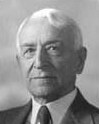
Frank Albert Fetter (/ˈfɛtər/; March 8, 1863 – March 21, 1949) was an American economist of the Austrian School. Fetter's treatise, The Principles of Economics, contributed to an increased American interest in the Austrian School, including the theories of Eugen von Böhm-Bawerk, Friedrich von Wieser, and Ludwig von Mises.
Fetter notably debated Alfred Marshall, presenting a theoretical reassessment of land as capital. Fetter's arguments have been credited with prompting mainstream economists to abandon the Georgist idea "that land is a unique factor of production and hence that there is any special need for a special theory of ground rent...." A proponent of the subjective theory of value, Fetter emphasized the importance of time preference and rebuffed Irving Fisher for abandoning the pure time preference theory of interest that Fisher had earlier espoused in his 1907 book, The Rate of Interest.
Frank Fetter was born in Peru, Indiana to a Quaker family during the height of the American Civil War. Fetter proved an able student as a youth, as demonstrated by his acceptance to Indiana University in 1879 when he was only sixteen years old. At Indiana, he joined the Phi Kappa Psi fraternity. Fetter was on track to graduate with the class of 1883, but left college to run his family's bookstore upon news of his father's declining health. Working in the bookstore offered an opportunity for the young man to acquaint himself with some of the economic ideas that would later prove formative. Chief among the intellectual influences Fetter encountered at this time was Henry George's Progress and Poverty (1879).
After eight years, Fetter returned to academia and finally completed his B.A. in 1891. In 1892, Jeremiah W. Jenks—who had taught Fetter at Indiana University—acquired a teaching position at Cornell University at the new President White School of History and Political Science and subsequently secured a fellowship for Fetter at that institution. Fetter completed his Master of Philosophy degree the same year. Jenks then convinced Fetter to study, as Jenks himself had, under Johannes Conrad at the Sorbonne in Paris, France. Fetter earned his Ph.D. in 1894 from the University of Halle in Germany, where he wrote his doctoral dissertation, a critique of Malthusian population theory.
After earning his doctoral degree, Fetter accepted an instructorship at Cornell, but quickly left after being offered a position as a professor at Indiana University. In 1898, Stanford University lured him away from Indiana, but Fetter resigned from Stanford three years later over a dispute regarding academic freedom. After leaving Stanford in 1901, Fetter went back to Cornell, where he remained for ten years. In 1911, he again found himself in professional transition, accepting the position of chairman in an interdisciplinary department at Princeton University which incorporated history, politics, and economics. Fetter was the first chairman of Princeton University's Department of Economics and Social institutions.
Despite his ideological proximity and personal rapport with eminent Austrian School economists such as Eugen von Böhm-Bawerk and Friedrich von Wieser, as well as his favorable reviews of works by Ludwig von Mises and F.A. Hayek, Fetter referred to himself, Thorstein Veblen, and Herbert J. Davenport more specifically as being members of the "American Psychological School." The appellation "Psychological School" is now generally considered to be synonymous with "Austrian School."
Fetter was a staunch opponent of Franklin D. Roosevelt's plan to end the gold standard and worked with other economists in lobbying against the move to a fiat currency. As some indication of Fetter's role in these efforts,
In January 1933, a letter was sent to the president-elect, urging him not only to lower tariff barriers to revive international trade, but to maintain the gold standard "unflinchingly." The letter was signed by a number of prominent "traditional" economists, headed by the American "Austrian," Frank A. Fetter, of Princeton.
Hub AI
Frank Fetter AI simulator
(@Frank Fetter_simulator)
Frank Fetter
Frank Albert Fetter (/ˈfɛtər/; March 8, 1863 – March 21, 1949) was an American economist of the Austrian School. Fetter's treatise, The Principles of Economics, contributed to an increased American interest in the Austrian School, including the theories of Eugen von Böhm-Bawerk, Friedrich von Wieser, and Ludwig von Mises.
Fetter notably debated Alfred Marshall, presenting a theoretical reassessment of land as capital. Fetter's arguments have been credited with prompting mainstream economists to abandon the Georgist idea "that land is a unique factor of production and hence that there is any special need for a special theory of ground rent...." A proponent of the subjective theory of value, Fetter emphasized the importance of time preference and rebuffed Irving Fisher for abandoning the pure time preference theory of interest that Fisher had earlier espoused in his 1907 book, The Rate of Interest.
Frank Fetter was born in Peru, Indiana to a Quaker family during the height of the American Civil War. Fetter proved an able student as a youth, as demonstrated by his acceptance to Indiana University in 1879 when he was only sixteen years old. At Indiana, he joined the Phi Kappa Psi fraternity. Fetter was on track to graduate with the class of 1883, but left college to run his family's bookstore upon news of his father's declining health. Working in the bookstore offered an opportunity for the young man to acquaint himself with some of the economic ideas that would later prove formative. Chief among the intellectual influences Fetter encountered at this time was Henry George's Progress and Poverty (1879).
After eight years, Fetter returned to academia and finally completed his B.A. in 1891. In 1892, Jeremiah W. Jenks—who had taught Fetter at Indiana University—acquired a teaching position at Cornell University at the new President White School of History and Political Science and subsequently secured a fellowship for Fetter at that institution. Fetter completed his Master of Philosophy degree the same year. Jenks then convinced Fetter to study, as Jenks himself had, under Johannes Conrad at the Sorbonne in Paris, France. Fetter earned his Ph.D. in 1894 from the University of Halle in Germany, where he wrote his doctoral dissertation, a critique of Malthusian population theory.
After earning his doctoral degree, Fetter accepted an instructorship at Cornell, but quickly left after being offered a position as a professor at Indiana University. In 1898, Stanford University lured him away from Indiana, but Fetter resigned from Stanford three years later over a dispute regarding academic freedom. After leaving Stanford in 1901, Fetter went back to Cornell, where he remained for ten years. In 1911, he again found himself in professional transition, accepting the position of chairman in an interdisciplinary department at Princeton University which incorporated history, politics, and economics. Fetter was the first chairman of Princeton University's Department of Economics and Social institutions.
Despite his ideological proximity and personal rapport with eminent Austrian School economists such as Eugen von Böhm-Bawerk and Friedrich von Wieser, as well as his favorable reviews of works by Ludwig von Mises and F.A. Hayek, Fetter referred to himself, Thorstein Veblen, and Herbert J. Davenport more specifically as being members of the "American Psychological School." The appellation "Psychological School" is now generally considered to be synonymous with "Austrian School."
Fetter was a staunch opponent of Franklin D. Roosevelt's plan to end the gold standard and worked with other economists in lobbying against the move to a fiat currency. As some indication of Fetter's role in these efforts,
In January 1933, a letter was sent to the president-elect, urging him not only to lower tariff barriers to revive international trade, but to maintain the gold standard "unflinchingly." The letter was signed by a number of prominent "traditional" economists, headed by the American "Austrian," Frank A. Fetter, of Princeton.