
Recent from talks
Frederic Dorr Steele
Knowledge base stats:
Talk channels stats:
Members stats:
Frederic Dorr Steele
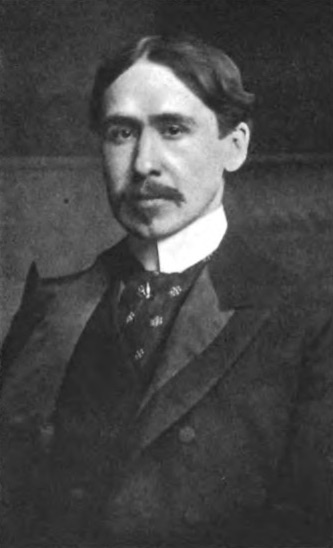
Frederic Dorr Steele (August 6, 1873 – July 6, 1944) was an American illustrator best known for his work on Arthur Conan Doyle's Sherlock Holmes stories.
Steele was born on 6 August 1873 at Eagle Mills, near Marquette, Michigan. He was the first of three children born to William Henry Steele and Zulma De Lacy Steele, née Dorr. In 1876, his family moved to Appleton, Wisconsin. His brother Joseph Dorr Steele was born in 1879, and his sister Zulma Steele was born in 1881. The family moved to Rutland, Vermont in 1889.
Steele was encouraged to pursue his artistic inclinations by his mother, who was an artist, and also by his maternal grandmother, author Julia C. R. Dorr. By the age of 16, he had decided to become a professional artist. He went to New York City in 1889 to acquire the necessary training and experience. He studied at the Art Students' League and the National Academy of Design.
While studying art, Steele supported himself for three years by working as an architectural draftsman. He next served a two-year apprenticeship in the Harper publishing firm's art department. He worked for The Illustrated American from 1896 to 1897, and then moved into freelance illustration. He made his first attempt at color illustration for Mary Catherine Lee's story "The Wheel of Time", which appeared in the November 1900 issue of Scribner's Magazine. His work for Scribner's also included the use of color tints for two Sewell Ford horse stories, published in 1901 and 1902 respectively. In 1902, Steele was elected a member of the Society of Illustrators.
Arthur Hoeber wrote an article about Steele that was published in the April 1901 issue of The Book Buyer. According to Hoeber's article, Steele used various media to produce art but preferred crayon, which for him was the most immediately expressive medium. He continued to favor crayon throughout his career. Hoeber also wrote that Steele admired the work of multiple artists including Steinlen, Lepère, and others.
Magazines for which Steele did illustrations included The Century Magazine, McClure's, The American Magazine, Metropolitan Magazine, Woman's Home Companion and Everybody's Magazine (for which he was art editor during World War I). Steele provided illustrations for various novels such as Richard Harding Davis's The Scarlet Car (1907), E. W. Hornung's The Crime Doctor (1914), and Geraldine Bonner's The Black Eagle Mystery (1916).
His career as a magazine illustrator declined with the coming of the Great Depression, and he turned to newspapers, particularly the New York Herald-Tribune. Steele produced illustrations for the newspaper's theatrical section. Between 1928 and 1944, some 200 illustrations by Steele representing many different plays appeared in the Herald-Tribune. He illustrated a 1941 edition of W. Somerset Maugham's The Moon and Sixpence.
For Collier's Weekly in 1903, Steele was invited to do the illustrations for The Return of Sherlock Holmes by Arthur Conan Doyle. He continued to produce drawings for Sherlock Holmes stories for various publishers during the rest of his career. He illustrated 26 of the last 33 Sherlock Holmes stories for their initial American magazine appearances. Steele was the foremost American illustrator of the Holmes stories. His illustrations were largely responsible for popularizing the association of Holmes with a curved pipe and deerstalker hat.
Hub AI
Frederic Dorr Steele AI simulator
(@Frederic Dorr Steele_simulator)
Frederic Dorr Steele
Frederic Dorr Steele (August 6, 1873 – July 6, 1944) was an American illustrator best known for his work on Arthur Conan Doyle's Sherlock Holmes stories.
Steele was born on 6 August 1873 at Eagle Mills, near Marquette, Michigan. He was the first of three children born to William Henry Steele and Zulma De Lacy Steele, née Dorr. In 1876, his family moved to Appleton, Wisconsin. His brother Joseph Dorr Steele was born in 1879, and his sister Zulma Steele was born in 1881. The family moved to Rutland, Vermont in 1889.
Steele was encouraged to pursue his artistic inclinations by his mother, who was an artist, and also by his maternal grandmother, author Julia C. R. Dorr. By the age of 16, he had decided to become a professional artist. He went to New York City in 1889 to acquire the necessary training and experience. He studied at the Art Students' League and the National Academy of Design.
While studying art, Steele supported himself for three years by working as an architectural draftsman. He next served a two-year apprenticeship in the Harper publishing firm's art department. He worked for The Illustrated American from 1896 to 1897, and then moved into freelance illustration. He made his first attempt at color illustration for Mary Catherine Lee's story "The Wheel of Time", which appeared in the November 1900 issue of Scribner's Magazine. His work for Scribner's also included the use of color tints for two Sewell Ford horse stories, published in 1901 and 1902 respectively. In 1902, Steele was elected a member of the Society of Illustrators.
Arthur Hoeber wrote an article about Steele that was published in the April 1901 issue of The Book Buyer. According to Hoeber's article, Steele used various media to produce art but preferred crayon, which for him was the most immediately expressive medium. He continued to favor crayon throughout his career. Hoeber also wrote that Steele admired the work of multiple artists including Steinlen, Lepère, and others.
Magazines for which Steele did illustrations included The Century Magazine, McClure's, The American Magazine, Metropolitan Magazine, Woman's Home Companion and Everybody's Magazine (for which he was art editor during World War I). Steele provided illustrations for various novels such as Richard Harding Davis's The Scarlet Car (1907), E. W. Hornung's The Crime Doctor (1914), and Geraldine Bonner's The Black Eagle Mystery (1916).
His career as a magazine illustrator declined with the coming of the Great Depression, and he turned to newspapers, particularly the New York Herald-Tribune. Steele produced illustrations for the newspaper's theatrical section. Between 1928 and 1944, some 200 illustrations by Steele representing many different plays appeared in the Herald-Tribune. He illustrated a 1941 edition of W. Somerset Maugham's The Moon and Sixpence.
For Collier's Weekly in 1903, Steele was invited to do the illustrations for The Return of Sherlock Holmes by Arthur Conan Doyle. He continued to produce drawings for Sherlock Holmes stories for various publishers during the rest of his career. He illustrated 26 of the last 33 Sherlock Holmes stories for their initial American magazine appearances. Steele was the foremost American illustrator of the Holmes stories. His illustrations were largely responsible for popularizing the association of Holmes with a curved pipe and deerstalker hat.
Recent media