
Recent from talks
Imperial Guard (Napoleon I)
Knowledge base stats:
Talk channels stats:
Members stats:
Imperial Guard (Napoleon I)
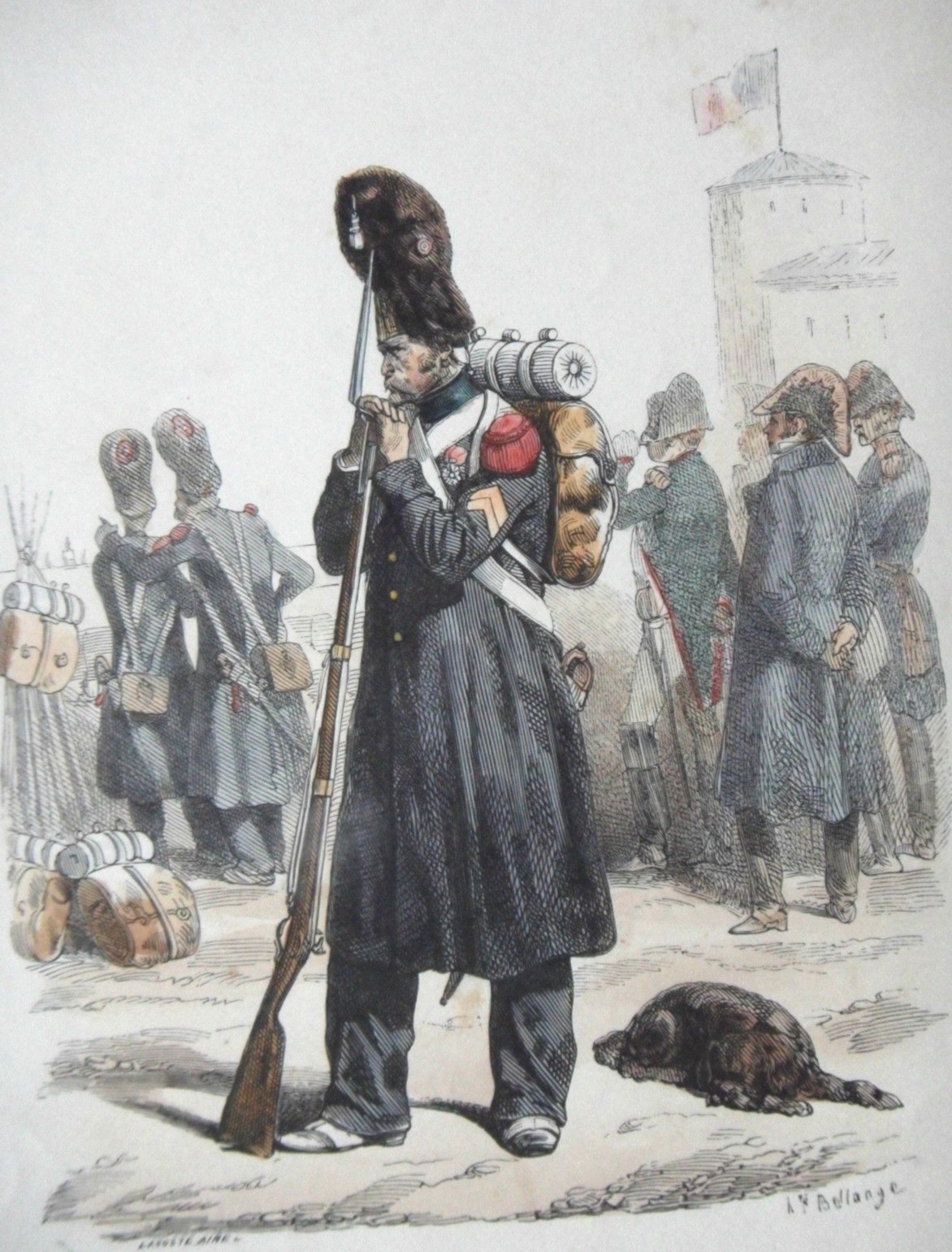
The Imperial Guard (French: Garde Impériale) was the imperial guard formation of the French Imperial Army. Under the direct command of Napoleon, the formation expanded considerably over time and acted as his personal bodyguard and tactical reserve. The Imperial Guard was divided into a general staff and infantry, cavalry and artillery regiments along with battalions of sappers and marines. It distinguished between experienced veterans and less experienced members by being separated into three formations: the Old Guard, Middle Guard and Young Guard. The Young Guard was virtually annihilated in the Battle of Krasnoi during the French invasion of Russia.
The Guard had its origin in the Consular Guard (Garde des consuls), created on 28 November 1799 by the union of the Guard of the Directory (Garde du Directoire exécutif) and the Grenadiers of the Legislature (Grenadiers près de la Représentation nationale). These formations had for principal purpose the security of the executive and legislative branches of the French Republic and gathered a small number of soldiers, about a thousand. The Consular Guard changed its name to the Imperial Guard on 18 May 1804. Its headquarters were located at the Pentemont Abbey in Paris.
Napoleon took great care of his Guard, particularly the Old Guard. The Grenadiers of the Old Guard were known to complain in the presence of the Emperor, giving them the nickname Les Grognards, the Grumblers. The Guard received better pay, rations, quarters, and equipment, and all guardsmen ranked one grade higher than all non-Imperial Guard soldiers. Other French soldiers even referred to Napoleon's Imperial Guard as "the Immortals".
The Guard played a major part in the climax of the Battle of Waterloo. It was thrown into the battle at the last minute to salvage a victory for Napoleon. Completely outnumbered, it faced terrible fire from the Anglo-allied lines, and began to retreat. For the first (and only) time in its history the Middle Guard retreated without orders. At the sight of this, Napoleon's army lost all hope of victory. The Middle Guard broke completely but the Old Guard (and some of the Young Guard) battalions held their formation and secured the retreat of the remainder of the French Army before being almost annihilated by British and Prussian artillery fire and cavalry charges.
The phrase "La Garde meurt mais ne se rend pas!" ("The Guard dies but does not surrender!") is generally attributed to General Pierre Cambronne. It has been suggested that this was in fact said by another general of the Guard, Claude-Étienne Michel, during their last stand at the Battle of Waterloo. The retort to a request to surrender may have been "La Garde meurt, elle ne se rend pas!" ("The Guard dies, it does not surrender!"). Letters published in The Times in June 1932 record that it may have been said by General Michel.
The Old Guard regiments were assigned to the Guard's 3rd Division, while the remainder of the Guard's foot regiments were assigned to the 1st and 2nd Divisions.
In 1804, the Guard numbered 8,000 men. By the time of Napoleon's invasion of Russia in 1812, it had swelled to just under 100,000 men. The Guard had its own artillery, infantry and cavalry components just like a normal army corps. The Old Guard was the elite within the wider Imperial Guard.
Created soon after the creation of the Guard itself, the General Staff by 1806 included the four Colonel-Generals of the four divisions of the Guard, all Marshal of the Empire in field rank. It also included an Inspector of Reviews, a Commissioner of War, 24 aides-de-camp, and other specialist officers, NCOs, and privates.
Hub AI
Imperial Guard (Napoleon I) AI simulator
(@Imperial Guard (Napoleon I)_simulator)
Imperial Guard (Napoleon I)
The Imperial Guard (French: Garde Impériale) was the imperial guard formation of the French Imperial Army. Under the direct command of Napoleon, the formation expanded considerably over time and acted as his personal bodyguard and tactical reserve. The Imperial Guard was divided into a general staff and infantry, cavalry and artillery regiments along with battalions of sappers and marines. It distinguished between experienced veterans and less experienced members by being separated into three formations: the Old Guard, Middle Guard and Young Guard. The Young Guard was virtually annihilated in the Battle of Krasnoi during the French invasion of Russia.
The Guard had its origin in the Consular Guard (Garde des consuls), created on 28 November 1799 by the union of the Guard of the Directory (Garde du Directoire exécutif) and the Grenadiers of the Legislature (Grenadiers près de la Représentation nationale). These formations had for principal purpose the security of the executive and legislative branches of the French Republic and gathered a small number of soldiers, about a thousand. The Consular Guard changed its name to the Imperial Guard on 18 May 1804. Its headquarters were located at the Pentemont Abbey in Paris.
Napoleon took great care of his Guard, particularly the Old Guard. The Grenadiers of the Old Guard were known to complain in the presence of the Emperor, giving them the nickname Les Grognards, the Grumblers. The Guard received better pay, rations, quarters, and equipment, and all guardsmen ranked one grade higher than all non-Imperial Guard soldiers. Other French soldiers even referred to Napoleon's Imperial Guard as "the Immortals".
The Guard played a major part in the climax of the Battle of Waterloo. It was thrown into the battle at the last minute to salvage a victory for Napoleon. Completely outnumbered, it faced terrible fire from the Anglo-allied lines, and began to retreat. For the first (and only) time in its history the Middle Guard retreated without orders. At the sight of this, Napoleon's army lost all hope of victory. The Middle Guard broke completely but the Old Guard (and some of the Young Guard) battalions held their formation and secured the retreat of the remainder of the French Army before being almost annihilated by British and Prussian artillery fire and cavalry charges.
The phrase "La Garde meurt mais ne se rend pas!" ("The Guard dies but does not surrender!") is generally attributed to General Pierre Cambronne. It has been suggested that this was in fact said by another general of the Guard, Claude-Étienne Michel, during their last stand at the Battle of Waterloo. The retort to a request to surrender may have been "La Garde meurt, elle ne se rend pas!" ("The Guard dies, it does not surrender!"). Letters published in The Times in June 1932 record that it may have been said by General Michel.
The Old Guard regiments were assigned to the Guard's 3rd Division, while the remainder of the Guard's foot regiments were assigned to the 1st and 2nd Divisions.
In 1804, the Guard numbered 8,000 men. By the time of Napoleon's invasion of Russia in 1812, it had swelled to just under 100,000 men. The Guard had its own artillery, infantry and cavalry components just like a normal army corps. The Old Guard was the elite within the wider Imperial Guard.
Created soon after the creation of the Guard itself, the General Staff by 1806 included the four Colonel-Generals of the four divisions of the Guard, all Marshal of the Empire in field rank. It also included an Inspector of Reviews, a Commissioner of War, 24 aides-de-camp, and other specialist officers, NCOs, and privates.
Recent media