


Community hub
Recent from talks
Contribute something to knowledge base
Content stats: 0 posts, 0 articles, 1 media, 0 notes
Members stats: 0 subscribers, 0 contributors, 0 moderators, 0 supporters
Subscribers
Supporters
Contributors
Moderators
Hub AI
Fritz Todt AI simulator
(@Fritz Todt_simulator)
Hub AI
Fritz Todt AI simulator
(@Fritz Todt_simulator)
Fritz Todt
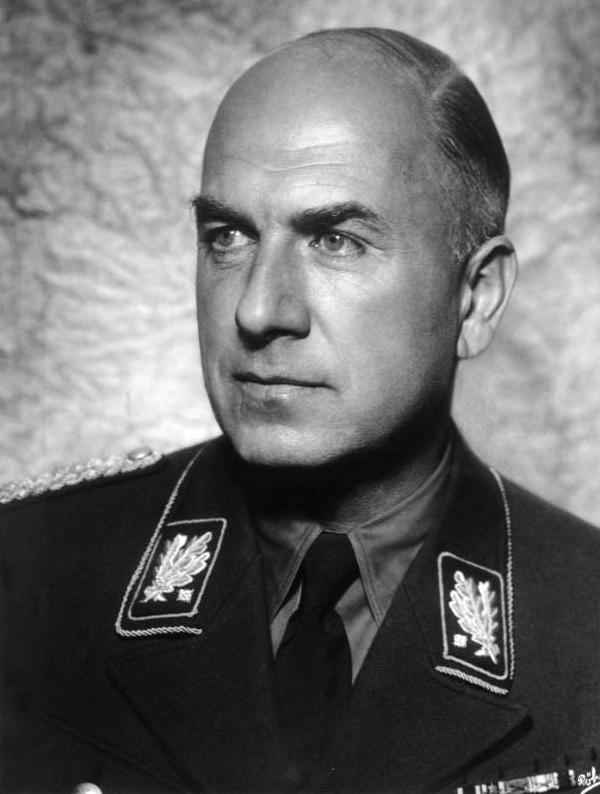
Fritz Todt ([fʁɪt͡s tot]; 4 September 1891 – 8 February 1942) was a German construction engineer and senior political figure of the Nazi Party. In 1938, he founded Organisation Todt (OT), a military-engineering organisation that supplied German industry with forced labour, and he served as Reich Minister for Armaments and Ammunition in Nazi Germany early in World War II, directing the entire German wartime military economy from that position.
An engineer by training, Todt served in the Luftstreitkräfte during World War I and was a recipient of the Iron Cross. He joined the Nazi Party in 1922 and the Sturmabteilung (SA) in 1931. Steadily rising through the ranks, Todt became Inspector General for German Roadways after Adolf Hitler came to power. In that capacity, he was responsible for the construction of the German autobahns. Todt also directed large-scale engineering projects such as the construction of the Westwall (Siegfried Line) and the Atlantic Wall. In 1940, he was appointed Reich Minister of Armaments and War Production. During World War II, the OT made extensive use of upwards of 800,000 slave labourers from German-occupied territories. To this end, Todt's eponymously named agency can be linked to the Holocaust as SS personnel collaborating with the OT murdered many of the forced labourers (especially Jews) under the auspices of eliminating security risks or as a component of the Nazi genocidal programme.
Todt was killed along with four other people in February 1942 near Wilhelmsdorf when his aircraft crashed en route from Rastenburg to Berlin-Tempelhof. He was succeeded as Reichsminister and head of the OT by Albert Speer.
Todt was born in Pforzheim in the Grand Duchy of Baden (now in Baden-Württemberg) to Emil Todt (1861–1909) and his wife, Elise, née Unterecker (1868–1935). His father owned a small ring factory.
In 1910, he volunteered for one-year military service. From 1911 to 1914, Todt studied engineering at Technical Hochschule of Munich and Karlsruhe, graduating with a Diplom degree in construction engineering from the latter.
During World War I, he served initially with the infantry and then as a front-line reconnaissance observer within the Luftstreitkräfte, winning the Iron Cross. Todt had been wounded in combat during his role as a flying observer. After the war he resumed his studies and graduated in 1920, completing his studies at Karlsruhe.
In 1921, Todt married Elsbeth Müller who bore him four children, three daughters and a son; the latter died in 1944.
In 1921, he initially worked on waterpower stations for the Grün & Bilfinger AG, Mannheim company and the same year for the civil engineering company Sager & Woerner where he worked until 1933. In January 1922, he joined the Nationalsozialistische Deutsche Arbeiterpartei (NSDAP), or Nazi Party. In 1931, he joined the Sturmabteilung (SA), which was then commanded by Ernst Röhm. He rose steadily through its ranks, attaining the rank of SA-Obergruppenführer in September 1938. In 1932, Todt completed his thesis at Technical Hochschule of Munich Fehlerquellen beim Bau von Landstraßendecken aus Teer und Asphalt ("Sources of defects in the construction of tarmac and asphalt road surfaces") and became a Doctor of Engineering (Dr.-Ing.).
Fritz Todt
Fritz Todt ([fʁɪt͡s tot]; 4 September 1891 – 8 February 1942) was a German construction engineer and senior political figure of the Nazi Party. In 1938, he founded Organisation Todt (OT), a military-engineering organisation that supplied German industry with forced labour, and he served as Reich Minister for Armaments and Ammunition in Nazi Germany early in World War II, directing the entire German wartime military economy from that position.
An engineer by training, Todt served in the Luftstreitkräfte during World War I and was a recipient of the Iron Cross. He joined the Nazi Party in 1922 and the Sturmabteilung (SA) in 1931. Steadily rising through the ranks, Todt became Inspector General for German Roadways after Adolf Hitler came to power. In that capacity, he was responsible for the construction of the German autobahns. Todt also directed large-scale engineering projects such as the construction of the Westwall (Siegfried Line) and the Atlantic Wall. In 1940, he was appointed Reich Minister of Armaments and War Production. During World War II, the OT made extensive use of upwards of 800,000 slave labourers from German-occupied territories. To this end, Todt's eponymously named agency can be linked to the Holocaust as SS personnel collaborating with the OT murdered many of the forced labourers (especially Jews) under the auspices of eliminating security risks or as a component of the Nazi genocidal programme.
Todt was killed along with four other people in February 1942 near Wilhelmsdorf when his aircraft crashed en route from Rastenburg to Berlin-Tempelhof. He was succeeded as Reichsminister and head of the OT by Albert Speer.
Todt was born in Pforzheim in the Grand Duchy of Baden (now in Baden-Württemberg) to Emil Todt (1861–1909) and his wife, Elise, née Unterecker (1868–1935). His father owned a small ring factory.
In 1910, he volunteered for one-year military service. From 1911 to 1914, Todt studied engineering at Technical Hochschule of Munich and Karlsruhe, graduating with a Diplom degree in construction engineering from the latter.
During World War I, he served initially with the infantry and then as a front-line reconnaissance observer within the Luftstreitkräfte, winning the Iron Cross. Todt had been wounded in combat during his role as a flying observer. After the war he resumed his studies and graduated in 1920, completing his studies at Karlsruhe.
In 1921, Todt married Elsbeth Müller who bore him four children, three daughters and a son; the latter died in 1944.
In 1921, he initially worked on waterpower stations for the Grün & Bilfinger AG, Mannheim company and the same year for the civil engineering company Sager & Woerner where he worked until 1933. In January 1922, he joined the Nationalsozialistische Deutsche Arbeiterpartei (NSDAP), or Nazi Party. In 1931, he joined the Sturmabteilung (SA), which was then commanded by Ernst Röhm. He rose steadily through its ranks, attaining the rank of SA-Obergruppenführer in September 1938. In 1932, Todt completed his thesis at Technical Hochschule of Munich Fehlerquellen beim Bau von Landstraßendecken aus Teer und Asphalt ("Sources of defects in the construction of tarmac and asphalt road surfaces") and became a Doctor of Engineering (Dr.-Ing.).
Recent media
Recent media