



Community hub
Recent from talks
Contribute something
Nothing was collected or created yet.
Diplom
View on Wikipedia
 | This article includes a list of general references, but it lacks sufficient corresponding inline citations. (May 2012) |
A Diplom (German: [diˈploːm] ⓘ, from Ancient Greek: δίπλωμα, romanized: diploma) is an academic degree in the German-speaking countries Germany, Austria, and Switzerland and a similarly named degree in some other European countries including Albania, Bulgaria, Belarus, Bosnia and Herzegovina, Croatia, Estonia, Finland, Poland, Russia, and Ukraine and only for engineers in France, Greece, Hungary, North Macedonia, Romania, Serbia, Slovenia, and Brazil.
History
[edit]The Diplom originates from the French Diplôme (Diplôme de l'ordre impérial de la légion d'honneur) describing a certificate devised during the Second French Empire to bestow honours upon outstanding citizens and soldiers of the imperial French army to promote them into the Legion of Honour since 1862. The Magister degree was the original graduate degree at German-speaking universities. In Germany the Diplom dates back to the pre-republican period: In October 1899 the engineering degree Diplom was announced by a supreme decree of the German emperor Wilhelm II in his function as the King of Prussia on the advent of the Centenary of the Technische Hochschule in Charlottenburg (now Technische Universität Berlin). The Diplom was subsequently adopted by the Technische Hochschulen (Institutes of Technology) which had received university status following this Prussian decree.[1] Later, all German universities adopted the Diplom as their degree in Science or Engineering.
In East Germany, the Diplom was the only first degree and was also granted in disciplines such as medicine or law, which at West German universities were completed with a Staatsexamen. Nowadays such diplomas are still granted to students of such disciplines, although most universities only grant the diplom status (for example "Diplom-Jurist" in law) on request. Some universities also grant a master's degree (e.g. "Magister iuris") to such students on request.
With the implementation of the Bologna process, awarding new Diplom and Magister degrees has become rare, since they are replaced by bachelor's or master's degrees. Already awarded degrees remain valid.
France
[edit]'Diplôme' is the French word for degree or diploma. The French engineering diploma is called Diplôme d'Ingénieur (often abbreviated as Dipl. Ing.). The French government also grants to all holders of a Diplôme d'Ingénieur the academic title of Ingénieur Diplômé, which is official and legally protected in France.
Germany
[edit]Before the introduction of the bachelor's and master's degrees in Germany, the standard Science, Engineering or Business degree was the Diplom and could be, in several variations, obtained at several types of institutes of higher education.
Obtained at a university, the degree was simply called a Diplom or rarely a Diplom (Univ.) and took usually between four and six years (240–360 European Credit Transfer and Accumulation System credits), depending on subject and curriculum. When obtained at a so-called University of Applied Sciences (or Fachhochschule), the diploma degree is called a Diplom (FH) and took mostly four years (240 ECTS credits).
The Diplom was usually awarded in the natural sciences, business, theology and engineering, while students of humanities, arts and languages finished with a Magister. (The degree in social sciences differed from university to university.) All kinds of Diplom degrees were usually first degrees. However, the Diplom / Diplom (Univ.) was also the highest non-doctoral degree in science, business or engineering in Germany.
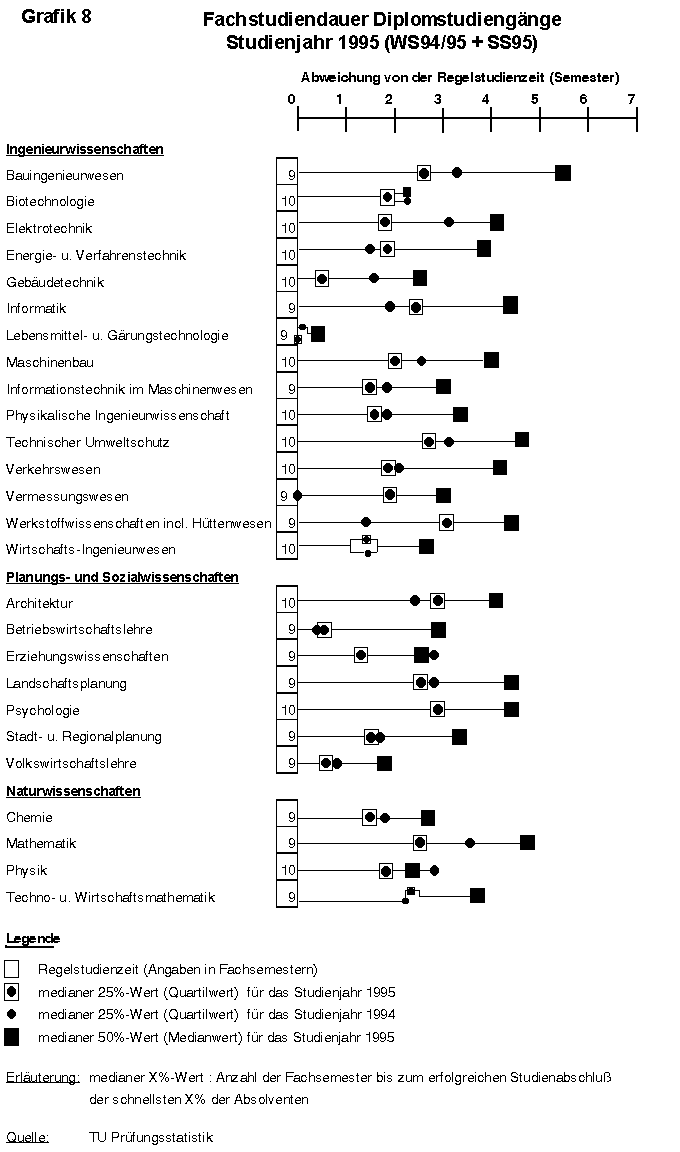
The duration of the Diplom degree programmes differed depending on subject and university. An official average duration (Regelstudienzeit) was set by law in each German state, usually being four years for a Diplom (FH) and 4, 4.5 or 5 years for a Diplom / Diplom (Univ.). In exceptional cases, universities were allowed to set longer average durations for certain subjects (HGRP1995 § 26 (3),[2] NHG2007 § 6 (3),[3] HmbHG2001 §53 (3)[4]). However, due to the curriculum set by most universities in Germany, the 4, 4.5 or 5 years for a Diplom / Diplom (Univ.) were often exceeded.[5] Although being a first degree, because of its actual duration, the Diplom / Diplom (Univ.) was and is in Germany not considered as an equivalent to a bachelor's but rather to a master's degree, as also expressed by the equivalent ECTS credits for the Diplom / Diplom (Univ.).
A holder of a Diplom obtained at a university is, depending on subject, for example referred to as "Diplom-Ingenieur" (Diplom-Engineer), "Diplom-Kaufmann" (Diplom-Merchant), "Diplom-Biologe" (Diplom-Biologist) and so on. In Bavaria, sometimes the postfix "(Univ.)" is added. If the Diplom has been obtained at a University of Applied Sciences (Fachhochschule) the postfix "(FH)" has to be added (e.g. Diplom-Ingenieur (FH)). There are a few rare exceptions where the postfix need not be added, mostly due to older laws, small differences in the laws of the German states or transition rules. Transition rules, for example in engineering, or European Union directives like Directive 2005/36/EC[6] grant certain limited groups with other kinds of related qualifications to also use the designation Diplom.
To obtain a Diplom at a university, students had to complete two separate periods of study. The first one was a two-year period of coursework in courses of mainly (but not only) introductory nature, the Grundstudium (meaning basic studying period). After (and during) this period, in addition to exams for passing the modules, students attained a series of usually four intermediate exams to obtain the Vordiplom (meaning pre-diploma).
The second period, the Hauptstudium (meaning main period of study), consisted of two years of coursework in courses of advanced level, an additional period of several months in which a thesis had to be written and eventually a series of usually four[7] final exams. It was not unusual for students to need more than two years for the coursework of the Hauptstudium. An obtained Vordiplom and the completion of the coursework of the Hauptstudium were the requirements to register for working on the thesis and for the final exams. However, access to courses of the Hauptstudium was usually not restricted to students who had already obtained the Vordiplom.
The extent of the final exams and the exams to obtain the Vordiplom was set by each university individually in its regulations. Normally, the content of two different modules of the preceding period of coursework was examined in each of the examinations, which could be oral or less often in writing. Most students needed approximately six months to complete the final exam period.
The thesis which followed an independent (although supervised) research project had officially to be completed in not more than 3 to 9 months (depending on subject and university).[7] However, the actual time students worked on these projects could again exceed the official duration by several months.
The curriculum for a Diplom (FH) degree, obtained at a University of Applied Sciences (Fachhochschule) used to be more application-oriented, in comparison to what was expected for a Univ. Diplom degree. The programme was slightly shorter and often one semester was spent by the students doing an internship. Those with some previous vocational qualification in a subject related to their studies were typically exempt from the requirement to do an internship. Typically, the studies in such a program were more organized and structured than the studies at a university, with a tighter schedule and a larger number of intermediate and final exams. Subjects were split into those regarded as basic studies and in-depth studies. Unlike the universities the period of basic studies (Grundstudium) wasn't completely separated from the period of in-depth studies (Fachstudium) by a pre-diploma. Instead of a pre-diploma the passing of one or more intermediate exams in a subject qualified to move forward with that particular subject or start related in-depth subject studies. Passing one or more final exams in a subject completed a subject. Once almost all subjects were completed thesis work could start, but the missing final exams had to be passed latest with the completion of the thesis work. It was typical to perform thesis work in the industry, supervised by a professor from the university of applied science and a senior professional from the company where the work was performed. Although lab work was also permitted as thesis work. The written thesis work needed to be defended in an oral exam after which the diploma was granted.
The Diplom / Diplom (Univ.) is usually a prerequisite for preparing a doctorate (Doktorarbeit). However, under certain conditions, holders of a Diplom (FH) are also eligible for doctoral studies. In German-speaking countries and in countries which Germany has bilateral agreements with—regarding the recognition of academic qualifications, the Diplom / Diplom (Univ.) is usually accepted as admission into doctorate programs.
Further kinds of diploma (Germany)
[edit]While the Diplom / Diplom (Univ.) and the Diplom (FH) were the most common Diplom degrees in Germany, further Diploma did and do exist. Those are:
- Diplom (BA) – The Diplom (BA) was not an academic degree, but instead a qualification designation which students received after completing a three-year programme at a so-called University of Cooperative Education (Berufsakademie). These colleges combined coursework with apprenticeships.
- Diplom (DH) – In the German state of Baden-Württemberg, the Universities of Cooperative Education were transferred into the Baden-Württemberg Cooperative State University (Duale Hochschule Baden-Württemberg) in 2009. Former students of a University of Cooperative Education can transfer their qualification designation Diplom (BA) into the academic degree Diplom (DH)
- Diplom I and Diplom II – Some German universities (for example the University of Kassel) used to offer these academic degrees, where the Diplom I was basically a minor Diplom / Diplom (Univ.) obtained after a shortened program of study, while the Diplom II was the equivalent to the Diplom / Diplom (Univ.).
Other uses of the word
[edit]In the German language the word Diplom can also be used for certificates of any kind of achievement. It is usually apparent from the context if an academic degree is meant or not, especially when the word is combined with the academic profession.
International comparison (Germany)
[edit]Acceptance of the Diplom / Diplom (Univ.) and the Diplom (FH) varies from country to country and from university to university. Usually holders of any of the degrees are considered for admission to postgraduate (not necessarily doctoral) studies. The acceptance or rejection of the diploma not only varies because of different academic standards, but also because of political, regulatory and administrative reasons.
- A bilateral agreement between Germany and France sets the Diplom / Diplom (Univ.) as equivalent to the French Maîtrise.[8]
- In the Netherlands the Diplom / Diplom (Univ.) is usually accepted as equivalent to the Dutch doctorandus[8] or the Dutch master's degree.[9]
- In the United States, evaluations by U.S. universities vary. For example, for admission to graduate studies, the University of Arizona,[10] the University of Central Florida[11] and the University of Wisconsin–Madison[12] require (at least) the Vordiplom plus an additional year of study. The Oregon State University[13] and the University of Southern California[14] consider holders of a Diplom (not differing between (FH) and (Univ.)) for admission to graduate studies. According to World Education Services, a German Diplom is equivalent to having earned both U.S. bachelor's and master's degrees.[15]
- In Canada, the Diplom / Diplom (Univ.) is at most universities the prerequisite to enter a Canadian Master's program,[16][17][18][19][20][21][22][23] and corresponds generally to a Canadian 4-year Bachelor's/Bachelier degree and an honours bachelor's degree; in all cases to a university Bachelor with Honours degree.
- In Denmark the Diplom (FH) awarded after four years of tuition is considered as being equivalent to a Danish bachelor's degree, whereas the Diplom / Diplom (Univ.) awarded after at least 4 ½ years of tuition merits a Kandidatuddannelse.[24] The German Diplom must not be confused with a Danish Diplomuddannelse which is equivalent to a bachelor's degree.[25]
- In the United Kingdom the University of Aberystwyth,[26] the University College London[27][28] and the University of Sheffield[29] consider both Diplom or a bachelor's degree as sufficient to enter a postgraduate programme. Also the University of Edinburgh states that it considers both degrees as sufficient to enter postgraduate programmes.[30]
- In the Republic of Ireland, the Diplom (FH) is recognized as being equivalent to a bachelor's honours degree, while a Diplom is considered equivalent to the Irish master's degree if its standard duration was at least 4.5 years.[31][32]
- In Norway, the authority in charge for the recognition of foreign qualifications Norwegian Agency for Quality Assurance in Education, called the Diplom degree system as being both "complex" and "confusing".[33] The Norwegian Statistical Office compares the Diplom / Diplom (Univ.) with the Norwegian master's degree.[34]
- In Sweden, the Swedish National Agency for Higher Education considers a German Diplom as sufficient for the admission to a Swedish Master's program.[35] On the Conceive-Design-Implement-Operate Conference in 2005 in Kingston, Ontario, Canada, Malmqvist et al.[36] stated that, the Swedish Civilingenjör engineering degree programs "are 4½ year integrated engineering programs roughly equivalent to Master of Science or Diplom-Ingenieur degrees".[37]
Comparison between Diplom and Bologna Degrees in Germany
[edit]The variations in the acceptance of degrees was one reason the EU initiated and executed the Bologna Process. Part of the Bologna Process shall ensure comparability between higher-education qualifications in the EU. As part of this process Germany has introduced Masters and bachelor's degrees and has largely phased out the awarding of new diploma degrees, a process not universally welcomed by the German academic and engineering communities.
The already awarded Diplom / Diplom (Univ.) and the Diplom (FH) degrees remain valid indefinitely and are not exchanged for master's or bachelor's degrees. Current German binding recommendations state that the newly German master's and bachelor's degrees come with the same eligibilities as the old degrees Diplom / Diplom (Univ.) and Diplom (FH), respectively.[38] This is, for example, important for joining certain career paths in government administration, military, or regulated professions, where some kind of diploma was required. It also implies that Diplom (FH) holders can join a master's degree program. It does not imply the degrees are the same, a fact stretched multiple times in the cited reference.
An actual comparison, in case it is needed, is done via ECTS points which are retroactively calculated/assigned to old Diplom / Diplom (Univ.) and Diplom (FH) degrees, when needed. This calculation is done when a holder of a Diploma (FH) wants to join a Masters program and needs to know the number of additional ECTS point to study for to obtain a master's degree.
Since the old diploma study programs were all a bit different there is not a single ECTS value or comparison chart for all kinds of diplomas. Almost universally, however, when retroactively calculating ECTS points for Diplom / Diplom (Univ.) degrees they end up well into the ECTS point range for a master's degree. The situation is different for Diplom (FH) degrees. Those tend to end up at least at the Bachelor's ECTS point level or above, and below the ECTS point level for a master's degree. The ranking is roughly shown in the following table, from lowest to highest rank. Typical ECTS points are provided for a very rough comparison, individual points vary.
| German non-academic degrees | ECTS point Examples |
|---|---|
| Diplom (BA) | – |
| German academic degrees | ECTS point Examples |
| Diplom (DH) | – |
| Bachelor | 180–240 |
| Diplom (FH), Diplom I | 240 |
| Diplom, Diplom (Univ.), Diplom II, Master | 300 |
The following chart illustrates the durations required to obtain the old degrees (Diplom, Diplom (FH)) and the new European degrees (bachelor's and master's), using nominal example durations.
At the time of the Bologna process, schools in most German states started changing from 13 school years to 12 years. (An exception are the states of Saxony and Thuringia, where Gymnasium has always lasted only 12 years ever since the German Reunification.) Most of the students going for a Diplom therefore spent 13 years in school before starting their university studies, while the younger Bachelor students nowadays may start one year earlier. (However, in some states, such as Rhineland-Palatinate or Schleswig-Holstein, the first class which completes school after 12 years will graduate as late as 2016.) Regarding international comparison, one may argue that British, Irish and French high school students have school also in the afternoons which could compensate with the (former) additional year of school attendance in Germany.
| 1st year | 2nd year | 3rd year | 4th year | 5th year | 6th year | 7th year | 8th year |
|---|---|---|---|---|---|---|---|
| Bachelors (3 or more years) (Bologna only)[39] |
Masters (consecutive) | Doctorate | |||||
| Diplom (FH) | 2 Sem. Master | Doctorate | |||||
| Diplom (FH) with excellent grades | additional coursework | Doctorate | |||||
| Vordiplom | Diplom (Universität) | Doctorate | |||||
Note: For the Diplom (FH) a student has to spend one to two obligatory semesters during his studies in a company. These semesters are included in the table. The study time is therefore one to two semesters shorter. Bachelor studies have them included in the table too. For the Diplom (Universität) those semesters are sometimes not included in the table.
Also note: In Germany, a Diplom (Universität) student can enter a doctoral program directly (if the student meets the admission requirements). A Diplom (FH) student has to have excellent grades to directly enter a doctorate program.[40] With the Higher Education Act of the Land Lower Saxony as of August 2010, outstanding Bachelor graduates can commence their doctorate at the universities of this German state.[41] In addition, a few German graduate schools, such as the Saarbrücken Graduate School of Computer Science or the Berlin Mathematical School also admit students with a bachelor's degree and excellent grades to their doctorate programmes.
Austria
[edit]The Austrian diploma curriculum is a first degree usually structured into 2–3 phases comprising a total of 240–360 ECTS credits (nominally 4–6 years). It typically ends with a final examination after submitting a "Diplomarbeit" (diploma thesis).[42]
Depending on the subject, the degrees granted are either Magister/Magistra with a specific suffix (such as Magister philosophiae for philosophy), or Diplom-Ingenieur (in engineering). Notable exceptions are the diploma studies of dentistry and medicine, which result in the degree Doctor medicinae universae (Dr. med. univ.) or Doctor medicinae dentalis (Dr. med. dent.)
In most subjects, diplom programmes have already been phased out in favour of separate, Bologna-style Bachelor and Master programmes. However, the degree Diplom-Ingenieur is still used for Master's graduates in engineering.[42]
Switzerland
[edit]In Switzerland, the Diplom (German) or Diplôme (French) was the typical first degree at the two federal institutes of technology and at the Swiss universities of applied sciences. Since 2004, these Swiss degrees are no longer offered since they are replaced by Bologna style bachelor's and master's degrees.
Finland
[edit]In Finland, the old diplomi-insinööri ("diploma engineer") title was completely replaced by Master of Science (Technology) in the Bologna process. All Finnish academic degrees are awarded both in Finnish and English and therefore the title is still awarded as diplomi-insinööri with Master of Science (Technology) as the official translation. Conversion was straightforward and academic credits were transformed linearly.
Greece
[edit]In Greece, a higher education diploma (δίπλωμα/πτυχίο ανώτατης εκπαίδευσης) is a 4 to 5-year (8-10 semester) (240 ISCED 6 - 300 ECTS ISCED 7) degree, 5-year Diplomas formatted similarly to the German Diplom (Uni), awarded to students of the Greek Engineering Schools and Departments (called Polytechnic in Greece – not to be confused though with the polytechnics of the UK).
While every institution has its own individual approaches, the curriculum usually consists of general knowledge and essential background subjects in the first five semesters. After the end of the fifth semester, students select their academic area of interest and pursue a set of specialised courses for the next four semesters. The last semester is devoted to the preparation of a thesis on the student's chosen area of interest, which is presented before a three-member panel.
5 – year Diplomas are considered equivalent to integrated master's degrees.[43] The holder of a diploma in engineering is permitted to sit in the Technical Chamber of Greece exams without any prerequisite. It also allows the engineer to be considered for doctorate studies without taking any additional classes.
Since adoption of the 2001 Higher Education Reform Act (Ν. 2916/2001, Ν. 3549/2007, N. 4009/2011) the Technological Educational Institutes (Τεχνολογικά Εκπαιδευτικά Ιδρύματα – TEI) constitute a parallel part of public higher education in Greece. They confer higher education diploma (δίπλωμα/πτυχίο ανώτατης εκπαίδευσης), a 4-year (8 semester) bachelor's degree formatted similarly to the German Diplom (FH) (240 ECTS – ISCED 6).
Grades range between 0 and 10, 5 being the passing mark. However, since grading practice differs amongst awarding institutions, a descriptive mark is used, which is more or less universal throughout Greece. For example, in the National Technical University of Athens, a grade in the diploma between 5 and 6.99 is "good" (καλώς), a grade between 7.00 and 8.99 is "very good" (λίαν καλώς) and a grade of 9.00 or more is "excellent" (άριστα).[44] In the University of Patras[45] the ranges are from 5 to 6.49 (good), from 6.5 to 8.49 (very good) and from 8.5 to 10 (excellent).
See also
[edit]- Diploma
- DEA (former French degree)
- Specialist, an analogous degree in Russia and CIS (former USSR)
- German Academic Exchange Service
References
[edit]- ^ "Glückwunsch, Dipl. Ing. – Ein Gütesiegel made in Germany wird 111 Jahre alt" (PDF). Archived from the original (PDF) on 13 August 2011. Retrieved 24 March 2011.
- ^ "Universitätsgesetz (UG)" (PDF). Archived from the original (PDF) on 27 July 2011. Retrieved 21 May 2011.
- ^ "Startseite – Studieren in Niedersachsen" (PDF). studieren-in-niedersachsen.de. Archived from the original (PDF) on 24 March 2012. Retrieved 23 April 2011.
- ^ "Landesrecht – Justiz – Portal Hamburg" (in German). Landesrecht.hamburg.de. Archived from the original on 20 July 2011. Retrieved 23 September 2011.
- ^ "Fachstudiendauer Diplomstudiengänge Studienjahr 1995 (WS94/95 + SS95)". Archived from the original on 20 March 2012. Retrieved 18 August 2011. – Example: Technische Universität Berlin – derivation of actual duration of study from standard duration for the years 1994/1995 (German)
- ^ "Legislation (Free Movement of professionals)". Archived from the original on 15 April 2014. Retrieved 18 April 2014. Free movement of professionals
- ^ a b "Diplomprüfungsordnung für den Studiengang Biologie an der Rheinischen Friedrich-Wilhelms Universität Bonn" (PDF). Archived from the original (PDF) on 18 August 2011. Retrieved 24 May 2011. – Example: Examination regulations for the Diplom degree in Biology, University of Bonn (Germany)
- ^ a b "Report 11 – B The relationship of UK degrees to those elsewhere in Europe". Leeds.ac.uk. Archived from the original on 8 November 2010. Retrieved 23 September 2011.
- ^ "Nuffic Site" (PDF). nuffic.nl. Archived from the original (PDF) on 14 March 2012. Retrieved 29 May 2015.
- ^ "consider". Grad.arizona.edu. Archived from the original on 13 September 2011. Retrieved 23 September 2011.
- ^ "UCF Graduate Studies". Ww2.graduate.ucf.edu. Archived from the original on 27 March 2012. Retrieved 23 September 2011.
- ^ "Graduate School Admission Requirements". Grad.wisc.edu. 17 February 2011. Archived from the original on 5 August 2012. Retrieved 23 September 2011.
- ^ "Graduate Admission Requirements by Country | Graduate School | Oregon State University". Oregonstate.edu. Retrieved 23 September 2011.
- ^ "Admission Requirement by Country – USC Graduate Admission". Usc.edu. Archived from the original on 26 September 2011. Retrieved 23 September 2011.
- ^ "International Credential Evaluation – World Education Services". wes.org. Archived from the original on 4 October 2002. Retrieved 29 May 2015.
- ^ Sybilla Pijet-. "Bureau des étudiants internationaux – Université de Montréal". Bei.umontreal.ca. Archived from the original on 4 October 2011. Retrieved 23 September 2011.
- ^ Behdin Nowrouzi - www.behdin.com. "Equivalent Qualifications – Department of Nutritional Sciences". Utoronto.ca. Archived from the original on 5 October 2012. Retrieved 23 September 2011.
- ^ International Student Evaluation Manual. "Faculty of Graduate Studies". Iem.grad.ubc.ca. Archived from the original on 19 August 2011. Retrieved 23 September 2011.
- ^ Canada. "Graduate International Admission Qualifications – School of Graduate Studies – Concordia University – Montreal, Quebec, Canada". Graduatestudies.concordia.ca. Archived from the original on 27 September 2011. Retrieved 23 September 2011.
- ^ "US and International – Dean of Graduate Studies – Simon Fraser University". Sfu.ca. Archived from the original on 23 June 2011. Retrieved 23 September 2011.
- ^ "International Degree Equivalencies – Faculty of Graduate Studies – Dalhousie University". Dalgrad.dal.ca. Archived from the original on 20 September 2011. Retrieved 23 September 2011.
- ^ "Graduate Studies | University of Waterloo". Grad.uwaterloo.ca. Archived from the original on 23 September 2011. Retrieved 23 September 2011.
- ^ "Graduate studies – International Credential Evaluation Guidelines" (PDF). Archived from the original (PDF) on 16 August 2011. Retrieved 13 April 2011.
- ^ "Database over vurderinger af udenlandske uddannelser – Styrelsen for International Uddannelse". Ciriusonline.ciriusintra.dk. Archived from the original on 13 August 2011. Retrieved 23 September 2011.
- ^ "Archived copy" (PDF). www.dtu.dk. Archived from the original (PDF) on 19 July 2011. Retrieved 22 May 2022.
{{cite web}}: CS1 maint: archived copy as title (link) - ^ "Aberystwyth University – EU Qualifications". Aber.ac.uk. Archived from the original on 25 October 2011. Retrieved 23 September 2011.
- ^ "Germany". Ucl.ac.uk. Archived from the original on 11 May 2012. Retrieved 23 September 2011.
- ^ "Entry Requirements". Ucl.ac.uk. Archived from the original on 11 April 2012. Retrieved 23 September 2011.
- ^ "Germany". Sheffield.ac.uk. Archived from the original on 24 September 2012. Retrieved 23 September 2011.
- ^ "Postgraduate | Germany | International students". Ed.ac.uk. 28 March 2008. Archived from the original on 15 January 2012. Retrieved 23 September 2011.
- ^ "NARIC Ireland Foreign Qualifications – Diplom". Archived from the original on 26 April 2017. Retrieved 25 April 2017.
- ^ "NARIC Ireland Foreign Qualifications – Diplom (FH)". Archived from the original on 26 April 2017. Retrieved 25 April 2017.
- ^ "Dokumentasjon og dokumentasjonskrav Tysktalende land" (PDF). Norwegian Agency for Quality Assurance in Education]. 2010. Archived from the original (PDF) on 16 June 2012. Retrieved 14 April 2011.
- ^ "Norge i Europa – statistikk, utdanningssystemer og høyere utdanning" (PDF). Norwegian Statistical Office. 2005. Archived (PDF) from the original on 18 September 2012. Retrieved 14 April 2011.
- ^ "Germany – Startsida". studera.nu. Archived from the original on 12 August 2011.
- ^ "Use of CDIO Standards in Swedish National Evaluation of Engineering Educational Programs" (PDF). Archived (PDF) from the original on 5 October 2011. Retrieved 13 April 2011.
- ^ Malmqvist J., and Sadurskis A. Quality Assurance of Engineering Education in Sweden. In Patil A.S., and Gray P.J. (eds.) – Engineering Education Quality Assurance – A Global Perspective. pp. 133–144. Springer Science+Business Media, Dordrecht, 2009
- ^ "Ländergemeinsame Strukturvorgaben für die Akkreditierung von Bachelor-und Masterstudiengängen" (PDF). Archived (PDF) from the original on 1 January 2011. Retrieved 24 March 2011.
- ^ "Bologna Declaration" (PDF). European Commission. 2007. Archived from the original (PDF) on 27 January 2007. Retrieved 10 May 2007.
- ^ "Promovieren mit FH-Diplom". Archived from the original on 17 September 2008. Retrieved 12 February 2008.
- ^ "Niedersächsisches Hochschulgesetz (NHG)". Lower Saxony. 2011. Archived from the original on 14 May 2013. Retrieved 23 January 2011.
- ^ a b Austrian Ministry of Science and Research, 2011: The system of Austrian higher education Archived 17 April 2012 at the Wayback Machine
- ^ "ΕΦΗΜΕΡΙ∆Α ΤΗΣ ΚΥΒΕΡΝΗΣΕΩΣ ΤΗΣ ΕΛΛΗΝΙΚΗΣ ∆ΗΜΟΚΡΑΤΙΑΣ" [Government's Gazette. Law 4485/2017 ΦΕΚ Α 114 / Article 46] (PDF). 4 August 2017.
- ^ "The Syllabus". mech.ntua.gr. Archived from the original on 7 August 2007.
- ^ "Statute". ece.upatras.gr. Archived from the original on 17 November 2007.

External links
[edit]
Diplom
View on GrokipediaOverview and Definition
What is a Diplom?
A Diplom is a professional academic degree traditionally awarded in certain European countries, particularly in German-speaking regions, for advanced studies in fields such as engineering, natural sciences, economics, and social sciences. It represents an integrated, one-tier qualification equivalent to a master's degree, combining undergraduate and graduate-level education into a single program.[2][1] The core characteristics of the Diplom include a duration of 4 to 5 years of full-time study, encompassing both theoretical coursework and practical training components, often divided into foundational and advanced stages. Programs typically conclude with a substantial thesis, which may take up to six months to complete, followed by comprehensive final written and oral examinations. This structure emphasizes in-depth specialization and prepares graduates for professional practice or further doctoral research.[2] Unlike certificate-style diplomas, which are shorter credentials focused on vocational or basic training, the Diplom holds the status of a rigorous higher education qualification, granting access to advanced career paths and academic progression. The term "Diplom" derives from the Latin diploma, meaning a folded document or official letter, originating from the Ancient Greek diplōma (folded paper or license), reflecting its historical role as an authoritative certification of achievement that has evolved to signify substantial academic accomplishment.[7] Under the Bologna Process, the Diplom is increasingly aligned with or transitioned to separate bachelor's and master's degrees, though it remains recognized as a master's equivalent in many contexts.[2]Scope and Variations
The Diplom degree manifests in various specialized forms tailored to specific academic disciplines, reflecting the integrated nature of pre-Bologna higher education in German-speaking countries. In engineering, the Diplom-Ingenieur emphasizes technical and scientific training through a curriculum focused on advanced mathematics, physics, and specialized engineering applications, culminating in a comprehensive thesis project.[6][8] Similarly, the Diplom-Kaufmann in business administration integrates economics, management, and quantitative methods, with coursework covering corporate finance, marketing, and organizational behavior to prepare graduates for professional roles in commerce.[2] In psychology, the Diplom-Psychologe features a curriculum centered on experimental methods, clinical theory, and statistical analysis, often including practical placements to develop research and diagnostic skills.[6][9] These variations ensure discipline-specific depth without intermediate qualifications, typically spanning 4 to 5 years of study. Institutionally, the Diplom is awarded by both traditional universities (Universitäten) and universities of applied sciences (Fachhochschulen or FH), with distinct emphases shaping the program's orientation. At universities, the degree prioritizes theoretical research and academic inquiry, fostering skills for advanced scholarship and innovation across fields like engineering and psychology.[2] In contrast, FH programs, denoted as Diplom (FH), stress practical application and industry collaboration, with shorter durations and curricula geared toward immediate professional integration, such as in business or applied engineering contexts.[6][10] This bifurcation allows for flexibility in addressing both academic and vocational demands. The credit framework for the Diplom aligns with the European Credit Transfer and Accumulation System (ECTS), generally requiring 240 to 300 credits to integrate foundational and advanced coursework equivalent to bachelor's and master's levels in a single qualification.[11][12] Programs at universities often approach 300 ECTS through extended research components, while FH variants may total around 240 ECTS with a focus on applied modules.[2] Despite the Bologna Process's dominance since 1999, a limited number of Diplom programs persist in select institutions as of 2025, maintaining single-subject focus without transition to tiered degrees.[6] For instance, Germany's Diplom (FH) remains available in applied sciences, offering a bridge for students opting out of full Bologna conversion.[2]Historical Background
Early Origins
The origins of the Diplom degree lie in the late 19th-century development of technical education in Germany, as Prussian authorities sought to bolster qualifications to support national industrialization. By the 1890s, Prussian education reforms elevated the status of technical institutions, culminating in the adoption of the Diplom-Ingenieur degree at Technische Hochschulen (technical universities).[13] In 1895, for instance, the Technical University of Karlsruhe was granted the right to award the Diplom-Ingenieur under the Prussian framework, marking an early step in formalizing these degrees.[14] The degree's formalization occurred in 1899 when Kaiser Wilhelm II issued a decree granting Prussian Technische Hochschulen the authority to confer the Diplom-Ingenieur, alongside the Doktor-Ingenieur, thereby linking it to state recognition and eligibility for civil service positions in engineering and scientific roles.[13] The primary purpose of the Diplom was to standardize professional qualifications for engineers and scientists, replacing fragmented certificates with a unified credential that met the demands of industrial growth and ensured graduates' integration into state-supported technical professions.[13]Modern Development
Following World War II, the Diplom degree experienced significant growth and widespread adoption in German-speaking countries, including Germany, Austria, and Switzerland, as part of the reconstruction and expansion of higher education systems. In West Germany, the federal structure of higher education, managed by the Länder, facilitated a rapid increase in university enrollments and the standardization of the Diplom as the primary professional qualification in fields like engineering and natural sciences, reflecting efforts to rebuild technical expertise for economic recovery. This expansion extended beyond traditional disciplines, with the degree increasingly incorporating social sciences and economics by the 1960s, as new universities such as the University of Linz in Austria (founded 1966) emphasized these areas to address growing demands for interdisciplinary training.[15][16] A key milestone in the 1970s was the reform in Germany that extended the Diplom to Fachhochschulen (universities of applied sciences), established through the Hochschulrahmengesetz of 1976, creating the Diplom(FH) variant focused on practical, application-oriented education in engineering, business, and social work. This development differentiated it from the research-intensive Diplom at traditional universities, aiming to meet labor market needs for applied professionals while maintaining the degree's rigorous structure, typically spanning 4-5 years with a thesis. The reforms responded to the 1960s Wissenschaftsrat recommendations for a two-tier system, though full implementation faced delays due to student protests in 1968.[17][18] Standardization efforts accelerated in the 1980s through EU initiatives, including precursors to the European Credit Transfer System (ECTS), such as the ERASMUS program launched in 1987, which promoted mobility and credit recognition for Diplom students across member states. These harmonization measures, building on the 1976 Education Action Programme, facilitated the comparability of the Diplom with other European qualifications, enhancing its portability without altering its core curriculum. In parallel, during the Cold War, the Diplom played a central role in East Germany's centralized higher education system under the German Democratic Republic, serving as the sole first-cycle degree in technical and scientific fields to support socialist industrial planning until reunification in 1990.[19][15]Implementation by Country
France
In France, the Diplom equivalent is the Diplôme d’Ingénieur, a prestigious engineering degree awarded primarily through the Grandes Écoles system, which emphasizes rigorous selection and advanced technical training. The program spans five years of post-baccalauréat study, totaling 300 European Credit Transfer System (ECTS) credits, and typically begins with two years of intensive preparatory classes known as classes préparatoires aux grandes écoles (CPGE). These preparatory classes focus on mathematics, physics, and sciences to prepare students for highly competitive entrance examinations, after which successful candidates enter a three-year engineering cycle at accredited institutions. This structure ensures a strong foundational education followed by specialized professional development, including practical internships and projects.[20][21] The title of Ingénieur diplômé has been legally protected since 1934 under French law, which established the Commission des Titres d’Ingénieur (CTI) to accredit schools and regulate the degree's issuance. Only institutions accredited by the CTI, such as the elite Grandes Écoles (e.g., École Polytechnique, Mines Paris), can award the Diplôme d’Ingénieur, guaranteeing standards of selective admission—often via national concours—and a curriculum blending theoretical knowledge with practical training, including mandatory industry placements. This protection underscores the degree's status as a hallmark of professional engineering competence in France.[22][23] While primarily focused on core engineering disciplines such as mechanical, civil, and electrical engineering, the Diplôme d’Ingénieur extends to related fields including informatics (computer science) and management, with over 64 accredited specialties available across institutions. Under French law, it is recognized as equivalent to a master's degree (niveau master), enabling graduates to pursue doctoral studies or professional roles requiring advanced qualifications. Representative examples include programs in bioinformatics at institutions like Télécom Paris or integrated engineering-management tracks at ESILV, highlighting the degree's adaptability to interdisciplinary demands.[20][24] Following the Bologna Process, the Diplôme d’Ingénieur persists as a distinct national degree, integrated into the European higher education framework without phase-out, and continues to be issued annually by approximately 250 accredited schools. In 2023, over 48,700 such diplomas were awarded, reflecting sustained demand and the program's resilience amid EU harmonization efforts. This ongoing issuance affirms its role as a cornerstone of French engineering education, unaffected by broader transitions to bachelor's-master's structures in other contexts.[20][25]Germany
In Germany, the Diplom represented the primary academic qualification in higher education prior to the widespread adoption of the Bologna Process, serving as an integrated degree that combined undergraduate and graduate-level studies. It was awarded across various disciplines, including engineering, natural sciences, humanities, and economics (such as the Diplom-Volkswirt for business and economics specialists), with elements of the Staatsexamen incorporated in fields like law, where it aligned with the Referendar practical training phase following the initial state examination.[2][26] The system distinguished between two main types: the research-oriented Diplom from traditional universities (Diplom-Universität), which emphasized theoretical depth and scientific inquiry, and the practice-oriented Diplom from universities of applied sciences (Diplom-Fachhochschule), focusing on applied skills and professional preparation. The former typically required five years of full-time study, equivalent to approximately 300 ECTS credits, while the latter lasted four years, corresponding to about 240 ECTS credits.[27][2] To obtain the degree, students completed a structured curriculum including an intermediate examination (often called the Diplom-Vorprüfung), a substantial thesis requiring up to six months of independent research, comprehensive final written and oral examinations, and, particularly in Fachhochschule programs, mandatory internships or supervised practical work assignments to bridge theory and application. These requirements ensured a rigorous preparation for professional practice or further doctoral studies.[2][26] Diplom degrees were issued by both universities and Fachhochschulen under national regulations coordinated by the Standing Conference of the Ministers of Education and Cultural Affairs (KMK), with issuance continuing into the early 2010s as Bologna-compatible programs were phased in; existing qualifications retain indefinite validity and equivalence to master's-level awards. State-level variations influenced implementation, notably in Bavaria, where technical universities like the Technical University of Munich placed strong emphasis on engineering and applied sciences Diploms to support the region's industrial economy.[27][28]Austria
In Austria, the Diplom represents a traditional higher education qualification awarded in select programs that predate the full adoption of the Bologna Process, maintaining a federal structure with adaptations across academic fields. Influenced by the German model, it emphasizes comprehensive, field-specific training at universities and universities of applied sciences (Fachhochschulen).[3][29] These programs typically span 4 to 6 years, equivalent to 8-10 semesters, and require 240 to 360 ECTS credits, aligning with a workload of 60 credits per full academic year. In education fields, such as teacher training leading to the Diplom-Lehrer title, a mandatory teaching practice component is integrated, comprising practical placements in schools to bridge theoretical and applied pedagogy. For engineering, the Diplom-Ingenieur title is conferred upon completion, while other disciplines may award the Magister or equivalent Diplom suffix.[30][3][31] Awarding bodies include public universities under federal oversight and Fachhochschulen, which focus on applied sciences and issue the Fachhochschul-Diplomgrad, often totaling 300 ECTS credits. These institutions ensure program accreditation through curricula that incorporate research, internships, and thesis work tailored to professional demands.[31][32] The framework originated with the 1962 University Organization Act (Universitäts-Organisationsgesetz, UOG), which structured higher education degrees, and was significantly updated by the 2002 Universities Act (Universitätsgesetz 2002, UG 2002) to enhance Bologna compatibility while preserving Diplom issuance for legacy and specialized continuity as of 2025. Annual amendments to the UG 2002 address degree structures and quality assurance.[33][34] A distinctive feature of Austrian Diplom programs was their early integration of EU mobility initiatives, such as the pre-Bologna Erasmus program, allowing students to accumulate credits abroad within the curriculum. In social sciences, these degrees particularly emphasize interdisciplinary approaches, combining modules in economics, law, sociology, and political science to foster broad analytical skills.[35][36]Switzerland
In Switzerland, the Diplom degree in engineering and sciences was predominantly awarded by the two federal institutes of technology, ETH Zurich and EPFL, as a unified, integrated program lasting typically 4 to 5 years. This structure emphasized a strong foundation in mathematics, physics, and core engineering principles during the initial years, followed by specialized coursework, laboratory work, and a substantial diploma thesis in the later stages, often spanning 9 semesters at ETH Zurich. Graduates received titles such as Diplomingenieur ETH or Diplomierter Ingenieur EPFL, reflecting the program's rigorous focus on technical expertise and practical application in fields like mechanical, electrical, and civil engineering.[37][38] Unlike the longer 5-year Diplom in Germany, the Swiss version exhibited variations in duration across cantons, with some programs completing in 4 years due to the confederal education system, which allowed regional adaptations in German-, French-, and Italian-speaking areas. This multilingual federation fostered a stronger international orientation from the outset, incorporating cross-lingual collaborations and exposure to diverse European standards, enhancing mobility for students and graduates. The programs integrated high levels of research from early stages, with mandatory theses often conducted in collaboration with industry partners or labs, positioning Diplom holders as key contributors to innovations in global technology firms such as ABB, Novartis, and Roche.[37] Following Switzerland's commitment to the Bologna Declaration in 1999 and active implementation starting around 2004, the Diplom was phased out in favor of the Bachelor-Master structure, with the last awards occurring approximately by 2010 as transitional students completed their studies. ETH Zurich fully transitioned to Bologna-compliant programs by the 2005/2006 academic year, while EPFL began earlier, around 2003/2004, ensuring seamless alignment with the European Higher Education Area through ECTS credits and modular curricula. This shift recognized the Diplom as equivalent to a Master's degree, preserving its prestige without ongoing issuance.[37][38]Finland
In Finland, the Diplom degree manifests as the diplomi-insinööri, a professional engineering qualification typically completed over five years at technical universities, including Aalto University.[39] This integrated program equips graduates with advanced expertise in engineering disciplines, emphasizing practical application in industry contexts.[40] The curriculum totals 300 ECTS credits, combining rigorous theoretical foundations in mathematics, physics, and specialized engineering topics with hands-on projects and mandatory industry placements to foster real-world problem-solving skills.[39] Over time, the degree structure extended beyond core engineering to include architecture—where it aligns with the arkkitehti title—and economics, particularly through programs in industrial engineering and management that integrate business and technical principles.[41][42] Prior to 2005, the diplomi-insinööri aligned with longstanding Nordic education models featuring a single, extended master's-level qualification; however, it was restructured into a two-tier system (three-year bachelor's followed by a two-year master's) under the Bologna Process, with the master's phase retaining the diplomi-insinööri title and officially translated as Master of Science in Technology.[43] A distinctive feature of Finnish engineering education is the emphasis on bilingual programs in Finnish and Swedish, offered at institutions like Aalto University and Åbo Akademi University to serve the country's linguistic diversity.[44] As of 2025, no new issuances of the pre-Bologna integrated diplomi-insinööri occur, though existing qualifications and the ongoing master's title remain fully recognized for professional licensing in engineering fields by Finnish authorities.[45][46]Greece
In Greece, the Diplom, domestically termed the Ptychio, serves as an integrated qualification in higher education, particularly in technical and professional fields such as engineering, medicine, and law. Offered at universities including the National Technical University of Athens (NTUA), these programs typically last five years for engineering disciplines, encompassing 300 ECTS credits that blend foundational and advanced coursework to prepare students for professional practice.[47][48] While durations vary—four years (240 ECTS) for most law programs and six years (360 ECTS) for medicine—the structure emphasizes rigorous, specialized training aligned with the European Credit Transfer System.[49] Completion requires students to pass a series of course examinations, undertake a practical training semester, and submit and defend a final thesis demonstrating original research or application. The Ptychio is conferred upon meeting these criteria, though it is frequently designated as a Diplom in international academic and professional contexts, especially for engineering graduates.[50][47] Following the Bologna Process, the Ptychio persists as an integrated master's equivalent for longer programs, enabling direct access to doctoral studies and regulated professions while remaining safeguarded by Greek legislation that reserves specific titles, such as "Engineer," exclusively for its holders. Approximately 58,000 students graduate annually from undergraduate programs, underscoring its prominence in producing skilled professionals.[51][47][52] Greek university curricula retain a pronounced classical heritage, integrating ancient philosophical and scientific traditions into contemporary studies across disciplines to foster critical inquiry rooted in the nation's intellectual legacy. Reforms in the 2020s have advanced EU alignment through enhanced quality assurance, strategic planning, and support for international mobility, all while upholding the Ptychio's integrated framework.[53][54]Transition to Bologna Process
Changes and Phasing Out
The Bologna Declaration of 1999 initiated a reform process to standardize higher education across Europe by establishing the European Higher Education Area (EHEA), promoting a two-cycle degree structure of undergraduate (typically three years) and graduate (typically two years) levels to replace longer integrated programs like the Diplom.[55] This shift aimed to enhance mobility, comparability, and employability, with full implementation targeted between 2005 and 2010 across signatory countries.[56] Country-specific timelines for phasing out new Diplom awards varied, reflecting national adaptations to the Bologna framework. In Switzerland, the transition was among the earliest and most complete, with Diplom programs fully discontinued by 2004 in favor of Bologna-compliant bachelor's and master's degrees; no new enrollments have been permitted since. Germany and Austria aimed for completion by 2010, but transitional periods extended this, allowing parallel offerings into the 2010s; by 2020, most programs had converted, though a small number of legacy Diplom tracks persisted in specialized fields.[26] In France and Greece, the phase-out was partial, as integrated five-year engineering diplomas (similar to Diplom) aligned with master's level under Bologna but continued in select institutions without full discontinuation. Existing Diplom degrees awarded prior to these transitions remain valid indefinitely across the EHEA, with EU-wide policies ensuring their recognition and non-expiration to protect credential holders' rights. The reforms faced significant challenges, including resistance from professional sectors that valued the Diplom's integrated, in-depth training—particularly engineers who argued the five-year structure provided superior practical preparation compared to the segmented bachelor's-master's model.[57] During the 2000s, many countries operated dual systems, permitting both old and new degree paths, which led to credential confusion among employers and graduates navigating mixed qualifications.[58] As of 2025, new Diplom issuances are rare and confined to niche programs in countries like Germany and Austria, where a handful of single-subject courses still culminate in the degree, primarily to accommodate ongoing legacy enrollments.[6] EU grandfathering policies continue to uphold the perpetual validity of pre-Bologna Diplom qualifications, facilitating their equivalence to modern master's degrees without revalidation requirements.[3]Equivalences and Recognition
The Diplom degree, as awarded in pre-Bologna systems in countries such as Germany and Austria, is recognized under the Bologna Process framework as equivalent to an integrated first-cycle (bachelor's) and second-cycle (master's) qualification, typically encompassing 240 to 300 ECTS credits. This equivalence aligns the traditional five-year Diplom program with a three-year bachelor's (180 ECTS) followed by a two-year master's (120 ECTS), enabling holders to pursue doctoral studies without additional bridging requirements in most European Higher Education Area (EHEA) member states. For instance, the Diplom-Ingenieur in engineering fields is directly comparable to a Master of Engineering (MEng), maintaining its status as a professional qualification that qualifies graduates for advanced research and regulated professions.[2][59][60] Internationally, recognition of the Diplom varies by jurisdiction but is broadly affirmed at the master's level through established credential evaluation bodies. In the United States, World Education Services (WES) evaluates the German Diplom (Universität) as equivalent to a five-year post-secondary master's degree, facilitating access to graduate admissions, employment, and immigration processes. In the United Kingdom, UK ENIC (formerly NARIC) classifies it as comparable to a Level 7 qualification on the Regulated Qualifications Framework, aligning with master's degrees for purposes of further study and professional registration. UNESCO's Global Convention on the Recognition of Qualifications concerning Higher Education, ratified by over 30 countries as of 2024, further supports transparent recognition procedures, emphasizing fair assessment of such integrated degrees without discrimination based on origin.[60][61][62] The ENIC-NARIC network provides validation services across Europe and beyond, issuing statements of comparability that confirm the Diplom's equivalence to modern Bologna-compliant degrees, often including details on ECTS workload and learning outcomes for non-EU mobility. Outside the EU, recognition in countries like Brazil requires formal revalidation by accredited public universities to ensure alignment with local standards, while in India, the Association of Indian Universities (AIU) assesses it on a case-by-case basis, typically granting equivalence to a postgraduate degree for academic and professional purposes. As of 2025, these processes remain essential for Diplom holders seeking opportunities in non-EU contexts, with ongoing updates under UNESCO conventions promoting smoother cross-border validations.[63][64] In professional engineering contexts, the Diplom maintains continuity for licensing and guild membership, particularly in fields like civil and mechanical engineering, where titles such as Diplom-Ingenieur retain protected status under national regulations and international accords like the Washington Accord. This ensures that pre-Bologna graduates can continue practicing without re-qualification in many jurisdictions, bridging the transition to Bologna structures.[65]| Qualification | Equivalent Degree | ECTS Credits | Recognition Body | Key Notes |
|---|---|---|---|---|
| German Diplom (Universität) | MSc or MEng | 300 | ENIC-NARIC / UK ENIC | Full master's equivalence; qualifies for PhD entry in EHEA.[2][61] |
| Austrian Diplom-Ingenieur | Integrated BSc + MSc | 240–300 | EHEA / Washington Accord | Professional engineering title protected; 5-year duration.[3][65] |
| Swiss Diplom (ETH) | Master's in Engineering | 300 | WES / ENIC-NARIC | 5 years post-secondary; direct US master's match.[60][63] |