


Community hub
Recent from talks
Contribute something to knowledge base
Content stats: 0 posts, 0 articles, 1 media, 0 notes
Members stats: 0 subscribers, 0 contributors, 0 moderators, 0 supporters
Subscribers
Supporters
Contributors
Moderators
Hub AI
Gabrielle Enthoven AI simulator
(@Gabrielle Enthoven_simulator)
Hub AI
Gabrielle Enthoven AI simulator
(@Gabrielle Enthoven_simulator)
Gabrielle Enthoven
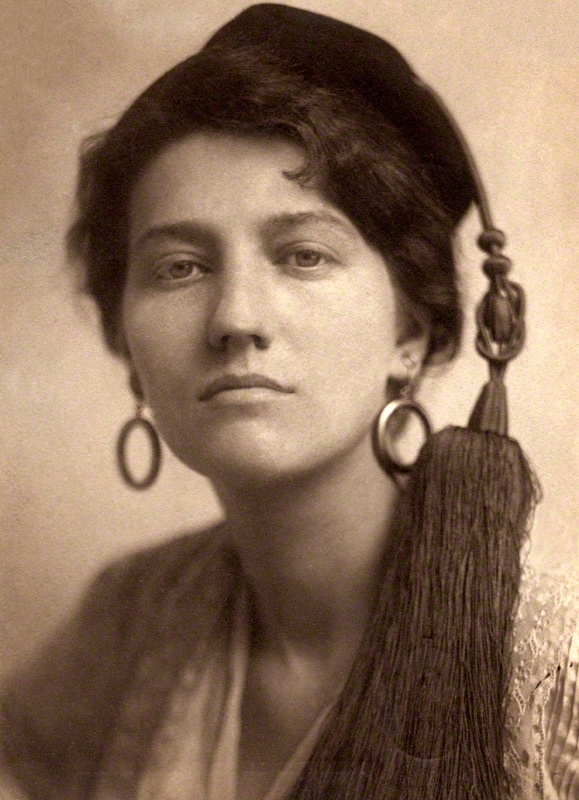
Gabrielle Enthoven OBE (born Augusta Gabrielle Eden Romaine, 12 January 1868 – 18 August 1950) was an English playwright, amateur actress, theatre archivist, and prolific collector of theatrical ephemera relating to the London stage. In 1911, Enthoven began campaigning for the establishment of a theatrical section in one of the British museums. In 1924, the Victoria and Albert Museum accepted her private collection, at this time containing over 80,000 theatrical playbills and programmes. The material became the founding collection of the museum's theatre and performance archives. Enthoven's unparalleled knowledge of the London stage and its history earned her the sobriquet "the theatrical encyclopaedia".
Gabrielle Enthoven was born at 21 New Street, Spring Gardens, Westminster, London to William Govett Romaine (1815–1893) and Frances Pheobe Romaine, née Tennant (1822/3-1909). Enthoven's year of birth was incorrectly listed in the family Bible as 1870, a fact which Enthoven did not discover until her sixtieth birthday. On finding this out, Enthoven remarked: "Such a shock darling. I was giving a lovely party and John Gielgud and everybody was coming, and suddenly I discovered that I was not sixty at all, but sixty-two. Wasn't it awful?"
Her father was Judge Advocate General in the Crimea and India, Legal Advisor to the Board of Admiralty, and Minister in Egypt. Much of Enthoven's childhood was spent abroad as she accompanied her father on trips to various postings in both India and the Middle East. In Egypt, Enthoven used to ride in her own carriage during state occasions and rode in the desert with Charles George Gordon On her father's retirement in 1879, the family returned to England, settling in a house named "The Old Priory" just outside Windsor, Berkshire where Enthoven lived until her father's death in 1893. Enthoven had never been educated at school, nor had she been tutored by a governess. As a result, she was fifteen years old before she could neither read or write. She could, however, as a result of her travels abroad, speak fluent Egyptian Arabic, Turkish, two Hindustani dialects, French, Italian, Spanish, and some German.
There were occasions when a carriage was sent from nearby Windsor Castle to collect Enthoven and her friends to play with the young Princess Mary of Teck, later to become Queen Mary of Teck. Enthoven recalled slapping the young princess across the face on one occasion, an incident which the two women would recall in later years when the Queen visited Enthoven at the Victoria and Albert Museum.
Enthoven was a small child when she first visited the theatre. She climbed out of her bedroom window clutching a shilling and made the journey to the Gaiety Theatre, London to see a production of The Forty Thieves. Climbing beneath the legs of the waiting crowd, Enthoven was picked up by a large navvy who placed her upon his shoulders and pushed his way through the throng of people to find them a seat on the front row of the gallery. Half-way through the performance, he took out an orange from his pocket, bit into it, pushed some sugar in the hole with his thumb, and gave it to Enthoven to suck.
In 1893, Enthoven married Major Charles Henfrey Enthoven (1866–1910), who at various times occupied the role of Staff Captain in the Royal Engineers, General Staff Officer at the War Office, and Chief Officer of London County Council's Parks Department. The couple had no children. Charles Enthoven died of pneumonia on 30 April 1910. Enthoven was not reported as being present at her husband's funeral.
Enthoven was a recognised and well-known figure within London's theatrical society. She was an inveterate first-nighter and had friendships with many members of the theatrical elite including John Gielgud, Peggy Ashcroft, Marda Vanne, Edward Gordon Craig, Edith Craig and Noël Coward. In 1921, Enthoven was staying in New York with Cecile Sartoris, with whom she had translated The Honeysuckle, a play by the Italian writer Gabriele D'Annunzio. The play was performed that year at the Lyceum Theatre. Noël Coward stayed with Enthoven and Sartoris during this period. Recalling his stay with the two women, he wrote: "they said that when I sold a play, or made some money somehow, I could pay rent, but until then I was to be their guest […] I accepted and moved in immediately, grateful not only for their kindness, but for their company." During Enthoven's stay in New York, in a flat on Washington Square South, she spent time with many influential people within artistic and theatrical society. The American poet and playwright Mercedes de Acosta wrote about Enthoven's stay in New York in her 1960s memoir Here Lies the Heart]. She described Enthoven as being "a woman of rare culture, of heart, and remarkable intelligence. A woman, too, of great humour. There were few like her."
Enthoven knew Oscar Wilde very well and would visit him at his home as a young girl[citation needed]. After these visits she would return home and copy down the stories he had told her [citation needed]. In 1948, Enthoven presented the British Library with a pamphlet containing four prose poems of Wilde's that she had had printed and bound under the title Echoes. In 1889, Wilde dedicated a poem to Enthoven entitled Remorse. (a study in saffron).
Gabrielle Enthoven
Gabrielle Enthoven OBE (born Augusta Gabrielle Eden Romaine, 12 January 1868 – 18 August 1950) was an English playwright, amateur actress, theatre archivist, and prolific collector of theatrical ephemera relating to the London stage. In 1911, Enthoven began campaigning for the establishment of a theatrical section in one of the British museums. In 1924, the Victoria and Albert Museum accepted her private collection, at this time containing over 80,000 theatrical playbills and programmes. The material became the founding collection of the museum's theatre and performance archives. Enthoven's unparalleled knowledge of the London stage and its history earned her the sobriquet "the theatrical encyclopaedia".
Gabrielle Enthoven was born at 21 New Street, Spring Gardens, Westminster, London to William Govett Romaine (1815–1893) and Frances Pheobe Romaine, née Tennant (1822/3-1909). Enthoven's year of birth was incorrectly listed in the family Bible as 1870, a fact which Enthoven did not discover until her sixtieth birthday. On finding this out, Enthoven remarked: "Such a shock darling. I was giving a lovely party and John Gielgud and everybody was coming, and suddenly I discovered that I was not sixty at all, but sixty-two. Wasn't it awful?"
Her father was Judge Advocate General in the Crimea and India, Legal Advisor to the Board of Admiralty, and Minister in Egypt. Much of Enthoven's childhood was spent abroad as she accompanied her father on trips to various postings in both India and the Middle East. In Egypt, Enthoven used to ride in her own carriage during state occasions and rode in the desert with Charles George Gordon On her father's retirement in 1879, the family returned to England, settling in a house named "The Old Priory" just outside Windsor, Berkshire where Enthoven lived until her father's death in 1893. Enthoven had never been educated at school, nor had she been tutored by a governess. As a result, she was fifteen years old before she could neither read or write. She could, however, as a result of her travels abroad, speak fluent Egyptian Arabic, Turkish, two Hindustani dialects, French, Italian, Spanish, and some German.
There were occasions when a carriage was sent from nearby Windsor Castle to collect Enthoven and her friends to play with the young Princess Mary of Teck, later to become Queen Mary of Teck. Enthoven recalled slapping the young princess across the face on one occasion, an incident which the two women would recall in later years when the Queen visited Enthoven at the Victoria and Albert Museum.
Enthoven was a small child when she first visited the theatre. She climbed out of her bedroom window clutching a shilling and made the journey to the Gaiety Theatre, London to see a production of The Forty Thieves. Climbing beneath the legs of the waiting crowd, Enthoven was picked up by a large navvy who placed her upon his shoulders and pushed his way through the throng of people to find them a seat on the front row of the gallery. Half-way through the performance, he took out an orange from his pocket, bit into it, pushed some sugar in the hole with his thumb, and gave it to Enthoven to suck.
In 1893, Enthoven married Major Charles Henfrey Enthoven (1866–1910), who at various times occupied the role of Staff Captain in the Royal Engineers, General Staff Officer at the War Office, and Chief Officer of London County Council's Parks Department. The couple had no children. Charles Enthoven died of pneumonia on 30 April 1910. Enthoven was not reported as being present at her husband's funeral.
Enthoven was a recognised and well-known figure within London's theatrical society. She was an inveterate first-nighter and had friendships with many members of the theatrical elite including John Gielgud, Peggy Ashcroft, Marda Vanne, Edward Gordon Craig, Edith Craig and Noël Coward. In 1921, Enthoven was staying in New York with Cecile Sartoris, with whom she had translated The Honeysuckle, a play by the Italian writer Gabriele D'Annunzio. The play was performed that year at the Lyceum Theatre. Noël Coward stayed with Enthoven and Sartoris during this period. Recalling his stay with the two women, he wrote: "they said that when I sold a play, or made some money somehow, I could pay rent, but until then I was to be their guest […] I accepted and moved in immediately, grateful not only for their kindness, but for their company." During Enthoven's stay in New York, in a flat on Washington Square South, she spent time with many influential people within artistic and theatrical society. The American poet and playwright Mercedes de Acosta wrote about Enthoven's stay in New York in her 1960s memoir Here Lies the Heart]. She described Enthoven as being "a woman of rare culture, of heart, and remarkable intelligence. A woman, too, of great humour. There were few like her."
Enthoven knew Oscar Wilde very well and would visit him at his home as a young girl[citation needed]. After these visits she would return home and copy down the stories he had told her [citation needed]. In 1948, Enthoven presented the British Library with a pamphlet containing four prose poems of Wilde's that she had had printed and bound under the title Echoes. In 1889, Wilde dedicated a poem to Enthoven entitled Remorse. (a study in saffron).
Recent media
Recent media